


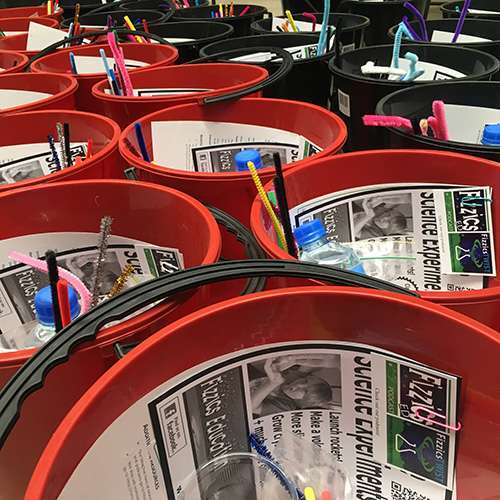
Primary Science TPL Rapid Upskill!
Designed from real classroom experiences, this modular day helps you create consistently effective science learning that directly addresses the new curriculum with easily accessible and cost-effective materials.
- Suitable for all Primary Teachers and available Australia-wide.
- Meets the Australian Professional Standards for Teachers
- Designed to build science capacity in your school
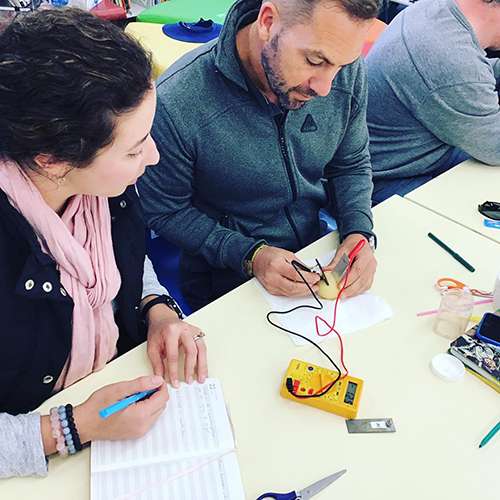
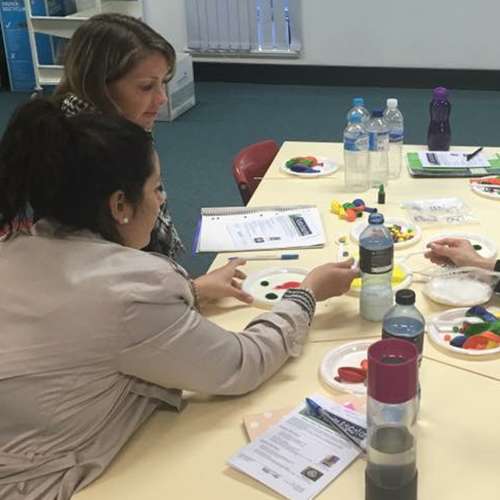
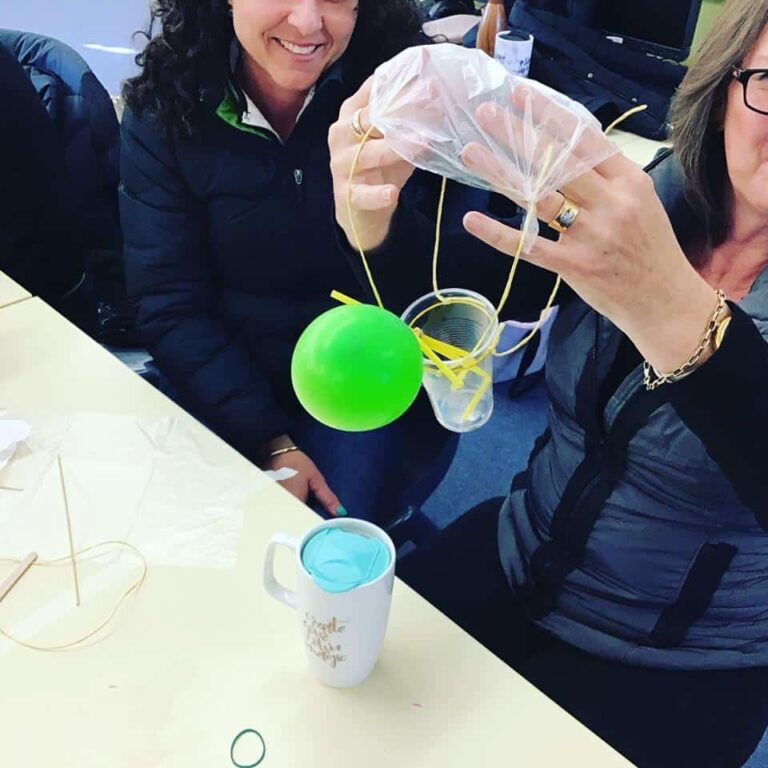
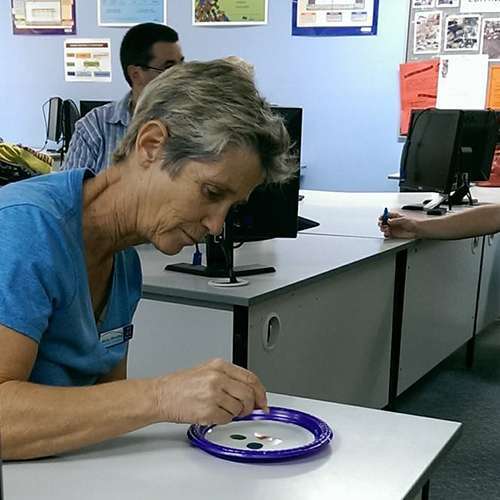
- Highly interactive & hands-on… creativity is celebrated here!
- Embedded curriculum planning
- Built on materials you can source from the local shops
Meeting the needs of the new curriculum
This teacher professional development workshop is deigned ot meet the needs of the new curriculum:
The day is modular, allowing us to tailor the practical activities and planning time specifically to your school’s current focus for the curriculum transition. To help us design the most effective day, let us know which of these areas you are most interested in addressing.
- Outcome & Focus Area Alignment
Are you looking for hands-on ways to target specific outcomes across specific stages? - Experimental Skills
Would you like to upskill teachers on variable testing, fair testing, and scientific investigation processes under the new syllabus? - Curriculum Mapping
Are you looking to adapt, audit, and map your school’s existing units against the updated requirements? - Inquiry & STEM
Do you want to co-create hands-on STEM challenges to teach core syllabus concepts through deeper, project-based inquiry?
Supporting the National STEM School Strategy 2016 – 2026
In 2015, all Australian education ministers agreed to the National STEM School Education Strategy 2016–2026, which focuses on foundation skills, developing mathematical, scientific and digital literacy, and promoting problem-solving, critical analysis and creative thinking skills. The strategy aims to coordinate current activities and improve STEM education. Fizzics Education has created this Teacher Professional Learning opportunity to help address the five action areas highlights by the Strategy;
- Increasing student STEM ability, engagement, participation and aspiration.
- Increasing teacher capacity and STEM teaching quality.
- Supporting STEM education opportunities within school systems
- Facilitating effective partnerships with tertiary education providers, business and industry
- Building a strong evidence base
By addressing these five action areas teachers will able to contribute to addressing two overall goals of the strategy;
Goal 1
- Ensure all students finish school with strong foundational knowledge in STEM and related skills
Goal 2
- Ensure that students are inspired to take on more challenging STEM subjects.
ACARA links
Science Inquiry Skills is concerned with the practices used to develop scientific knowledge, including questioning, planning and conducting experiments and investigations, collecting and analysing data, drawing critical, evidence-based conclusions, and evaluating and communicating results.
The Science Inquiry Skills strand comprises of five sub-strands. This TPL day will focus on three of the five sub-strands, these are:
- Questioning and predicting – key abilities include identifying and constructing questions that can be investigated scientifically, proposing hypotheses and suggesting possible outcomes.
- Planning and conducting –key abilities include making decisions about how to investigate or solve a problem and carrying out an investigation, including the collection of data.
- Communicating – key abilities include conveying information or ideas to other through appropriate representations, text types and modes.
AITSL Standards
- 2.1 Demonstrate knowledge and understanding of the concepts, substance and structure of the content and teaching strategies of the teaching area.
- 2.2 Organise content into an effective learning and teaching sequence.
- 3.2 Plan lesson sequences using knowledge of student learning, content and effective teaching strategies.
- 3.3 Include a range of teaching strategies.
Support Reading
Format
The day is broken up into 3 distinct sections;
Before Morning Tea
Introduction & Principles of Science Literacy
After Morning Tea
Your choice of module, where this could be either
- STEM ideation
- Formative assessment
- Science & digital tech,
- Scientific method deep dive
- Working mathematically
After Lunch
Making it happen!
Rapid development of the curriculum to suit the needs of learners. It’s all about implementing the ideas raised throughout the day.
Teachers are paired up as part of a Professional Learning Network so that following the TPL day;
- Teachers can work with each other to support the implementation of their goals for their school.
- The following school term all teachers are invited to share what they have achieved and find ways to collaborate and extend student learning opportunities.
Tailored Modules
It’s all about choice!
The middle session of the day will be focussed on an area you want to give you outcome you need. During afternoon session we work together on how this can be implemented.
Choose one of the following below…
STEM Ideation
We’ve all heard the acronym STEM… so what does it really mean to put this into classroom practice? In this module we look closely at what ideas have been used by other schools and then together we rapidly develop ideas for STEM in your school. This is module is about co-creation of STEM lesson activities that students love and planning for how to realistically implement a lesson sequence that fits in school timetable.
Formative Assessment
Do your students genuinely understand the scientific principles that you’re teaching? How deep is their understanding exactly? Can you measure this on the fly? How can you be sure that your assessment is targeting the skills necessary for future studies? This module is all about getting into the heart of formative assessment in science education, all whilst keeping the learner’s needs in mind as well as what industry expects outside of school.
Scientific Method Deep Dive
Listing off facts & figures doesn’t mean that a student actually ‘gets science’. This module is specifically designed to help you teach students how to work scientifically by investigating the scientific method in detail:
- forming a hypothesis
- identifying variables and fair testing
- experimental design and reporting
- critical thinking and problem solving
These 4 elements are essential for students to engage in the scientific method and form the basis for scientific literacy in the entire Primary Science & Technology Syllabus. On completing this science workshop you will be well-equipped to teach students to plan and undertake their own first-hand investigations as well as evaluate their results correctly, regardless of what unit of work they are studying!
Working Mathematically
How does mathematics apply to the real world? The focus of this module is to demonstrate how mathematics works in the real world and how answers need to be evaluated carefully against how the experiment is designed. Mathematical concepts cover algebraic techniques, measurement, integers, fractions, number patterns, angles and geometric figures. Importantly, it’s about how the students collect this data and do they understand how what their answer actually means!
Science & Digital Tech
We all love a gadget and we most definitely use apps everyday! This module helps take advantage of our digital native’s curiosity as we explore the variety of helpful resources that can really make a difference when teaching students science in the classroom. We’ll look at how you can enhance learning with your resources already at hand, plus help with planning out what you can do to create Maker Spaces and more!
Duration
Duration
- Full day workshop
- Ideally this is run between 8:30am and 3:30pm
- Set up time 45 minutes and pack up time 45 minutes.
Requirements
- Appropriate for up to 30 teachers – invite local schools to attend!
- Table and chairs for each teacher.
- We provide all necessary materials
- Access to running water.
- Access to a whiteboard and electrical power.






