Unlocking Nature’s Secrets: Fun with Patterns for Preschoolers!
National Science Week is almost here!
This year’s theme is Decoding the Universe – Exploring the unknown with nature’s hidden language.
So, how do we address this in the preschool setting? The good news, the theme is all about finding patterns in nature. Your children at your centre can think of it like nature having its own secret language, and we’re going to learn to read it!
Core National Science Week 2025 concept: “What’s a pattern?”
A pattern is when something repeats over and over again.
For preschoolers, you can find patterns almost everywhere!
Looking for Patterns in Flowers

Have you ever looked closely at a sunflower? Or maybe a beautiful daisy? If you look right in the middle, you’ll often see spirals! These aren’t just any spirals; they follow a special pattern called the Fibonacci sequence, which is a series of numbers where each number is the sum of the two preceding ones, starting with 0 and 1. Therefore, the sequence begins: 0, 1, 1, 2, 3, 5, 8, 13, 21, and so on, extending to infinity.
As early educators, we don’t need to go into that detail with our learners; all we have to say is that some patterns grow bigger and bigger, and we’re going to find examples of that in nature. We can explore this by:
- Counting petals
Are there the same number of petals on every flower? Do some have more or less? - Looking at spirals
Can you find the spirals in the middle of a sunflower? We can even try to draw them with our fingers! - Finding symmetry
If you draw a line right down the middle of some flowers, do both sides look the same?
That’s called symmetry! We can find this in many things such as butterflies or even ourselves too.
Here is an associated activity on making a plant collection that your preschoolers can do with guidance from you.
Constellation Patterns

The sky shows patterns that we can observe too.
As early educators, we can introduce the concept of constellations and how these patterns in the sky are used for navigation and for astronomers to tell others where a particular star is. Show your learners examples such as the Southern Cross (Crux) or Orion. This is also an opportunity to talk about different cultural stories about the constellations in the sky.
Here is an activity where you can make constellations from a film canister (yes you can still get these!).
They make a great guessing game for preschoolers.
Patterns with our moon
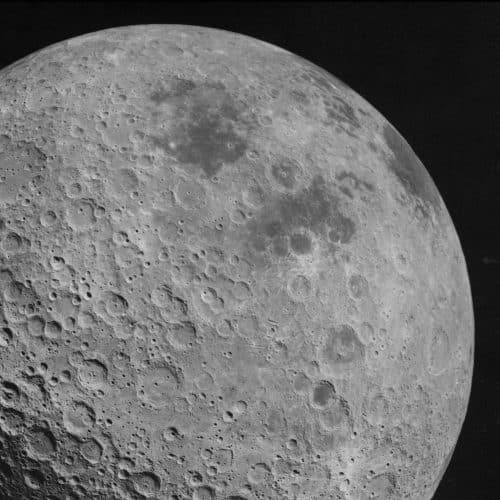
Ask your learners, “Does the moon always look the same?”
As we know, the Moon changes its shape, from a tiny sliver to a big round circle. The lunar phases are a pattern we can watch over and over again.
You can teach the lunar phases with preschool children using oreo cookies, although you may have to keep an eye on the kids that will eat them too early!
Nature Pattern Rubbings

Go on a nature walk in the preschool garden or a local park and collect leaves, bark, interesting rocks, and sticks. Go back inside and place paper over these items and do crayon rubbings to reveal their textures and patterns. This activity introduces texture patterns, observational skills, and how nature creates unique designs.
Leaf, Flower & Shell Sorting by Attributes

Collect a variety of leaves and flowers from the garden or bring in some shells from the beach.
Have children sort them by colour, size, shape, or number of petals or with the shells, this could be size, shape and colour. This activity develops classification skills, pattern recognition (e.g., “all the red flowers,” “all the pointy leaves”), and early mathematical grouping.
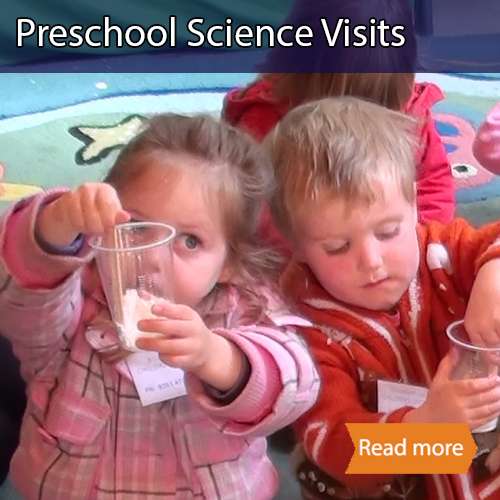
Have a preschool science visit to your centre!
Over to you
Even though “Decoding the Universe” sounds super big, for our preschoolers, it’s about noticing the amazing things around us. By looking for repeating shapes, colours, and movements, your little ones are already starting to understand the hidden language of nature. It’s a wonderful way to spark their curiosity and get them excited about science!
So, get ready to explore with your little ones this National Science Week.
What patterns will you discover together?
Happy teaching,

Want more ideas for teaching science?
Subscribe to the FizzicsEd Podcast!