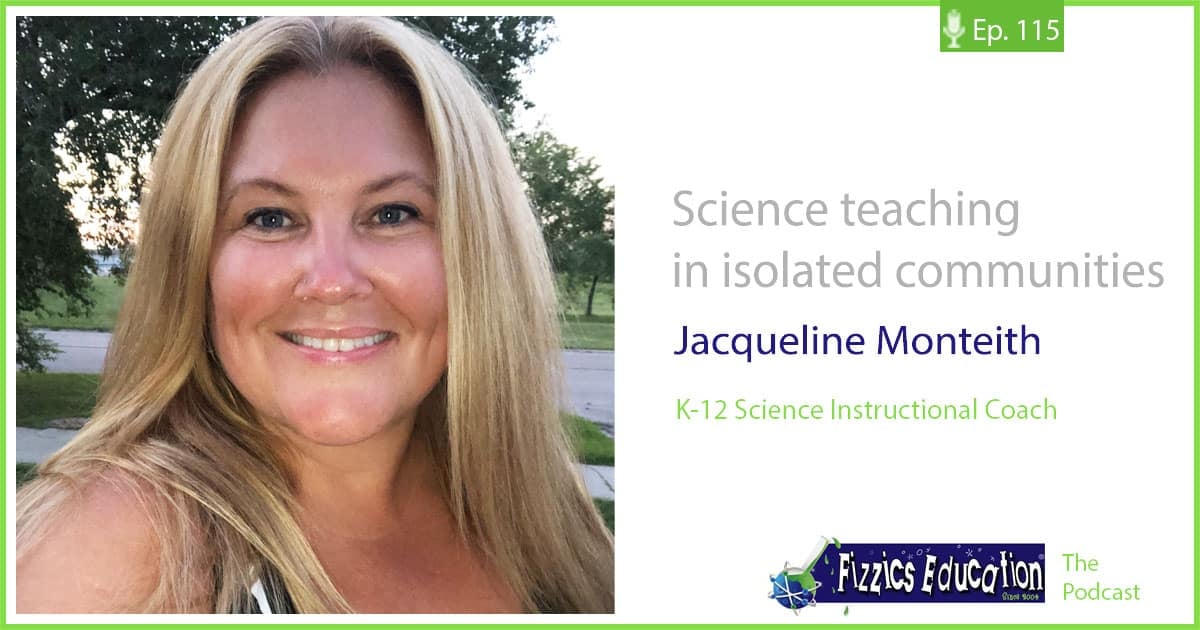
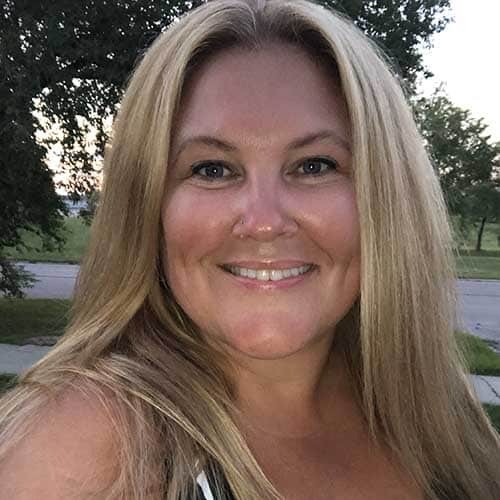
Jacqueline Monteith is a visionary educator who began her career teaching secondary school in the vast, remote landscapes of Northern Manitoba, Canada. This early immersion in regional education sparked a lifelong commitment to accessibility, leading her to earn a Master’s Degree in Distance Education in 2012.
Since 2013, Jacqueline has served as the Science Instructional Coach for the Frontier School Division, one of the largest and most geographically diverse school divisions in North America. In this pivotal role, she mentors and supports teachers across isolated communities, ensuring that distance is never a barrier to high-quality STEM engagement. Her work involves developing innovative pedagogical methods that empower both educators and youth to explore scientific concepts through a blend of virtual and hands-on learning.
With 18 years of frontline experience, Jacqueline’s expertise in remote delivery and her “zest for thinking differently” have positioned her as a global leader in modern education. She is particularly adept at finding unique ways to ignite curiosity in students who may lack traditional laboratory access, making her a vital voice in the conversation about the future of science teaching in 2021 and beyond.
Top 3 Learnings from this Episode
Adaptability is the Core of Remote Science: Teaching in isolated areas requires a shift in mindset where basic materials and the natural environment become the primary tools for enquiry, proving that expensive labs aren’t the only way to teach physics or chemistry.
The Power of Instructional Coaching: Dedicated support roles like Science Coaches are essential for teacher retention and confidence in remote schools, providing a vital link to resources and pedagogical expertise.
Technology as an Equity Tool: When used effectively, distance education technologies do not just replace the classroom—they expand it, allowing students to participate in global scientific conversations regardless of their postcode.
Frontier School Division’s mission is to provide equal opportunities for all students, a goal Jacqueline champions daily through her specialised science coaching and support programmes.
[00:00:18]Ben Newsome: You’ve spoken again for another Fizz Ed podcast. Glad you’re here for another chat around science and STEM and all that sort of thing. This week, we’re definitely talking about science as we head on up to Canada to hang out with Jacqueline Monteith, who is a science instructional coach with the Frontier School Division. She loves teaching science and, importantly, via distance and for isolated communities in all sorts of areas right across Manitoba. She does an amazing job working with kids who are isolated like you wouldn’t believe, talking ice roads to be able to get into their sites. This chat is all about how she supports those students and the teachers in making sure that their inquiry-based learning is awesome, relevant, and engaging. So let’s get right into it.
[00:01:01]Announcer: This is the Fizzics Ed Podcast. We’re all about science, ed tech and more. To see 100 fun free experiments you can do with your class, go to fizzicseducation.com.au. That’s physics spelled F I Z Z I C S and click 100 free experiments.
[00:01:20]Jacqueline Monteith: Well, it’s been quite the year for us, just like everybody. I am here in Winnipeg, Manitoba, Canada. Just yesterday, our Code Red, which is our highest level of isolation and restrictions due to COVID, was extended for another two weeks to accommodate for a post-holiday season and any potential gatherings that have been happening. So we’ve been on an isolation lockdown since mid-November. We are in the thick of our second wave of COVID. In the educational system, that looks like all sorts of different things for different grade levels, for different teachers, even within our different communities. So every person is really encountering a very unique teaching and learning situation.
[00:02:08]Ben Newsome: It makes it tough. I mean, whether they’ve got internet or they’ve got devices, do they have materials to do the hands-on things that you might want them to do in your lessons? It’s a challenge. Going from November, so it’s mid-January right now nearly, so that’s quite a long time for kids. How are the younger ones holding up?
[00:02:25]Jacqueline Monteith: Well, the way we have it set up here in Manitoba is that there has not been a lot of transmission in schools officially. There are cases in schools, but it’s not being transmitted in schools because of our very strict protocol. So Kindergarten through Grade 12 education has been in person this entire time until the beginning of January, where now Grade 7 to 12 is fully online. Only our younger ones are actually in the classroom. But again, every community, every school, every classroom is in a different situation in terms of separate classrooms or partial face-to-face or online learning or not online but completely remote. Again, it’s just such a diverse situation for every teacher out there.
[00:03:17]Ben Newsome: Wow. I was connecting with some parents over the weekend and they had nothing but praise for what the people have to actually deal with right now. They’re doing an amazing job. So tell us, how long have you been teaching in Manitoba?
[00:03:36]Jacqueline Monteith: Well, I started teaching in 2002. I was born and raised in the city here, so I’m a full-on city girl here in Winnipeg, Manitoba. I really craved to start my teaching career with something different. I wanted an adventure. My original thought was that I would like to go overseas and I would like to teach and travel, explore an area for about a year and then explore a different area of the world for about a year and teach there, and continue on for a couple of years that way. When I graduated university, I realised how broke I actually was and that this giant paycheck was not waiting for me at the end of my university career.
[00:04:15]Jacqueline Monteith: I know, it’s shocking. So I decided I still wanted that dream, I wanted to do something different and out of my comfort zone, but to keep it a bit more local to start with to get on my feet.
[00:04:30]Jacqueline Monteith: I ended up going to Cormorant, Manitoba, a very small community in Northern Manitoba. The community has less than 400 people. The school was 20 feet from the door of where I was living, and it really changed the entire trajectory of my teaching career. This is where I fell in love with being in a small community and really connecting with my students in a different way than I had in the city in larger numbers.
[00:05:00]Jacqueline Monteith: I really enjoyed connecting with my coworkers, my colleagues, and learning from them properly, and really getting that exposure to everything that science can be from on-the-land learning and that authentic connection that we all have.
[00:05:20]Jacqueline Monteith: So I ended up going to Cormorant for one year and staying for 10. And now I am back in Winnipeg, so I have my grocery store down the street again, which is fantastic. But in regular years, I still get to teach and travel throughout my entire school division, including back to Cormorant on occasion. Now I look after schools all throughout our province in science education. We go on the road and support our teachers, support our youth, and just try to bring new, innovative ways of teaching and being and doing into our science education.
[00:05:55]Ben Newsome: That’s awesome. Your story reminds me, almost in parallel, of a really good friend of mine, Sean Forty, who was on the podcast quite a while ago. He went up to Northern Alaska, a very small community as well. He thought he was only going to do a few months there and stayed there for a few years, and that produced a real travel bug in him. He ended up, and still is, teaching in South Korea. You just never know where teaching is going to take you. It’s so cool to hear that.
[00:06:22]Ben Newsome: So you drive between different schools to support the communities in different ways. How big is the district?
[00:06:29]Jacqueline Monteith: Our school division covers almost our entire province of Manitoba, which is larger than the state of California. So it’s big.
[00:06:44]Jacqueline Monteith: Our farthest community that we could drive to would be about a 12-hour drive north from where I am. However, many of our communities are only accessible by ice roads in certain seasons, or train, or helicopter, or aeroplane. All the way up to Churchill, Manitoba, which is the polar bear capital of the world, is one of our schools right along the Hudson Bay in the Subarctic, and that’s only accessible by train or plane. So our methods of travel are diverse, for sure. Sometimes it feels lucky when we can get in a vehicle and just drive somewhere and it’s not too far.
[00:07:22]Ben Newsome: That actually brings a challenge too, because with isolation comes, well, how removed are you from the set curriculum, so to speak? I mean, the curriculum is there for you regardless of whether you’re in the metropolitan area or in a remote area. How do you find the teaching communities… how diverse or different is it between a site that’s honestly accessible only by ice road, so resources may or may not be around as easily, compared to metropolitan? Do you see much of a difference?
[00:07:49]Jacqueline Monteith: Sorry, I need a repeat on the last part of your question.
[00:07:56]Ben Newsome: Yeah, had a bit of a break up on the net. With the differences between metropolitan and people who are way out who can only be accessed via ice road, is there much of a challenge in terms of resourcing for those schools?
[00:08:12]Jacqueline Monteith: Yeah, I think everything’s a bit more of a challenge. It’s not just the resources because we have the ability to send packages and get resources back and forth, but that immediacy of what you need is just not there. There may not be the option of running down to a dollar store or a Walmart and grabbing what you need for the next day. So that element of pre-planning and really forward-thinking not in the next couple of days, but what you might need in the next couple of months always has to be there.
[00:08:44]Jacqueline Monteith: I find that’s actually a skill that our teachers already excel at. So when it comes to distance education, that pre-planning and pre-thinking is already ingrained in us just because of our situations and our locale.
[00:09:00]Jacqueline Monteith: It’s difficult, I would say, at the best of times, and now with everything it’s really forward-thinking. It’s really looking at the endpoint of what you want our students and our teachers to be achieving and succeeding at, and then figuring out what kind of pathway we can take to get there if we don’t have access to materials and if we don’t have access to technology.
[00:09:22]Jacqueline Monteith: I know when I was teaching in Cormorant, cell service doesn’t exist in many of our more northern rural communities. Sometimes the Wi-Fi that we had in the school or just general internet was down if it was too cloudy out that day. Or suddenly the wind blew and a power line went out, and suddenly it’s two days with no power. It was a constant expectation of handling something unexpected.
[00:09:55]Ben Newsome: Absolutely. Vaguely reminds me of in the 80s trying to get analogue TVs to work, and you had to stand in a certain place in your living room to get them to work. But I get it.
[00:10:07]Ben Newsome: Obviously, you love your science. You teach science lots of ways, and you help teachers to teach science in lots of ways. But then again, there are different ways to teach science, different methods of instruction and whatnot. Is there a one size fits all, or do you find that a particular way of teaching for this group of kids might be better? I guess what I’m asking is, how do you like to best teach science?
[00:10:28]Jacqueline Monteith: I think the one size fits all is non-existent for us. Once you let that go, once you really accept that one size fits all doesn’t work, it opens up a whole lot of other doors inadvertently.
[00:10:46]Jacqueline Monteith: What we really celebrate is finding your voice as a teacher and what kind of perspective you want. If you want to be out on the land and you want to be outside of your classroom as much as possible, let’s find a way to get you there. If you as a science teacher really like inventing, as an example, and you want to include invention and innovation in all that you do, let’s find a way to get you there. Really it’s a celebration of diversity not only in our communities, but of the teacher, and thus of our students as well.
[00:11:18]Ben Newsome: Absolutely. What’s really cool is when you see schools running programmes in conjunction with other schools and seeing that cross-pollination between schools can be really fun. I remember watching a cluster of schools running a shared experiment where the kids were set to do one thing and then they’d post the materials to the next group. A little bit expensive, let’s be honest, but the kids were then building off this thing that they were doing. It’s really neat, and it all comes down to what flexibility you have. How can you find that gap in the curriculum to make it not just a stock standard one size fits all, and that’s awesome that you’re doing that.
[00:11:56]Jacqueline Monteith: Absolutely. In our curriculum here, we do have a lot of that freedom. I think there’s a lot of change happening, not only in the recent year but overall. When you think about the base beliefs about how education can best suit our youth and our teachers, it’s absolutely changing right now. We’re going from a very structured, must teach this and this and this in a list format, to an exploratory-based, deep dive into whatever happens to come up.
[00:12:30]Jacqueline Monteith: We’re lucky here in Manitoba, our curriculum is a bit dated. However, right in our curriculum it says that these are suggestions and guidelines, and there’s a lot of room for flexibility and teacher choice of what you would like to do. It really is fantastic to actually look at our curriculum and try to get away from that list and open up possibilities.
[00:12:53]Jacqueline Monteith: Some ways that we do that are with the promotion of cross-curricular teaching, where you use science as your base because that always seems to be the easy win for both students and teachers. They’re into it, they’re on board with it. And then building out your literacy, your numeracy goals, art, culture, whatever it happens to be, but you’re looking at it more as a whole curriculum, much like you would look at a person as a whole self, not compartmentalised. That again opens up a lot of different options.
[00:13:24]Ben Newsome: That’s really cool. It’s quite a vibrant time to be involved in education when it’s getting changed or pivoting, a cliché term, but it is a lot of fun with it. How’s it being received? I suspect it’s one thing to really want to embrace change, but change isn’t for everyone too. How’s that going?
[00:13:48]Jacqueline Monteith: I think that’s something that goes with we need to be well aware of what’s happening and respect that diversity. Some people prefer to be within a very structured scenario, and that’s where their comfort level is, and that’s okay too. Sometimes you go into a classroom and all you see is utter chaos, and for some people that’s a place of comfort and celebration. For other people, there’s so much anxiety and you cannot handle that for more than two minutes and you need to walk away. So everybody is in a different scenario, and we just try to work within that.
[00:14:27]Ben Newsome: That’s a good point because having gone to these different sites, different schools, you’re going to see some serious diversity in the instruction and honestly even just the sites themselves. Some will just be an absolute row of tables, row of tables, desk, and that’s it.
[00:14:50]Ben Newsome: I’ll go into some rooms and they had sofas. It wasn’t really expensive stuff; they had actually gotten something from the local second-hand store and tried to make the place look like a home. They had pot plants hanging from the ceiling and whatnot. It was totally different, and this is in the public school. It’s funny how it is. Obviously, all this comes with effort and time and whatnot, but having it as a safe place for kids is always a good thing for sure.
[00:15:15]Ben Newsome: One of the things I’d like to ask people who’ve been teaching for a while with science is, it’s always nice to give an idea of like a pop thing. If you had students walking into your room, just say they were middle grades, Grade 7, and you know you’re only going to have them for about 10 minutes. I need to teach them a quick science activity, like an engagement tool, a quick, fun thing to do. What would be a quick go-to thing that you could quickly do? The reason why I ask this is so that people who are listening can do it and try it.
[00:15:48]Jacqueline Monteith: Yeah, try something right away. Years ago, I developed a document with ideas from Kindergarten all the way to Grade 12. I called this document the five-minute field trip, which is really a way for schools and classrooms to get outside, even if it’s only for five minutes, and do an activity that’s quick and easy and fun, but relates to a concept. So really just trying to connect students to the content that they’re talking about, and also build your relationship between teacher and classroom as well.
[00:16:22]Jacqueline Monteith: I revised it this year to not just getting out into the schoolyard, but also into your home yard, your area that you’re in, to accommodate what’s happening this year. If you can get out for five minutes and do one of these activities and connect it to your content, hey, that’s a baseline for exploration right there.
[00:16:40]Jacqueline Monteith: Within that, one item that I always promote is the concept of the scientific scavenger hunt. So even just looking around the classroom, can you tell me, can you spot five items that demonstrate chemical or physical change? Can you show me five items, or tell me three states of matter in this classroom? Getting kids engaged, hands-on, minds-on, getting them active, and really looking at their home, local environment in a different way.
[00:17:08]Ben Newsome: That’s awesome. Reminds me of simple machines. You just have what random things are in the room that show levers or pulleys or whatever it is, and have all these kitchen utensils randomly sitting on their desks. When they walk into the room, they go, “Why is a can opener on my desk? What are you about to do to me?” That’s really good. Obviously, that’s a really useful tool for getting kids’ brains ticked on. What are five things in their room that they can do.
[00:17:36]Ben Newsome: Sometimes we’ll have lessons that go completely the wrong way, right? They go, “This is what was going to happen, and then this happened, but then there was a learning out of it.” Things go wrong all the time. We’ve had experiments, no one gets hurt, but they certainly don’t always work. What are some ones where you’ve gone, “You know what, I thought this was going to do it,” and it didn’t?
[00:18:03]Jacqueline Monteith: There’s definitely one that stands out to me because it didn’t go well because of my own doing.
[00:18:14]Jacqueline Monteith: I was about seven hours north, so I’m on the road all the time. I have a truck packed full of science, and I go to the school. I was working with a Grade 4, 5, 6 class, and we had talked about owl pellets previously. We wanted to dissect some owl pellets and find out what the owl had eaten, regurgitated, and dive into these really cool, gross owl pellets, and kids love that. We wanted to dissect them, and I ordered the owl pellets, I had them with me, I had the dissecting tools with me. We did a pre-lesson a couple of months earlier, so now I was returning to do this most exciting part.
[00:18:57]Jacqueline Monteith: The students start to open up and dive into their owl pellets, and one student from across the room said, “Are these real?” Like, is this the real thing? I said, “Yes, absolutely, this is the real thing. These come from owls, this is what they ate, and they’re picking apart bits of fur and guts and finding the bones.” And then another student said, “Are you sure this is real?” I’m like, “Of course it’s real,” and I went over to show them.
[00:19:22]Jacqueline Monteith: What I mistakenly ordered, and didn’t know ahead of time, was I ordered some kind of synthetic owl pellet, which was basically, instead of what the owl actually regurgitated and the guts and the bones within that the students would pick apart, it was essentially a ball of dryer lint with some plastic bones in the middle. They just opened up this ball of dryer lint, so it was this fake owl pellet. There’s no repairing that. I can’t run to a store. I can’t reorder and have it in two days. It’s months before I make my way back to this school and correct that.
[00:20:01]Jacqueline Monteith: So we had a good laugh at that. I ended up having the teacher go double check their stock pile, and they had a smaller number of very old owl pellets, but it was enough for us to at least share. So we ended up getting through the activity.
[00:20:17]Jacqueline Monteith: But by chance, I also had a bucket of cow eyeballs in my vehicle for another school. Just by chance, I went and grabbed those instead, and we dissected those. The motto was, the more gross the better it is, so they were happy with that.
[00:20:34]Ben Newsome: That’s cool. It’s lucky that you had the extra owl pellets, but as much as that could have felt like, “Oh my gosh, this has all gone bad,” at the same time that weirdly opens up an opportunity to talk about microplastics and things going into the environment. If you’ve got these plastic bones and bits and pieces in there, now you’ve got, “Well, these are chunky bits. Imagine if they were really small.” This is a real thing that’s generally part of the discourse right now, not just in science, but across our culture.
[00:21:09]Jacqueline Monteith: Absolutely. What I really liked is that when the first student questioned me, and I wasn’t right beside them, and I said, “Of course these are real,” the second student questioned me, I actually really loved that they felt comfortable enough to say, “Hey, are you sure?” They were using their own process of analysis and looking at what was in front of them versus what I was telling them, and they found that disparity and they were able to move forward in that. Even how we laughed about it and talked about it and revisited it again in a different way later on, it ended up being an all-in, I wouldn’t change it, it ended up being really great.
[00:21:50]Ben Newsome: That’s the acid test. Would you do it again?
[00:21:53]Jacqueline Monteith: Definitely. I think as a science teacher, whether you’re working with other teachers or whether you’re working with students, the more you become comfortable with being wrong, the easier your life will be. I think that is a top skill here. I am wrong all the time, and I have to learn to love it because every time I’m wrong I’m absolutely learning, whether it be from my colleagues or from our young people, or just in general from mistakes I make. Reaching that comfort level of being wrong is probably the greatest skill set.
[00:22:28]Ben Newsome: Well, it is. Also, if you’re right all the time, that means you’re not pushing your boundaries, are you? It’s all part of it.
[00:22:36]Ben Newsome: Just before we head on off, I just wanted to quickly ask, if you had a bunch of instructional coaches in front of you who are just about to start looking after a province the size of Manitoba, and they were about to start next week for the first time, what sort of advice would you give them?
[00:23:02]Jacqueline Monteith: I suppose I would give a couple of small pieces of advice. The first is to be sure to relish who you are. What you bring to the table is not going to be the same as what the next person would bring or the last person would bring, but really just relish and celebrate what you have to bring to the table in terms of your beliefs, your values about the educational system, your expertise, all of that. Bring it to the table and be proud of what that is.
[00:23:35]Jacqueline Monteith: At the same time, being willing to open your mind and to learn alongside your colleagues and from students as well. Releasing that need that we need to know everything and that we need to be the experts in every single piece of what we’re doing. I think what we really need to be the experts on is just opening our minds and being willing to learn as we go as well.
[00:23:58]Ben Newsome: Love it. Good words to live by. Outside of education, it’s probably a good way to go.
[00:24:06]Jacqueline Monteith: True.
[00:24:08]Ben Newsome: Thank you very much, Jacqueline, for jumping on the podcast. I’m really looking forward to the Learning Jam coming up, and it was really cool to hang out on that panel that we did with Facebook just half an hour ago. It’s good fun. Have a fantastic weekend, and hopefully these lockdowns and all this stuff that’s been going on goes away soon.
[00:24:34]Jacqueline Monteith: Yes, and the silver lining is that a lot of us are now used to this webcam thing, so we might be able to connect to more of those students who are 12 hours ahead a little bit easier, a little bit more, which is good. Thanks, Ben. I really hope we can connect again, and I’m also looking forward to the Learning Jam. Hope to see a lot of people out there.
[00:24:55]Ben Newsome: Awesome. Take it easy, see you later.
[00:25:15]Ben Newsome: Well, there we go. We just heard from Jacqueline Monteith, who you can tell loves her science and importantly loves helping students no matter where they are, no matter how isolated they actually are. If you’re wondering about the Learning Jam, head on over to toddleapp.com. That’s T-O-double-D-L-E-A-P-P.com, and there you’ll see the Learning Jam, which is this really interesting learning event happening in January where you can be involved no matter where you are in the world. It is a 24-hour global learning event happening between January 23 and 24, and you can totally get involved.
[00:25:45]Ben Newsome: That’s enough for this particular podcast. As usual, we have more science podcasts coming up throughout the year. I hope you’re having a blast teaching kids no matter where you are and no matter how they are situated. You’ve been listening to me, Ben Newsome from Fizzics Education, and this is the Fizzics Ed Podcast. I hope to catch you another time.
[00:26:34]Announcer: This podcast is part of the Australian Educators Online Network, aeon.net.au.
Frequently Asked Questions
What are the primary challenges of teaching science in remote communities?
The main challenges include geographical isolation, a lack of traditional laboratory facilities, and limited access to specialised equipment. Teachers in these areas often work in small teams or even in isolation, requiring them to be highly resourceful and adaptable when delivering the science curriculum. Jacqueline emphasises that providing consistent support and kits is essential to overcoming these barriers.
How does a Science Instructional Coach support teachers in isolated areas?
A Science Instructional Coach acts as a mentor and resource provider. Jacqueline Monteith travels to remote sites (often by small plane) and uses virtual tools to co-teach, model experiments, and help teachers integrate hands-on activities into their lessons. This relationship-based approach ensures that teachers feel supported rather than isolated in their professional journey.
Can high-quality science experiments be conducted without a formal laboratory?
Absolutely. Jacqueline advocates for the use of “science kits” and household materials to demonstrate complex concepts. By focusing on hands-on learning and the scientific method rather than expensive hardware, students can engage in meaningful enquiry. This approach proves that the quality of science education is defined by the level of engagement and critical thinking, not the room it is taught in.
What role does technology play in bridging the education gap in Northern Manitoba?
Technology is a vital bridge in the Frontier School Division. Through virtual excursions, synchronous video conferencing, and digital resource sharing, students in remote communities can connect with experts and peers globally. Jacqueline’s background in Distance Education allows her to leverage these tools to create an equitable learning environment regardless of a student’s physical location.
How can teachers in isolated areas stay connected with their professional community?
Connection is maintained through intentional networking, virtual professional development sessions, and the support of instructional coaches. Building a digital community allows for the sharing of best practices and emotional support, which is crucial for teacher retention in remote regions. Platforms like LinkedIn and specialised educational programmes help keep the dialogue open across vast distances.
Discussion points summarised from the Science teaching in isolated communities with Jacqueline Monteith with AI assistance, verified and edited by Ben Newsome CF
Extra thought ideas to consider
Redefining the Laboratory
Consider the idea that the local environment—the tundra, the forest, or the community—is a more powerful laboratory than a traditional classroom. How can we better integrate land-based learning and Indigenous knowledge into the formal science curriculum to make it more relevant for students in remote areas?
The Impact of Mobile Science Support
Reflect on the “kit-and-coach” model where physical resources are sent ahead of a virtual or in-person coaching session. Could this model be applied to urban schools that lack funding, or is it a specialised solution only for those separated by distance?
The Future of Hybrid Pedagogy
As we move further into the decade, how will the lessons learned from remote education in Northern Manitoba influence mainstream teaching? The flexibility required for distance education often leads to more innovative and student-centred teaching strategies that could benefit all learners.
Recognised by
22 years, award-winning work, 1 purpose
Recognition from business, education and industry bodies across Australia.
Australian Small Business Champion
Multiple years
CILC Pinnacle Award and Hall of Fame inductee
Center for Interactive Learning and Collaboration
Western Sydney Awards for Business Excellence
Winner
Top 100 Coolest Company
Listed
Local Business Awards
Winner
We value your privacy
We use cookies to improve your experience. Essential cookies are always active. You can choose which optional cookies to allow.We use cookies. Optional ones stay off unless you allow them.Privacy policy