Podcast: SCINEMA – Bringing science stories to life
Grab your popcorn! We find out more about SCINEMA, the southern hemisphere’s largest international science film festival. We find out what’s on offer from an education point of view as we chat with Ben Lewis, editor of Australia’s Science Channel as well as Jennifer Chalmers who is the education specialist for The Royal Institution of Australia.
Photo: SCINEMA Liverpool City Council. Credit: Urban Screen Productions (UTV)
SCINEMA is the largest international science film festival in the Southern Hemisphere, providing a prestigious platform that showcases the finest science features, documentaries, animated shorts, and experimental films from global filmmakers. In 2019, the festival’s reach was truly monumental, with over 600 venues hosting screenings for a combined audience of more than 100,000 people.
From premier cinema screenings in major metropolitan centres to community-led events in regional towns across every state and territory—and even as far afield as Antarctica—SCINEMA traverses the globe to share the wonder of discovery. Whether the films are avant-garde, humorous, or deeply thought-provoking, SCINEMA serves as a vibrant celebration of science on the silver screen.
However, SCINEMA is more than just a festival; it incorporates a robust education programme designed to integrate cinematic science into Australian classrooms. By providing films and curated resources specifically mapped to the Australian Curriculum, the festival offers educators a unique, immersive way to discuss complex scientific issues. Educators can register for the programme and access these valuable assets here.
About Ben Lewis
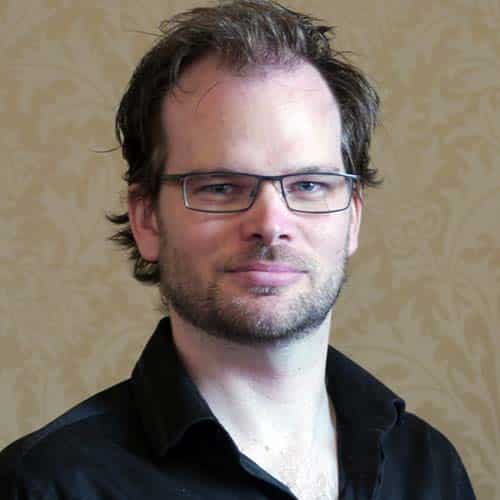
Ben Lewis
Ben Lewis is the Editor of Australia’s Science Channel—a leading not-for-profit online platform dedicated to broadcasting compelling Australian science narratives. After completing a PhD in skin cancer biology and molecular pharmacology (a rigorous academic path focused on identifying novel preventative mechanisms for melanoma), Ben realised his true calling lay in science communication rather than the laboratory.
Ben has cultivated an extensive portfolio spanning live events, documentary production, journalism, and national radio. He has been privileged to collaborate with some of the world’s most influential figures, including Professor Brian Cox, Dr Jane Goodall, Alan Duffy, Bill Nye, and Dr Karl, as well as astronauts, ABC and BBC Worldwide crews, and Antarctic explorers. Having once been granted access to a nuclear reactor, his next sights are set on the final frontiers: a working stint in Antarctica and, eventually, space. You can follow Ben’s popular “Today I Learnt” series on Twitter @BenSciGuy.
About Jennifer Chalmers
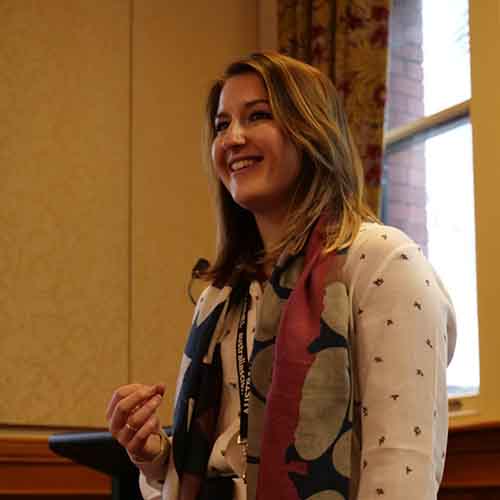
Jennifer Chalmers
Jennifer Chalmers is the Education Specialist at The Royal Institution of Australia. With a multidisciplinary background in Product Design Engineering and Science Pedagogy, she dedicates her time to synthesising the latest STEM developments into engaging educational content.
Jennifer is driven by a passion for STEM outreach, finding immense professional fulfilment when a student discovers their potential for a career in science or technology. When she isn’t advocating for the next generation of scientists, she is likely spending time with her beloved miniature dachshund, Bobbie.
The Royal Institution of Australia, as an independent charity, remains committed to connecting the public with the world of science through news, digital media, high-profile events, and comprehensive educational resources.
[00:00:17]Ben Newsome: Yes, welcome again to another Fizzics Ed Podcast. Glad to have you yet again. This week, I can tell you what, it is an interesting one. We’re talking about the SCINEMA International Science Film Festival. Really cool. This is all about the largest international science film festival in the Southern Hemisphere. Seriously, in 2019, over 600 venues hosted screenings right across the country. Really cool stuff. It’s really about bringing science and stories together and it’s so much fun.
[00:00:44]Ben Newsome: Today we get to speak with Ben Lewis, who’s the editor of Australia’s Science Channel and who is heavily involved in SCINEMA, very much so, and he really, really loves his stuff. In behind this, he has been lucky enough to tell science stories with not only Australia’s awesome scientists but also Brian Cox, Jane Goodall, Alan Duffy, Bill Nye, Dr Karl, you name it, lots and lots of people Ben’s been involved with. He very much loves SCINEMA.
[00:01:08]Ben Newsome: Joining us today too is Jennifer Chalmers, who’s the education specialist at the Royal Institution of Australia. She’s got a background in product design engineering and science teaching. She spends her whole day, and hopefully not a weekend, collating all sorts of articles and videos about the developments in STEM and making really handy educational resources. You want to hear more about SCINEMA, trust me, it’s well worth your time. Let’s get right into it.
[00:01:33]Announcer: This is the Fizzics Ed Podcast. We’re all about science, ed tech and more. To see 100 fun free experiments you can do with your class, go to fizzicseducation.com.au. That’s physics spelled F I Z Z I C S and click 100 free experiments.
[00:01:52]Ben Lewis: So, me personally, I’m the editor of Australia’s Science Channel, which is really, really cool. It’s basically the go-to place for Australian science stories. So all the science stories that are done by Australians or are about Australia, from some of the best voices and science communicators and writers and the best universities around the country.
[00:02:18]Ben Lewis: But as well as telling those stories, we run this SCINEMA film festival, which is honestly, it’s super exciting. I love working on it. It’s one of the major science film festivals around the world, and it’s all done right here in Australia. We get entries from all around the world. Last year I think we had entries from 37 different countries. It really is the best of the best science films. We sort through all of those and then we present this film festival online through Australia’s Science Channel for people to see the incredible stories from not only Australia, but from 37 other countries.
[00:03:08]Ben Newsome: 37 other countries is somewhat of a logistical feat, which is really good. Jennifer, how do you fit into this?
[00:03:16]Jennifer Chalmers: Hi. I am the education specialist at the Royal Institution of Australia. What I get to do every day is take these resources that Ben has curated for Australia’s Science Channel or through our other publication, Cosmos Magazine, and I make education resources for them. I map them all to the Australian curriculum and make that into something that can be used in the classroom.
[00:03:46]Jennifer Chalmers: With SCINEMA, we’ve got these amazing films every year that are all about communicating science in a way that is relevant. It puts science into a context which is just amazing when you’re trying to learn about something or when you’re trying to find out if you’re interested in something. Well, if you can see how it makes sense to you and how you can apply that into your life, then you’re going to be more motivated to learn about it.
[00:04:13]Jennifer Chalmers: That’s the bits I try and grab and make into an education resource to be used both in the classroom and online as well. Everything that we all do is all available online for free that you can just go in and download. Most of my day is spent reading these amazing articles and trying to work out how that’s best used to motivate students and get them interested in STEM.
[00:04:38]Ben Newsome: By the way, I do love Cosmos Magazine as well. It’s certainly one of the ones that we definitely read, all of us do in Australia, and if you haven’t heard about it overseas, definitely type in Cosmos Magazine and you’ll certainly find it. How cool is this? SCINEMA with 37 countries. I imagine there’s quite a process, Ben, even just to whittle them down.
[00:04:57]Ben Lewis: Oh yeah, it really honestly is the work of months. We get hundreds upon hundreds of entries. I think our biggest field was a couple of years ago and we got well over a thousand entries or something like that. There’s a group of us who spend a large chunk of our days and a lot of our private time as well, sitting down and watching through all these films. We whittle those down to a select number and we then hand those over to an expert judging panel.
[00:05:30]Ben Lewis: These are filmmakers, they’re TV executives, they’re scientists, they’re science communicators, people from a whole different range of areas and fields. They then sit down and watch those and actually judge all of those to find our winners. There is the Best Film, there’s awards of scientific merit. This year there is actually a Junior Prize as well, and we’re starting to encourage student filmmakers to start entering for SCINEMA. There’s the usual gamut of prizes that you would see in a film festival. But yeah, it is a pretty large undertaking to work through all these amazing films from around the world just to get them down to that short list that then goes off to our expert panel.
[00:06:28]Ben Newsome: That’s full on because I think it was late last year or early last year, we had a chat with one of the Flame Challenge winners from the Alan Alda Center where the idea is that lecturers or scientists could produce a three-minute video around a particular topic in science that an eleven-year-old could understand. That was an undertaking in itself, but at least they had an army of eleven-year-olds who would help judge this panel. Then you’ve got a thousand, probably high quality no matter what, high quality things that you’d submit in the first place, that’s a lot to whittle down.
[00:07:02]Ben Newsome: The fact that Jennifer, you’re working with the education side to then build out resources that teachers can use. I mean, it’s such a fantastic offering. I’ve got to ask, where did this all come from? When did this first start? Who said, “You know what, let’s do the thing”? By the way, I’m looking at video here, so Ben just pointed at himself.
[00:07:24]Ben Lewis: That was a little signal to Jennifer of “You take this one.” So SCINEMA film festival actually started quite a number of years ago now, and it was originally a project of two guys who worked at CSIRO. They did this amazing job. They built it up to be just an absolutely fantastic product, and it just got to the point where it was becoming this all-consuming beast for them. It had grown, I think, possibly larger than they had ever envisioned it to be.
[00:07:58]Ben Lewis: So they sort of put their hands up and said, “Look, we need a little bit of help here,” and they came and talked to us at the Royal Institution of Australia. Just to wind back a little bit, Royal Institution of Australia, not-for-profit organisation dedicated to engaging the public and teachers and students and really everyone with the world of science. So part of that is Australia’s Science Channel, part of that is Cosmos Magazine, which you mentioned, and the education arm, which is what Jennifer works on as well.
[00:08:30]Ben Lewis: So the couple of guys from the CSIRO came to the Royal Institution of Australia and said, “Look, we’ve got this film festival,” which we were actually already aware of, we’d admired them for quite a few years, “Would you guys be interested in taking this over and helping take this to the next level?” So that’s where we sort of came in. We’ve been running it for a few years now and really helping take that film festival, make it bigger, make it brighter and bring in new elements such as the education resources and taking it into the classrooms, which is the role that Jennifer is playing through this film festival.
[00:09:18]Jennifer Chalmers: I think one of the things that we’re now really proud of with SCINEMA is it is, in fact, the largest science film festival in the Southern Hemisphere. Last year we had something like 100,000 community screenings or viewings of our film festival. So with our playlists, we had about 100,000 people watching these films in the cinema, in their own living room, in the classrooms, just engaging in STEM and science and just seeing how incredible it really is and getting excited and getting passionate about it.
[00:09:54]Jennifer Chalmers: We all get really excited about it, and it’s the fact that we can share that with everyone else through film is just amazing. So when we get all these films in, okay sitting and watching a few hundred of them when you’re meant to be working or when you are working is a challenge and it’s daunting, but it’s amazing to see all these different ideas and all the different aspects of STEM that you don’t even think about. The different careers that are hidden that come out in these films that you can then discuss, particularly for me in your classroom, is just amazing. It’s hard to see how anyone can not watch the playlist and be inspired because they’re just amazing talent that comes in.
[00:10:40]Ben Newsome: It’s one of those things that when you sort of look at the sheer, just knowing the vast array of films that are coming in, and also knowing that teachers’ time and students’ time is often limited. Let’s be honest, it’s limited for everyone. It’s always a case of trying to go down which rabbit hole do we go down first. But having that built out from a resourcing thing has got to help the teachers out by a long, long way.
[00:11:03]Ben Newsome: I’ve got to ask, Ben, there’s lots of metrics. You’ve got TV executives, you’ve got people who are science communicators and everyone else helping to work out which are the ones that fit the bill for Australia’s Science Channel. What sort of things have been the output? For example, last year, I know there’d be heaps of awesome ones, but what are the sort of things that people could have watched last year if they knew about it? What were some of the highlights, standouts that we go, “You know what, that was totally worth their time if they went down there”? What were some of those things that came out?
[00:11:31]Ben Lewis: I mean, this is the thing that I love the most about SCINEMA, I think, is because you do get, as Jen said, this wide range of subjects from all over the world, so many different voices. You actually realise how many cool science stories there are actually out there, and you start to pick apart all these sort of elements that maybe you didn’t really know. I work in science media and there’s still little bits where I’m like, “Oh, that’s really cool. I did not know that even existed.” So there’s that element to it. There’s also just the ways that different people tell stories as well, and seeing science stories being told in ways that you’ve never seen a science story being told before. So that’s one of the really cool things from my aspect.
[00:12:05]Ben Lewis: So look, last year, the best film was a film about a man who had a face transplant. It was called Face of a Stranger. Now, that sounds a little bit gruesome and it also sounds a little bit dry, but through this sort of story, you see this incredible journey of this guy who’s gone through absolute tragedy to have this facial deformity that he ends up with, and then just this incredible passion and drive from a surgeon and this friendship in a way that develops between the surgeon and the patient as they’re going through this entire process.
[00:13:00]Ben Lewis: This is a film that followed them over months and months and months of the transplant process. So this is the cool thing. You sit there and go, “Okay, what’s a story about a face transplant? It’s going to be quite a dry medical thing.” It’s not. It’s very much a human story. When we are whittling through all the entries, trying to work out our short list, that’s the thing that always jumps out and grabs me, that these are very much human stories, and it tends to be the stories that bring in that human element that you connect with. Humans connect with humans. So when you do start getting those human stories and these stories about the human experience and how science feeds into and shapes the human experience and affects the human experience, that’s what I get very excited about. So yeah, Face of a Stranger last year was just a perfect example of this film that sounds like one thing and then you watch it and you just take away all these other different layers to it.
[00:14:04]Ben Newsome: Absolutely. I was just thinking about, everyone often thinks about a science cinema being like a documentary, but it doesn’t have to be that hard and fast, straight up science at all. The personal connection makes a huge difference. I remember sitting in with what Bookend Trust put out, it was a film called Sixteen Legs, which is really just about the mating habits of cave spiders in Tasmania. Wow, firstly, I didn’t think I’d ever be sitting in a cinema to watch mating habits of spiders in a movie, but the actual discoveries of what the caverns and networks were like, knowing what the speleologists were doing as they go into the caves, and also being narrated by Neil Gaiman was an extra, wow, there’s so many things going on. It’s really cool and having that human element just makes a difference. Can I ask, are these mainly feature length films, or quick five minute things, 30 minute things, they’re all over the place?
[00:14:55]Ben Lewis: It really is the complete range. We get films that are a couple of minutes long, if that. I think the shortest film I’ve ever seen was a minute and 40 or something like that, and it still had this absolutely killer point to it. And then right up to feature length. We have had films that have been professionally, widely released into cinemas and films that have been published on Netflix, for example. We have had those films entered. There have been films from Brian Cox documentaries have been entered into SCINEMA. So we really do get the full range of very short, very experimental films right up to feature lengths, and along the way you also get TV episodes and things that you would have seen on Netflix or on BBC or on the ABC as well. So you really do get the entire mixture.
[00:15:59]Ben Lewis: I mean, one of the office favourites from the last few years was about four minutes long. Face of a Stranger was an hour, but this office favourite was about four minutes long and it was about a snail called Jeremy. And Jeremy was very unique because his shell twirled, it curled in the opposite way to every other snail that’s ever been found. I think they’re all righties, all the shell curls off to the right. Jeremy, the shell curled to the left. Sounds very, very basic, and yet it became this incredible global discovery of how many snails out there do actually twirl off to the left. When it is so unique, is that just going to be lost through breeding because if Jeremy bred with another snail whose shell twirled off to the right, the offspring would be right. So it was this race against time in a way to find a female snail that Jeremy could breed with, whose shell also twirled to the left. You get these absolutely crazy unexpected stories that are unbelievably sweet, but hilarious, right up to these very in-depth particle physics and medical documentaries. The whole, yeah, it really is, I mean it sounds like a cliche, but there genuinely is something for everyone.
[00:17:18]Ben Newsome: That’s really cool. I imagine, Jennifer, looking at the education resources that you’ve got to create around that, that just goes straight into the heart of high school biology, instantly.
[00:17:28]Jennifer Chalmers: Yeah, exactly. What’s amazing about these films is that people work really hard to make these films to communicate what they’re passionate about in a way that everyone can understand and everyone can engage with. And that’s exactly what teachers are doing every single day. So to show students that, not coming from their teachers, can have a huge impact on them. For someone else to be telling them the same thing or showing them examples of how what they’re learning in the classroom can be applied, is amazing for the kids to see. We all instantly fell in love with Jeremy and who’d think that we were sitting here a year later talking about this little snail? But it was just fantastic.
[00:18:10]Ben Newsome: Yeah, but this is one of these things though. Sometimes not just inane objects or animals, just anything random that people naturally go, “You know what, I love you, I like you, and I identify you.” I’m just thinking right now, top of my head, Australian Museum has an entire Twitter channel on Blobby the Blobfish. Blobby the Blobfish is this under-sea creature that hasn’t got that much structure, especially when it’s just left on a desk. It looks like a blobfish. It’s a sad, ugly looking thing, but they’ve used that animal, a real animal by the way. Anyone go look it up on your favourite search engine, and they’ve used as a way of actually connecting with people who wouldn’t normally connect with the museum before. I believe that Jeremy would have done the same thing for people who work with molluscs.
[00:18:54]Jennifer Chalmers: Exactly. Everyone was getting involved in this one. It sort of led to lots of citizen science because people were going out into their gardens and they were looking at snails, looking at them real closely and seeing if they could find any other of these lefty snails so that they could help Jeremy.
[00:19:08]Ben Newsome: I have to ask you, have you found a left-handed snail? I haven’t.
[00:19:11]Jennifer Chalmers: Not personally, no, I haven’t.
[00:19:13]Ben Newsome: Everyone listening in, you’ve got some homework.
[00:19:15]Jennifer Chalmers: Yeah, we want to know where they are. Even the scientist who was narrating this, he was having a real dilemma about does he freeze Jeremy for science, or does he keep Jeremy because everyone’s fallen in love with him? What do we do with him?
[00:19:33]Ben Newsome: Do we clone Jeremy? I don’t know. I was actually just wondering, I mean, often these things are given up to students as, “Thou shalt consume this content and then write a report about it.” But then again, they could create this content. They could make this stuff. Often the idea of citizen science is this thing that’s often done by adults, but the reality is kids can be involved. How often do you get kids actually submit something? It doesn’t mean they always get up, but do you often get things from student groups?
[00:20:01]Jennifer Chalmers: Yes, so we have had some amazing feedback when we’ve hosted our screenings in cinemas around Australia in the past. We’ve had kids come up to us and we’ve spoken to them and they have been so enthusiastic about, they love science, and especially with younger students, we hear them saying how excited they are about science. And so this year in 2020, we actually launched SCINEMA Junior. So this is open to junior filmmakers. We want them to communicate science through film. So we want them making their films and sending them into us. It can be anything that they’re interested in.
[00:20:41]Jennifer Chalmers: From a teacher’s perspective, what I would find would be really useful is when you’re trying to find out how they’ve understood a concept, why not get them to do it through film? You don’t always have to get them to write it down. What a great opportunity is to let them go and investigate something that they’re excited in, and then communicate that through film. It’s got to be the best way to gauge their understanding of a concept. We’re really hoping to get lots of people involved and possibly lead to some filmmaking classes as well to get lots of the arts into STEM as well. Get a whole different perspective. We’re hoping this appeals to the students who think that they’re not so interested in science outright, but if we take that into filmmaking and science communication, then that could open up a whole new window to them that they might not have known existed.
[00:21:30]Ben Newsome: Absolutely. And by the way, if you’re listening in as a student, you can totally use transcription services too to get that stuff written down as well and then you can configure it and tie it around what you’ve got to do your assignments around. But this is a really just cool opportunity for people to do. Now, you just said it’s April 27th, 2020, so it’s just been launched for 2020. But obviously these go on. How do people get involved with this? Actually, before we even get into that, Ben, if I could ask, what was some advice? If someone’s to say, “Okay, I’ve got a submission deadline, I’ll go do the thing” without listening to some advice, it’s usually good to get some advice first. What are the sort of things you would suggest to at least consider when they’re storyboarding out what they’re going to do before they start putting these things onto celluloid?
[00:22:21]Ben Lewis: Yeah, what really attracts me to a story is the story. It doesn’t matter what the production values are like. Whether you’re making this on an iPhone or an iPad, right up to a hundreds of thousands of dollar red camera setup, that doesn’t matter unless you have the raw ingredients to begin with. So it’s about finding this story that you want to tell. There needs to be a real element of you wanting to tell this story. Your interest in the story will come across on film to an audience. Even if you’re not appearing on the screen, the interest and excitement that the filmmaker has will come across. Finding the story that grabs you as much as you think will grab an audience will largely help.
[00:23:02]Ben Lewis: The next thing as well is making sure that, there’s a saying that I use a lot whenever I talk to people about science communication things, it’s like, don’t give me the whole story, just give me the best story. You don’t need to tell every single element to this story, just whittle down to the exact element of this story that you want to tell. It really is, again, like I said, it’s about telling a story. Think about how you would explain it to your friends or something like that, and then start to use that as some inspiration of how you might actually tell your story on the screen. Giving information isn’t a story. Finding out some way that you can make this story exciting and interesting and take your audience along on a little bit of a journey through it as well. So yeah, it’s very much about working out what excites you and then sharing that excitement with your audience. That’s the easiest way, I think, of making this great film that people will want to watch.
[00:24:08]Ben Newsome: That makes a lot of sense. Jennifer, have you had some, maybe some teachers who have just been pulled into, just about to start their service in teaching and they discovered that there’s this thing called SCINEMA and it’s a great thing to get involved with. What sort of ways have you seen SCINEMA get embedded into classrooms of all different ages and sizes? What are some ways that you’ve seen the teachers go, “You know what, made it actually sing, made it really work for their class,” rather than just an ad hoc, “Here, go do this homework for overnight” type thing? What have you seen that makes it work?
[00:24:40]Jennifer Chalmers: I think one of the things that I work hard to do is to do a lot of the work for the teachers because, as you’ve said, they are so busy. So I’ll create these interactive resources as well that go along with the films. They will tell you how the film fits with the curriculum so you can check that it’s relevant. And then you can try some of the activities that I’ve created to go alongside it.
[00:25:06]Jennifer Chalmers: Ways that you can ensure the students are understanding the concepts in the film, ways to get them involved in discussions around, for example, the ethics of the science being discussed in the film, which is one of the big things that came from Face of a Stranger. Well, this is a really controversial science topic, let’s actually break that down and explore it in the classroom, because not everything is straightforward in science as being right and wrong.
[00:25:31]Jennifer Chalmers: It’s when the teachers work through these, they take their time, they digest, and it’s about getting everyone involved, really, and letting these discussions flow within the classrooms. There’s so many discussions that come out from these films because they are new and exciting concepts. Every year it’s a brand new film. It’s something that we may not have ever heard of before or ever explored. And so it’s giving the students the opportunity to ask their questions and get involved, I think is the main thing that they can do.
[00:26:08]Jennifer Chalmers: Going on to the website for SCINEMA, it’s scinema, S C I N E M A.australiascience.tv. Apologies if my Scottish vowels don’t come across very well there. But if you go on to there, then you can see the films that we’ve had last year. And on the education website, which is education.australiascience.tv, you can get all those resources to download and try in the classroom.
[00:26:39]Jennifer Chalmers: What we’re even doing this year is to help teachers, especially those non-specialist teachers in science or in STEM, who are unsure about how to use the films in their classroom. Because a lot of the time it’s almost a no-no to sit and watch a film with your class. We want to show teachers how they can do that effectively.
[00:27:03]Jennifer Chalmers: So we’re actually hosting a PD session for teachers. In fact, educators in general, so we’ve got museum educators and things interested in this as well, at the end of June. And it’s going to be virtual, it’s going to be online, where I will show you what kind of resources we have and how you can use them for your students in your classrooms.
[00:27:25]Jennifer Chalmers: And then we also have some student workshops. So again, it will be virtual, but it will be me through the screen teaching your classes with these resources that we’ve created so that then after that, you can host your own screenings. You can do this with as much or as little of our resources as you want. You can use these science films in your classrooms.
[00:27:48]Ben Newsome: Well done. Seriously, the largest science film festival in the Southern Hemisphere is just awesome. I’ve got to ask, you’ve got this massive film festival in the Southern Hemisphere, and yet we have a globe, we have a lot of countries. There’s Australian people, but there’s going to be people from all over the place. Where do some of these films often come from? Are they from the usual suspects or are they from around the corner sometimes?
[00:28:22]Jennifer Chalmers: So this year when I was watching the films, I saw a lot come in from obviously North America, USA, Canada, India, and mainland Europe as well. So we get quite a lot from France, obviously some from CERN, for example, and Switzerland. So they really do come from all over. And that’s what is really exciting to see, because we get such diversity.
[00:28:47]Ben Lewis: And yeah, it’s not only English speaking countries as well. We do get films in other languages which are subtitled into English. So yeah, there really is no limit to the countries we do actually receive these from. We do get them all over, which is really, really cool.
[00:29:06]Ben Lewis: And because of the way that we present SCINEMA, it being an online film festival as much as it being offline, not only do we get films from overseas as well, but people overseas can still be part of SCINEMA and watching it as well through Australia’s Science Channel. As much as it’s an Australian science festival, in that it’s run out of Australia, it is very much embodying the international in its name, the SCINEMA International Film Festival, because we do get a lot of entries from overseas and we do get people interacting with the festival itself from overseas as well.
[00:29:46]Ben Newsome: That’s awesome. So those people from overseas and in Australia as well, at some point this competition for this particular year will end and these things will become live and available for everyone to see. What sort of time when they can expect to be able to see this stuff on their screens near them?
[00:30:01]Jennifer Chalmers: So we open it up for screenings to watch these films in the playlist of collected films through National Science Week, which is the entirety of August. So if you want to have a screening, watch it in your living room, in your classrooms, if you want to just watch it on your own at your desk one day, you can get involved at any time in August.
[00:30:27]Jennifer Chalmers: We will open up registrations for you to host a screening probably start of May, probably. So in the next few weeks, you’ll be able to register to host your own screening, and that just means that you want to watch it, that could be on your own, it could be with a crowd of 20, crowd of a hundred, whatever. It’s just there for you to get involved.
[00:30:51]Jennifer Chalmers: As I mentioned, the professional development will be at the end of June, and then these student workshops will be throughout July and into August as well, with our main focus will be on, our main screenings will occur in August for National Science Week.
[00:31:09]Ben Newsome: Brilliant. And well done to the Royal Institution of Australia for looking after this, for Australia’s Science Channel, for Cosmos Magazine to pull this thing all together. I mean it’s a lot of work. These things don’t happen overnight anyway. But you’ve created a brilliant thing and I really wish all the best for everything that you’ve been doing. Years from now, it’s just going to keep on growing and growing. Well done. Thanks very much, Ben and Jennifer, for popping on the Fizzics Ed Podcast. I hope you have a great afternoon.
[00:31:55]Ben Newsome: Well, there we go, we just heard from Ben Lewis from Australia’s Science Channel and Jennifer Chalmers from the Royal Institution of Australia. How cool is SCINEMA? It’s such an awesome idea and a wickedly cool international science film festival. Seriously, if you can get involved, it’s well worth your time. Now of course you want to check out more resources. So, check out scinema.australiascience.tv and that will help you find out all about SCINEMA a bit more and also find out where you can sign up to host a community screening. Get involved. And also check out education.australiascience.tv which has all the education resources. Seriously there’s lots of stuff. In fact, we’re going to put a whole bunch of links into the show notes as usual to help you out. You can find out about the Royal Institution of Australia, Australia’s Science Channel, Cosmos Magazine, and all those sorts of things. And actually, we’ll also put a link in there for Jeremy the Lefty Snail, just because I think that’s just awesome. Look, I hope you had a blast. It really is worth checking out this festival. And if you can’t get to Australia or if you want to set up your own one in your own country, why don’t you reach out to the team and find out how you can get involved too.
[00:32:59]Ben Newsome: That’s enough for today. I hope you had a bit of an interesting insight and thought about how you might be able to get your class, your museum, whoever you might be involved, not only just to consume the content but perhaps to produce it, because that’s where it’s really cool. Enough from me for now. You’ve been listening to me, Ben Newsome from Fizzics Education, and again, you listen to another Fizzics Ed Podcast. I’ll catch you next time.
[00:33:48]Announcer: This podcast is part of the Australian Educators Online Network. aeon.net.au.
Frequently Asked Questions
What is SCINEMA and how can schools participate?
SCINEMA is the largest international science film festival in the Southern Hemisphere. Schools can participate by registering for a free community screening, allowing them to host their own mini-festival during National Science Week using a curated playlist of world-class science films.
How are the films selected for the festival?
Filmmakers from across the globe submit their work, which is then reviewed by a panel of judges comprising scientists and film professionals. They look for films that demonstrate scientific accuracy while maintaining high production values and compelling storytelling.
What educational support is available for teachers using these films?
The Royal Institution of Australia provides dedicated educational resources mapped to the Australian Curriculum. These include teacher notes, classroom activities, and discussion prompts that help students engage with the science beyond just watching the screen.
Can regional or remote schools access the festival content?
Yes, the festival is designed for maximum accessibility. Since it operates on a community screening model, any school with an internet connection can download the films and host an event, ensuring that students in remote areas have the same opportunities as those in major cities.
What is the SCINEMA Junior category?
SCINEMA Junior is a specific category for filmmakers aged 17 and under. It encourages students to become science communicators by creating and submitting their own short films, fostering both creative expression and scientific inquiry.
Discussion points summarised from the SCINEMA – Bringing science stories to life with AI assistance, verified and edited by Ben Newsome CF
Extra thought ideas to consider
The Impact of Narrative on Scientific Literacy
Consider how the use of storytelling and emotional narratives in film helps students retain complex scientific information compared to traditional rote learning. Does a well-told story about an individual scientist make the field more accessible to diverse student groups?
Film as a Tool for Ethical Inquiry
Many science films deal with controversial or cutting-edge topics. How can teachers use film as a safe space for students to debate the ethical implications of technology, such as gene editing or artificial intelligence, within the framework of the Australian Curriculum?
Bridging the Gap Between Arts and Science
Explore the role of cinematography and sound design in conveying scientific data. How does the ‘Art’ in STEAM enhance the communication of ‘Science’, and can students learn science better by becoming creators of media themselves?
Recognised by
22 years, award-winning work, 1 purpose
Recognition from business, education and industry bodies across Australia.
Australian Small Business Champion
Multiple years
CILC Pinnacle Award and Hall of Fame inductee
Center for Interactive Learning and Collaboration
Western Sydney Awards for Business Excellence
Winner
Top 100 Coolest Company
Listed
Local Business Awards
Winner
We value your privacy
We use cookies to improve your experience. Essential cookies are always active. You can choose which optional cookies to allow.We use cookies. Optional ones stay off unless you allow them.Privacy policy