Find out more about the Ocean Lovers Festival, a celebration of sustainability, science, arts & culture all on Australia’s iconic Bondi Beach. We chat with founders Anita Kolni & Carolyn Grant as they describe the huge variety of free activities, workshops, installations and science talks that are happening between March 20 & 22. Dr Vanessa Pirotta also drops by to describe her whale research and the use of drone technology, as well as shares her thoughts on helping students get into STEM.
In this episode, we dive into the Ocean Lovers Festival at Bondi Beach with founders founders Anita Kolni & Carolyn Grant as well as the incredible Dr Vanessa Pirotta. We explore how drones and data science are revolutionising marine biology, and how art, music, and science come together to inspire a “Sea Change” in how we protect our blue planet.
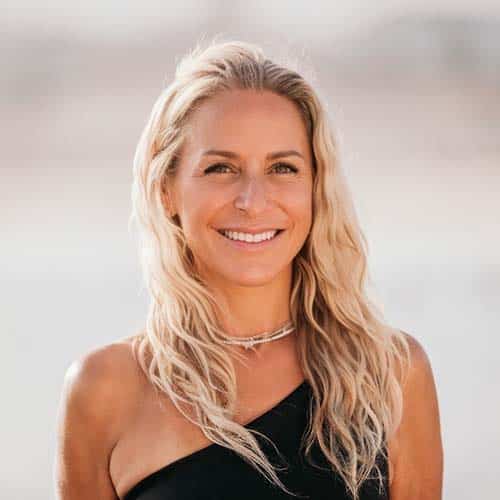
About Dr Vanessa Pirotta
Anita KolniDr Vanessa PirottaCGCarolyn Grant
Dr Vanessa Pirotta is a world-renowned wildlife scientist and science communicator. Her research has taken her across the globe, focusing on the use of innovative technology to study marine life. Vanessa is a national winner of the FameLab science communication competition (placing second in the world) and has been recognised as one of the AFR’s Top 100 Women of Influence. Whether she is speaking at the United Nations or a TEDx event, Vanessa is dedicated to making STEAM accessible and exciting for everyone.
Expertise: Marine Biology, Whale Conservation, Drone Technology, and Science Communication.
The Ocean Lovers Festival is a multi-day celebration held at Sydney’s iconic Bondi Beach. It showcases the latest in marine science and state-of-the-art technology through a lens of art, film, and music. A key highlight is the Ocean Lab, curated by Fizzics Education and supported by Inspiring Australia, where visitors can engage in hands-on workshops and live science talks.
Festival Highlights:
Innovation Showcase: Discovering “cool ideas” and technology designed to clean our oceans and monitor marine health.
Science Communication: Live talks that translate complex marine research into inspiring stories for the general public.
STEAM Integration: Seeing how Art and Science (STEAM) collaborate to create powerful environmental messages.
Community Action: Engaging in workshops that provide practical steps for individuals to reduce their marine impact.
Drones as Research Tools:
Vanessa explains how custom-built drones are used to collect “whale snot”—biological samples from a whale’s blowhole. This non-invasive method allows scientists to study whale health, genetics, and hormones without disturbing the animals.
The Importance of STEAM:
We discuss why the “A” in STEAM is vital. Art and music at the festival help emotionalise scientific data, making people care about the ocean in a way that raw statistics sometimes cannot.
Marine Conservation Innovation:
Vanessa highlights how technology like satellite tracking and underwater acoustics help us understand migration patterns and the impact of human noise on marine communication.
Education Tip: The “Ocean Health” Citizen Scientist.
Follow Vanessa’s lead by turning your students into marine researchers! You don’t need a drone to start; use local beach or waterway clean-ups to categorise the “data” found (plastics vs. organic waste). As Vanessa demonstrates, Scientific Inquiry starts with observation. Use the data collected to create a piece of “Ocean Art”—demonstrating the STEAM connection by using artistic expression to highlight an environmental problem.
[00:00:16]Ben Newsome: Yes, welcome again to another Fizzics Ed Podcast. Glad to have you yet again for another chat around science and STEM, the environment, and all that sort of thing. This week we’re diving deep, and all puns intended, because we are talking about the Ocean Lovers Festival, which is this awesomely cool event that first happened in 2019 and, by the way, attracted 15,000 people no less to check out everything about the oceans and sustainability and things.
[00:00:45]Ben Newsome: This year it’s only getting bigger and better. This time we get to talk with Anita Kolni and Carolyn Grant, who are the founders of the Ocean Lovers Festival, as well as Dr Vanessa Pirotta, who is an amazingly cool researcher who’s done a lot of work with drones with whales to, of all things, collect their snot, which is the weirdest, coolest thing, but it’s got to do about understanding how the population is thriving and surviving out in the wild.
[00:01:10]Ben Newsome: There is so much happening at the Ocean Lovers Festival. We’ve got speakers flying in from all over the place, not just across Australia but from all over the world to talk about sustainability and how it impacts our world. The public itself, there’s lots of activities, workshops, there’s a beach clean-up, there’s heaps of things going on, and it will totally be worth your time.
[00:01:30]Ben Newsome: Anita and Carolyn get to chat really about what the Ocean Lovers Festival is all about and all the things that you can be involved with and your students. Dr Vanessa Pirotta gets to describe a bit about the work she’s been doing with marine mammal research, and she’s got a lot of thoughts around how to get kids involved in science as well. So, lots to chat about. Enough about me talking about it, you want to hear from the people who are actually going to be doing this. So let’s dive right in.
[00:01:58]Announcer: This is the Fizzics Ed Podcast. We’re all about science, ed tech and more. To see 100 fun free experiments you can do with your class, go to fizzicseducation.com.au. That’s physics spelled F I Z Z I C S and click 100 free experiments.
[00:02:16]Anita Kolni: We’re very excited, actually. So it’s the Ocean Lovers Festival. It’s our second year, and it’s a festival celebrating ideas, art, music, and actions around oceans.
[00:02:30]Ben Newsome: Which is, I feel like you’re downplaying it. It’s a huge thing.
[00:02:33]Anita Kolni: It is a huge thing. I did make it sound a bit small.
[00:02:37]Anita Kolni: It does. It’s actually going from the 17th to the 22nd of March. We’ve got films, talks, eco stalls, an ocean beach clean-up, a paddle-out for protection, science workshops… you can actually come along and we’re calling it “Science in your Swimmers” and thanks to Vanessa for helping us actually do a photo shoot around that idea. You can walk off the beach in your swimmers and hear and speak to some amazing scientists and people who work with the oceans
[00:02:40]Anita Kolni: …and who are inventing great ideas to help our oceans because we know they’re under a bit of stress at the moment. And you can actually go to the Icebergs pool and jump in and swim with some of our science projects. So we’re installing a crayweed forest in the pool, and you can find out from the scientists at the Sydney Institute of Marine Science about why that’s a really important project, restoring the crayweed to our Sydney coastline.
[00:02:40]Anita Kolni: And also a Living Seawall tile, which Volvo have sponsored for us. And that’s a project that’s regenerating all the concrete seawalls around Sydney Harbour with these fantastically designed tiles that replicate the ancient mangrove swamps and help our sealife regenerate and clean up our waterways. So these are really hopeful projects that people can come and get involved in and actually swim through and chat to a scientist. What a unique opportunity. So that’s what the Ocean Lovers Festival is about.
[00:03:26]Ben Newsome: That’s it. And I’ve got to say, like considering that you’re in your second year, I mean, seriously, it was a large thing in your first year. You had 15,000 people on one of Australia’s most iconic beaches and, wow, it’s got a bit of a roll on. And you really do, I mean, even just looking across what’s coming across on the timetable, I mean there are heaps of projects and workshops and panels and speakers and things to do and everything. It’s fantastic. I’ve got to ask, where did this thought come about that, you know, we need to do this festival, we need to do this thing?
[00:04:30]Anita Kolni: The thought came about a couple of years ago. We’d been working on a bit of a bigger project and we thought, how can we actually bring this to a mainstream audience? So I came and met with Caz through an introduction I got from the Woollahra Sailing Club and it kind of grew from there.
[00:04:48]Ben Newsome: It’s funny how things like that just happen that way because, you know, I’ve seen some amazingly cool projects that literally just turn up out of the blue because a conversation started happening and now it’s huge and you’ve got researchers from all over the place. Vanessa, you’re kind of one of them. Vanessa, tell us what you get up to.
[00:05:06]Dr Vanessa Pirotta: Well, our research is basically focused on wildlife conservation in the ocean. So anything big that you can see swimming, like a whale, our research specifically looks at protecting them. But we do it in ways in which you might not think is possible. So for example, you were talking about before, just having a conversation and coming together with ideas. My research has definitely been about that where I’ve come together with the science world, but also with technology specialists, in this case drone experts, together to provide emerging technologies for wildlife conservation, in this case whale conservation.
[00:05:46]Dr Vanessa Pirotta: And so what we’ve essentially done and continue to do is use these drones that are waterproof and are deliberately flown through whale snot, which is that visible plume of spray that you see as a whale comes up and takes a breath and goes back down and swims again. And all this research has actually been done off Bondi, which is fantastic. So to actually link real-world research and leading in the world with this festival is really powerful and quite impactful.
[00:06:09]Ben Newsome: It’s really cool because one of the things that students have to do is work out how do I solve a problem using a certain amount of stuff. And in this case, trying to get out to whales who clearly aren’t on land, which means trying to get out to them and actually sample, in this case, whale snot is a little bit difficult. So I mean there are some people who may not be aware completely how you’re doing that with drones. So it’s alright if you could just sort of go down that rabbit hole and let us know exactly what it looks like and how that sort of works?
[00:06:38]Dr Vanessa Pirotta: Yeah, absolutely. So the thing is I like to explain it as being a vet on the sea. So if you have a dog or a goldfish or something that’s sick, you can literally pick up that animal and take it to the vet. But with a whale, in order to do that, you can’t actually physically do that because a whale can be up to 18 metres in length, at least for the humpback whale, and over 45,000 kilograms. So that’s quite crazy. So what we do is we hop on a boat and then on our boat we have our specialist team.
[00:07:11]Dr Vanessa Pirotta: We’ve got the drone pilot, the captain, myself, and other people who are there ready to collect samples. And what we do is we put a Petri dish on a drone. So this is a little circle device with a lid, and we stick this on the top of our drone, which can open and close when we want it to do so. Then once we see a whale out in the distance, the drone is flown from the back of the boat over to the whale and it just waits for the whale to come up and take a breath and we can see what the whales are doing by using the drone’s camera.
[00:07:31]Dr Vanessa Pirotta: …which is cool because we can actually see into the water on a really nice sunny day. And then when a whale takes a breath, the drone is in position, the Petri dish opens, the drone is flown through the densest part of the whale snot and then the sample lid is shut and that’s flown back to us in the boat where we can then collect that sample and then later in a laboratory look at the types of bacteria and viruses living in whale lungs. So it’s kind of like a snapshot of whale health and the ocean health in only a couple of moments.
[00:08:02]Ben Newsome: Which is so very, very cool. And well done by the way coming up with this work. I mean, nothing like a world first just off Bondi. And the thing is the beauty about research is that people can then emulate it and then they can make differences for all sorts of whale species, dolphins and all the rest, which is unreal. And just even thinking about this, Anita and Caz, we’ve got a… I mean Vanessa is clearly a whale researcher but there’s a couple of people involved with whales in amongst all the other researchers which people can find out about. How did you meet Olaf and Ari?
[00:08:32]Anita Kolni: Yeah, that’s pretty exciting. In fact, kind of wanted to comment we launched our programme the other day and we had one of the local Indigenous yoga teachers actually come and talk to us about the fabulous whale songlines that exist. And people may or may not be aware but there’s fabulous carvings all around Bondi of whales in the rocks. So it’s been a precious home to whale lovers for centuries, and we’re pretty excited to bring you some excellent new whale lovers to the stage during the festival.
[00:09:05]Anita Kolni: So Ari’s actually flying straight from Antarctica to meet us and come and join the festival and talk to all our festival-goers. He is with the California Ocean Alliance and probably one of the top researchers in Antarctica for whales, and we know how much people love our whales. Ari came to us through a connection through a photographic exhibition that we’re doing with Matt Draper, who’s bringing us his extraordinary imagery that he creates from freediving and photographing whales all over the world. He’s going to have an exhibition going into a gallery in Paddington for us and he introduced us to Ari, who’s going to come and speak on the science that matches that artwork all about whales. So that’s one really exciting component. And then Anita’s been in touch with Olaf.
[00:09:58]Anita Kolni: Yes, and Olaf we got in touch via the Australian National Maritime Museum, who said you’ve got to connect with Olaf, he’s an awesome presenter and speaker. And we got in touch with him too, and funnily enough, Olaf and Ari actually know each other. So it’s a small world in this whale world. Very small.
[00:10:19]Anita Kolni: …and it’s really exciting. We’re just so excited to be able to bring such experts from all around the world to be able to talk and tell people about these amazing creatures.
[00:10:26]Ben Newsome: …the thing, the Ocean Lab tent and what’s happening on the Sunshine Stage, there is a lot of cool science. Not just sit back passively, you can actually get involved. You mentioned the Australian National Maritime Museum, they’re running workshops throughout that weekend.
[00:10:43]Anita Kolni: That’s right. And they’re bringing down some underwater drones. So you might see your own whale. Not quite whale season sadly, but you’ll be able to actually drive an underwater drone and see what’s happening in the waters off Bondi. And those dolphins are there all the time, aren’t they, Vanessa? You study those as well.
[00:11:03]Dr Vanessa Pirotta: Actually, dolphins always make an appearance when you’re least expecting it.
[00:11:07]Ben Newsome: I’ve got to ask Vanessa, you’d obviously have a connection with some of these. I believe something that Olaf Meynecke, the researcher from Griffith, was talking about was how you identify which whale is which just by their flukes and things. Do you see in your research the same ones come down our coastline or do you constantly see new ones?
[00:11:29]Dr Vanessa Pirotta: Well, the thing is that this population on the east coast consists of over 30,000 individuals.
[00:11:36]Dr Vanessa Pirotta: It’s a big pool, but having said that, there are some whales that have unique patterns and scarring that I have actually seen the same individual. For example, one year there’s this famous female known as Blade Runner. The reason she got her name is not through a very good way. She was unfortunately hit by a vessel and she has propeller marks down her back which have since healed, thankfully.
[00:11:59]Dr Vanessa Pirotta: I saw her when I was doing my Master’s research in 2013 and then that very same year I saw her swimming off Sydney by herself. At that time I didn’t know it was a “she”, because it’s 50/50 for the whales. When she returned down south, my friend saw her with a baby! So she must have been travelling past Sydney pregnant and then that year had her calf. So there you go, we do sometimes see the same whales.
[00:12:23]Ben Newsome: That’s awesome. And you’re probably, if you’re sitting back listening in the car or walking the dog or wherever you are, it’s not just about whales. There’s all sorts of different stuff going on. From a large animal point of view, Tim Wolfenden and Emma Midgley from NSW Department of Primary Industries are dropping by to do stuff on sharks, which is awesome.
[00:12:43]Anita Kolni: Yeah, that’s really exciting. We’ve had lots of interest in that area as well. And we’ve also got an amazing exhibition, actually, called Out of Sight Out of Mind where people can go and look into these amazing images with their smartphones. They can dive into them through… we’re doing that with our charity partner Underwater Earth, and they can dive into the images with their smartphones and smart devices and see 360 degrees around them under some of the most beautiful locations in the world.
[00:13:09]Ben Newsome: So, the reason why I really want to have a chat with you guys about what’s coming up with the Ocean Lovers Festival is sometimes you see these festivals and they’re a series of speakers and they’re fantastic but you don’t get a chance to actually interact and do things, especially from a public point of view. And what I love about this is that there really is something for everyone. Everything from the art point of view and
[00:13:09]Ben Newsome: …actually, I remember there’s actually quite a bit of conservation going on down the beach itself. What’s going on with some of these walks and things?
[00:13:36]Anita Kolni: With… sorry, with which ones?
[00:13:38]Ben Newsome: Yeah, the walks that go out to the headland and what not to sort of… I think it was working with Tomra if I remember correctly.
[00:13:46]Anita
[00:13:46]Anita Kolni: No, we’ve got… that’s the beach clean-up. We’ve got the beach clean-up with Tomra and we got a community environment programme grant for that which we’re very excited about through Dave Sharma. So that’s happening on Sunday at 10:00 am at the beach for an hour. Tomra will be there with an education station to teach people about better recycling, better ways of recycling their trash.
[00:14:10]Anita Kolni: And that will be followed by a paddle-out for protection on our Sydney Coast Hope Spot, which Bondi is part of, from 11:30 am on the Sunday. And the walks you’re talking about is actually on the Saturday. So that’s with Kadoo Tours and it’s an Indigenous coastal care walk and talk where you can learn some of the amazing ways that the Indigenous culture have taken care of our oceans over the years, whether it was leaving the oysters to regenerate one year while they farmed mussels and the reverse the following year. So they’ve got some amazing stories to tell and some really good bush tucker tasting along the way as well.
[00:14:47]Ben Newsome: Well here’s the thing that I like about this is one of the panels that grabbed my eye was really looking for tech and how people are getting involved with doing new things with the ocean in
[00:14:47]Ben Newsome: …a lot of ways and I mean I know you’ve got the Seabin Project involved, which is very cool. I mean I know about it, but doesn’t mean that people might have come across it. Just wondering if you want to describe how the Seabin Project, at least what it does, and how people can get involved a little bit?
Rowing on the Red Cedar, 12 students from the MSU Crew Club and Spartan Navy set a world record Oct. 17 when they pulled a 44,000-pound MSU CATA bus 100 meters.
“We actually did better than I expected,” said club president Dan Holahan. “To actually move it was pretty cool.”
Starting in front of the MSU Auditorium, the crew divided into two teams of six, taking turns to break the current record of 1:17 for a six-person pull. The Spartan Navy’s top time was 1:04.
Holahan attributes the team’s success to their intensive training. “The 100 meters we moved that bus is about a tenth of the distance we
[00:15:15]Anita Kolni: Yeah, the Seabin was just some two really cool surfer guys that had a great idea to how to get some rubbish out of our ocean, so they created this little bin that sits in marinas. It’s not that little, it actually collects a lot of rubbish.
[00:15:33]Carolyn Grant: They’re kind of like pots
[00:15:35]Carolyn Grant: …exactly, that collects rubbish without hurting any of the fish or any of the sealife around. So it floats in the water, it literally is a sea bin. And this project’s now in like 150 countries. It’s become phenomenally popular and successful in just over 18 months. Amazing. So Pete Ceglinski, our surfer dude, is actually bringing his Seabin down. We’ll have it in the actually just outside where your Science Lab‘s going to be then, and we’re in the Ocean Lab. He’ll actually have a big swimming pool in our Eco Expo display to show us physically how the Seabin works so people can come and have a chat with their team and have a look at the actual what it how it works.
[00:16:16]Ben Newsome: So much going on, like everything from I think Plastic Oceans Australia is doing a chat on microplastics. I know the Deep Green Biotech Hub from UTS is actually going into the science of seaweed, which sometimes people go, “Oh, is it just seaweed?” But here’s the point, there is more to it and actually I remember actually reading something about seagrass itself and that it actually is far better when it comes to carbon dioxide.
[00:16:42]Anita Kolni: Carbon sink, correct. That’s right. There’s so much stuff going on. I mean if anyone is actually interested in surfing, I mean Tom Wilson‘s popping down from Wavechanger about the surfboards they’ve been building and all the stuff that goes on with that.
[00:16:57]Carolyn Grant: That’s right. And we’ve also got Notox Surfboards and Warhandplanes coming down too. So surfboards made out of eco and environmentally friendly materials and the warhandplanes for body surfing as well. And then we’ve got swimwear made out of recycled fishing nets and shampoo bars and all cool products for people to come and have a look. We’re actually fully at capacity now with our stalls this year, which is really exciting.
[00:17:26]Ben Newsome: No, it’s unreal. And so I’m just kind of thinking, Vanessa, like you can hear like there is so much stuff going on and you were out there at the launch here a couple weeks ago for this massive Ocean Lovers Festival and it’s just going to get bigger each year. I can totally see that. Vanessa just as a researcher, I mean I undoubtedly would know there’d be students in high school, potentially in primary school, who would love to emulate what you do basically and how you got there and what not. I mean if you had a bunch of kids in front of you and they were genuinely interested in doing research in some form of biology or frankly any type of science, doesn’t matter, what would be some sort of advice that you’d give to students to at least start those first steps?
[00:18:04]Dr Vanessa Pirotta: That is a really good question and the first thing I’d say is to follow your passion. And I know it kind of sounds a bit corny, but if you’re identifying what you’re really interested in, whatever subject, maybe it is science, technology, engineering, arts, maths, biology, whatever it is, working out that, “Hey, I’m actually very interested in this.” If you’re a student and you don’t know how to learn more or you want to learn more you don’t know which courses to study, maybe you’re even leaving high school or you might even be in university and you’re still going, “Oh, I’m not too sure,” the best thing you can do is surround yourself with people or at least ask questions to people like myself and other scientists there like Olaf, Ari.
[00:18:51]Dr Vanessa Pirotta: And there’s an opportunity for that transmission of knowledge straight away and it’s a firsthand information port of call so to speak. So for example, science communication, we often hear these two buzzwords and they really are important because there are so many people like ourselves doing research that are now becoming so much more visible out there because of social media and people are able to access us and ask these kind of questions and to be visible and to see young kids see people in scientific positions to go, “Oh my God, I want to one day work in Antarctica, maybe not on whales but maybe on krill or something interesting.” So having that knowledge and that passion and the ability to ask more questions to learn where should I go, what’s my next step because I really want to make this dream happen. And it is definitely possible. I mean I’m sure a lot of the people and scientists in the positions that they are now are not just there through pure luck but rather worked incredibly hard and sort of asked those questions and said, “Yes, I’m going to go and try my best, I’m going to volunteer here, I’m going to do this,” and hopefully something amazing happens for them in the future and that’s definitely how I got to being where I am.
[00:19:50]Ben Newsome: No, I love that. And actually one of the things is that sometimes when we’re in front of students and they ask what sort of science can you do and they’ll often think of the classic lab coat etc etc, but you can do all sorts of creative ideas. You can look at certain compounds and suddenly they become amazingly useful for the globe. I’m actually thinking about one of the chats that’s coming up in the High Tide room, Professor Kirsten Benkendorff. She’s running a chat around called “A snail a day keeps the doctor away”, which is a little odd, but honestly medicine from molluscs which you’d never really think of as a thing, but we use chemical compounds in so many different ways in this world and where they come from can be sometimes surprising.
[00:20:31]Ben Newsome: But someone had to discover it and someone had to check that it was safe and all this sort of thing. There’s so much, I mean even just think of the theme itself in the oceans, there’s so much out there that it frankly covers two-thirds of our world if not further the globe with the oceans. There’s so much there, we have barely scratched the surface. And that’s why I love about what research does. It’s just getting out there and just finding out what can we do, what is out there, and this festival 100% puts it in front and centre right in the heart of the city.
[00:21:01]Ben Newsome: Anita and Caz, I mean this thing couldn’t come together without a bucketload of supporters. I was wondering if you could give a bit of a shout out to who’s been helped you get this thing together. Like I mean there’s a heap of places that have been involved.
[00:21:15]Anita Kolni: Yeah, for sure. So very early on for our first festival, interestingly, we got Volvo, the car company, on board. And what might surprise people is they have been the first car manufacturer to phase out the combustion engine starting this year. They are very committed to electrification of their vehicles and also actually making components of their vehicles out of recycled ocean plastics. So they’re actually a terrific partner, they’ve taken the opportunity, they’ve invested in ocean recovery projects globally and very distinctly here in Sydney with the seawall tile project. So they’re a great partner.
[00:21:57]Anita Kolni:Tomra were a natural fit and have been really enthusiastic supporters. They are the return and earn recycling people. They’re one of the globe’s actually biggest recycling companies and they’re going to bring a lot of insight and education to us because recycling’s just such a hot button for the whole population now for a variety of reasons and there’s so much better that we can do. Waverley Council are a big partner and passionate supporters, clearly they’re custodians of some amazing parts of Sydney’s coast. So a natural fit for us to be homed in Bondi for our first couple of festivals but we do hope to take it around the country.
[00:22:35]Anita Kolni: And other lovely supporters like Ocean Protect. These guys came up with the stormwater drain systems that keep a lot of your plastics and a lot of the litter, most of it actually, that heads out to the ocean. So they’re on a campaign to really get every council around the country stopping your stormwater rubbish going out into our oceans. So they’re going to come and speak on some stages and be around actually podcasting all weekend as well. So those guys are actually just really fun to catch up with.
[00:23:05]Anita Kolni: And then we’ve got Inspiring Australia which is enabling us to do this incredible Ocean Hub with Fizzics Education, which we’re very excited about as well. And we’ve got let me see… oh, and we also have the Vine Foundation behind our Out of Sight Out of Mind exhibition. But so many other local businesses in Bondi that have come behind us. The whole precinct will be quite activated around oceans and we hope that mood and people’s understanding of how important our oceans are, as much as we love them we’re also hurting them. So we’re going to give some hope and some direction and then we hope we can take that to lots of other places.
[00:23:45]Ben Newsome: You’ve done an amazing job. And even just think like the competitions like the Litterati… I can never say this thing. Litterati!
[00:23:53]Anita Kolni:Litterati‘s going really well and we have actually we’ve just had another seven entries from Bondi Beach Public School and we have about 330 school children coming down on Friday to check out all the activations and activities at the festival.
[00:24:09]Ben Newsome: Yeah, so just think like massive artworks made out of trash.
[00:24:13]Anita Kolni: That’s right. That’s exactly it. They’ll all be on display at the Pavilion so come down and have a look.
[00:24:19]Ben Newsome: Absolutely. So if you’ve never been to the Bondi Pavilion, it’s right in the heart of the beach, it’s right in the centre. You can’t miss it, it’s the big building that’s there.
[00:24:27]Anita Kolni: And it’s a community centre. It’s getting redeveloped in the next year so this is one of your last opportunities to come and see this lovely historic building all activated all weekend. And there’s some live music and some food. There’s lots of good reasons to come down apart from all our excellent science.
[00:24:41]Ben Newsome: So if people listening in… obviously in all shapes and walks, sizes of life, what they get up to. But I mean if they’ve got the opportunity to be in Sydney, clearly we want them to come because it’s a free event, go check it out. So where would they find out more information?
[00:24:57]Anita Kolni: So they can go on our website oceanloversfestival.com and we’ve also got lots of information on all our socials. So we’re on Instagram and Facebook, all Ocean Lovers Festival.
[00:25:07]Ben Newsome: Absolutely. And if people want to hear Vanessa, if they want to find out more about what you’ve been getting up to, where would they find out that?
[00:25:14]Dr Vanessa Pirotta: Well, thankfully I’m an ocean ambassador now which is very exciting for the Ocean Lovers Festival, which I’m very proud to be. So you can find more information about my work on the actual website as well, but also you can head to my own website which is vanessapirotta.com. And so there’ll be always be linking to the festival and doing a lot of promotional work for the festival as well but also generating these ideas that come out of it and be the person to speak to to be someone that you can go, “Hey, I saw this at the festival, what does this mean?” or “Can you give me some more information about this, this is so cool!” So totally helping out in all the ways I can possibly do so. Happy to help here.
[00:25:51]Ben Newsome: Absolutely. You’re a legend, Vanessa. Very, very cool. And again, oceanloversfestival.com. Check it out because this website’s moving fast as you get more and more stuff, it keeps on growing and growing and growing, which means there’s going to be a lot more information that you can find, even after the festival. So if you’re listening to this in August 2021 or whatever, jump on their website because there is a lot of content that you can find and you can apply some of these ideas in your classrooms or wherever you are and I definitely know you’ll get a lot out of it. Hey, all three of you, thank you very much for joining me on this podcast. I’m really looking forward to this and we’ll be down at the Ocean Lab on Friday, Saturday, Sunday of that weekend. Again, that weekend is the… up to the 22nd?
[00:26:35]Anita Kolni: The weekend is the 20th to the 22nd of March.
[00:26:38]Ben Newsome: Exactly. Yeah, it’s pretty much. And so it’s going to be absolute all pistons firing on that weekend on the 21st and 22nd because that’s the big the big deal when there’s so much going on. Even if you just pop down for an hour or so, definitely do so. And if you can’t make Sydney, there are some VR experiences that you can get involved in. So definitely jump on oceanloversfestival.com and you can find out that information. Hey, thanks very much. Have a fantastic day.
[00:27:24]Ben Newsome: Well there we go, we just heard from Anita Kolni, Carolyn Grant and Dr Vanessa Pirotta. Are you interested? Do you want to check out the Ocean Lovers Festival? I definitely think it’s worth it. And by the way, if you can’t make it this year, see if you can make time next year because this is going to be going on and on and on and there is going to be a bunch of information that you can check out on the website, which will support your teaching and learning and frankly just finding out stuff for sure. So definitely again, that website: Ocean Lovers Festival, all one word,.com. oceanloversfestival.com. And if you want to check out what Vanessa’s been getting up to, just look up vanessapirotta.com. So Vanessa, P-I-R-O-double-T-A.com and you can just check out all of her research, her TEDx talks and all that sort of thing.
[00:28:09]Ben Newsome: So look, enough from this particular podcast episode. We have got more and more things coming up throughout the series this year, but again, do check out the Ocean Lovers Festival. We’re really proud to be involved in it and I’m really looking forward to it. It’s not that far away and it’s going to be a lot of fun. Bye for now.
What is the primary goal of the Ocean Lovers Festival? The festival aims to celebrate the ocean and inspire a “sea change” in how we interact with our marine environment. By bringing together science, art, film, and music at Bondi Beach, the event provides a platform for innovators and the community to showcase solutions for ocean conservation and foster a deeper connection with the sea.
How does Dr Vanessa Pirotta use drones to study whales? Dr Pirotta uses custom-built drones to fly through the “blow” or “snot” emitted from a whale’s blowhole. This non-invasive technique allows researchers to collect biological samples that contain DNA, hormones, and bacteria, providing a “health check” for the whale without the need for invasive physical sampling.
Why is the “A” in STEAM (Art) so important for science communication? As discussed in the episode, while science provides the hard data and facts about ocean health, art and music help to “emotionalise” that information. This connection allows the general public to feel a personal bond with the marine environment, making them more likely to take action and support conservation efforts.
What can visitors expect to see at the Ocean Lab? Curated by Fizzics Education, the
Recognised by
22 years, award-winning work, 1 purpose
Recognition from business, education and industry bodies across Australia.
Australian Small Business Champion
Multiple years
CILC Pinnacle Award and Hall of Fame inductee
Center for Interactive Learning and Collaboration
Western Sydney Awards for Business Excellence
Winner
Top 100 Coolest Company
Listed
Local Business Awards
Winner
We value your privacy
We use cookies to improve your experience. Essential cookies are always active. You can choose which optional cookies to allow.We use cookies. Optional ones stay off unless you allow them.Privacy policy