


Science Show Demonstrations
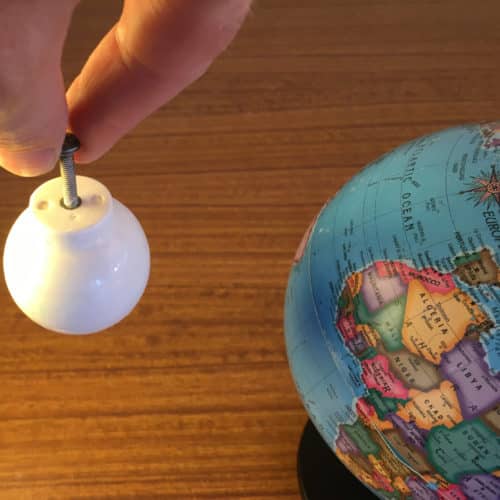
- Distances in space – Measure the distances between the Earth, Sun & Moon. What about sizes?
- Tricky Trajectories – Can you launch a rocket to get it to the target?
- Giant Gyro – How do spacecraft turn in space?
- Breathe in! – What would happen to an astronaut if they didn’t wear a spacesuit?
- Gravity Pull – Model the gravity on Earth vs. Moon. Which planet’s gravity is greater?
- Troublesome tools – How does working in space affect tool design and use?
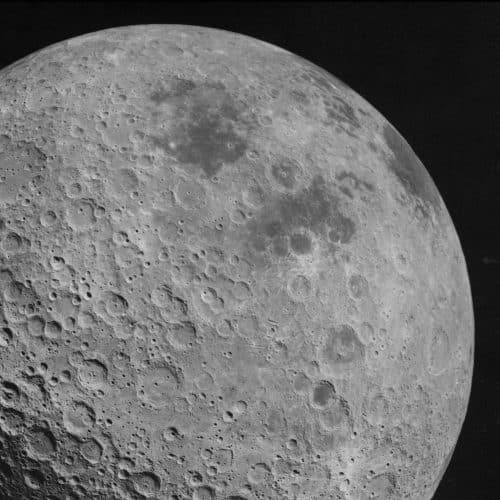
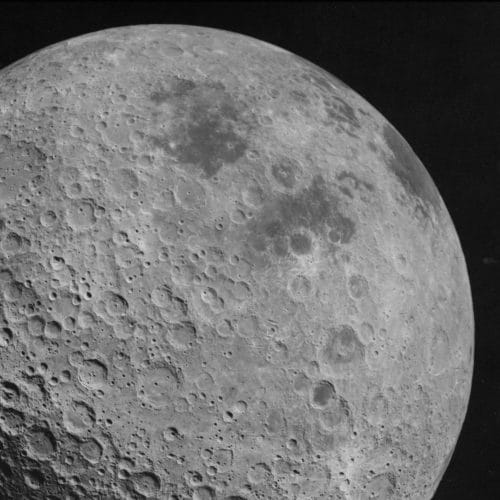
- Lunar phases – Why does the Moon look different throughout the month?
- Creating craters – Model crater formation… what do craters tell us about the Moon’s formation?
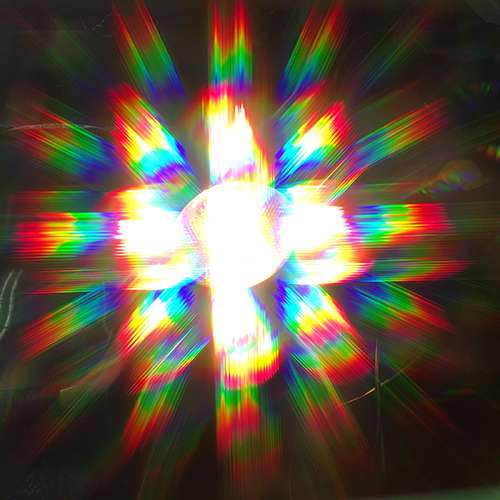
- Rainbows of light – How spectrometers were used on lunar experiments
- Rocket launcher – Launch a rocket using a chemical propellant
- Remote rocks – Determine the types of rocks you have using a sensor
- Rocket modelling – Compare scale models of the Saturn V to other rockets
- Heating up & Cooling down – How do materials respond to rapid changes in heat?
- Spiraling orbits – What happens to space debris as it approaches celestial objects
- Magnetometer – Investigate magnetism, just like the Apollo missions & more
- Roaring Jug – A model of how rocket engines work
- The Great Conspiracy – We landed on the Moon! Lets go through the evidence…
- Hidden Figures – The mathematicians behind Apollo missions
Science workshop content
What Students Experience: The Lunar Discovery Show
Designed for groups of up to 240 students, this stage show elevates space science to a senior secondary level. We combine cinematic narrative with sophisticated demonstrations to explore the orbital mechanics, rocketry, and materials science defining humanity’s permanent return to the Moon.
1. Lunar Observational Science
We begin by deconstructing exactly what we see from Earth. Students investigate tidal locking and the mechanics of lunar eclipses, alongside a deep dive into lunar phases to understand the geometry of the Earth-Moon-Sun system.
2. Propulsion & Rocketry
Using a whoosh bottle combustion demonstration, we explore the chemistry of high-energy propellants. We compare the heavy-lift capacity of the Artemis SLS to the Space Shuttle, analysing the engineering required to reach escape velocity.
3. Surface Missions & Return
We contrast Apollo-era experiments with the advanced scientific goals of the Artemis program. The show concludes with the physics of the return journey, discussing the re-entry dynamics and thermal protection systems needed for a safe descent.
Our Commitment to Quality Science Education
A Trusted School Partner for 20 Years
Fizzics Education delivers reliable, syllabus-aligned visits that engage students and meet the rigorous academic standards of the secondary classroom.
Detailed links to outcomes across Earth & Space and Physics.
Proven experience managing and engaging large secondary cohorts in auditorium settings.
STEM professionals trained to facilitate advanced conceptual inquiry.

Australian Curriculum Mapping
Australian National Curriculum Mapping for all our science incursions
Australian ACARA Content Outcomes:
Science F-10 Version 9.0
Year 7
- investigate and represent balanced and unbalanced forces, including gravitational force, acting on objects, and relate changes in an object’s motion to its mass and the magnitude and direction of forces acting on it AC9S7U04
- model cyclic changes in the relative positions of the Earth, sun and moon and explain how these cycles cause eclipses and influence predictable phenomena on Earth, including seasons and tides AC9S7U03
Year 8
- compare physical and chemical changes and identify indicators of energy change in chemical reactions AC9S8U07
Year 7 & 8
- explain how new evidence or different perspectives can lead to changes in scientific knowledge AC9S7H01 AC9S8H01
- examine how proposed scientific responses to contemporary issues may impact on society and explore ethical, environmental, social and economic considerations AC9S7H03 AC9S8H03
- develop investigable questions, reasoned predictions and hypotheses to explore scientific models, identify patterns and test relationships AC9S7I01 AC9S8I01
- analyse data and information to describe patterns, trends and relationships and identify anomalies AC9S7I05 AC9S8I05
- construct evidence-based arguments to support conclusions or evaluate claims and consider any ethical issues and cultural protocols associated with using or citing secondary data or information AC9S7I07 AC9S8I07
Year 9 & 10
- explain how scientific knowledge is validated and refined, including the role of publication and peer review AC9S9H01 AC9S10H01
- Investigate how advances in technologies enable advances in science, and how science has contributed to developments in technologies and engineering AC9S9H02 AC9S10H02
- develop investigable questions, reasoned predictions and hypotheses to test relationships and develop explanatory models AC9S9I01 AC9S10I01
- analyse and connect a variety of data and information to identify and explain patterns, trends, relationships and anomalies AC9S9I05 AC9S10I05
- construct arguments based on analysis of a variety of evidence to support conclusions or evaluate claims, and consider any ethical issues and cultural protocols associated with accessing, using or citing secondary data or information AC9S9I07 AC9S10I07
Australian National Curriculum Mapping for all our science workshops & shows

NSW K-10 Science Syllabus Mapping
NSW Science 7–10 Syllabus (2023)
Stage 4
A student:
- identifies questions and makes predictions to guide scientific investigations SC4-WS-02
– Identify questions and problems that can be investigated scientifically
– Make predictions based on scientific knowledge and observations - explains how observations are used by scientists to increase knowledge and understanding of the Universe SC4-OTU-01
– Explain that predictable and observable phenomena on the Earth are caused by the relative positions of the Sun, the Earth and the Moon
– Use physical models or virtual simulations to explain the cyclic patterns of lunar phases and eclipses of the Sun and Moon - describes the effects of forces in everyday contexts SC4-FOR-01
– Explain forces as either direct (contact) or indirect (non-contact)
– Conduct a practical investigation on the effects of a range of direct and indirect forces
– Investigate examples of forces and magnetism in familiar contexts
Stage 5
- asks questions or makes predictions using observations SCLS-WS-02
– Ask questions about familiar objects and events based on observations
– Make predictions based on observations - explains the factors that affect the rate of chemical reactions SC5-RXN-02
– Investigate and explain how concentration, surface area, temperature and catalysts affect the rate of reactions
NSW K – 10 Science Syllabus mapping for all our NSW incursions

VIC Science Syllabus Content
VIC Curriculum F–10 Version 2.0
For explanatory points & implementation advice for each dot point, please visit the VIC Curriculum F-10 site.
Levels 7 and 8
- physical changes can be distinguished from chemical changes; a chemical change can be identified by a colour change, a temperature change, the production of a gas (including laboratory preparation and testing of oxygen, carbon dioxide and hydrogen gases) or the formation of a precipitate. VC2S8U08
- balanced and unbalanced forces acting on objects, including gravitational force, may be investigated and represented using force diagrams; changes in an object’s motion can be related to its mass and the magnitude and direction of the forces acting on it. VC2S8U14
- cyclic changes in the relative positions of Earth, the Sun and the Moon can be modelled to show how these cycles cause eclipses and influence predictable phenomena on Earth, including seasons and tides. VC2S8U12
- investigable questions, reasoned predictions and hypotheses can be developed in guiding investigations to identify patterns, test relationships and analyse and evaluate scientific models. VC2S8I01
- scientific methods, conclusions and claims can be analysed to identify assumptions, possible sources of error, conflicting evidence and unanswered questions. VC2S8I06
- evidence-based arguments can be constructed to support conclusions or evaluate claims, including consideration of ethical issues and protocols associated with using or citing secondary data or information. VC2S8I07
Levels 9 & 10
- space exploration seeks to expand knowledge of the origins and structure of the universe and to resolve the challenges of humans travelling and living away from Earth’s surface. VC2S10U12
- investigable questions, reasoned predictions and hypotheses can be used in guiding investigations to test and develop explanatory models and relationships. VC2S10I01
- the validity and reproducibility of investigation methods and the validity of conclusions and claims can be evaluated, including by identifying assumptions, conflicting evidence, biases that may influence observations and conclusions, sources of error and areas of uncertainty. VC2S10I06
- arguments based on a variety of evidence can be constructed to support conclusions or evaluate claims, including consideration of any ethical issues and cultural protocols associated with accessing, using or citing secondary data or information. VC2S10I07
Session Requirements
👥 Capacity & Timing
👨🎓 Attendance: Maximum of 240 students per class.
🏫 Target: Appropriate for Years 7 to 10.
🛠️ Set/Pack: 45 mins setup and 45 mins pack up.
📍 Space & Safety Needs
🏗️ Furniture: 2 tables required.
🔌 Power: Access to 2 electrical power sockets.
🪑 Seating: Chairs are not required.
⚠️ Fire Alarms: Ability to turn off fire alarms is required for certain demonstrations.
Tailored Learning & Safety
Materials used may be varied to suit conditions and the audience. Please chat with our presenter for any specific focus areas.






