


Science Show Activities
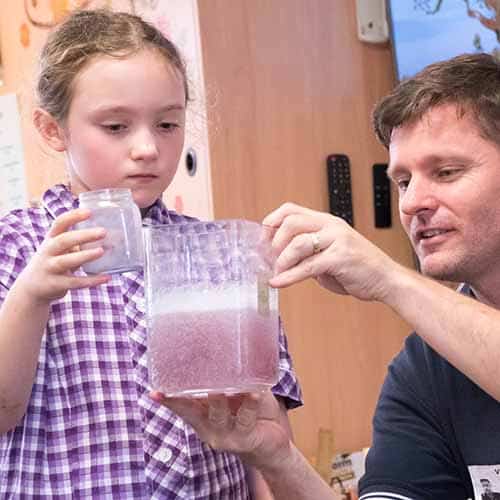
- DNA Extraction – Extract real DNA from fruit
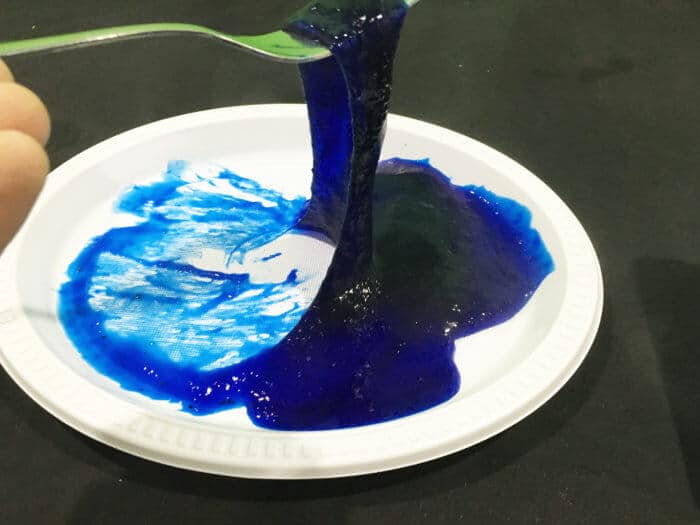
- Slimy, gooey stuff – Look at fibre in a different way & learn why you need it
- pH testing – Use cabbage juice indicator to test foods
- Sherbet making – Its a chemical reaction…in your mouth!
- How much sugar? – Not all drinks are the same
- Lemon Juice Painting – Investigation of Maillard reaction & Caramelisation
- Coloured flames demonstration – Trace elements affect our diret as well as fire!
- Flour Fireball – How muc energy is locked away in food?
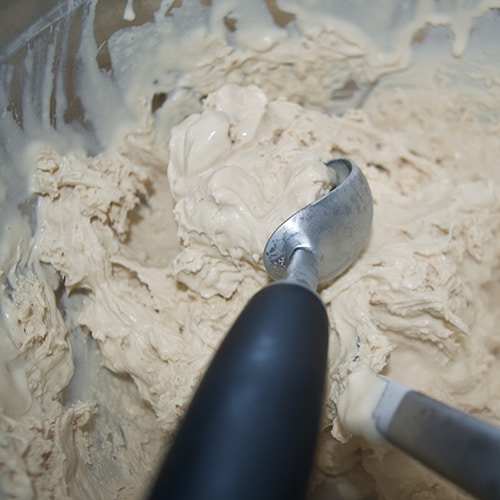
- OPTIONAL: Liquid Nitrogen Ice-cream Making – We make instant ice-cream! Either add 30 minutes to the workshop or we can include this in the 60 minute version by adjusting the program
Science workshop content
What Students Experience: The Food Lab
In this immersive chemistry workshop, students transform the classroom into a food testing laboratory. By applying scientific methods to everyday ingredients, we reveal the complex nutrients and chemical reactions that power our bodies.
1. Nutrient Fundamentals
We begin with an investigation into healthy eating and the role of nutrients. Students gain a chemical perspective on their dietary choices.
2. Culinary Chemistry
The science of flavour and texture comes to life through hands-on sherbet making and lemon juice painting.
3. Molecular Biology
We conclude with pH testing and fruit DNA extraction as we discuss advanced food sciences. To top it off, students explore thermodynamics and the amount of energy found in food through our signature (optional) liquid nitrogen ice cream demonstration.
Our Commitment to Quality Science Education
A Trusted School Partner for 20 Years
Fizzics Education delivers reliable, syllabus-aligned visits that engage students and meet the practical requirements of the Australian classroom.
✓
✓

Australian Curriculum Mapping
Australian National Curriculum Mapping for all our science incursions
Australian ACARA Content Outcomes:
Science F-10 Version 9.0
Foundation
- recognise that objects can be composed of different materials and describe the observable properties of those materials AC9SFU03
- explore the ways people make and use observations and questions to learn about the natural world AC9SFH01
- pose questions and make predictions based on experiences AC9SFI01
Year 2
- recognise that materials can be changed physically without changing their material composition including by breaking into smaller pieces AC9S2U03
Year 1 & 2
- describe how people use science in their daily lives, including using patterns to make scientific predictions AC9S1H01, AC9S2H01
- pose questions to explore observed simple patterns and relationships AC9S1I01, AC9S2I01
- compare observations with predictions and others’ observations AC9S1I05, AC9S2I05
Year 3
- identify sources of heat energy and examine how temperature changes when heat energy is transferred AC9S3U03
- investigate the observable properties of solids and liquids and how adding or removing heat energy leads to a change of state AC9S3U04
Year 4
- examine the properties of natural and made materials and consider how these properties influence their use AC9S4U04
Year 3 & 4
- examine how people use data to develop scientific explanations AC9S3H01, AC9S4H01
- consider how people use scientific explanations to meet a need or solve a problem AC9S3H02, AC9S4H02
- pose questions to explore patterns and draw conclusions AC9S3I05, AC9S4I05
Year 5
- explain observable properties of solids, liquids and gases by modelling the motion and arrangement of particles AC9S5U04
Year 6
- compare reversible changes, including dissolving and changes of state, and irreversible changes, including cooking AC9S6U04
Year 5 & 6
- investigate how scientific knowledge is used by individuals and communities to make decisions AC9S5H02, AC9S6H02
- pose investigable questions to identify patterns and test relationships AC9S5I01, AC9S6I01
Health and Physical Education
Foundation
- identify health symbols, messages and strategies in their community AC9HPFP06
Years 1 & 2
- investigate a range of health messages and practices in their community AC9HP2P06
Years 3 & 4
- interpret the nature and intention of health information and messages AC9HP4P09
- investigate and apply behaviours that contribute to their own health and safety AC9HP4P10
Years 5 & 6
- investigate different sources and types of health information and how these apply to choices AC9HP6P09
- analyse how behaviours influence the health and safety of individuals AC9HP6P10
Design & Technology
Years 1 & 2
- explore how food can be selected and prepared for healthy eating AC9TDE2K04
Years 3 & 4
- describe the ways food can be selected and prepared for healthy eating AC9TDE4K04
Years 5 & 6
- explain how the characteristics of foods influence selection and preparation for healthy eating AC9TDE6K04
Australian National Curriculum Mapping for all our science workshops & shows

NSW K-10 Science Syllabus Mapping
NSW K – 10 Science Syllabus mapping
NSW Science Syllabus Content
A student:
- STe-4MW-ST identifies that objects are made of materials that have observable properties
- ST1-5LW-T identifies how plants and animals are used for food and fibre products
- ST1-6MW-S identifies that materials can be changed or combined
- ST1-7MW-T describes how the properties of materials determine their use
- ST2-7MW-T investigates the suitability of natural and processed materials
- ST2-8PW-ST describes the characteristics and effects of common forms of energy, such as light and heat
- ST3-5LW-T explains how food and fibre are produced sustainably in managed environments
- ST3-7MW-T explains how the properties of materials determines their use
- ST3-8PW-ST explains how energy is transformed from one form to another
- PD3-7 proposes and implements actions and protective strategies that promote health and safety
NSW Science and Technology K–6 Syllabus (Implementation from 2027)
For explanatory points & implementation advice, please visit the NESA Curriculum site.
Stage 1
- ST1-SCI-01: Investigate how taste and smell provide information about the environment
- ST1-PQU-01: poses questions based on observations and information to investigate cause and effect
Stage 2
- ST2-SCI-01: Observe matter as solids, liquids, and gases; describe how heat energy affects particles during state changes
- ST2-PQU-01: poses questions to create fair tests that investigate the effects of energy
Stage 3
- ST3-SCI-01: Pose questions to determine whether substances dissolve in water by identifying variables and conducting fair tests
- ST3-PQU-01: poses questions to identify variables and conducts fair tests to gather data
>

VIC Science Syllabus Content
Science
Foundation to Level 2
- Objects can be made of different materials with observable properties. VC2S2U04
- Properties of objects and mixtures can differ from their component materials. VC2S2U05
Levels 3 & 4
- Solids, liquids and gases have observable properties; heat energy leads to a change of state. VC2S4U04
- Heat energy generation and temperature changes during transfer. VC2S4U09
Levels 5 & 6
- Modelling the motion and arrangement of particles in matter and mixtures. VC2S6U03
- Comparing reversible changes (dissolving) and irreversible changes (cooking). VC2S6U04
Health and Physical Education
Foundation to Level 2
- Identify health symbols, messages and strategies that support safety. VC2HPFP07
Levels 3 & 4
- Investigate health messages and strategies to promote wellbeing. VC2HP2P07
Levels 5 & 6
- Interpret the intention of health information and messages; influence on personal decisions. VC2HP4P09
Design and Technologies
- Levels F-2: Explore how food can be selected and prepared for healthy eating. VC2TDE2C03
- Levels 3-4: Describe the ways food can be selected and prepared for healthy eating. VC2TDE4C03
- Levels 5-6: Explain how the properties of foods influence selection for healthy eating. VC2TDE6C03
Session Requirements
👥 Capacity & Timing
👨🎓 Attendance: Max 32 students per class.
🏫 Target: Appropriate for Years K to 6.
⏰ Duration: 60 minutes.
🛠️ Set/Pack: 45 mins setup + 45 mins pack down.
📍 Space & Power
🏗️ Layout: Access to 6 to 7 tables is required for experiment stations.
🔌 Power: Access to 1 electrical power socket.
🪑 Seating: Chairs are not required for students.
We will need fire alarms isolated if we are to run those demonstrations
Go Further!
Complete Units of Work to Support Your Teaching
Support your classroom with 270+ syllabus-linked lessons, high-quality videos, and marking rubrics.
Save planning time with high-quality videos, printable experiments, vocabulary lists, and marking rubrics designed to engage students in STEM.






