



Science Show Activities
- Ball Smasher – Striking materials can create a fair bit of heat!
- Colour change mug – Engaging demonstration on thermochromic materials.
- Cool Conductivity – How does metal respond to changes in temperature?
- Convection connection – Learn about how heat transfers drive global weather patterns.
- Drinking bird – Classic demonstration of liquid expansion from heat. How does it work?
- Get in the mood – Rings that change colour with heat. Retro science fun.
- Hand boiler – Boil this liquid with the heat of your hand. Wow!
- Heat turbine – Find out about geothermal heat with this great device.
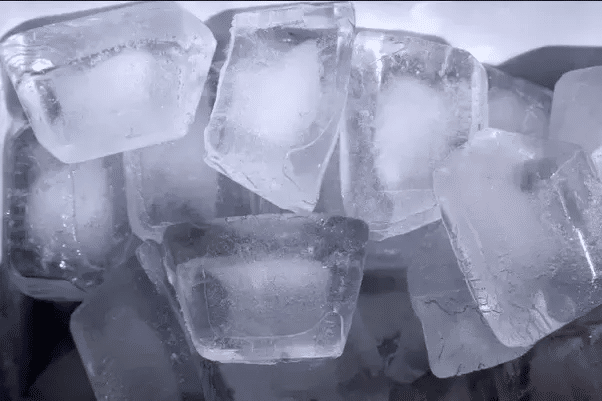
- Ice, ice baby! – Counter-intuitive melting of ice – which material will melt the ice first?
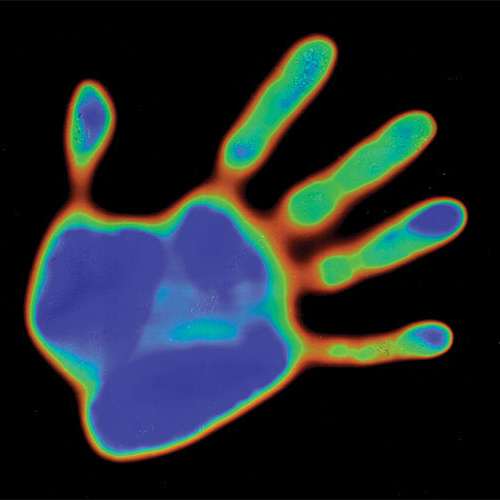
- LCD mats – Use the heat of your hand to change the liquid crystal materials.
- Nitinol – See how nitinol responds to heat and how it is used for robotics.
- Radiometer – Convert heat energy into kinetic energy with this fun engine.
- Space Shuttle Burn – How can space shuttle tiles survive heat of atmospheric re-entry?
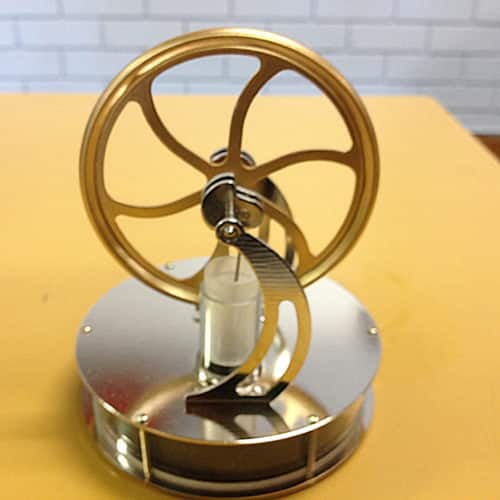
- Stirling engine – An engine that runs from the heat of your hand? How does that work?
- Tea bag rocket – How does that relate to convection; how do you even make it?
Science workshop content
What Students Experience: The Thermodynamics Lab
In this high-energy workshop, students explore the invisible flow of thermal energy. By observing how particles behave at different temperatures, we make the abstract concepts of conduction, convection, and chemical heat transfer visible and tangible.
1. The Thermal Hook
We open with a counter-intuitive ice-melting challenge that defies student expectations. This sets the stage for exploring how heat affects solids, liquids, and gases, and how thermometers measure particle speed.
2. Hands-On Stations
Students rotate through specialised zones to test heat conductivity and model particle motion. They investigate endothermic reactions that get cold to the touch and use thermochromatic materials that change colour with temperature.
3. Kinetic Foundations
The session concludes with powerful demonstrations of gas expansion. We show how these thermal forces drive everything from internal combustion engines to the massive weather patterns of our planet.
Real Classroom Feedback
The Thermodynamics Lab was a huge hit! Seeing the students so engaged with particle theory and heat transfer was wonderful. A brilliant way to make complex physics accessible.
A fantastic hands-on session investigating thermal energy. The students loved the counter-intuitive challenges and the thermochromatic materials.
“Such enthusiastic scientists learning about Hot and Cold! A perfect introduction to thermodynamics for our junior primary students.”
⬅️ Swipe to see more examples ➡️
Our Commitment to Quality Science Education
A Trusted School Partner for 20 Years
Fizzics Education delivers reliable, syllabus-aligned visits that engage students and meet the practical requirements of the Australian classroom.

Australian Curriculum Mapping
Australian National Curriculum Mapping for all our science incursions
Australian ACARA Content Outcomes:
Science F-10 Version 9.0
Year 2
- Recognise that materials can be changed physically without changing their material composition and explore the effect of actions including bending, twisting, stretching and breaking AC9S2U03
Year 1 & 2
- Describe how people use science in their daily lives, including using patterns to make scientific predictions AC9S1H01, AC9S2H01
- Pose questions to explore observed simple patterns and relationships and make predictions based on experiences AC9S1I01, AC9S2I01
- Compare observations with predictions and others’ observations, consider if investigations are fair and identify further questions AC9S1I05, AC9S2I05
Year 3
- Identify sources of heat energy and examine how temperature changes when heat energy is transferred from one object to another AC9S3U03
- Investigate the observable properties of solids and liquids and how adding or removing heat energy leads to a change of state AC9S3U04
Year 4
- Examine the properties of natural and made materials including fibres, metals, glass and plastics and consider how these properties influence their use AC9S4U04
Year 3 & 4
- Examine how people use data to develop scientific explanations AC9S3H01, AC9S4H01
- Consider how people use scientific explanations to meet a need or solve a problem AC9S3H02, AC9S4H02
- Pose questions to explore observed patterns and relationships and make predictions based on observations AC9S3I01, AC9S4I01
- Compare findings with those of others, consider if investigations were fair, identify questions for further investigation and draw conclusions AC9S3I05, AC9S4I05
Year 5
- Explain observable properties of solids, liquids and gases by modelling the motion and arrangement of particles AC9S5U04
Year 6
- Compare reversible changes, including dissolving and changes of state, and irreversible changes, including cooking and rusting that produce new substances AC9S6U04
Year 5 & 6
- Investigate how scientific knowledge is used by individuals and communities to identify problems, consider responses and make decisions AC9S5H02, AC9S6H02
- Pose investigable questions to identify patterns and test relationships and make reasoned predictions AC9S5I01, AC9S6I01
- Compare methods and findings with others, recognise possible sources of error, pose questions for further investigation and select evidence to draw reasoned conclusions AC9S5I05, AC9S6I05
Australian National Curriculum Mapping for all our science workshops & shows

NSW K-10 Science Syllabus Mapping
NSW K – 10 Science Syllabus mapping
NSW Science Syllabus Content
A student:
- ST1-8PW-S describes common forms of energy and explores characteristics of sound energy
- ST2-6MW-S describes how adding or removing heat causes a change of state
- ST2-8PW-ST describes the characteristics and effects of common forms of energy, such as light and heat
- ST2-9PW-ST describes how contact and non-contact forces affect an object’s motion
- ST3-6MW-S explains the effect of heat on the properties and behaviour of materials
- ST3-7MW-T explains how the properties of materials determines their use
- ST3-8PW-ST explains how energy is transformed from one form to another
- ST3-9PW-ST investigates the effects of increasing or decreasing the strength of forces
NSW Science and Technology K–6 Syllabus (Implementation from 2027)
For implementation advice, visit the NESA Science and Technology site.
Stage 2
ST2-SCI-01 uses information to investigate the solar system and the effects of energy on living, physical and geological systems
- Recognise that matter is anything that has mass, takes up space and consists of small particles
- Observe matter existing as a solid, liquid and gas
- Describe water changing states using Tier 2 and Tier 3 vocabulary
- Describe how heat affects the movement and arrangement of particles
- Recognise heat transfer via conduction, convection and radiation
- Measure temperature using a thermometer in degrees Celsius
- Conduct fair tests to compare how materials absorb or reflect heat
- ST2-PQU-01 poses questions to create fair tests that investigate the effects of energy
Stage 3
- ST3-PQU-01 poses questions to identify variables and conducts fair tests to gather data

VIC Science Syllabus Content
Science
Foundation to Level 2
- Objects can be made of different materials with observable properties. VC2S2U04
- Materials can be combined for particular purposes; mixtures vary from base materials. VC2S2U05
- Pose questions based on experiences to explore patterns and relationships. VC2S2I01
- Share findings using everyday and scientific vocabulary. VC2S2I06
Levels 3 & 4
- Solids, liquids and gases have observable properties; changes of state via heat energy. VC2S4U04
- The properties of natural and made materials influence their use and re-use. VC2S4U05
- Heat energy can be generated from different sources; temperature transfer. VC2S4U09
- Plan and conduct scientific investigations using provided scaffolds and fair tests. VC2S4I02
Levels 5 & 6
- Explain properties of matter by modelling particle motion; mixtures and solutions. VC2S6U03
- Compare reversible changes (dissolving/state) and irreversible changes (cooking). VC2S6U04
- Plan and conduct repeatable investigations, deciding variables and identifying risks. VC2S6I02
Session Requirements
👥 Capacity & Timing
👨🎓 Attendance: Max 32 students per class.
🏫 Target: Appropriate for Years 1 to 6.
⏰ Duration: 60 or 90-minute options.
🛠️ Set/Pack: 45 mins setup + 45 mins pack down.
📍 Venue Requirements
🏗️ Tables: 7 tables for rotation stations.
🔌 Power: Access to 3 electrical sockets.
🪑 Seating: Chairs are not required.
Go Further!
Complete Units of Work to Support Your Teaching
Support your classroom with 270+ syllabus-linked lessons, high-quality videos, and marking rubrics.
Support your classroom teaching with 270+ syllabus-linked lessons, high-quality videos, printable experiments, and comprehensive marking rubrics designed for K-6 teachers.






