

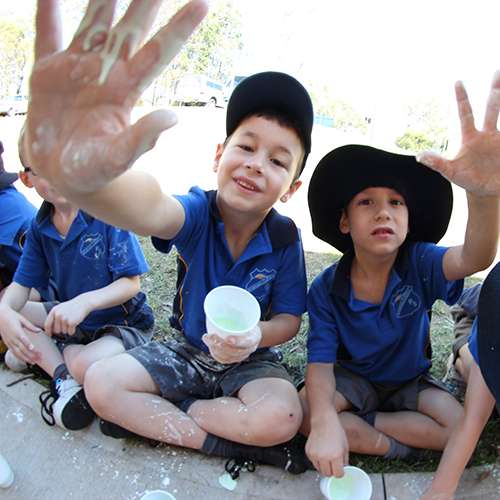

Science workshop content
What Students Experience
This workshop is built around three high-energy modules designed to make chemistry tangible and fun for early learners. Throughout each module, we emphasise fair testing of variables and encourage students to clearly communicate their scientific observations.
Giant Bubbles
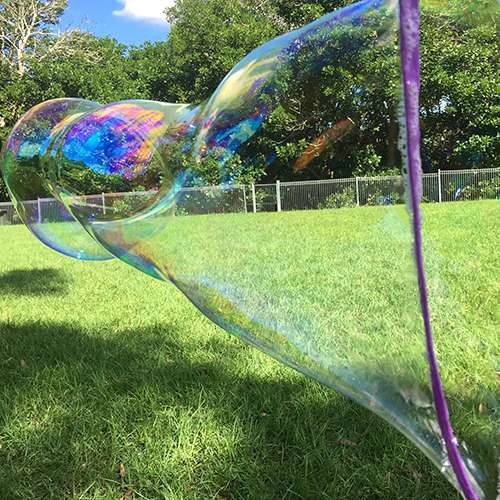
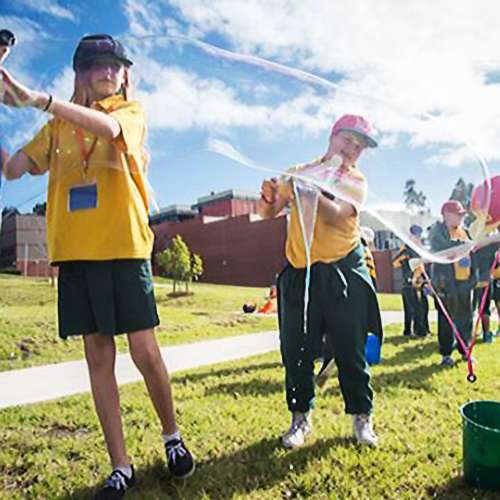
Students investigate the chemistry of surface tension by exploring how changing the bubble mixture affects the size and strength of their creations.
Sherbet Making
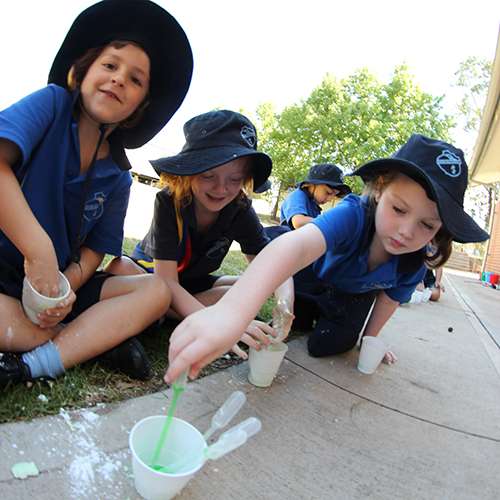
A tasty introduction to chemical reactions! Students witness how specific ingredients combine to create a fizzy reaction right in their mouths.
Slime Making
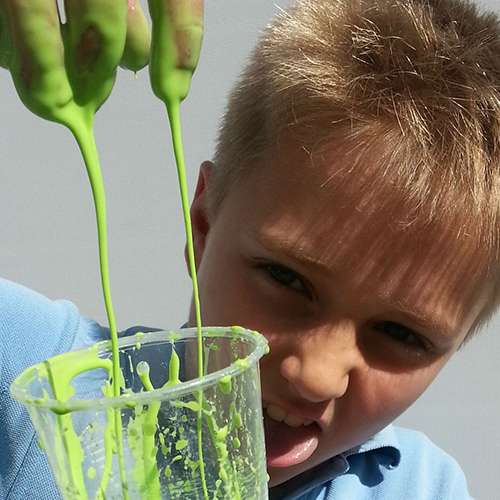
Students follow a scientific procedure and practice active problem-solving to create a cross-linked polymer (slime) with the perfect texture.
🚀 The Big Launch: We also include a rocket launch demonstration to vividly show how small changes in variables can have a massive influence on the final result!
Real Classroom Highlights
Our K-2 students had a blast with the Slime, Sherbet and Bubbles workshop! It was wonderful to see them so engaged with the scientific process while having so much fun.
A huge thank you to Fizzics Education for a fantastic day! The sherbet making was a highlight, and the rocket launch at the end was the perfect way to demonstrate variables in action.
⬅️ Swipe to see more examples ➡️
Our Commitment to Quality Science Education
A Trusted School Partner for over 20 years
At Fizzics Education, our 20-year history is built on delivering reliable, syllabus-aligned visits that engage students and meet the practical requirements of the Australian classroom.
Supporting Australian schools and teachers since 2004.
Facilitated by experienced science specialists focused on early childhood learning.

Australian Curriculum Mapping
Australian National Curriculum Mapping for all our science incursions
Australian ACARA Content Outcomes:
Science F-10 Version 9.0
Foundation
- Recognise that objects can be composed of different materials and describe the observable properties of those materials AC9SFU03
- Explore the ways people make and use observations and questions to learn about the natural world AC9SFH01
- Pose questions and make predictions based on experiences AC9SFI01
Year 2
- Recognise that materials can be changed physically without changing their material composition and explore the effect of different actions on materials including bending, twisting, stretching and breaking AC9S2U03
Year 1 & 2
- Describe how people use science in their daily lives, including using patterns to make scientific predictions AC9S1H01, AC9S2H01
- Pose questions to explore observed simple patterns and relationships and make predictions based on experiences AC9S1I01, AC9S2I01
- Compare observations with predictions and others’ observations, consider if investigations are fair and identify further questions with guidance AC9S1I05, AC9S2I05
Australian National Curriculum Mapping for all our science workshops & shows

NSW K-10 Science Syllabus Mapping
NSW K – 10 Science Syllabus mapping for all our incursions
NSW Science Syllabus Content
A student:
- identifies that objects are made of materials that have observable properties STe-4MW-ST
- identifies that materials can be changed or combined ST1-6MW-S
- describes how the properties of materials determine their use ST1-7MW-T
NSW Science and Technology K–6 Syllabus (Implementation from 2027)
For implementation advice, visit the NESA Science and Technology site
Early Stage 1
STE-SCI-01
- Recognise that properties of materials can be observed using the senses
- Observe and manipulate materials to describe their properties using Tier 2 vocabulary
- Pose questions about materials and describe how they are used in everyday objects
STE-PQU-01 poses questions based on observations to collect data
Stage 1
ST1-PQU-01
- Poses questions based on observations and information to investigate cause and effect
Print a PDF detailing NSW K to 6 science visits

VIC Science Syllabus Content
VIC Curriculum F–10 Version 2.0
For implementation advice, visit the VIC Curriculum F-10 site.
Foundation to Level 2
- Objects can be made of one or more different materials; these materials have observable properties. VC2S2U04
- Materials can be combined in a variety of ways for particular purposes; the properties of objects and mixtures can differ from the properties of the materials from which they are made. VC2S2U05
- Experiences can be used as a basis for posing questions to explore observed patterns and relationships, and to make predictions. VC2S2I01
- Observations, findings and ideas can be shared with others by using everyday and some scientific vocabulary. VC2S2I06
Session Requirements
👥 Capacity & Timing
👨🎓 Attendance: Max 32 students per class.
🏫 Target: Kindergarten to Year 2.
⏰ Duration: 60 minutes.
🛠️ Setup: 30 mins set/pack required.
🧪 Materials: All slime is non-toxic and will not stain fabric. We recommend students wear art smocks for sherbet and bubble activities.
📍 Space & Setup
🏗️ Layout: Ideally run on a grassed area near a table.
☔ Weather: An outside covered area is required in case of rain.
🚰 Sink: Access to a sink for washing up is essential.
🪑 Seating: Chairs are not required for students.
Go Further!
Complete Units of Work to Support Your Teaching
Support your classroom with 270+ syllabus-linked lessons, high-quality videos, and marking rubrics.
Save time and engage students in STEM with high-quality videos, printable experiments, and full marking rubrics for your Materials unit.
Extend the Experience
Pair this workshop with a larger stage show for groups of up to 240 students:






