


Science Show Activities
- Caught in the Shadow – Model the difference between solar and lunar eclipses.
- Celestial cross-sections – How are stars and planets constructed differently?
- Escape Plan – Launch a rocket at different pressures to find out what escape velocity is
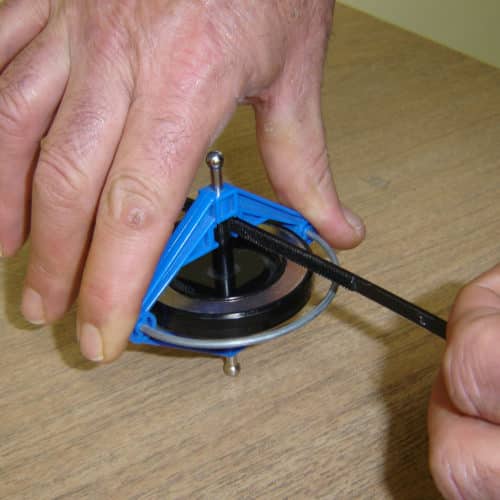
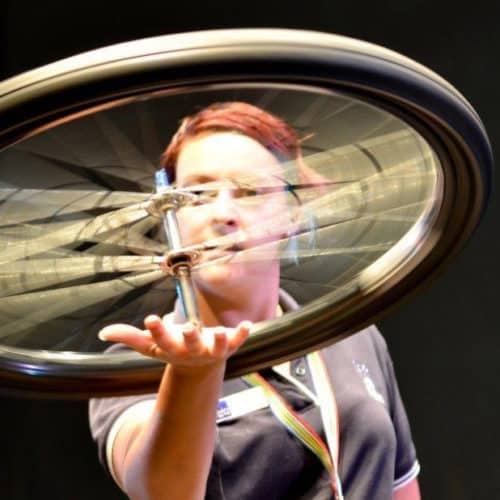
- Giant Gyro – How do spacecraft turn in space anyway?
- Gravity Pull – Model the gravity on Earth vs. Mars. Which planet’s gravity is greater?
- Gyrating Gyros – Why does the Earth wobble on it’s axis in a 25,800 year cycle?
- Planetary orbits – Measure the difference in orbits between the planets in the Solar System
- Predict the Tide – Interpret a real tidal chart. How are tidal patterns formed anyway?
- Rocket launcher – Launch a rocket using a chemical propellent
- Scanning for Signals – Picking up faint signals from distant star systems.
- Solar Spacecraft – What is the power source of some space probes?
- Spiralling satellites – Satellite attenuation; what comes up must come down
- Star viewers – What are the different type of galaxies?
- Talking with friends – Lasers may replace radio in future communication
- Telescopic vision – Use a telescopic lens to read distant information
- The Big Bang – The Universe is expanding, what does it look like?
- Thermal Tiles – How do spacecraft survive atmospheric re-entry?
- Troublesome tools – How is working in space affect tool design and use?
- Turn the tide – A simple model showing the effects of gravity on water bodies
- Shuttle tile burn – How much a heat can a real shuttle tile take?
Science workshop content
What Students Experience
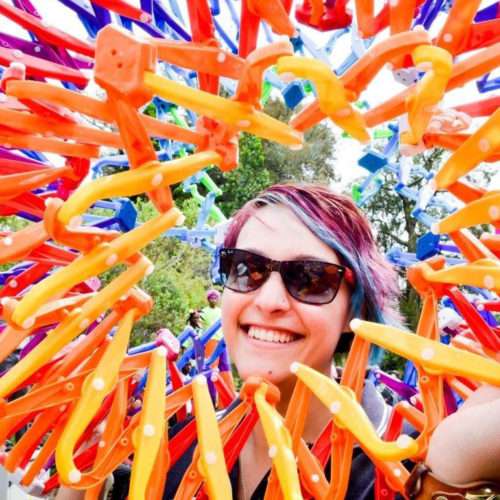
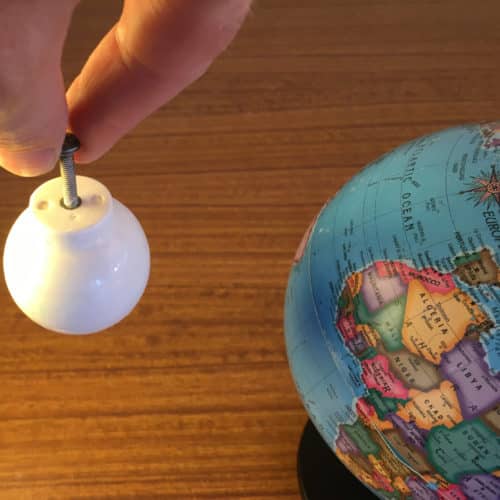
We first challenge students to critique a solar system model, demonstrating how traditional classroom models can be inadequate compared to the reality of deep space. We then model the true distances and relative sizes of the Sun and planets using a Mega Hoberman sphere.
We finish with a high-impact finale using a vacuum chamber to show what happens to our lungs in space, and finally, we burn a real Space Shuttle tile to discuss the incredible materials science required for space travel.
Which space workshop or show should I choose?
Real Classroom Highlights
Our students were in awe of the Space Shuttle tile demonstration! A fantastic hands-on experience that perfectly complemented our Earth and Space unit.
Watch as students explore planetary scales and distances! The vacuum chamber finale left everyone speechless. High-quality science education at its best.
⬅️ Swipe to see more examples ➡️
Our Commitment to Quality Science Education
A Trusted School Partner for 20 Years
Fizzics Education delivers reliable, syllabus-aligned visits that engage students and meet the practical requirements of the Australian classroom.
Highly rated for managing inquiry-based workshops for all ages.
Presenters trained specifically to engage students in complex space science.

Australian Curriculum Mapping
Australian National Curriculum Mapping for all our science incursions
Australian ACARA Content Outcomes:
Science F-10 Version 9.0
Year 3
- Identify sources of heat energy and examine how temperature changes when heat energy is transferred from one object to another AC9S3U03
- Investigate the observable properties of solids and liquids and how adding or removing heat energy leads to a change of state AC9S3U04
Year 4
- Identify how forces can be exerted by one object on another and investigate the effect of frictional, gravitational and magnetic forces on the motion of objects AC9S4U03
- Examine the properties of natural and made materials including fibres, metals, glass and plastics and consider how these properties influence their use AC9S4U04
Year 3 & 4
- Examine how people use data to develop scientific explanations AC9S3H01, AC9S4H01
- Consider how people use scientific explanations to meet a need or solve a problem AC9S3H02, AC9S4H02
- Pose questions to explore observed patterns and relationships and make predictions based on observations AC9S3I01, AC9S4I01
- Compare findings with those of others, consider if investigations were fair, identify questions for further investigation and draw conclusions AC9S3I05, AC9S4I05
Year 5
- Identify sources of light, recognise that light travels in a straight path and describe how shadows are formed and light can be reflected and refracted AC9S5U03
- Explain observable properties of solids, liquids and gases by modelling the motion and arrangement of particles AC9S5U04
Year 6
- Compare reversible changes, including dissolving and changes of state, and irreversible changes, including cooking and rusting that produce new substances AC9S6U04
- Describe the movement of Earth and other planets relative to the sun and model how Earth’s tilt, rotation on its axis and revolution around the sun relate to cyclic observable phenomena AC9S6U02
Year 5 & 6
- Investigate how scientific knowledge is used by individuals and communities to identify problems, consider responses and make decisions AC9S5H02, AC9S6H02
- Pose investigable questions to identify patterns and test relationships and make reasoned predictions AC9S5I01, AC9S6I01
- Compare methods and findings with those of others, recognise possible sources of error, pose questions for further investigation and select evidence to draw reasoned conclusions AC9S5I05, AC9S6I05
Australian National Curriculum Mapping for all our science workshops & shows

NSW K-10 Science Syllabus Mapping
NSW K – 10 Science Syllabus mapping for all our incursions
NSW Science & Technology Syllabus Content
A student:
- describes how contact and non-contact forces affect an object’s motion ST2-9PW-ST
- investigates regular changes caused by interactions between the Earth and the Sun ST2-10ES-S
- investigates the effects of increasing or decreasing the strength of a specific contact or non-contact force ST3-9PW-ST
- explains regular events in the solar system and geological events on the Earth’s surface ST3-10ES-S
NSW Science and Technology K–6 Syllabus (Implementation from 2027)
For implementation advice, visit the NESA Science and Technology site
Stage 2
ST2-SCI-01
- Model Earth’s revolution around the Sun and recognise that a complete revolution takes 365.25 days
- Describe features of our solar system using multimodal representations
- Demonstrate that gravity is a force of attraction between objects and Earth
- Recognise that the force of gravity keeps Earth, moons and planets in their positions
ST2-PQU-01 poses questions to create fair tests that investigate the effects of energy
Stage 3
ST3-SCI-01
- Recognise stars, galaxies, nebulae, exoplanets and black holes as astronomical features
- Research how living things can travel and survive in space
- Examine the development of our knowledge through discoveries and technologies
ST3-PQU-01 poses questions to identify variables and conducts fair tests
📄 Print a PDF detailing NSW K to 6 science visits

VIC Science Syllabus Content
VIC Curriculum F–10 Version 2.0
For implementation advice, visit the VIC Curriculum F-10 site.
Level 3 & 4
- forces, including frictional, gravitational, electrostatic and magnetic, affect the motion of objects. VC2S4U10
- scientific investigations can be planned and conducted using fair tests and safe equipment. VC2S4I02
Level 5 & 6
- the force of gravity keeps Earth and other planets in the solar system in orbit around the Sun. VC2S6U07
- repeatable scientific investigations can be planned and conducted identifying changed, measured and controlled variables. VC2S6I02
Session Requirements
👥 Capacity & Timing
👨🎓 Attendance: Max 32 students per class.
🏫 Target: Years 3 to 6.
⏰ Duration: 60 minutes.
🛠️ Set/Pack: 45 mins setup and 45 mins pack up.
🚀 Professional Grade: Includes vacuum chamber experiments and authentic space shuttle tiles.
📍 Space & Power
🏗️ Room Layout: 12 to 7 tables required for hands-on rotation stations.
🔌 Power: Access to 2 electrical power sockets.
🪑 Seating: Chairs are not required for students.
Go Further!
Complete Units of Work to Support Your Teaching
Support your classroom with 270+ syllabus-linked lessons, high-quality videos, and marking rubrics.
Save time and engage students in STEM with high-quality videos, printable experiments, and full marking rubrics for your Earth & Space unit.
Extend the Experience
Pair this workshop with a larger stage show for groups of up to 240 students:






