

Science Show Demonstrations
- Clinometer – Determine the height of your building using trigonometry
- Density Detective – Identical volumes can have very different masses.
- Eulers Disc – Investigate variance of data using this spinning disc.
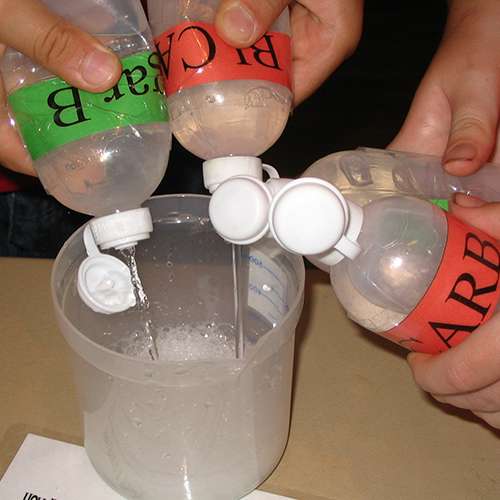
- Fizzy Fountains – Chemical reaction rates change with reactant concentrations.
- The Crusher – Is there a pattern to what weight cylinders can hold?
- Koala Capture – Determine the population of koalas using random samples.
- Measure that dino! – Use trigonometry and shadows to determine the height of a dinosaur!
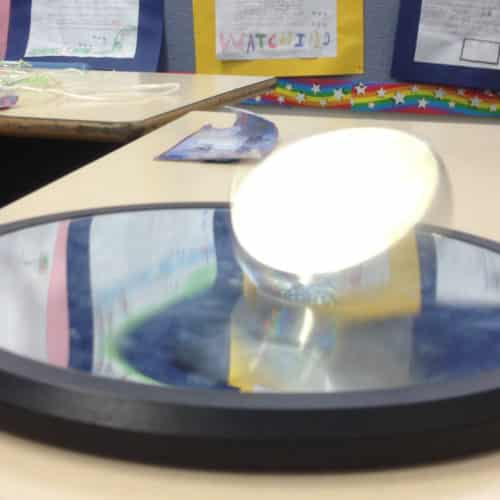
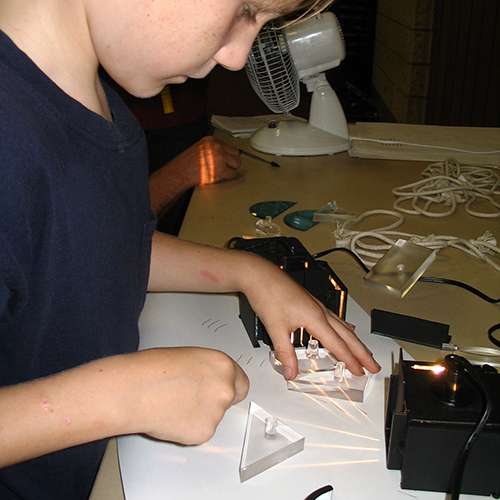
- Rays of Light – Measure light beam angles using Hodson Light Boxes™ and protractors.
- See Saw – Vary the masses and distance from the fulcrum. Graph and explain…
- Tricky Tangrams – Test your spatial ability, how many shapes can you make?
- Twisting topology – Can you release yourself from the rope trap?
- Solving Symmetry – Examine symmetry using Georeflectors™.
- Vexing Volumes – A proportionality problem… good luck!
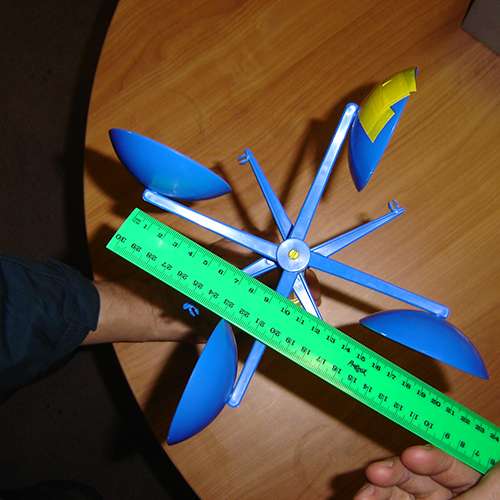
- Windy Days – Calculate wind speed using an anemometer.
STEM workshop content
What Students Experience
This is a high-impact, applied mathematics workshop where students see the real-world inputs to equations. Rather than just moving integers on a page, students discover the scientific consequences of measurement accuracy and data interpretation.
Optics & Angles
Students investigate the geometric relationship between the angle of incidence and the angle of reflection using light beams and mirrors.
Ecological Sampling
Students apply mark and recapture ratios to estimate the population size of koalas in a simulated bushland environment.
Chemical Volumetrics
Using gas volume measurement, students quantify the results of chemical reactions, linking ratios and proportions to physical evidence.
📐 Broad Applications: Rotating stations also cover shadow length estimation (ratios), anemometer work (calculating wind speed via circles), mirror drawing (symmetry), and geometric tessellation.
Our Commitment to Quality Science Education
A Trusted STEM Partner for 20 Years
Mathematics is the language of science. Our integrated workshop is designed by educators to help students see the “why” behind the numbers, providing syllabus-aligned investigations that challenge and inspire.
Specifically designed to extend Gifted and Talented students.
Delivered by science educators who specialize in integrated STEM.

Australian Curriculum Mapping
Australian National Curriculum Mapping for all our science incursions
Australian ACARA Content Outcomes:
Mathematics F-10 Version 9.0
Year 3
- Estimate the quantity of objects in collections and determine the reasonableness of calculations AC9M3N05
- Use mathematical modelling to solve practical problems involving additive and multiplicative situations AC9M3N06
- Identify which metric units are used to measure everyday items and make estimates AC9M3M01
- Measure and compare objects using familiar metric units of length, mass and capacity AC9M3M02
- Identify angles as measures of turn and compare angles with right angles AC9M3M05
Year 4
- Use mathematical modelling to solve practical problems; formulate problems using number sentences and choose calculation strategies AC9M4N08
- Interpret unmarked and partial units when measuring length, mass, capacity and temperature AC9M4M01
- Estimate and compare angles using names including acute, obtuse, straight, reflex and revolution AC9M4M04
- Recognise line and rotational symmetry of shapes and create symmetrical patterns AC9M4SP03
Year 5
- Solve problems involving multiplication of larger numbers and check reasonableness of answers AC9M5N06
- Solve problems involving division and interpret any remainder according to the context AC9M5N07
- Use mathematical modelling to solve practical problems, choosing operations and efficient calculation strategies AC9M5N09
- Find unknown values in numerical equations using the properties of numbers and operations AC9M5A02
- Choose appropriate metric units; use smaller units or a combination of units to obtain an accurate measure AC9M5M01
- Estimate, construct and measure angles in degrees using a protractor AC9M5M04
Year 6
- Approximate numerical solutions to problems involving rational numbers and percentages AC9M6N08
- Use mathematical modelling to solve practical problems, justifying the choices made AC9M6N09
- Convert between common metric units of length, mass and capacity AC9M6M01
- Identify relationships between angles on a straight line, at a point and vertically opposite AC9M6M04
- Recognise and use combinations of transformations to create tessellations and geometric patterns AC9M6SP03
Science F-10 Version 9.0
Year 3 & 4
- Examine how people use data to develop scientific explanations AC9S3H01, AC9S4H01
- Pose questions to explore observed patterns and relationships and make predictions AC9S3I01, AC9S4I01
- Compare findings with others and consider if investigations were fair AC9S3I05, AC9S4I05
Year 5 & 6
- Investigate how scientific knowledge is used to identify problems and make decisions AC9S5H02, AC9S6H02
- Pose investigable questions to identify patterns and test relationships AC9S5I01, AC9S6I01
- Recognise possible sources of error and select evidence to draw reasoned conclusions AC9S5I05, AC9S6I05
Australian National Curriculum Mapping for all our science workshops & shows

NSW K-10 Science Syllabus Mapping
NSW K – 10 Science Syllabus mapping for all our incursions
NSW Mathematics K–10 Syllabus (2022)
Stage 2
- MAO-WM-01 develops understanding and fluency through exploring concepts and applying techniques to solve problems
- MA2-RN-02 represents and compares decimals up to 2 decimal places using place value
- MA2-AR-01 selects and uses mental and written strategies for addition and subtraction
- MA2-GM-02 measures and estimates lengths in metres, centimetres and millimetres
- MA2-GM-03 identifies angles and classifies them by comparing to a right angle
- MA2-NSM-01 estimates, measures and compares the masses of objects using kilograms and grams
- MA2-DATA-01 collects discrete data and constructs graphs using a given scale
Stage 3
- MA3-RN-03 determines percentages of quantities and finds equivalent fractions and decimals
- MA3-AR-01 selects and applies appropriate strategies to solve addition and subtraction problems
- MA3-MR-01 selects and applies strategies to solve multiplication and division problems
- MA3-GM-02 selects and uses the appropriate unit and device to measure lengths and distances
- MA3-NSM-01 selects and uses the appropriate unit and device to measure the masses of objects
NSW Science & Technology Syllabus Content
A student:
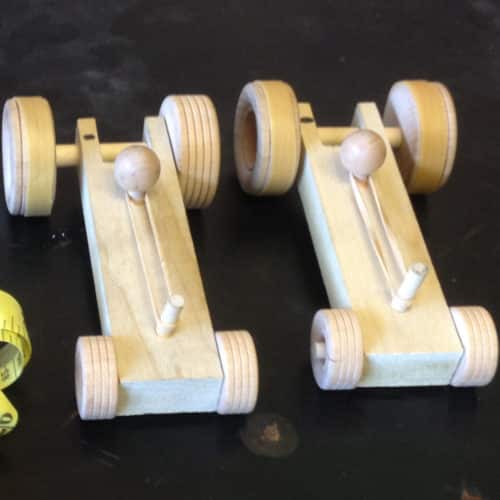
- describes how contact and non-contact forces affect an object’s motion ST2-9PW-ST
- questions, plans and conducts scientific investigations and communicates using representations ST2-1WS-S
- selects and uses materials, tools and equipment to develop solutions ST2-2DP-T
- investigates the effects of increasing or decreasing the strength of a specific force ST3-9PW-ST
- plans and conducts scientific investigations to answer testable questions and summarizes data ST3-1WS-S
NSW Science and Technology K–6 Syllabus (2027)
For implementation advice, visit the NESA site
Stage 2
ST2-SCI-01
- Observe examples of matter that exist as a solid, liquid, or gas and describe their defined shapes/volumes
- Recognise that heat energy can be transferred via conduction, convection and radiation
- Recognise that temperature is measured using a thermometer expressed in degrees Celsius
ST2-PQU-01 poses questions to create fair tests that investigate the effects of energy
Session Requirements
👥 Capacity & Timing
👨🎓 Attendance: Max 32 students per workshop.
🏫 Target: Years 3 to 6 (HPGE optimised).
⏰ Duration: 60 or 90 minute workshops
🛠️ Set/Pack: 45 mins setup and 45 mins pack up.
📐 Tailored Learning: Materials may be varied to suit audience conditions. Please chat with our presenter if you have a specific HPGE focus.
📍 Space & Power
🏗️ Room Layout: 7 tables arranged around the edge of the room.
🔌 Power: Access to 3 electrical power outlets.
🪑 Seating: Chairs are not required for students.
Go Further!
Complete Units of Work to Support Your Teaching
Support your classroom with 270+ syllabus-linked lessons, high-quality videos, and marking rubrics.
Save time and engage students in STEM with high-quality videos, printable experiments, and full marking rubrics.
Extend the Experience
Pair this workshop with a larger stage show for groups of up to 240 students:






