

Science Show Activities
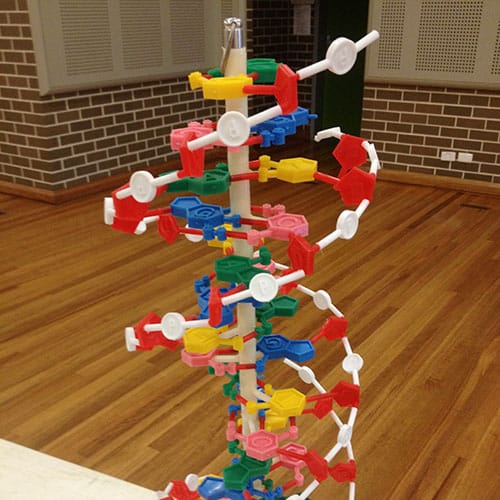
- DNA structure – Learn how bases in DNA link and how bonding creates the helical structure
- DNA Extraction – Extract real DNA from plants… a classic activity
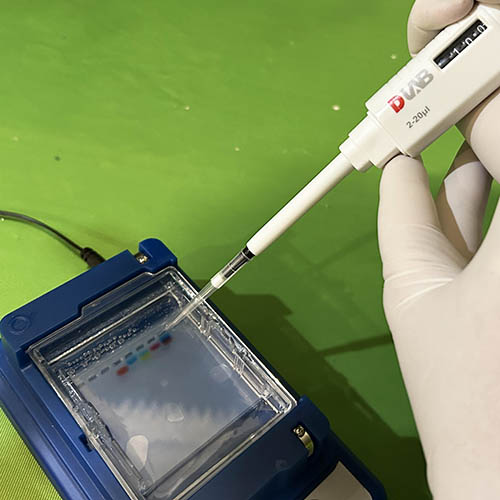
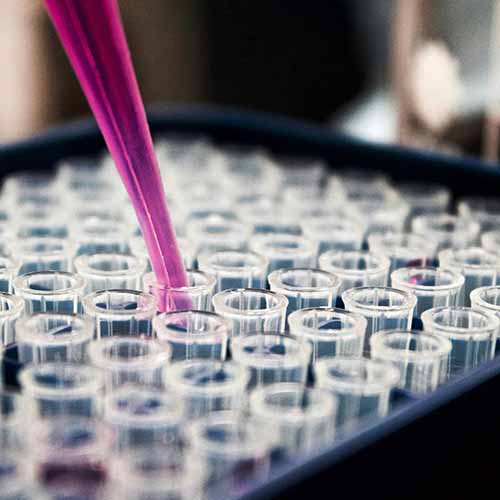
- Micropipetting – Lean the skills used to use a micropipette
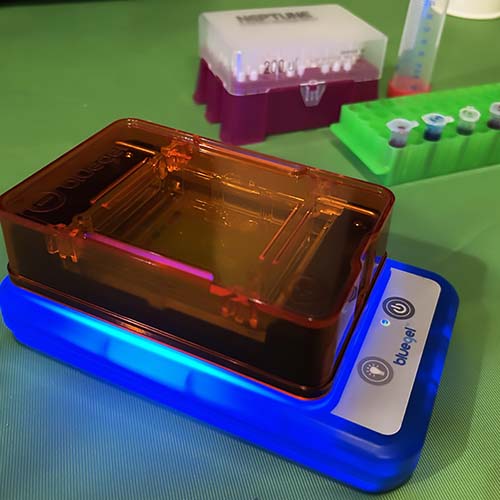
- Electrophoresis – Using DNA simulant, run a gel to discuss DNA base pair traversal speeds
- Chromatography – How does this an analogy for electrophoresis?
- Biotechnology – Learn a variety of genetic technologies including nanopore sequencing & CRISPR
Science workshop content
What Students Experience: DNA & Molecular Biology
This workshop bridges the gap between theoretical genetics and actual laboratory diagnostics. Students move beyond textbook diagrams to handle the precision tools used in modern pathology and genomic research, focusing on the techniques that underpin the future of personalized medicine.
1. Isolation & Centrifugation
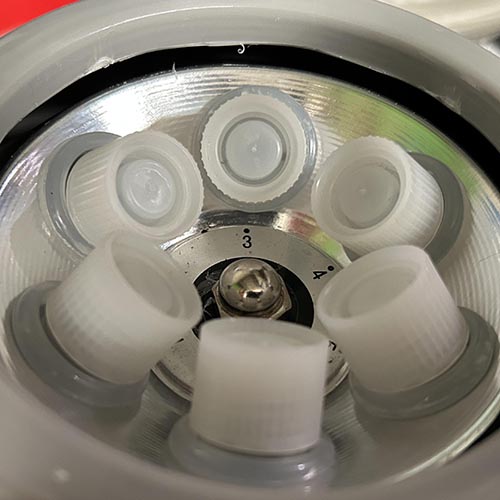
After analyzing the structure of DNA, students perform a DNA extraction to isolate genetic material. We demonstrate laboratory centrifuges in action to show how high-speed rotation is used to separate molecular components by density.
2. Precision Micropipetting
Mastering the core tool of the modern lab, students use micropipettes to handle microlitre volumes. This skill is put to the test as they practice loading electrophoresis gels, a critical step in DNA profiling and genomic analysis.
3. Analysis & Electrophoresis
Students examine electrophoresis results in the classroom to see how fragments are separated by size. We further discover how this works by using chromatography to visualize the principles of molecular separation.
Our Commitment to Quality Science Education
A Trusted Partner for High School Science Departments
Fizzics Education provides the research-grade equipment and specialist knowledge required to bring complex molecular biology outcomes to life in the classroom.
Mapping directly to Stage 6 Biology outcomes in genetics and biotechnology.
Providing schools with access to centrifuges, electrophoresis tanks, and precision micropipettes.
Facilitated by science specialists focused on developing rigorous lab-ready students.

Australian Curriculum Mapping
Australian National Curriculum Mapping for all our science incursions
Australian ACARA Content Outcomes:
Science F-10 Version 9.0
Year 10
- explain the role of meiosis and mitosis and the function of chromosomes, DNA and genes in heredity and predict patterns of Mendelian inheritance AC9S10U01
- use the theory of evolution by natural selection to explain past and present diversity and analyse the scientific evidence supporting the theory AC9S10U02
Year 9 & 10
- explain how scientific knowledge is validated and refined, including the role of publication and peer review AC9S9H01 AC9S10H01
- Investigate how advances in technologies enable advances in science, and how science has contributed to developments in technologies and engineering AC9S9H02 AC9S10H02
- develop investigable questions, reasoned predictions and hypotheses to test relationships and develop explanatory models AC9S9I01 AC9S10I01
- analyse and connect a variety of data and information to identify and explain patterns, trends, relationships and anomalies AC9S9I05 AC9S10I05
- construct arguments based on analysis of a variety of evidence to support conclusions or evaluate claims, and consider any ethical issues and cultural protocols associated with accessing, using or citing secondary data or information AC9S9I07 AC9S10I07
Australian National Curriculum Mapping for all our science workshops & shows

NSW K-10 Science Syllabus Mapping
NSW Science 7–10 Syllabus (2023)
Stage 4
A student:
- identifies questions and makes predictions to guide scientific investigations SC4-WS-02
– Identify questions and problems that can be investigated scientifically
– Make predictions based on scientific knowledge and observations
Stage 5
- asks questions or makes predictions using observations SCLS-WS-02
– Ask questions about familiar objects and events based on observations
– Make predictions based on observations - describes the relationship between the diversity of living things and the theory of evolution SC5-GEV-01
– Explain how the processes of natural selection and isolation can lead to changes within and between species
– Investigate, using evidence, how the complexity and diversity of organisms have changed over geological timescales - explains how DNA is responsible for the transmission of heritable characteristics and can be manipulated through genetic technologies SC5-GEV-02
– Identify that all organisms have information coded in genetic material
– Observe and model the arrangement of genetic information in an organism to define and compare the terms DNA, gene, chromosome and genome.
– Relate the structure of the DNA double helix to its functions
– Discuss the nature of scientific discovery by comparing the contributions of scientists involved in the discovery of the double helix structure of DNA.
– Identify examples of current and emerging genetic technologies
– Discuss applications of genetic technologies in conservation, agriculture, industry and medicine
– Discuss the applications of genetic testing and its associated social, economic and ethical implications
NSW K – 10 Science Syllabus mapping for all our NSW incursions

VIC Science Syllabus Content
VIC Curriculum F–10 Version 2.0
For explanatory points & implementation advice for each dot point, please visit the VIC Curriculum F-10 site.
Levels 7 and 8
- investigable questions, reasoned predictions and hypotheses can be developed in guiding investigations to identify patterns, test relationships and analyse and evaluate scientific models. VC2S8I01
- scientific methods, conclusions and claims can be analysed to identify assumptions, possible sources of error, conflicting evidence and unanswered questions. VC2S8I06
- evidence-based arguments can be constructed to support conclusions or evaluate claims, including consideration of ethical issues and protocols associated with using or citing secondary data or information. VC2S8I07
Levels 9 & 10
- genetic inheritance involves the function of DNA, chromosomes, genes and alleles, and the roles of mitosis and meiosis in passing on genetic information to the next generation; the principles of Mendelian inheritance can be used to predict ratios of genotypes and phenotypes in monohybrid crosses involving dominant and recessive traits. VC2S10U04
- investigable questions, reasoned predictions and hypotheses can be used in guiding investigations to test and develop explanatory models and relationships. VC2S10I01
- the validity and reproducibility of investigation methods and the validity of conclusions and claims can be evaluated, including by identifying assumptions, conflicting evidence, biases that may influence observations and conclusions, sources of error and areas of uncertainty. VC2S10I06
- arguments based on a variety of evidence can be constructed to support conclusions or evaluate claims, including consideration of any ethical issues and cultural protocols associated with accessing, using or citing secondary data or information. VC2S10I07
Session Requirements
👥 Capacity & Timing
👨🎓 Attendance: Maximum of 30 students.
🏫 Target: Appropriate for Years 7 to 10.
⏰ Duration: 60 minutes.
🛠️ Set/Pack: 45 mins setup and 30 mins pack up.
📍 Space & Power Needs
🏗️ Layout: 7 tables around the edge of the room.
🔌 Power: Access to at least 2 electrical power sockets.
↔️ Space: Wide floor space is required.
🪑 Seating: Chairs are not required.
Extend the Experience
Pair this workshop with a larger stage show for groups of up to 240 students:






