
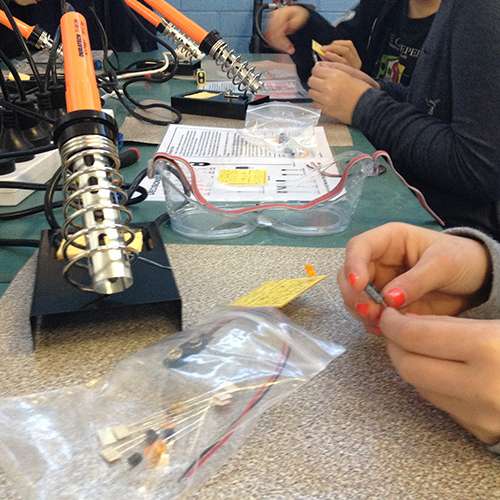
Make your own electronic circuit to keep!
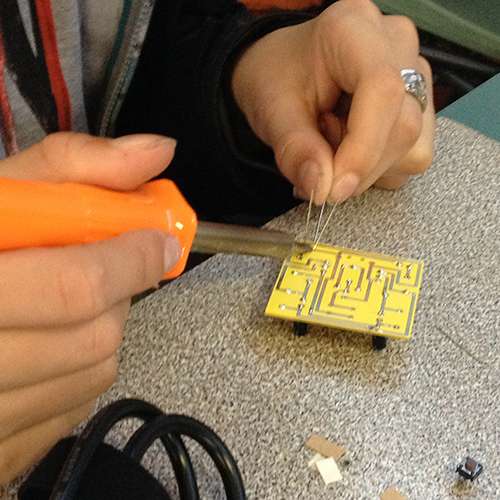
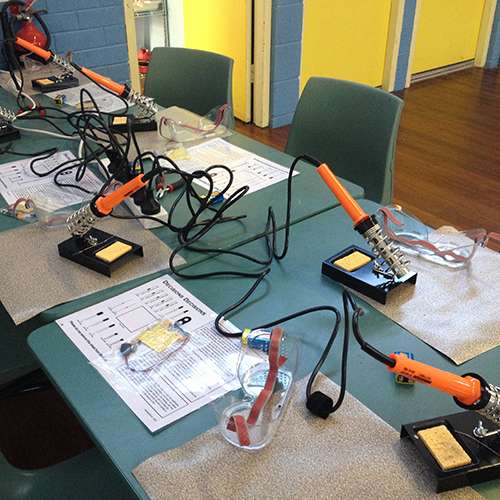
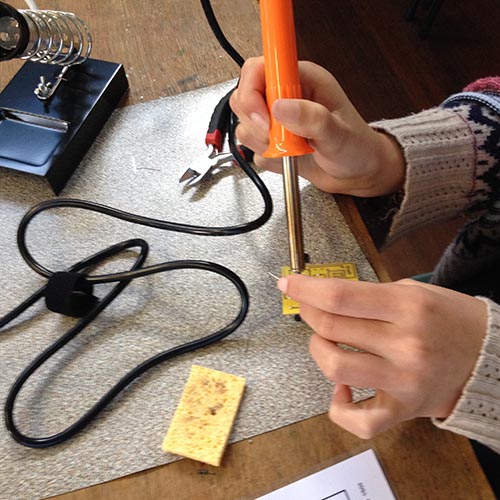
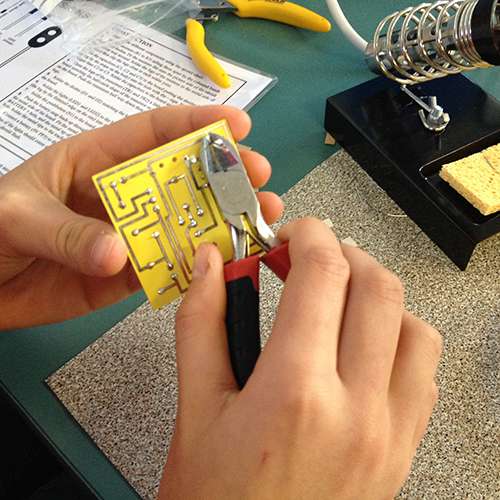
Using soldering irons and appropriate safety equipment, your school classroom becomes a hive of activity as students construct their own electronic device using real electrical components.
Whilst constructing circuits, your students will learn about capacitors, resistors, diodes as well as how electronic circuit boards are manufactured in the real world.
The kits have been designed by Madlab and have been used by the Edinburgh Science Festival.
 Rated Excellent on Trustpilot – read our reviews
Contact us
Science workshop experiments
Electronic kits that can be made to keep include:
Beginners
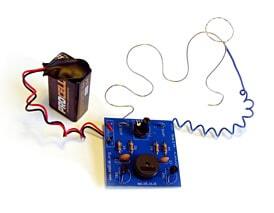
Wonky Wire – Use a steady hand to complete the challenge
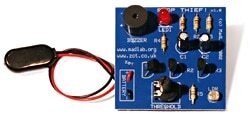
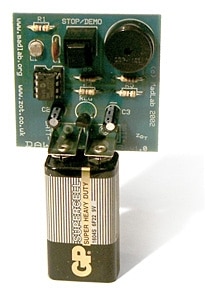
Stop Thief! – Make a burglar alarm
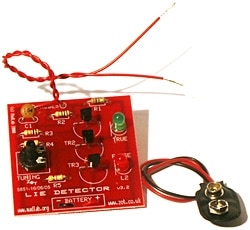
Lie Detector – Detect your friend sweating out the answers!
Intermediate
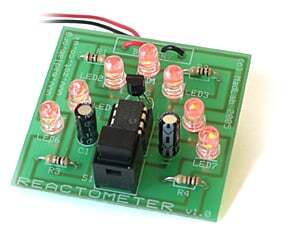
Reactometer – A simple reaction tester that lights up
Dawn Chorus- Awake to sound of bird sounds
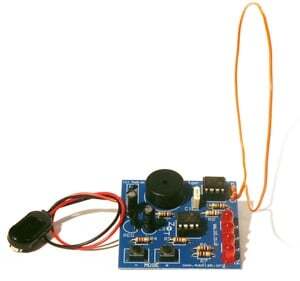
Junior Theremin – A musical instrument you play without touching

Australian Curriculum Mapping
Australian National Curriculum Mapping for all our science incursions
Australian ACARA Content Outcomes:
Science F-10 Version 9.0
Year 7 & 8
- explain how new evidence or different perspectives can lead to changes in scientific knowledge
AC9S7H01 AC9S8H01 - examine how proposed scientific responses to contemporary issues may impact on society and explore ethical, environmental, social and economic considerations AC9S7H03 AC9S8H03
- develop investigable questions, reasoned predictions and hypotheses to explore scientific models, identify patterns and test relationships AC9S7I01 AC9S8I01
- analyse data and information to describe patterns, trends and relationships and identify anomalies AC9S7I05 AC9S8I05
- construct evidence-based arguments to support conclusions or evaluate claims and consider any ethical issues and cultural protocols associated with using or citing secondary data or information AC9S7I07 AC9S8I07
Year 9 & 10
- explain how scientific knowledge is validated and refined, including the role of publication and peer review
AC9S9H01 AC9S10H01 - Investigate how advances in technologies enable advances in science, and how science has contributed to developments in technologies and engineering AC9S9H02 AC9S10H02
- develop investigable questions, reasoned predictions and hypotheses to test relationships and develop explanatory models AC9S9I01 AC9S10I01
- analyse and connect a variety of data and information to identify and explain patterns, trends, relationships and anomalies AC9S9I05 AC9S10I05
- construct arguments based on analysis of a variety of evidence to support conclusions or evaluate claims, and consider any ethical issues and cultural protocols associated with accessing, using or citing secondary data or information AC9S9I07 AC9S10I07
Australian National Curriculum Mapping for all our science workshops & shows

NSW K-10 Science Syllabus Mapping
NSW Science 7–10 Syllabus (2023)
Stage 4
A student:
- identifies questions and makes predictions to guide scientific investigations SC4-WS-02
– Identify questions and problems that can be investigated scientifically
– Make predictions based on scientific knowledge and observations
Stage 5
- asks questions or makes predictions using observations SCLS-WS-02
– Ask questions about familiar objects and events based on observations
– Make predictions based on observations - evaluates current and alternative energy use based on ethical and sustainability considerations SC5-EGY-01
– Identify the elements of a complete circuit
– Construct circuits and draw circuit diagrams that contain several components to show the flow of electricity through a complete circuit
– Measure and compare voltage and current at different points in series and parallel circuits
– Conduct an investigation to determine the relationship between voltage (), current (), and resistance (), as described by Ohm’s law ()
– Conduct an investigation to compare the energy transformed over time in model circuits or appliances
NSW K – 10 Science Syllabus mapping for all our NSW incursions

VIC Science Syllabus Content
VIC Curriculum F–10 Version 2.0
For explanatory points & implementation advice for each dot point, please visit the VIC Curriculum F-10 site.
Levels 7 and 8
- electrical circuits transfer energy when current flows and can be designed for diverse purposes using different components; the operation of circuits can be explained using the concepts of voltage and current. VC2S8U17
- investigable questions, reasoned predictions and hypotheses can be developed in guiding investigations to identify patterns, test relationships and analyse and evaluate scientific models. VC2S8I01
- scientific methods, conclusions and claims can be analysed to identify assumptions, possible sources of error, conflicting evidence and unanswered questions. VC2S8I06
- evidence-based arguments can be constructed to support conclusions or evaluate claims, including consideration of ethical issues and protocols associated with using or citing secondary data or information. VC2S8I07
Levels 9 & 10
- electricity can be generated as alternating current (AC) using magnets (via turbines turned by wind, water, tides or steam that is generated by the combustion of oil, gas or coal or by nuclear energy) or as direct current (DC) using photovoltaic cells or batteries. VC2S10U16
- investigable questions, reasoned predictions and hypotheses can be used in guiding investigations to test and develop explanatory models and relationships. VC2S10I01
- the validity and reproducibility of investigation methods and the validity of conclusions and claims can be evaluated, including by identifying assumptions, conflicting evidence, biases that may influence observations and conclusions, sources of error and areas of uncertainty. VC2S10I06
- arguments based on a variety of evidence can be constructed to support conclusions or evaluate claims, including consideration of any ethical issues and cultural protocols associated with accessing, using or citing secondary data or information. VC2S10I07
Requirements
- Appropriate for Years 7 to 10
- Access to 3 electrical power sockets and at least 7 tables
- Chairs are not required but useful.
- Duration 90 mins.
- Set up time 45 minutes and pack up time 30 minutes.
- Soldering irons are used; safety precautions are taken however it is still the school responsibility to choose students who are suitable for this program






