It’s just around the corner!
2025’s National Science Week theme:
Decoding the Universe – Exploring the unknown with nature’s hidden language
With such a broad topic, there are plenty of options to inspire students this year in multiple areas of science.
Below are some resources we’ve put together to help!
20 Free National Science Week 2025 teaching ideas
Decoding the Universe with Mathematics
- Fibonacci Frenzy
Explore the Fibonacci sequence in nature (pinecones, sunflowers, shells) and discuss its mathematical basis.
To support, here is an activity by the NSW Department of Education on fibonacci sequences.

- Golden Ratio Hunt
Have students find examples of the Golden Ratio in art, architecture, and nature.
Here is an activity by the Victorian Department of Education on the golden ratio.
- Symmetry in Nature
Investigate different types of symmetry (radial, bilateral) in plants, animals, and crystals.
Here is a supporting article by the BBC on symmetry.
- Fractal Fun
Introduce fractals and their presence in natural phenomena like coastlines, clouds, and trees. Students can try to draw simple fractals. Here is an activity by Exploratorium to support a fractals lesson.
- Coding with Primes
Learn about prime numbers and their importance in cryptography and secure communication (relate to decoding).
Here is an activity on using factor trees to decompose numbers by the Victorian Department of Education.
- Celestial Coordinates
Teach about how astronomers use coordinates to map the universe, linking to geometry and mapping skills.
This activity by Museums Victoria will help with this!
- Scale of the Universe
Use powers of ten and scientific notation to comprehend the vast distances and sizes in the cosmos.
You can even use a bad solar system model to teach this!
- Orbital Mechanics (Simplified):
Explore basic concepts of orbits using simple models or simulations, linking to gravitational forces and mathematical relationships. We run this as part of a Stars & Planets science incursion for primary and high schools.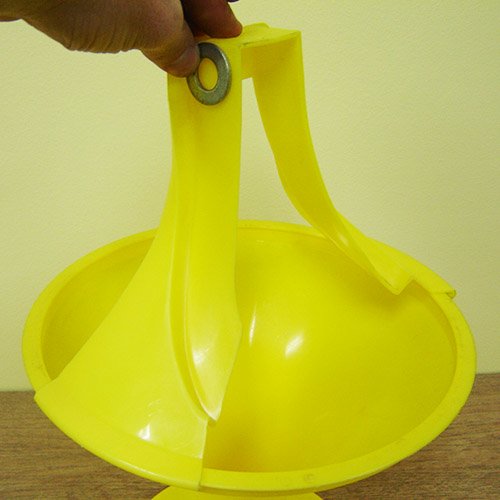
- Music and Maths
Investigate the mathematical relationships in musical scales and harmonies, showing how math underlies artistic expression.
Read this article for teaching ideas based on music!
- Probability of Planets
Discuss the probability of finding exoplanets with certain characteristics, introducing basic probability concepts.
Learn about Exoplanets on this NASA article here.
- Star Charts and Angles
Learn how to use star charts and measure angles to locate constellations.
This activity by Museums Victoria will support this!
- Sundials and Shadows
Build simple sundials and understand the geometry of shadows and the Earth’s rotation.
Here is a simple sundial activity you can run with your students by the Queen Victoria Museum & Art Gallery.
- Data Representation (Cosmic Data)
Analyse and graph real or simulated astronomical data (e.g., star brightness, planetary temperatures).
Check out the open NASA data repository of astronomical data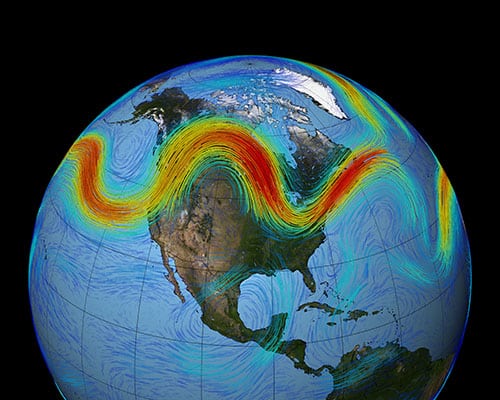
- Tessellations in Space
Explore tessellations and how they are used in spacecraft design or even in natural crystal structures.
To start this off, learn about the James Webb Telescope here.
- The Math of Light Speed
Discuss how the speed of light is a fundamental constant and how it’s used in astronomical calculations.
Learn how to calculate the speed of light using chocolate and a microwave.
- Pattern Recognition (Constellations)
Challenge students to identify and draw patterns in star constellations.
Make your own constellation viewers here.
- Mathematical Modelling (Weather/Climate)
Discuss how mathematical models are used to predict weather patterns or understand climate change on Earth.
Learn about weather models from the Bureau of Meteorology here.
- Geometry of Lenses and Telescopes
Explain how the principles of geometry are applied in the design of optical instruments.
Make your own telescope activity here.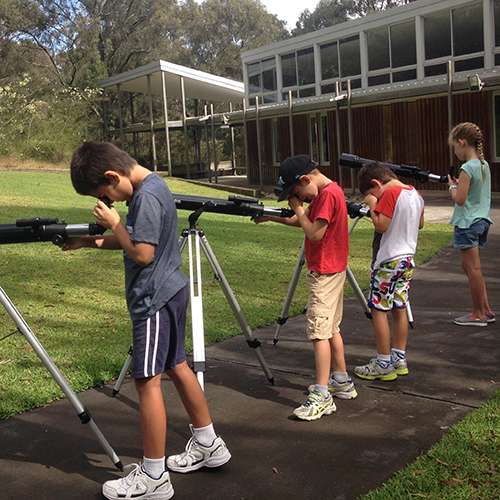
- The Power of Pi
Explore the significance of Pi in circles, spheres, and its appearance in various scientific formulas.
Plenty of classroom Pi activities here!
- Fibonacci Code Breakers
Create simple codes based on the Fibonacci sequence for students to decipher.
The Australian Digital Technologies Hub has a lesson plan on this here
Of course, this is a very small selection of ideas that allow you to teach the 2025 National Science Week school theme.
If you’re approaching this from a pure space point of view, you could use the free space science experiments here or even the previous Destination Moon science week teaching ideas we wrote for a previous National Science Week.
If you’d like us to come to your school, we’d love to get involved in your science week activities!
Over to you!
Happy teaching,

Want more ideas for teaching science?
Subscribe to the FizzicsEd Podcast!