Many learners love science but what if we use science experiments as a hook for English and Mathematics lessons?
Science has an intrinsic ability to captivate the minds of students of all ages, interests, and abilities, making it a powerful tool in education. Beyond its inherent fascination, science can also serve as a springboard to enhance literacy and numeracy skills, critical areas of leaning for life.
Recently I spoke with my good friend Ted Tagami from Magnitude.io as we went through how a simple experiment about melting ice can be turned into multiple lessons that not only address literacy and numeracy, but also cover a wide array of subjects including economics, geography, music and much more.
Below is a summary of what we covered during this recording!
Science as a Catalyst for Literacy
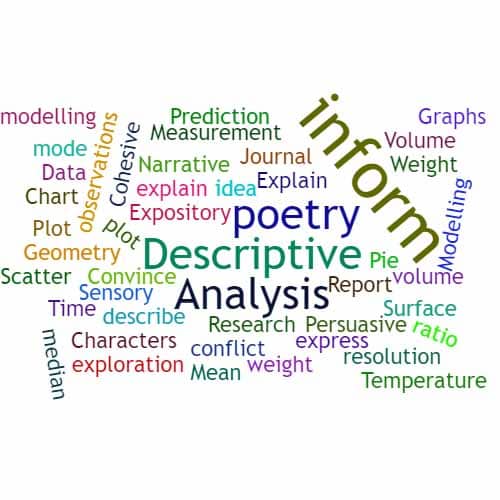
In the context of literacy, scientific experiments offer a dynamic way to engage with traditional English skills—reading, writing, speaking, and listening—through various activities. Here are some ways science can be woven into literacy education;

-
Expository Writing
Students can utilize expository writing to explain, describe, and inform readers about their observations and results from scientific experiments. This type of writing allows students to organize their thoughts, clarify complex concepts, and enhance their ability to communicate effectively through descriptive language.
-
Persuasive Writing and Debates
Prior to conducting an experiment, students can engage in persuasive writing or participate in debates about potential outcomes. This format helps them develop their argumentative skills by constructing and defending their viewpoints, which is crucial for critical thinking. This could also take the form of a pitch contest!
-
Narrative Writing
Students interested in creative writing can craft narratives centred around scientific experiments. These stories can include elements such as characters, plot development, conflict, and resolution, providing a creative avenue to explore scientific concepts.
-
Descriptive Writing
This style focuses on sensory observations, encouraging students to use sensory details in their writing about experiments. Younger students can expand their sensory vocabulary, while older students can refine their ability to describe observations vividly.
-
Reflective Writing
Reflective writing after experiments enables students to connect their personal experiences with the experimental outcomes. This method fosters critical thinking and self-assessment by allowing students to compare their initial thoughts and expectations with the actual results.
-
Journaling and Research
Maintaining a journal throughout the duration of an experiment encourages continuous writing and personal expression. It also serves as a medium for idea exploration. Complementing this, engaging in research writing about the scientific principles involved helps students develop cohesive reports that integrate information gathering and synthesis.
-
Poetry
You can use an experiment to encourage students to explore text and their observations through poetry too!
Enhancing Numeracy Through Science
Science not only stimulates curiosity but also naturally incorporates elements of mathematics, making it an excellent tool for teaching numeracy. Here are several ways to integrate math into science lessons:

-
Measurement and Data Collection
Experiments often require precise measurements, which can include length, volume, temperature, and time. This practice reinforces the importance of accuracy and the application of various measurement units. For a fun experiment on measurement, try this experiment on measuring the speed of light using chocolate!
-
Statistical Analysis
Repeated experiments generate data that can be analyzed statistically. Learning to interpret data through means, medians, modes, ranges, and standard deviations can be made engaging through hands-on activities. For fun experiment on statistics, try this mark and recapture biology experiment about snails
-
Graphing
Presenting data in graphical formats not only aids in data interpretation but also helps students learn about different types of graphs and their uses. This is especially useful when they present their experiments via a scientific poster or report.
-
Geometry and Spatial Awareness
Discussing the shapes and sizes of materials used in experiments, like ice cubes in a melting study, can lead to discussions on surface area, volume, and other geometric concepts. By the way, you can teach geometry in a fun way using bubbles!
-
Unit Conversion
Experiments provide a real-world context for converting between different units of measurement, an essential skill in both academic and everyday settings.
-
Predictive Modelling
Advanced mathematical concepts like modelling can be introduced through predicting experiment outcomes based on gathered data, linking directly to real-world applications such as environmental science.
Broader Educational Impact
The interdisciplinary nature of using science as a teaching tool extends beyond just literacy and numeracy. It encompasses a wide range of subjects and skills, making it a versatile and effective educational strategy. By linking scientific experiments to different curriculum areas, teachers can create a more integrated and engaging learning experience that resonates with diverse learners.
Below are just some ways that you could use a melting ice experiment in other subject areas;

Finally, what makes a great experiment?
For me, its about below!
Make it surprising, make it provocative, use it to increase deeper conversations and help students see that repeatable and rigorous experiments can be both insightful about our world and therefore influences our lives in many ways.

Happy teaching,

Primary science teaching book!
“Be Amazing! How to teach science, the way primary kids love”
Want more ideas for teaching science?
Subscribe to the FizzicsEd Podcast!