Transcript
[00:00:00] Ben Newsome: You’re listening to the Fizzics Ed podcast. For hundreds of ideas, free experiments and more, go to fizzicseducation.com.au. And now, here’s your host, Ben Newsome.
[00:00:19] Ben Newsome: Yes, welcome back for another Fizzics Ed podcast. Hey, glad to have you, and I must say, this is a really interesting chat if you love your space and your biology. This is all about a really large summit, the Australian Space Biology and Health Summit. It’s the third time it’s been held, and it’s coming up in November of this year in 2021. Seriously, it’s a massive program and over a thousand industry and academic leaders are participating. And guess what? There’s an education component as well. In fact, there are three specific challenges that your students—yes, students—can get involved in with ASBX. And today we are talking with one of the main people involved, Dr Joshua Chou. He is one of Australia’s leading exponents of space biology and health, and I’ve got to say, as you listen to him, you can hear he’s totally passionate when it comes to really dealing with disease and linking it with engineering principles and, guess what, microgravity, which is a really fascinating conversation in its own right. But we are definitely talking about the Australian Space Biology and Health Summit and how you can get your students involved. So, let’s head on right in.
[00:01:21] Ben Newsome: This is the Fizzics Ed podcast. We’re all about science, EdTech and more. To see 100 fun, free experiments you can do with your class, go to fizzicseducation.com.au—that’s physics spelled F-I-Z-Z-I-C-S—and click “100 free experiments.”
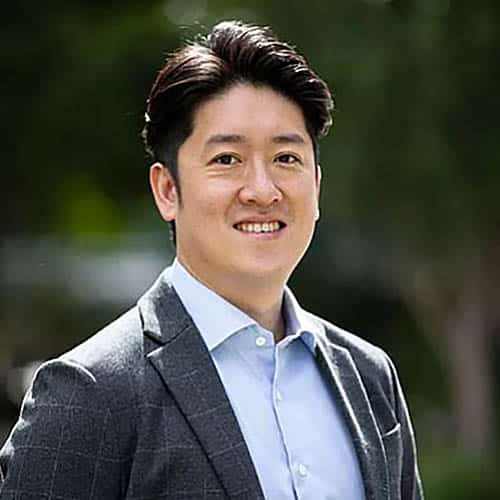
[00:01:41] Dr Joshua Chou: Absolutely, and I have to say up front that I wear a couple of hats. But on a day-to-day basis, I’m a senior lecturer over at the University of Technology Sydney, in the School of Biomedical Engineering. So, in essence, I’m a researcher. So my background is really in cell biology and I’m really passionate and interested in understanding what makes the body tick, and also more importantly, what makes it tick and what causes it to go into disease states. And as part of that, I’ve been all over the world. I’ve done research positions in Japan, also at Harvard, and come back to Australia. So, being around the world and once when I came back, I was really fascinated with how microgravity in space really affects the human body because it actually mimics a lot of the conditions of the aging process or disease conditions here on Earth. So there’s that cross-correlation between the two. So it really fascinated me as a biologist to really understand what makes our body tick, what makes diseases tick, and hope of finding better treatment methods or just basic understanding of how things work.
[00:02:52] Ben Newsome: That is quite a trajectory there, Joshua. I was thinking, what on Earth got you into this? I mean, biomedical engineering I understand that, and then cell biology I understand that. Then you slid in just quietly microgravity, then you kept talking. Where did this fascination come from?
[00:03:07] Dr Joshua Chou: Absolutely, everyone asks me that question. To be honest, I was involved in one of the NASA bone projects when I was at Harvard. So that kind of got me a first glimpse into what is microgravity, how it affects the human body, and what are the processes that are involved in it. And it really hit me hard that we don’t really understand quite a lot about how the body or diseases actually respond in microgravity. We of course know quite a bit, but it’s not very deep in terms of that understanding. So it really—I saw that there was an opportunity, and of course as everyone knows right now, there’s big aspiration to go further and deeper into space. And these are real fundamental questions that we really have to answer before anyone could really go out there, let alone colonize other planets.
[00:04:20] Ben Newsome: So this is not an easy undertaking to say, “I’m just going to go out and study microgravity and see what happens to cell cultures.” That’s a lot of steps involved and undoubtedly a lot of parties involved as well. So which way do you—what are your first steps to making that sort of stuff happen?
[00:04:35] Dr Joshua Chou: You’re absolutely right. There is interest around the world and from researchers as well, but what we were lacking before was really the technology to be able to conduct this type of study. You can imagine, of course, you can do actual research or experiments on the ISS, but that takes a lot of time, not to mention the price tag that comes with it. So really for me, the first step was to develop these technologies. So the first thing that we did was really to develop a simulated microgravity device. So it’s called a random positioning machine, an RPM. Basically, it rotates in the X and Y axis at a certain acceleration or rate that basically cancels out the gravity axis, or as close as we can. So once we have this device, we starting to put different cells, both healthy cells and also cancer cells and other types of diseases and viruses in there just to see what happens. And we were really taken away by how they responded, and that really kick-started all my research in this area of microgravity.
[00:05:37] Ben Newsome: Yeah, I’ve got to really ask about this. I mean, it’s such a broad question and I know you could go into ridiculous amounts of detail, but just a simple question: what happens? What is the difference between a healthy cell and a cancerous tumor, so to speak? What do you see happen in simulated microgravity?
[00:05:59] Dr Joshua Chou: Absolutely. And you know, what we initially thought was, is it going to die? Is it going to accelerate their function mechanisms? And really the conclusion we came up with is that all the different cells in your body react differently to microgravity. So for example, heart cells—we can imagine our heart is always pumping. So under microgravity conditions, heart cells don’t really affect them too much. And this is a good thing because we would hope that our astronauts won’t have a heart attack or any heart conditions when they’re up there for a long time. But cancer cells and bone cells—we all know astronauts lose a lot of bone, and we finally understand why, because bone cells and cancer, they’re probably our body’s most mechanosensitive. What that means is they’re very responsive to the mechanical loading stimulation. So we’ve all heard the phrases, going to the gym is good for you, doing exercise is good for you, and that’s because our body needs these mechanical stimuli to keep our body and our cells functioning properly. So you can definitely see in microgravity, where you’re floating in space because there’s no loading, it really does affect the body.
[00:07:03] Ben Newsome: Yeah, wow. I mean, and by the way, the RPM thing—I have seen a little bit of what you get up to. It does sort of remind me of those amusement park rides.
[00:07:13] Dr Joshua Chou: Yes, it does. Yeah, I have been approached by people say, “Oh, can we build one of these for humans and just keep spinning them?” I’m like, “Yeah, you probably could, but they’ll end up vomiting more than curing anything.”
[00:07:27] Ben Newsome: Yeah, absolutely. There’ve been a few movies that have depicted that quite graphically. Okay, so it’s got me thinking—I mean, so obviously this is human biology. I mean, this may be a bit of an out-there question, but I’m kind of thinking: what about plants? I mean, plants experience disease in different ways and they do respond to gravity in—certainly gravitropism is a thing in plants. What would happen? I’m just curious. Would disease cells in plants do the same thing, or would it be the same in fungi and in other forms of life? This is real, I suppose, a fundamental thing that we’ve got to look at because if we are going to establish a colony on the Moon or on Mars or wherever else we end up getting in another thousand years or so as we go. I’m kind of just curious. Is it a uniform change that you can expect something to happen in an animal cell as you can in a plant cell as you can in other cells, or is it very, very, very specific because of the organism that we’re dealing with?
[00:08:21] Dr Joshua Chou: Absolutely, and this is a very interesting question. And this is something that I’m very passionate about, is to promote more about space biology. And space biology, most people associate with the human aspect, but biology obviously extends into plants as well. Personally, I haven’t had the time or resource to expand into the plant biology per se, but we do see that it is very important. So I remember it was about two years ago when the Chinese first landed on the Moon, they also tried to grow bean sprout, but it died after two or three days. And this is a very good example of how the different environment will affect the growth of different plants and how they function as well. So plants are definitely what we call mechanosensitive as well. It means that they are susceptible to these different mechanical stimuli and so definitely putting them in this microgravity environment will affect their function and mechanism and their growth. So right now we are expanding into that area of research. We’ve actually partnered with Australia’s [Organization] Foundation—recently they’ve received some wattle seeds that came back from space. So we’re working with them to characterize those seeds and see how microgravity has affected them down at the molecular and cellular level.
[00:09:44] Ben Newsome: Yeah, that is fantastic. I mean, and I love it also, the connection with Australia as well. Well, we’re in Australia, you’re in Australia, we’re actually, we’re in the same city. But having research that is really directly connected with this particular nation’s kind of neat considering how many nations could be involved in this, it’s really cool. And what I love, and then you did allude to this when you first mentioned this, that yes, you have—you do wear a lot of hats and understandably so. You’ve got a summit coming up all on space biology and it’s not that far away. I’d love to know a bit more about it.
[00:10:08] Dr Joshua Chou: Absolutely, absolutely.
[00:10:14] Dr Joshua Chou: So we are hosting the Australian Space Biology and Health Summit on November 16th to 19th. It’s a free event, so anyone could register, but you have to register to be able to access the content. So what we’ve done really is to bring the whole world together to this one platform. Before this conference, there were people who do space biology but everyone was kind of doing their own thing, everyone was separated. So what I wanted to do was to really bring everyone together. And you can definitely see from the first time we held it in 2018, we only had about 100 people, but every year we’ve tripled if not quadrupled in size in terms of the number of speakers and attendees. And this really signifies the importance of space biology and health because they kind of go hand-in-hand together. So what you will expect from this conference is really to hear from world leaders, not only from research perspective but also from industry, because I think all these go hand-in-hand. And space biology and health is very different that you need to take a multidisciplinary approach. That means we need more people and more experts to be involved to really address all the challenges associated with human beings in space.
[00:11:41]
Dr Joshua Chou: And you know, personally, I’m very excited with some of the speakers. We have experts from JAXA talking about space food for all the foodies out there. I’m personally curious about, you know, what is it that they eat up there? And all the way to skincare, moisturizer being developed for space and of course, you know, the biology aspect. There’s just so many incredible things from the speakers. And even the latest, I think only a couple of days ago, the Inspiration4 that landed back. So we will be talking to the people that are involved in it and just to hear a debrief about what they learned from that mission.
[00:12:20]
Ben Newsome: Oh, absolutely. And actually for the foodies out there, absolutely, as we speak on the International Space Station right now, I do know there are some chili plants being grown, which means you might have an actual first fruiting body. And I know that chili—and you might be going, “Why chilies? Why not tomatoes or potatoes or whatever?” Well, your taste drops. You lose a bit of your taste when you’re up there, and so chilies are—everyone loves a bit of chili sauce up there, I’ve heard. And it’s very, very cool. But what I do love about what you’re doing with your summit is that you’ve opened up an opportunity for really young kids, like really young. There’s three challenges coming up, which is for schools and, you know, youth groups to get involved in a few different ways. And I really wanted to hear a bit more about this because I know that there are people listening in who look after students of different ages. And so, Joshua, can you let us know about these challenges, please?
[00:13:08]
Dr Joshua Chou: Absolutely, absolutely. And you know, the summit is really focused on, you know, the research aspect and the development of it. And what we wanted to do was really to inspire the younger generation. And it’s not necessarily just to inspire the younger generation; it’s also for the younger generation to inspire us, because, you know, we are involved in it so deeply, sometimes we need different inspirations. So, you know, this year we’re very honored and very happy that we can expand the scope of the summit to include young researchers to be involved.
[00:13:51]
Dr Joshua Chou: And, you know, for all the listeners out there, you can be involved in different capacities as Ben mentioned. You know, we have three different challenges. And one is being a drawing challenge for those people who like to express through their art. We really value that. And there are young presentation categories as well for those people out there who wants to present their research or their ideas. Nothing’s too big or too small. We just want to hear and see your ideas. And of course there’s one that is for a writing competition where you can write and share your ideas with us.
[00:14:26]
Dr Joshua Chou: So, you know, we hope that we’re able to cater and address, you know, the different mediums in which you’re able to communicate your ideas to us, and also for us to share with the world on stage what your thoughts are. And look, you know, sometimes, you know, the smallest ideas can turn out to be the biggest innovation. So we really want to hear from you, hear your ideas, get everyone involved and share your ideas with the rest of the world. And of course, there are prizes to be won, certificates to be given, so we will recognize you for all your hard work and efforts to share with us your ideas.
[00:14:55]
Ben Newsome: I love that. And actually I was just sort of thinking going, I mean, you wouldn’t expect a drawing competition always to be involved in some of this. I mean, often it’s the research side, and it’s very cool you’ve got the young researchers involved, and of course writing about it. But the drawing aspect actually brings an opportunity to actually link it with real research at the same time. It got me thinking about—there’s a person named Julia and she runs a thing called Imagine Naturalist. I must have her on this podcast at some time.
[00:15:23]
Ben Newsome: She does this thing where they imagine what life forms might actually look like given the abiotic parameters that surround that particular moon or planet or whatever it is. And so it actually forces you to think about what would they look like? I mean, are they silica-based? Are they carbon-based? And how big would they be based on the gravity, etc., etc. So you can kind of link imagination with fundamental constraints of the universe at the same time. Kind of that produces a really interesting—and I know because, I mean, having a look at the different challenges, the different competitions you’ve got there, Joshua, you’ve got this quite wide. I mean, it’s not just for the older kids either; you’ve got it for the young kids too, which is great.
[00:16:01]
Dr Joshua Chou: Absolutely, absolutely. And you know, I have kids myself and I like to see—I enjoy his creativity. And that’s why we wanted to try to cover pretty much all the age groups that we can, because I really believe that, you know, everyone has something that they can share and contribute, and it’s not limited by age or, you know, different groups of people. So that’s why we’re very passionate to open this to literally everyone in Australia and the world.
[00:16:30]
Ben Newsome: Which means we really should let people know where on Earth to find said competition. The summit itself, and it’s the third annual one, is it? So it’s 2021, so I mean people listening on this a couple of years’ time, it’s, you know, a couple of years down the track, I’m sure the summit will be going and it’ll be bigger and brighter and all the rest. But it’s in November, but where do we—where do we head off? What’s the website? Where do we find out more?
[00:16:53]
Dr Joshua Chou: Yeah, absolutely. If you go to www.asbx.com.au, you’ll see all the programs right now. You can register to attend the conference for free, and there’s a tab up there, “competition,” so you can click on that and it’ll have all the competition details and you can register for that. It’s pretty straightforward and simple. And if you have any questions, feel free to reach out to one of our friendly team members, they’ll be more than happy to help you out.
[00:17:21]
Ben Newsome: Absolutely. So, now by the way, if you do miss those submission deadlines, that doesn’t matter because you can actually use these frameworks in a lot of ways to create your own competition in-house in your own school or wherever you are. So in January or February or March or April, May, whenever it is that you’ve got students in front of you, you could still do those things as mini-challenges. But then again, ASBX will come around again, and perhaps there might be an opportunity to submit again. It’s a good practice opportunity. So don’t feel like, “Oh my God, I missed the deadline!” There’s always another opportunity for sure.
[00:17:53]
Ben Newsome: And it actually just gets me thinking, I mean, space biology is such a broad thing that we can look at. I mean, if you had some educators in front of you and they were sort of looking at, well, how—what are the first steps in getting kids excited, firstly about space, secondly about biology, and then thirdly, combining the two? What would you suggest?
[00:18:13]
Dr Joshua Chou: Well, you know, it’s really up to the imagination. But, you know, it could be as simple as, you know, what would life look like on the Moon? Or how would life look like on Mars? These are obviously the two more classic scenarios because those are the two places we have aspiration to live on. And then, you know, you can extend that very easily into, you know, what life would look like in terms of the buildings that we’ll live in, the food that we’ll be eating, the type of activities they’ll be doing due to the lower gravity of the Moon and so on.
[00:18:48]
Dr Joshua Chou: So it is very broad and I think that is the beauty of it, that there is no limit to your imagination and that any ideas is a great idea. And this is what we want to foster is to start having these thoughts to really anticipate what the future will look like and, more importantly, how we can try to achieve that and get there.
[00:19:09]
Ben Newsome: Yeah, that makes total sense. I mean, I suppose it’s always about being, you know, the first spark that ignites the fire. Yes, it’s clichéd, but there’s a reason the cliché exists, 100%. No, this is really, really cool. And well done, by the way, for putting together this summit. I know it’s not a small undertaking. I know you’ve got a fantastic team of supporting you and obviously as the network’s grow, it becomes bigger and bigger and bigger as things go along.
[00:19:38]
Ben Newsome: But more importantly, it’s not just an out-there thing that’s abstract and doesn’t affect society at large. The research that’s being done does affect people here on Earth. And really, really awesome the work that you’re doing, as well as not just in the research, but also in inspiring the next generation to do the research next. And that’s really what it’s all about.
[00:19:57]
Dr Joshua Chou: Thank you, thank you, thank you. And look, you know, we—what we want to do is to inspire the next generation because, to be quite frankly, we depend on them. And you know, like you said rightfully, the biology and health aspect, those are all translatable to health and biology here on Earth. So that’s why, you know, we’re very passionate about this type of research is because it’s not only to support human expansion in space, but more importantly, supporting healthcare and lifestyle in general down here on Earth.
[00:20:26]
Ben Newsome: Exactly, and that’s just—that’s what’s fantastic about everything about research is always just one step to the next thing. It just—it just is. Look, look, Joshua, thanks so much for jumping on the podcast. And if you’re listening in and you didn’t get that, it is ASBX. That is where you’ve got to head off. Type in “ASBX” into your favorite search engine and you will find the Space Biology Summit coming up and all the things that are happening. And definitely I will always put those links in the show notes, of course, too. So Joshua, thank you so much for joining us on this chat. And look, hey, looking forward to the summit!
[00:20:59]
Dr Joshua Chou: Thank you so much for having me. Take care.
[00:21:03]
Announcer: We hope you’ve been enjoying the Fizzics Ed podcast. We love making science make sense. Why don’t you book us for a science show or workshop in your school? If you’re outside of Australia, you can connect with us via a virtual excursion. See our website for more.
[00:21:20]
Ben Newsome: So how good would it be to have your students involved with the Australian Space Biology and Health Summit, which is coming up in November? And by the way, if you miss it in 2021, it will come up in 2022 and onwards. Space biology is a serious theme which is coming up, especially if we are serious about getting to the Moon and Mars and beyond. And by the way, Dr Joshua Chou is very, very accomplished in what he does.
[00:21:43]
Ben Newsome: He is a Charlie Teo fellow, and he was awarded the Australian Space Award Researcher of the Year in 2020 and was a 2021 finalist for the UTS Chancellor’s Medal for Research Excellence. So got to love what he’s doing. If you want to find out more about Joshua, go check out the show notes, which will have the link, but also check out the profiles at UTS—the University of Technology in Sydney—and look up Joshua Chou and you’ll find out what he’s getting up to, especially through the School of Biomedical Engineering. Love his work.
[00:22:11]
Ben Newsome: So, hey, that’s the end of this particular podcast, but as usual, we have a lot coming up when it comes to STEM education. You’ve been listening to me, Ben Newsome from Fizzics Education, and this is the Fizzics Ed podcast, and I’ll catch you another time.
[00:22:20]
Announcer: You’ve been listening to another Fizzics Ed podcast. We’re excited about science. Subscribe to us on iTunes to download the next episode as soon as it’s released. And don’t forget, for hundreds of ideas, free experiments, our new “Be Amazing” book and more, go to fizzicseducation.com.au—that’s physics spelled F-I-Z-Z-I-C-S.
[00:22:48]
Announcer: This podcast is part of the Australian Educators Online Network, aeon.net.au.
Frequently Asked Questions
What is space biology?
Space biology is the study of how living organisms, ranging from single cells and plants to human beings, respond and adapt to the unique conditions found in space. This research primarily focuses on the effects of microgravity and radiation to understand how life can be sustained during long-duration missions to the Moon or Mars.
How does microgravity affect the human body?
Microgravity mimics many aspects of the ageing process and certain disease states on Earth. For example, because the body is no longer subjected to mechanical loading, astronauts can experience significant bone density loss. Interestingly, different cells react differently; while heart cells are relatively stable, bone and cancer cells are highly ‘mechanosensitive’ and change their behaviour significantly when gravity is removed.
What is the Australian Space Biology and Health Summit (ASBX)?
ASBX is a premier international event that brings together industry leaders, academic researchers, and students to discuss the future of space medicine and biology. It explores how space-based research can lead to medical breakthroughs on Earth, such as new treatments for cancer or improved understanding of bone health.
How can students participate in the ASBX challenges?
The summit offers three distinct categories for student involvement: a drawing challenge for artistic expression, a writing competition for sharing ideas, and a young researcher presentation category. These challenges are designed to be inclusive of all age groups, encouraging the next generation to contribute their imagination to the future of space exploration.
Why is space biology research useful for people on Earth?
Research conducted in microgravity provides insights that are impossible to obtain under Earth’s normal gravity. By observing how diseases like cancer or conditions like osteoporosis progress in space, scientists can identify new molecular targets for drugs and develop more effective healthcare treatments for patients on the ground.
Extra thought ideas to consider
The concept of Mechanotransduction
Consider how our cells ‘feel’ the world around them. Mechanotransduction is the process by which cells convert physical forces into chemical signals. In space, the removal of gravity removes these signals, effectively changing the instructions the cells receive. How might this ‘reset’ of physical forces be used to ‘switch off’ the growth of aggressive tumours?
Sustaining life on other planets
To colonise the Moon or Mars, we must go beyond ‘surviving’ to ‘thriving’. This involves complex biological systems including agriculture (growing plants like chillies or wattle seeds) and maintaining human health. What are the ethical and biological considerations of creating a self-sustaining ecosystem on a world where the gravity is significantly different from our own?
Discussion points summarised from the FizzicsEd Podcast podcast, verified and edited by Ben Newsome CF