Transcript
[00:00:00] Announcer: You’re listening to the Fizzics Ed podcast. For hundreds of ideas, free experiments and more, go to fizzicseducation.com.au. And now, here’s your host, Ben Newsome.
[00:00:19] Ben Newsome: Welcome back again to the Fizzics Ed podcast. Hey, I hope you’re having a fantastic day or morning or evening or whatever it is that you are up to. I’ve got to say this is going to be an interesting chat. We’re hanging out with Ted Tagami, who is both the education chair of the User Advisory Committee for the ISS US National Lab and the co-founder of Magnitude. And what is this all about? Hey, we’re heading up to space. Seriously. We are talking about a really interesting project that’s already been launched eight times called ExoLab, and Ted is very excited to tell us all about what’s happening with ExoLab 9, where guess what? You yourselves as teachers, seriously, or educators, wherever you are on the planet, can be involved in and actually replicate the exact experiment that’s happening in space on the International Space Station. And I’m really excited to be associated with this, and you get to hear about this soon enough. So I can tell you what, this is going to be an interesting chat and importantly, have a think about how you might be able to get involved. So let’s listen to Ted.
[00:01:21] Announcer: This is the Fizzics Ed podcast. We’re all about science, edtech and more. To see 100 fun free experiments you can do with your class, go to fizzicseducation.com.au. That’s Fizzics spelled F-I-double Z-I-C-S and click 100 free experiments.
[00:01:34] Ben Newsome: Ted, welcome to the Fizzics Ed podcast.
[00:01:36] Ted Tagami: Well, good morning, I guess, right?
[00:01:39] Ben Newsome: Yeah, it’s good morning. Saturday morning for me.
[00:01:45] Ted Tagami: Friday afternoon in Berkeley, California.
[00:01:50] Ben Newsome: Nice time. And I understand you’ve had quite the interesting week considering what you’ve been getting up to. But I suppose some people might not have met you at this point. So Ted, what do you do? I know what you do, but Ted, what do you do?
[00:01:57] Ted Tagami: What do I do? Well, I cause the good kind of trouble. I actually, my background is more in art than it is in science and engineering, and I have to rely on guys like you, Ben, and other educators to really help me pedagogically. But as a dad, now my sons are men, back in 2013 I realized that we needed to make some changes in the way we engage students with learning. And there was a new standard that came into California, the state that I’m from, called the Next Generation Science Standards. And it was really about taking science and engineering and bringing them together. And from an art perspective, I wanted to create something that you felt, right, that you really experienced. So when those 12-year-olds grew up, they could be with their friend and go, “Do you remember when we did that thing?” And they would get all excited about it, and those were memories. My philosophy is if you’re going to impact somebody, a young or old, with learning, it’s got to be something that’s memorable. Not all of the experiences can be, but I figured if we can get to space and do stuff in space, well, that’s pretty cool. That’s probably pretty memorable. So that’s kind of where we’re starting from, Ben.
[00:03:59] Ben Newsome: So that vision of getting to space had some bumps and bruises along the way. I won’t share all of them with you, but suffice to say it took us four years for our first mission to get to space. And we’re kind of doing the lazy man’s mission. We’re allowing someone to handle our power and our data, so we get rides from rockets like the SpaceX rockets or the Northrop Grumman resupply rockets that go up to the International Space Station.
[00:04:19] Ted Tagami: Yeah, and of course, that’s completely wacky, right, with again, no experience. And so the number one thing I think, especially in this new world we’re stepping into—and the pandemic has probably, if anything, kind of peeled it back and we can all see it now—we are living in an interdisciplinary, maybe transdisciplinary world where the idea of being just focused in physics or just focused in, like, electrical engineering, now it’s about how might we work together to solve problems in teams collectively, whether it’s in a country or on our planet. And so what’s been a focal point for us has been the United Nations Sustainable Development Goals. We figure if we can align towards that, we can do it. They’re several hundred kilometers above the planet traveling at a ridiculous speed in miles per hour. It’s about 17,500 miles per hour. Don’t ask me to translate that to kilometers, but it’s very fast. It’s moving, basically it’s falling continuously, and that’s one thing I had to wrap my head around first. That’s why you have microgravity. And so with this round sphere of a planet that we have, it’s moving so fast and it’s falling, it keeps on missing the planet. So it has to get that speed of 17,500 miles an hour or the orbit will degrade and it’ll burn back up in the atmosphere, or if it’s going too fast, it will start going in a higher orbit, maybe even leave Earth’s orbit and be out there in the deep of space. And so that’s just kind of an interesting thing to consider. But what happens to life in a microgravity environment? What happens to materials in a microgravity environment? What happens to just the normal physics that we’re used to? What does a flame do? What does water do? All completely different. Convection doesn’t really exist. So super cool stuff, and the smartest people on the planet are still trying to figure this out. It’s like, well, what’s that really mean? And so there’s a lot of fun right there. And if we can bring students right to the very edge of that discovery and they know that they’re part of it, and that’s really from the youngest ages on up to uni, it’s really quite exciting to get out of the way and see what they come up with.
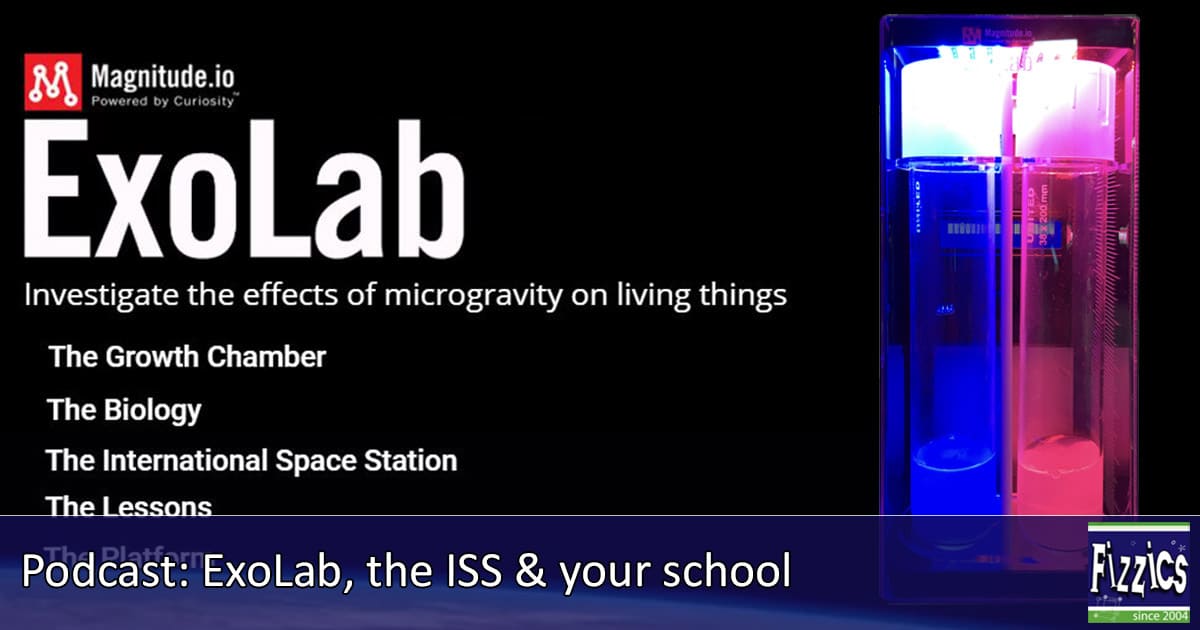
[00:05:41] Ben Newsome: I’ve got to say it, when I came across what you do at Magnitude and this ExoLab, it’s so cool. I mean, you’re eight missions in and about to hit your ninth with ExoLab. It’s so cool. I mean, would you want to just describe what that thing looks like? I mean, okay, for some people it’s—okay, we’re in a visual medium here, but we’re also in a podcast medium, which means—so would you want to describe what ExoLab is and what it measures, what it does, and yeah.
[00:06:13] Ted Tagami: Alright, so here’s the—this is the thing that really got me captivated once we met my co-founder. We’ve known each other for like 20 years, so he easily convinced me that we could do things in space. We went from satellites, which were really much more difficult, to these laboratories. And the best way for me to describe it is, oh, just right there in Australia you’re on the highway and you’re behind this big old 18-wheeler with the 40-foot container on the back of it, right? That container probably came on a ship or on a rail before you saw it on the highway there, and it’s delivering goods, intermodal transportation, right? And that technology enabled the modern world. You can fill one of those containers up, either a short 20-unit or the larger 40-foot containers, and go anywhere in the world for a few thousand bucks. Little bit more expensive to go to space, and they’re a lot smaller. So imagine a 10-centimeter cube. That is intermodal transportation for space. Think about it like a Lego block. You combine those together and you can start building larger satellites or even laboratories. And if you stick with that form factor, now power requirements, data requirements, other interoperable functions that are mandatory when you’re doing a mission in space become much easier to do. So kind of literally thinking inside the box to come up with a mission. And so the big thing here is it’s still very, very expensive. You’re easily getting into the $100,000 range US to do a mission, and as Ben you mentioned, we just completed our eighth. And so the way we’ve gotten past that budget issue is we’ve decided to open it up for the planet. So while we have a single school is never going to be able to afford something like that—maybe super wealthy schools are probably doing it or they apply for grants and other things like that.
[00:08:01] Ben Newsome: It’s quite a thing to say I’m only one school going to space. That’s quite a bit of money down.
[00:08:05] Ted Tagami: It is, it is. And there’s ways to do it less expensively for sure, but we wanted to get authentic research. We wanted to go right to the very edge of discovery. And so these labs, these 10-centimeter building blocks, is to cube building blocks is what we’ve developed. The mission that’s coming home, it was supposed to come home on Thursday this week US time, and it was scheduled for Saturday and the weather keeps on bumping us. It looks like we’re going to be arriving early Sunday morning, which might be a late Sunday night or early Monday morning for you guys. But that’s on the Crew-1 Dragon we’re going to come home, and that thing is 20 centimeters by 20 centimeters by 10. And while we run a lab in space, our novel approach is in science centers, museums, classrooms and libraries, we run an analog version of that. Now our unit—we’re on video here so I’ll show it to you. If you’re listening you probably can’t see it, but imagine if you will, two of those 10-centimeter cubes packed on top of each other and this lab has three sides of it is acrylic, a clear acrylic. It’s a growth chamber. It has an LED light array with variable lighting, so you can change the wavelength of light, the photoperiod, and the intensity. There’s a light meter there, a lux level we can measure the micromoles per square meter. It’s got temperature and relative humidity and it’s got carbon dioxide readings, all ambient, far too expensive if we were going to build something with a controlled environment. And then it has an image that’s captured once an hour with a wide-angle camera. It’s an Internet of Things device, so it’s networked with other devices around the world and that data gets up to, I call it the mothership, it gets up to the cloud. And then we have a learning management platform where you can view your classroom experiment alongside the experiment in space in near real-time. Usually there’s about a 48-hour delay. We usually have folks starting a little after we’ve started our experiment in space. But also you can connect if you’re in Australia, while you can connect to a school in Sri Lanka or in Zimbabwe or in Greece or Canada, a lot of them here in the United States. And so that’s really kind of fun. And then just to add a little bit more excitement to it, these are missions, right? And so your class in, or if you’re in a library, your patrons will get excited because the rocket launch is on a certain date. It gets up to space, you get connected and you run your experiment. During that live mission in orbit, we have live broadcasts in which we’re providing information about what’s happening with the experiment. We have students share their stories and experiences, best practices, maybe you have a conundrum you faced or something, some interesting phenomena you’ve seen, and it’s a chance to build community. So we’re just really getting started. Eight missions seems like a lot, but there’s so much to learn on every single mission. So that’s kind of where we are. Hopefully that’s a good explanation, Ben.
[00:10:52] Ben Newsome: No, it’s a fantastic explanation. And what I love about it truly is it’s real citizen science. It’s real science. I mean, how many times does a kid—they’ve got the teacher at the front of the class talking about some research that happened 100 years ago, it’s in some dusty textbook, blow it off—no they don’t, let’s be honest, modern teaching is not so much like that anymore, but you’re still describing stuff that doesn’t happen in their room. And to be able to actually do real research, provide real data, compare real data to someone on the other side of the planet, and it actually gets all collated and actually is useful within 48 hours of producing it, that is just amazing. I mean, I can imagine as a student just sitting there going, “Seriously, I’m in a real thing? I’m in a real thing?” And it’s on the space station. It’s such a unifying concept, which I really love.
[00:11:43]
Ben Newsome: And what I do love about it is what is actually happening within the ExoLab. So it’s stuff that you could start growing these plants, these organisms yourself, they just happen to be measured in microgravity.
[00:11:55]
Ted Tagami: Yeah, and so the pandemic really had us rethinking about what it meant to engage with our experiences. Our labs are really affordable. We started they were a few thousand dollars when we started, they’re down to around $450 US now for the lab. But we wanted to find a way to get it to the kitchen table, if you will, because the students weren’t getting into the class. So we had little kits—I probably have a kit around here somewhere. These little kits that they would get that had the basic supplies for the mission, a little hand lens so they could if they didn’t have a microscope, they could kind of do some visual observations and they’d take notes. And so that’s the flight for the mission ticket, if you will, plus the little kits about 10 bucks US to do that. So we’ve dramatically reduced the cost. Our name Magnitude is our philosophy. We wanted to reduce costs orders of magnitude, right? And we wanted to increase reach of these experiences orders of magnitude.
[00:12:30]
Ben Newsome: It’s quite a thing to say I’m only one school going to space. That’s quite a bit of money down.
[00:12:34]
Ted Tagami: It is, it is. And there’s ways to do it less expensively for sure, but we wanted to get authentic research. We wanted to go right to the very edge of discovery. And so these labs, these 10-centimeter building blocks, these cube building blocks is what we’ve developed.
[00:12:51]
Ted Tagami: And to your point, Ben, our experiment, what is going on inside these actual missions? We’re looking at—I had so many different ideas when I started, you know, with this art background of mine. I was thinking about like crystallography in microfluidics and looking at bugs, you know, entomology and all these things. And plants were a natural start because it’s a living organism, and there are stresses that microgravity gives the living organism in which genetically the RNA actually starts changing. And there’s been studies with like the astronaut twins, Mark and Scott Kelly, for example. That’s fairly expensive to run people, but the plants are a lot more affordable. They’re a lot smaller, much easier to run.
[00:13:34]
Ted Tagami: So this mission that’s coming home right now, we’re going to actually append and we’re running it again in August on August 18th—so that’s the one that’s coming up with you guys, ExoLab 9. And what we’re looking at is a family of legumes because they have a special relationship with a bacteria that fixes nitrogen. And the twofold challenge here, one is the extraordinary, which is what might it take to put a garden on Mars? Right? It’s like, okay, they haven’t figured it out yet, right? And you talk about growing—and you might have seen articles, you might have read them, you might have watched videos about plants in space. But right now, plants in space, for every one pound of microgreens, they’re throwing around about 10 pounds of debris they can’t use again because of contamination. So it’s not scalable right now. So we’re literally starting to line up with NASA’s missions and we started working with Kennedy Space Center and the Veggie team over there in terms of what they’re looking at. We’re still pretty much independent and doing it but we’re aligning with what they’re looking at for long-range missions to like Mars.
[00:14:42]
Ted Tagami: But something that is I feel much more closely aligned with, it’s—we have such a beautiful world. I mean, our Earth is just absolute—it’s keeping us all alive, right? And it’s like all the plants and all the animals here. But the tragedy of civilization is we’re degradating our topsoil. Artificial fertilizers are pumping everything we can out of the soil at a cost. And according to the United Nations, not to depress anybody because I think we can find solutions and that’s why I’m excited about sharing everything we can with our younger generations—we have about 60 years of topsoil left on the planet that’s really kind of fully arable. So how might we take natural organisms like a rhizobia bacteria that works in conjunction with legumes, like in this case we’re flying Red Clover, Trifolium pratense. It could easily have been a green bean or a chickpea or something else like that. They’re a little larger plants and we’re looking for fast higher iterative rates for investigation. And we’re looking at this relationship between this bacteria and the plant down at the root level. They had this little dance, and the nitrogen’s pretty much fixing it and the plant’s saying, “I really love that nitrogen.” Bacteria, I’m imagining it’s probably doing a little brokerage like, “What do you got for me?” So plant says, “Hey, listen, I got a bunch of extra sugar that I’ve gotten through this photosynthesis thing that I do. Can I give you some?” Bacteria loves it, plant loves the nitrogen and so they have this wonderful exchange down at the roots. These nodules form, these big cysts kind of form in the roots. And that’s storing nitrates and nitrites is what the scientists tell me, and from there that gets converted to ammonia and other things the plant can use. And so it’s a real beautiful system. And often it’s an intercrop for a more kind of industrial farming practice. But we’re hoping we can start looking at these mechanisms and look at stresses like heat tolerance or water salinity—can a plant grow in brackish water? Can you still get nutrient soil? And if you start looking at Mars, it’s like the perchlorates in the regolith. There’s no soil because there’s no living things on Mars. It’s just rock and dust like the Moon, with a lot of—and in the case of Mars, a lot of carbon dioxide. But you know, how might we actually bootstrap a little garden? And that was actually Elon’s original quest to go to Mars was to put a garden up there. So if we could collaborate with something like that, that would be really awesome. Can you guys help us maybe, you know, come join us, find out? There’s obviously a lot of failures along with the successes, and I think that’s part of the mission is figuring out how we can do that.
[00:17:16]
Ben Newsome: It’s going to be so fantastic to see what comes up next. I mean like you have this launch and by the way, if you’re listening and going there’s a launch in August? Yeah, seriously, August 18.
[00:17:25]
Ted Tagami: Right now it’s 18th, yeah.
[00:17:27]
Ben Newsome: Yeah, and of course weather permitting. But for Australian teachers, that’s National Science Week, which is just fortuitous considering what’s coming up.
[00:17:35]
Ted Tagami: That’s right, that’s right. I sure hope it—wow, that—I sure hope it stays with that. I think there’s a lot that we can do. And so we have the pre-flight and I’ve had there’s a lot of different stubs in my head when I think about learning. You know, you can talk about history. You can talk about sociology. You can talk about how 16 different countries have gotten together to construct this thing that’s been in orbit for 20 years. And you can get into the engineering of it, the electrical, the mechanical and computer science of it. Or we can just focus on the biology. But that when launch day comes, we’ll be flying on a SpaceX rocket this time, which is great—SpaceX 23—and we’re going to spend about 25 days operational in orbit. We’re going to be home up and back home again in about a month. And then, well, what happens when we get back? Hopefully we’ve done everything right in orbit and our plants germinated and they were able to get those nodules. And when they come back, we’re actually going to take them to the lab and do some epigenetic research. Some looking for some gene expressions. The plants got to be in real great shape. The mission that we just concluded and the reason why we’re running this next one again is we had some challenges with the plants actually germinating properly. We had a failure in—I’d say a mechanical issue that forced us to have plants growing in a suboptimal condition. So we just said rinse and repeat, we’ll do it again. And that was great foundational learning for us, right? And for the kids.
[00:19:01]
Ted Tagami: Yeah, and we got some engineering adjustments we need to make for our lab that goes to space.
[00:19:06]
Ben Newsome: I love that. I mean, how many times do we as educators talk to the students about, “You know what? Things occasionally will go wrong.” Guess what? They weren’t making this up.
[00:19:17]
Ted Tagami: That’s right, that’s right. And you know what I also like is it’s not formulaic. It’s like, if you’re in chemistry class, you’re going to mix these two because you’re going to look for this reaction and you’re going to measure it and record it and write it down. And if your numbers are wrong, your moles are incorrect or whatever, then you failed. And this is got nothing to do with that at all. You’re going to probably want some foundational knowledge and you want to apply some of the stuff that you did pick up in that dusty textbook, because it’s valuable, right? Literacy and numeracy and these kind of foundational skills are super important. But now we’re asking our students to kind of stretch their imagination a little bit and think about what might happen and what the possibilities are. And then if we’re really ambitious in the classroom, we kind of go past that and we say, “Well, if you’re going to run a mission, what would you run?” And, you know, what might a future Mars city look like? And suddenly you’re, you know, you’re off in a totally different direction. A lot of interesting and fun things that can be done. And we support all of that. I’m very much taking the creative mindset here is what gets your students excited? We can keep it on rails, we’ve got the curriculum kind of laid out. It’s all written out, you can follow it step by step if that’s kind of feel more comfortable. I know there’s been a lot of challenges the last year and a half or so. Or you can get kind of crazy with us and try a bunch of different things. So there’s a lot of different ways we can do it.
[00:20:32]
Ben Newsome: Absolutely right. I mean, I love how that’s right, you can do the history, math, science, you do whatever you want with it. I mean, I was even just thinking just listening about putting Red Clover—honestly, my own home garden is sitting fallow right now and there is clover throughout it. And I’m like, going, “Great, throw some more nitrogen in the soil, please, because I kind of need it for when we deal with the winter crop coming up.” It’s a thing. This is what I love—what’s going to happen not just on the ISS, but eventually potentially on the Moon and potentially on Mars, and who knows what might happen over the next few centuries. I like the idea that it really is analogous to what’s been happening since the agrarian farmers started doing their thing a couple of thousand years ago. It’s really cool. Such an exciting thing. So I mean, I guess the question for now is, so you’ve got there are schools around the planet involved up you’ve got ExoLab 8, hopefully landing and hopefully with nodules all over those—all over the clover. How—I mean, how do people sort of take the next step to get to get involved in this particular journey?
[00:21:33]
Ted Tagami: Oh my gosh. Well, as far as our friends in Australia, they’re going to be working with you, I think. I hope that the case here.
[00:21:40]
Ben Newsome: Yeah, well, that’s absolutely so.
[00:21:41]
Ted Tagami: And we’ll be able to get the hardware out probably through Physics Education and then we’ll do some training. It’s about this is got the short course here, it’s the Reader’s Digest version of what we’re doing, but we’d walk through the entire mission. I bring in my educators that can speak much more eloquently about what we’re doing than I can. I’m kind of like the pointy-haired boss, you know, the crazy ideas and then the real people that really know how to do it actually get it done, right? But—and then we just walk through it together working up toward that date. Now, I don’t know when your schools begin or end, when the breaks happen or when training is available, but we can be adjustable. And I think I mentioned this to you, Ben, it’s in the middle of the night for me, but I know that’s an optimal time for Australia. So we’ll be up in the middle of the night in order to make sure that you have the highest fidelity experience. And then what we learn, I think what we hope, especially if you and your team really get excited about this, that we kind of hand that off to your team and you can manage it in that kind of time zone, right? That—that kind of longitude, if you will, plus or minus a few hours east or west. And then that enables people to have the service and support that they need and that immediacy. But you’ve got to bring everyone together. The kumbaya of getting everyone together super exciting. So much fun when you hear like a—we have these sessions two weeks ago. This young gal from Romania really gave us a top-notch—I mean, it was like from university level kind of her what her research was. And then, you know, a couple kids from the center of our country out there in Kansas were providing some additional information. They were a little younger, so you know, somewhat precocious but really kind of excited about it and they were showing the sketches that they had drawn and it was really a chance for them to throw their light to shine. And there’s these scientists and researchers all around the planet are really excited and interested in the work that’s done. And so poster sessions and being able to present at conferences are always a possibility. And what’s interesting, I think about the pandemic, is this ability to participate in conferences digitally now is not a bad thing. In fact, it’s the only way you can. And so I imagine that students that are involved and they really kind of have a good understanding, they’ve got a really good presentation available, that we can probably get them in a really nice kind of national, international kind of conversation, which is like what’s next, right?
[00:24:05]
Ben Newsome: This is what I love about this. And actually, and for for those people listening outside of Australia, and I know there’s lots of you right across the globe, which is really cool. Thanks for hanging out with us. I mean, certainly we would have Australian teachers, but the reality is this is a global project. So I mean, people have got to—you can do it from anywhere. You can get in touch. So how would they get in touch with the Magnitude team if they’re not in Australia? Like to be able to get involved if there’s not someone who’s—I don’t know, they could be I know you’ve got you got Romania then there’s people in Germany and all over the place. So what if—what if there’s nothing happening in their particular country?
[00:24:41]
Ted Tagami: Oh wow, give us a shout, right? So you definitely you’re going to need to have an internet connection for your lab to work properly. That’s been a little bit of a challenge in some of our countries in Africa, for example. But we can usually find a way to get that support in the urban centers. And there’s even in South Africa, the teacher there has like a generator or whatever, and they’ll bring it along and to the remote classroom so they can kind of see the lab. Not a requirement, but that’s kind of cool. But they can contact us direct, you know. Go if you go to magnitude.io—IO actually stands for Indian Ocean—dot-com was taken back in 2013. But IO is also kind of like computers like in-out or on-off, right? A binary. And so we thought that was a clever name for Magnitude. But magnitude.io and it kind of gives you background of the of us, our company, what we do with experiments like our missions to space, and a way to contact us. You can always send a email to [email protected] and then we can get someone to get back to you. And if someone if you want to send me a note, feel free, [email protected], and I usually am more than happy to take the call to kind of get a sense of what’s going on, where you’re coming from and where your interests might lie. And so these kind of pre-programmed experiments are easier for us to do this at scale. People have come to us and said, “Can we run our own?” And if you’re willing to have a longer horizon line in which you imagine that 12-year-old girl getting to high school, what experience will she have built over the subsequent years, then I’d say we should probably talk. Because we can build those kind of missions, right? And and what we try to do is offer something that’s easy to get on and get engaged with and not saying you’ve got to make a multi-year commitment. But if you’re really thinking about doing something extraordinary, and it’s all happening right now in machine learning and artificial intelligence and genomics, electrical and computer science and mechanical engineering, and all of the sciences, there are so many different opportunities. Even if the student doesn’t do something in space, they would have learned some team-building skills, some dynamics of inter- the interrelationship between disciplines, and just the this much larger space that we’re in, the world, this Earth and then even beyond. So that’s what I get excited about, the potential. And we just kind of get out of the way once we’ve sparked that imagination, it’s like take a step back and see what happens. And talk about a chemistry experiment, right? That’s a good one.
[00:27:15]
Ben Newsome: It’s wild, and absolutely. And if you’re listening in Australia and you it doesn’t matter if you’re in high school or primary school, just reach out to Physics Education. Even just type “ExoLab” into our website and you’ll find all the information that you need, and we’re always happy to chat. I mean honestly our office lines are [email protected]“>[email protected] and go from there. But I must say, I’m really excited about the potential not just with ExoLab and inspiring generations of kids to want to get into this type of thing. So I mean teachers do this every day. That’s their job, to really inspire and open up minds. So I guess a question I’d have before we sort of finish up is, if you had some teachers who were right in front of you right now and they were thinking about like, “How do I get space science as a thing to kids that makes it tangible and they didn’t have the fancy resources? They just had some rooms and some simple stuff around.” How do we get kids really engaged in space science that, you know, makes them want to actually know more about their world?
[00:28:13]
Ted Tagami: Oh my gosh. Well, you the physical, especially with younger students. You can never lose by doing something physical, right? Like the Coke and Mentos experiments or that, you know, it’s like something where there’s something happening, right? They get really excited. So, you know rocketry is something that we can introduce, and it could be paper rockets, they could be water rockets. We can go high-powered, you know solid-propellant rockets, you know, that go up multiple miles in the atmosphere. So those are those kind of experiments that kind of really get someone engaged. The world around you, I guess. Quite often we look to technology as being like an answer. And especially I think in light of the pandemic, it’s like, “What technology do we need to solve the problem?” And you know, without technology we couldn’t be doing anything that we just talked about over the last 30 minutes, Ben. But sometimes no technology is the best technology. A pencil is technology if you really want to think about it. The fact that we look at these symbols on a piece of wood that’s been crushed into paper, right? And these symbols make words in our our head that make meaning—that’s technology, right? The writing. And so, but pulling that all back, I think if we can just activate our senses as adults as well. I think we kind of forget often the power of just listening. Or or or having someone hand you something with a blindfold on, you have to kind of feel, figure out what it is, right?
[00:29:45]
Ben Newsome: Oh.
[00:29:46]
Ted Tagami: Right? Right? Those senses and that and smell. So many memories are connected with smell. Maybe you remember Mom’s kitchen, right, when you’re a kid, and wow, when you can smell that pie, you can smell that special dish that they made. That all of a sudden a flood of memories comes back. Why is that? Right? It’s the way the brain works. And so all these things I think we can activate and we can reacquaint ourselves. And sometimes we too often we’re looking at that screen like you and I are looking at a screen right now, Ben. And it’s great because we can do that and we’ve now we’ve transcended all these thousands of miles and we’re kind of in the same space. But where is that space? It’s not in Australia and it’s not in California. It’s somewhere. Where is it, right? But here we are and we’re in this volume. And so what can they do to get started is just I say exciting. The you know book so many books are written, fictional and non-fictional works, that the power to curl up in a chair with a book on a winter day, there’s a lot of power in that.
[00:30:48]
Ben Newsome: Yeah, I absolutely even just thinking just the we just went through last week a supermoon, which was really, really cool. I remember as my two kids, they’re addicted to YouTube and all the things. And I called out to my—they’re young, they’re 9 and 12, and I called out to my my son and was like, “Hey Nate, look at the look at the moon, it’s so bright. What do you think’s going on?” And it’s a really good discussion. Then he pulled my daughter off a Zoom call with her friends to get her outside to have a look at the moon. It’s really good to have just a chat about, “Why is the moon so bloody bright?” And we got to have that discussion, and “Yes, it’s 30% brighter because it’s a supermoon. What’s that, Dad?” And I actually suggested people, maybe you have a look at the trajectory of the ISS. Because every now and then it passes overhead.
[00:31:36]
Ted Tagami: That’s right, that’s right. I oh yeah, you can see it behind me here as I’m running a live view of Earth when it’s in daylight. But also I can see the next passes that come overhead. And wherever latitude and longitude you are on the planet, as long as you’re not in the Arctic circles, right, far extreme north or south, it’s going to pass overhead three to five times a day.
[00:31:59]
Ben Newsome: Yeah.
[00:32:00]
Ted Tagami: And at nighttime, when it’s a little when it’s off the horizon, it’s a little higher in the sky, for about six to eight minutes it’s going to pass overhead as a streak of light. You can see it with the naked eye. Absolutely amazing. Talk about about an inspiration. And you know, I don’t know if if you have a lot of students out in the Outback over there in the city, but light pollution’s a big thing. But if you’re out in the country, just looking up at at the sky at night and having a chance to just lie down in the grass and watch the galaxy kind of rotate or the Earth rotating, but watching the sky move over our heads is really just quite—inspiring, right? And I think that’s what ancient people, you know, where they came up with the gods and all this other stuff and the meaning of life. And we have to be careful that we—we take our place our proper place in the universe, right? And that’s if anything gives us all a lot to be humble about when we see and and feel the presence of the whole world, universe above us. It’s really quite extraordinary. So yeah, look up I guess is to your point, Ben, right? Supermoon, kind of hard to miss it, right?
[00:33:02]
Ben Newsome: I like it. Look up and keep your feet on the ground. It’s really, really cool. Look, thank you Ted very much for jumping on this particular podcast. I know we’re going to be hanging out more and more and more throughout this year. And it looks like there’s just a lot of really cool momentum that you’ve created. And well done with ExoLab. I know it’s not the only space project you’re involved in. There’s lots of things that you guys are involved in. But thank you for your time with this chat and mate, looking forward to it.
[00:33:27]
Ted Tagami: Oh, me as well. Thank you so much, Ben, I really appreciate it. Look forward to seeing you guys in space.
[00:33:32]
Ben Newsome: Yeah, absolutely. Alright, cheers now.
[00:33:35]
Announcer: We hope you’ve been enjoying the Fizzics Ed podcast. We love making science make sense. Why don’t you book us for a science show or workshop in your school? If you’re outside of Australia, you can connect with us via a virtual excursion. See our website for more.
[00:33:51]
Ben Newsome: Well, there we go. We just heard from Ted Tagami and I’ve got to say, he really is passionate. You can really tell about, you know, how the world can be together and learn about how the world works. He truly is passionate about it and I really recommend heading over to magnitude.io. And it doesn’t matter where you are on the globe, I know that Ted will work tirelessly to connect you to the ISS with a real experiment. And if you’re in Australia, we will help you out definitely. Look in ExoLab, type ExoLab into the Physics Education website in the search bar and you’ll find out all you need to know. It doesn’t matter whether you’re in a secondary school, primary school, or if you’re in an informal space, that’s also fantastically cool because we’re happy to work with you too, to help you get in connected and involved with this particular project. Now, the good news about the ExoLab is that you actually can use this for multiple missions coming up. So look, if you want to be involved, I’d really love to hear from you. And—this is going to be a very exciting space. And seriously, oh, watch this space. And yes, all puns intended. So look, I hope you’re having a fantastic evening, day, morning, night, wherever it is that you’re up to. And I’m hoping you can catch me again on this podcast. You’ve been listening to me, Ben Newsome, and this is the Fizzics Ed podcast. I’ll catch you another time.
[00:35:01]
Announcer: You’ve been listening to another Fizzics Ed podcast. We’re excited about science. Subscribe to us on iTunes to download the next episode as soon as it’s released. And don’t forget, for hundreds of ideas, free experiments, our new Be Amazing book and more, go to fizzicseducation.com.au. That’s Fizzics spelled F-I-double Z-I-C-S. This podcast is part of the Australian Educators Online Network. AEON.net.au.
Frequently Asked Questions
What exactly is the ExoLab programme?
ExoLab is a networked global experiment that connects students directly with the International Space Station (ISS). Schools use a specialised growth chamber on Earth to mirror an identical experiment happening in microgravity. It allows students to observe biological responses in real-time and contribute to actual space science research.
Which plants and organisms are typically used in these experiments?
The research often focuses on legumes, such as clover or alfalfa, and their relationship with rhizobia bacteria. By studying nodulation and nitrogen fixation, students help scientists understand how we might grow food and sustain soil health during long-term missions to the Moon or Mars.
How do students access the data from the ISS?
Magnitude.io provides a digital platform where students can view live images and environmental data from the ISS experiment. This allows them to compare factors like temperature, humidity, and CO2 levels between their classroom lab and the orbiting laboratory, fostering deep data analysis skills.
Do schools need specialised equipment to join?
Participating schools receive or purchase the ExoLab hardware, which is designed to be a “plug-and-play” research station. This equipment ensures that the conditions in the classroom can be monitored and compared accurately with the flight version on the ISS.
Is this programme aligned with the Australian Curriculum?
Yes, the ExoLab experiments are designed to address key outcomes in the Science Inquiry Skills and Biological Sciences strands. It provides a practical, hands-on way for students to engage with complex concepts like gravity, plant biology, and the iterative nature of the scientific method.
Extra thought ideas to consider
The Future of Space Agriculture
As we look toward permanent lunar bases, the ability to grow food in-situ becomes critical. Consider how the lessons learned from student experiments on Earth and the ISS today might influence the design of self-sustaining ecosystems for future space explorers.
Democratising Access to Space
Historically, space research was reserved for elite institutions. How does providing school-aged students with access to the ISS shift the cultural perception of who can be a scientist, and what impact might this have on the future STEM workforce?