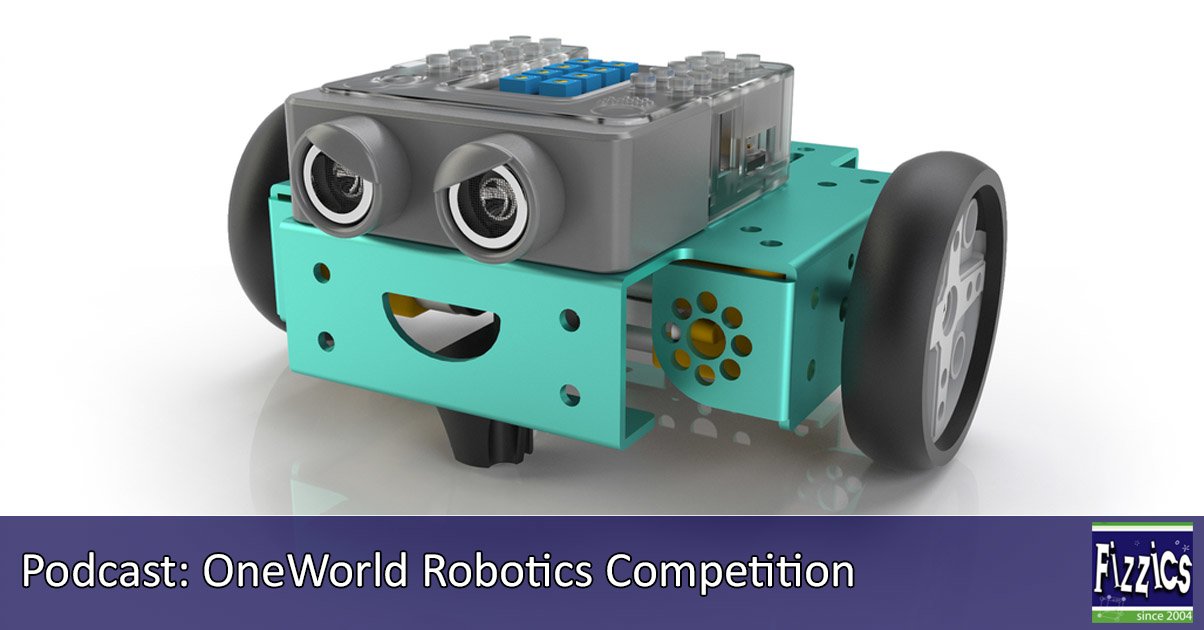
Find out about the OneWorld Robotics competition being held in Australia and Asian countries for 2019. It’s all about students applying digital literacy skills to a real-world problem!
How do we prepare the next generation to be innovative problem-solvers rather than just users of technology? In this episode, we talk with Kurt Yang about the One World Robotics Competition. We explore how mastering the Seven Survival Skills and applying robotics to Future Smart City scenarios can help students become adaptable, technically proficient leaders in the 21st century.
About Kurt Yang
Kurt Yang
Kurt Yang is a product manager at Actura who transitioned from a successful career in the financial services industry (FinTech) to the education sector (EdTech). Passionate about STEAM education, Kurt has been instrumental in the development of the Flip Robot platform. He believes that by removing the fear of technology and focusing on hands-on exploration, both teachers and students can master complex digital skills and apply them to genuine societal challenges.
The One World Robotics Competition
Mastering digital literacy is essential for students to thrive in a globalised economy. The One World Robotics Competition is a unique international programme designed to bring real-world industry scenarios into the classroom.
Competition Goals:
Seven Survival Skills: Prioritising critical thinking, collaboration, and adaptability over pure technical speed.
Future Smart Cities: Challenging students to solve autonomous transport and traffic issues for the 2050 metropolitan landscape.
AIoT Integration: Introducing students to the convergence of Artificial Intelligence and the Internet of Things (AIoT).
Startup Simulation: Encouraging teams to act as startup companies competing for a government tender, fostering entrepreneurial thinking.
Top Episode Learnings: Robotics for Future Readiness
The “Seven Survival Skills”:
Kurt emphasises that technical completion is only part of the goal. Students must master Dr Tony Wagner’s Seven Survival Skills—including curiosity, imagination, and oral communication—to succeed in the competition and their future careers.
Smart City Scenarios:
The competition moves beyond simple line-following robots. By tackling autonomous vehicle challenges, students must consider the legal and social impacts of their code and hardware designs.
Teacher Confidence and Local Support:
A successful robotics programme requires local support. Actura provides NESA and CPD accredited professional development to ensure teachers feel confident implementing tech, regardless of their background.
Education Tip: Lose the Fear.
Incorporate Kurt’s “just do it” approach by allowing students (and yourself!) to make mistakes during the assembly and coding phase. Robotics is an iterative process where failures are necessary data points. By construction and deconstruction, students develop a deeper technological literacy that a textbook simply cannot provide.
[00:00:17]Ben Newsome: Yes, welcome again to another Fizzics Ed Podcast. I hope you’ve had a fantastic week and are ready to do some more science and tech in your classroom or wherever you just might well be. Hey, this one’s a little bit different. We’re hearing about the One World Robotics Competition, which is a little bit new, but it’s certainly gotten a real roll on because it’s in Auckland, Brisbane, Melbourne, Shanghai, Singapore, Sydney, and Taipei for its first year.
[00:00:45]Ben Newsome: Kurt Yang from Actura, who’s a product manager over there, has dropped in to let us know what is this One World Robotics all about. This competition’s really quite interesting because it’s all about really getting kids to use digital literacy skills, the ones that we all talk about, but actually make them apply it to a real-world scenario around Smart Cities. It’s quite interesting and I really want to see how this actually goes. So this week is all about hearing about this and how you can get your schools involved. So, without further ado, let’s drop in as Kurt’s got a bit to say.
[00:01:14]Announcer: This is the Fizzics Ed Podcast. We’re all about science, ed tech and more. To see 100 fun free experiments you can do with your class, go to fizzicseducation.com.au. That’s physics spelled F I Z Z I C S and click 100 free experiments.
[00:01:29]Ben Newsome: Kurt, welcome to the Fizzics Ed Podcast.
[00:01:31]Kurt Yang: Thanks, Ben.
[00:01:33]Ben Newsome: Thanks for coming on a very wet, miserable day. You’ve come in from across but, look, hey, we’re sitting in the nice warmth of our video conferencing room here and really looking forward
to chat. So, Kurt, tell me, what is it that you get up to?
[00:01:52]Kurt Yang: Just been working really, really hard on our latest products. Just a bit about myself, my name’s Kurt Yang. So I actually grew up in China, sort of spent half my life there, half my life in Australia and New Zealand. For the last maybe about 15, 20 years I spent overseas. I worked in different areas, banking, FinTech, and now I’m in EdTech. It
‘s a very exciting new area and we… the company’s called Actura. So we are about bringing the best STEAM education solution to the market. Me myself, I work on a STEAM education solution called Flip Robot, and we have a lot of very cool hardware, software and latest robotic competition coming up, so it keeps me really, really busy. Yeah, that’s what I’ve been up to.
[00:02:16]
[00:02:16]Ben Newsome: Yeah, quite a bit. That’s quite a bit of a move from the financial world into the education world.
[00:02:21]Kurt Yang: Yep. It definitely has. For me, it was a sure thing just in terms of a
[00:02:21]Kurt Yang: sea change of my career. I started off my career in banking, in various commercial roles. I think in my early days, or in my banking career early days, it was very just normal. Technology was just sort of starting to influence the financial services industry.
[00:02:46]Kurt Yang: But I think in the last maybe two or three years, or even four years
[00:02:46]Kurt Yang: I saw a surge in terms of the disruption to the products and services, to the industry, and even to some aspect was impacting my job as well. So I think I was thinking what could I do, whether just change different job or within the bank or actually just having another different career path. And I was torn between different things and eventually I decided to really dive into bit more into the technology area.
[00:03:13] <
[00:03:13]Kurt Yang: So I jumped into a smaller FinTech company, I worked there for a while, and then this opportunity came up. So now I work in this, you can say, EdTech company which focusing on bringing the best robotics STEAM education solution to customers. So it’s been very exciting.
[00:03:36]
[00:03:36]Ben Newsome: Well, the Flip Robotics platform is amazing. It’s really cool. And this is not just a straight-up infomercial, it actually has some genuine pedagogy in this because… we’ve used, as an education outreach provider, we use a lot of different EdTech platforms in all these different ways—the Bee-Bots, the Lego robotics and whatnot. What I love
about what the Flip Robot does is it’s highly accessible for those schools where the budget is a bit limited. And this platform just works, and more importantly, it uses coding that’s more familiar to kids, especially if they’ve used Scratch and all that sort of stuff before. And so you’re heavily involved in that design or, you worked in tech, but tech can be lots of different versions on the hardware and the software and bits. How are you involved in getting Flip Robot to be born, so to speak?
[00:04:14]
[00:04:14]Kurt Yang: Definitely. Just speaking about that, that’s something else I’m also very passionate about that I forgot to mention earlier. Part of the reason why I’m doing what I’m doing, which I feel very fortunate about, is I’ve developed this huge passion now towards STEAM education. It’s something I wasn’t aware of before, but the more I get involved, the more I get passionate about. And also part of the reason why I am, to answer your question now, is in my job, I’m a product manager
there, and I get involved in almost every single aspect from a product development point of view. So we’re talking about the hardware designs and software development, just getting customer feedback, school teacher’s feedback to the solutions, and when we designing the curriculum, so we actually have a very comprehensive range of curriculum to support the implementation of the hardware and software. So almost every single aspect of the actual overall Flip Robot solution I get involved in, and I actually do design some of it, actually a very big chunk of it. That’s something I get very excited about and just felt very, very fortunate to be part of this.
[00:05:37]Ben Newsome: They’re lots of fun. I mean, I imagine that it’s quite challenging to be working in hardware development, literally just working out how all this casing gets manufactured, how the circuitry actually works and functions, and handles to the student abuse which they’re going to abuse the platforms, let’s be honest. But then there’s the coding side, then creating the actual curriculum around it. I mean, that’s quite a bit of stuff to work with. Which means that of course, I mean, working with teachers, that’s certainly a majorly important role because I mean, they’re the ones who are going to eventually use it.
[00:06:17]Kurt Yang: Yeah, definitely. I think after I first got into this role, at the time all we had was a 3D-printed version of the robot. That was like a prototype… I probably wouldn’t even call that as a prototype because it wasn’t even functional. It was just a 3D-printed version of what it looks like, and we had to approach schools, get their feedback in terms of is this something what you want or you can envision to implement in the classrooms.
[00:06:55]Kurt Yang: And from there, over the last maybe year and a half to two years, we have developed this whole wide range, about 10, 12 different versions of the extension or different configuration of the robots, and three to four different software platforms, and the whole range of curricula. So it’s been amazing. But also to answer your question earlier, it’s just I think through the engagements with schools and teachers, what I felt is in this current STEAM education industry, there is definitely a bit of a lack of support to teachers. Just helping them building up the confidence to teach tech, or especially given the tech industry right now, there are so many new different technologies coming up, and it’s hard for teachers to keep up.
[00:07:54]Kurt Yang: And us, as the industry people or the vendors or solution providers, I do believe it is our job to help teachers making sure they have not just the right tool, just in terms of the hardware and software, but understand how to use them, understand how to implement them, and actually make their life easier because they’re very busy people as you know.
[00:08:18]Ben Newsome: Exactly, and that’s exactly what I wanted to have a chat with you about because that curriculum that’s been built out… I mean, it’s one thing to roll out a product and go “Good luck”. It’s another thing to actually write out actual lessons that people can 100% pick up and use and also teach yourself before you’ve got students in front of you. And I mean, that’s a major role that Actura does.
[00:08:41]Kurt Yang: Yeah, exactly. And the other thing I think because we… you know for some other providers out there, they providing the hardware, amazing hardware and software, which is great, you know, but say if there’s a bit of that gap in terms of support whether it’s from a curriculum, PD and other perspective, the actual implementation will be hard, you know, that’s where the gap is. Whereas in our case, we have all of that plus we have what we call local support as well. So just for your information Ben, also for all the audience information, Actura, we are an Australian-based business, so we are Sydney-based. We’re headquartered in Sydney, and we have offices and people on the ground in different states, and in New Zealand, and in Singapore in different areas, and we are able to provide that kind of local support to teachers in the classrooms every day.
[00:09:41]Ben Newsome: And that’s one of the things with teacher PD sessions. Like we run a lot of those professional development programmes in lots of different areas of STEAM and STEM and all the rest. But certainly you get a lot of people with different backgrounds when it comes to coding, to technology in general. I mean, that makes it quite interesting. So if I was to rock up in… no idea how to code a single thing, just imagine I had no idea what I was doing. And I wanted to teach a Year 5 class how to deal with just logical reasoning, that sort of thing. How do they sort of go from knowing not much through to someone who can just run programmes with a whole bunch of Year 5s or Year 6 students? How does it sort of work?
[00:10:26]Kurt Yang: Definitely, definitely. We actually got this whole thing mapped out. So we have what we call like… you can do a trial. For example, initially, you know, we have people, whether we have trainers or we have people, we can go to the school, before they implementing the solution, right? We actually provide like maybe a one to two hours workshop for the teachers, give them like a from a both a technical and a solution point of view, give them a high level a demo and understanding what our solution’s about, and also trying to get them the feel of is this something for them. Is something from a technical point of view they can take on? Because our this sort of starter kit, our entry level robot, it is fairly easy for even Year 3, 4, 5 students or even higher as well, to take on fairly easily.
[00:11:22]Kurt Yang: And then from there on the teachers get a sense of is this something, you know, like they’re going to be able to do or for them. And if they decided to implement it, we actually going to go out there to provide them with PD support as well. So we actually do a face-to-face one day PD session for them, and also there will be what we call e-learning materials available for teachers to take on. And for those learnings and PD sessions the teachers doing, they can claim NESA or just in general like a sort of accredited CPD hours for their teacher accreditation. But the most important thing is that we provide that step-by-step support from a professional support point.
[00:11:57]Ben Newsome: Yeah, absolutely. And what I love about that is… I mean, okay, the Flip Robot, it’s got a bunch of different sensors, you know, can it find its self-way in the room? And then students off they go merrily away. But what’s neat is that I understand you guys are launching a competition which I think’s just nice because it’s one thing to have kids knowing how to, you know, programme their thing, but it’s another thing then compete against others. And that’s going to be a lot of fun.
[00:12:21]Kurt Yang: Yeah, exactly. Me myself for one is I’m very excited about this upcoming… it’s the… so the name of the competition is One World, so it’s the One World Robotics Competition. I know there are a lot of competition like robotic competition out there already, and to us the reason why we felt very excited like about this one the one we are doing is for one is it is focus a lot heavily on the skills rather than the actual technical sort of completion of the challenge, if that makes sense.
[00:12:55]Kurt Yang: So in the skills I’m talking about what we call Seven Survival Skills, which is very essential soft skills kids need to master for their future success, things like, you know, critical thinking, problem-solving, creativity, adaptability. So the way we structure the competition is in a way that there will be the technical challenges, which will be very future-proofing, forward-thinking, but at the same time, the theme or the way we going to do the scoring a lot of time is actually based on the Seven Survival Skills. And for one is, you know, for teams participating in the competition, they can actually still learn a lot from a technical standpoint.
[00:12:55]Kurt Yang: So the technology, just for your audience as well, is we’re using AI and IoT combined together, it’s what we call AIoT, and also there will be sensors involved as well. So the theme or what we call solution category for this competition will be Future Smart Cities.
[00:13:51]Kurt Yang
[00:13:51]Kurt Yang: So it’s talking about solving the urgent traffic transportation problems in the metropolitan areas maybe in 2050s. And obviously everyone knows these days autonomous vehicle is coming, whether you like it or not, it’s going to be here very soon. And I think getting our students, our kids think about how we can tackle those problems, not just from a technical standpoint, but also from a social and legal point of view.
[00:14:1
[00:14:18]Kurt Yang: So we will be incorporating all those elements, all those challenges into this competition. So students are almost like they are a startup company. They need to tackle it, they’ve been contracted by the government to tackle these problems and to win the tender. So that’s basically roughly what this competition’s about.
[00:14:40]
[00:17:39] Kurt Yang: Yeah, and the other thing I just want to quickly touch on on this competition is, given this is also our first year doing it, we also providing a fair bit of a financial incentive for schools to participate. So basically for the global competition winner, they will get $5,000 US towards their future team building or maybe their school activities.
[00:18:10]Kurt Yang: And then for each of the what we call future skills category winners,
[00:18:10]Kurt Yang: you know how I was talking about the Seven Survival Skills, each team winner also get $1,000 US for that. And also for the area competition winners, they will get a class set, which is like 20 Flip Robot starter kit, and also all the implementation support for their classroom implementation of the Flip Robot solution.
[00:18:31]
[00:18:31]Ben Newsome: Oh, that’d be cool because one thing especially, as an educator I know half the problem, half the battle is getting the equipment in the first place. And so if you’ve got a couple of robots to enter in the competition and you’ve got some red hot the trot students who are just nailing it, to get a huge starter set is a big deal.
[00:18:47]Kurt Yang: Exactly. Now I’m just speaking not just to students but also to teachers and schools as well. For schools and teachers thinking about trialling out Flip Robot, I actually feel using this One World Robotics Competition is a great way to trial it out. Because for one, you get a taste of the Flip Robot solution technology in general, without having to implement it across the whole grade. So it’s kind of like a trial period. But at the same time, if you guys win, you can actually get a class set of robots
to implement it as well, so to me it’s a win-win solution from a school point of view.
[00:19:25]Ben Newsome: What I love about these competitions, they tend to be a moving thing. They’re not static and they tend to be developed over time. And I can imagine a competition like this, I mean Year 7, 8 and 9 of course, primary schools can get involved for a later version of
this, but I mean this is the sort of thing that could be done with after-school robotics clubs.
[00:19:41]Kurt Yang: Exactly. Easily. Yeah.
[00:19:44]Ben Newsome: And if anything, it’d be really interesting
actually to see who would win, the after-school robotics clubs or the high school club that’s really good at this as well. Have like this little war in amongst themselves. But it’d be a lot of fun with this, and the beauty about this is that you sort of think about how learning as a whole should be. It doesn’t just stop at Year 18. I could almost imagine this also running for university groups or just interest groups, adults as well. It’d be a lot of fun.
[00:20:09]Kurt Yang: Yeah, I think because
Based on the audio, the transcript continues from where you left off.
[00:20:09]Kurt Yang: Yeah, I think because this is the first year we’re running it, so obviously this is the target we have. But as we have more success, we will definitely look to open it up more to more audiences, more target groups. So that’s exciting.
[00:20:21]
[00:20:21]Ben Newsome: Awesome. So if I’m a head teacher, I don’t know, Year 9, and I’m running a faculty and want to get involved, how do I get in contact?
[00:20:30]Kurt Yang: Definitely. Okay
[00:20:30]Kurt Yang: Definitely. Okay, so if you want to firstly to get some information about the One World Robotics Competition, you can just Google it, just Google ‘One World Robotics Competition’. The first search result is actually the URL for that website. And alternatively, you can get in touch with me. I’m one of the primary people responsible for the competition, so I can provide you guys with more information in terms of the registration and all the details of the competition as well.
ask is perspectives and advice, which often helps. So imagine I’ve got a bunch of people in front of you who are pre-service teachers and they know that they want to implement STEM and not just be about coding but just literally STEM in general. What would be your advice if they had robots in front of them and first steps, how to learn, work with these things? What would be your advice if you only had a couple of minutes to say here’s your first steps as a new pre-service teacher to use these platforms, what would you suggest to do?
[00:21:46]Kurt Yang: I think to me, even to me as well, I think it’s just don’t have the fear. Because a lot of people every time think about coding, robotics, they have this fear just about technology, oh this is too much for me, too hard for me. Just get your hands into it. Just very hands-on, build the robot, even that means sometimes you make mistakes or you have different failures and stuff, it doesn’t matter because that’s how I learn.
[00:22:15]Kurt Yang: Coming from a finance background, working in robotics, if I can do it, I believe everybody can do it. So my best advice is just really get hands-on, just do it. Assemble the robot, construct it in different ways. Coding-wise, obviously for our solution, we have a lot of materials and YouTube videos and stuff that help teachers to learn. But at the same time, just on a more generic sense, there’s a lot of materials out there, whether they’re teaching people how to do Blockly coding or just basic script coding. So just get into it. There’s no fear. You don’t have to have like a diploma or bachelor degree in IT to do this stuff because I’ve been doing it for the last couple of years. Everything I learned about hardware, software, I pretty much learned on my own, and also I guess a few helps here and there, but generally I just did it.
[00:23:12]Ben Newsome: No, I agree. Because I was only speaking with Michael Kasumovic a couple of episodes ago who is very involved with biological sciences at the University of New South Wales, heavily involved with the BEES programme. I cannot for the life of me remember, Michael if you’re listening, I cannot remember the acronym, what BEES stands for. Biological and Earth and Environmental Sciences or something like that. But he created a bunch of apps which was to help students understand biological processes. He’s a biological guy, he’s a scientist, and he started just messing around and all of a sudden out of that has created like 20 different apps that people can actually use and it’s doing phenomen
ally well. So yeah, just go… if you’re listening on, just look through the back catalogue for Michael’s episode there because it just gives you an idea of his headspace because he was very much about lose the fear and just do it anyway. And it’s amazing how well it goes and I agree.
[00:24:04]Ben Newsome: Well, Kurt, thank you so much for coming on in.
[00:24:07]Kurt Yang: My pleasure.
[00:24:08]Ben Newsome: And look, that One World Robotics Competition is going to be a lot of fun. And I can imagine this thing growing and growing and growing as these competitions tend to do. And
if you’re listening on in and you do happen to have Flip Robotics or if you’re considering it, reach out to Kurt because I’ve got this feeling that this will be a competition your kids are just going to love.
[00:24:25]Kurt Yang: Totally agree.
[00:24:27]Ben Newsome: All right, mate, have a fantastic day. Catch you soon.
[00:24:29]Kurt Yang: Thank you, Ben.
[00:24:32]Announcer: Not all TPL for teachers is as awesome as it could be. I feel like there’s a lot of PowerPoint presentations, a lot of sitting and listening to someone talk. Well, if you want a break from that, Fizzics TPL sessions are fully hands-on, fully integrated with the curriculum and full of amazing science ideas that you can put in your classroom right now.
[00:24:53]Ben Newsome: Well, what’d you think about that? This One World Robotics Competition is certainly something where you can really get your kids’ hooks and teeth into when it comes to having some genuine digital literacy skills. And it’s something that Dr Tony Wagner has talked about when it comes to the Seven Survival Skills in this 21st century of ours: critical thinking and collaboration and adaptability and initiative and oral skills and accessing and analysing information, curiosity and imagination.
[00:25:27]Ben Newsome: All that stuff is what these competitions is all about. And what Kurt’s describing is something that, well, I can just see these competitions just getting bigger and bigger and bigger. And look, if you want to find out more about it, again, the website is oneworldrobotics.com.au and check out what this competition is all about and get involved if you’re nearby. And if you’re not nearby, reach out to them, let them know, “Hey, we want to get involved. How can we do this?” and maybe they might get that competition to a city near you. So there you go, that’s One World Robotics Competition. I hope you enjoyed a bit about this episode and I hope you have a fantastic week. I’ll catch you another time.
What is the One World Robotics Competition? The One World Robotics Competition is a global event held in cities like Sydney, Auckland, Singapore, and Shanghai. It focuses on using digital literacy and robotics to solve real-world problems, specifically within the framework of Future Smart Cities.
How does this competition differ from other robotics events? Unlike many competitions that focus purely on technical completion, One World emphasises the mastery of the Seven Survival Skills—soft skills like critical thinking, collaboration, and adaptability. Scoring is heavily weighted towards how students apply these skills and navigate social or legal challenges.
What are the “Seven Survival Skills” mentioned in the episode? Derived from the work of Dr Tony Wagner, these include critical thinking and problem-solving, collaboration across networks, agility and adaptability, initiative and entrepreneurship, effective oral and written communication, accessing and analysing information, and curiosity and imagination.
What real-world scenario do the students tackle? The competition is themed around Future Smart Cities, specifically addressing traffic and transportation challenges for the year 2050. Students act as a startup company contracted by the government to manage autonomous vehicles and urban infrastructure.
How can teachers with no coding experience get involved? Actura provides significant local support, including face-to-face professional development (PD) sessions and e-learning materials. Kurt Yang encourages a “lose the fear” approach, suggesting that teachers learn alongside their students by simply getting hands-on with the hardware.
Discussion points summarised from the One World Robotics Competition with AI assistance, verified and edited by Ben Newsome CF
Extra thought ideas to consider
Beyond the Code: Social and Legal Robotics
The One World competition asks students to consider the social and legal implications of autonomous vehicles. Discussion could focus on how technology doesn’t exist in a vacuum and why ethics and policy are just as important as the circuitry.
The Career Sea Change: From Finance to EdTech
Kurt Yang’s transition from banking and FinTech to EdTech highlights how technical and analytical skills are transferable. Educators might discuss with students how a background in one industry can provide a unique perspective in another, such as applying commercial tender processes to a robotics competition.
Authentic Teacher Professional Development
The episode highlights that effective EdTech implementation requires more than just hardware; it needs ongoing local support and accredited PD. Schools should consider how they choose technology partners based on the level of hands-on support and curriculum integration offered.
Recognised by
22 years, award-winning work, 1 purpose
Recognition from business, education and industry bodies across Australia.
Australian Small Business Champion
Multiple years
CILC Pinnacle Award and Hall of Fame inductee
Center for Interactive Learning and Collaboration
Western Sydney Awards for Business Excellence
Winner
Top 100 Coolest Company
Listed
Local Business Awards
Winner
We value your privacy
We use cookies to improve your experience. Essential cookies are always active. You can choose which optional cookies to allow.We use cookies. Optional ones stay off unless you allow them.Privacy policy