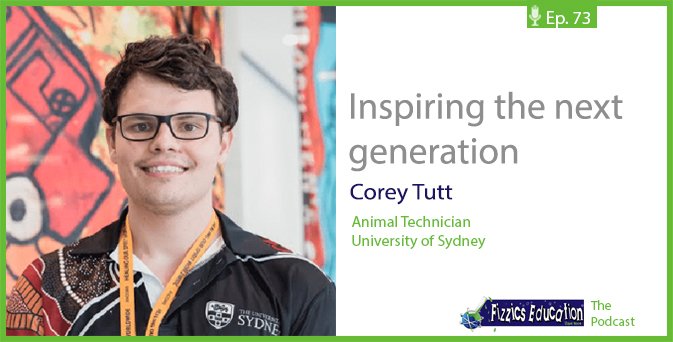
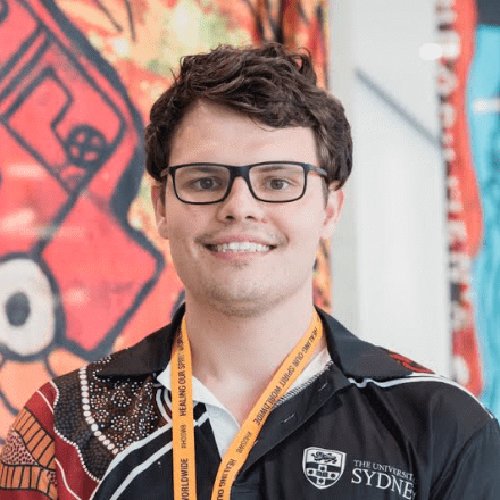
Podcast: Inspiring indigenous youth with Corey Tutt
Be inspired as we chat with Corey Tutt who has made it his mission to spread his love of science to remote and regional indigenous communities through sending science books to schools & linking these students to scientists via Skype. This project is completely self-funded and he works hand in hand with local elders in each community. Not only is Corey increasing scientific literacy, he is also helping kids see true pathways to higher education!
How do we bridge the gap between world-class research institutions and the most remote communities in Australia? In this episode, we speak with Corey Tutt about his mission to empower Indigenous youth through STEM. We explore his journey from alpaca shearer to medical researcher, and how he is creating vital pathways for the next generation of First Nations scientists and animal carers.
About Corey Tutt
Corey Tutt is a proud Indigenous man from the South Coast with Kamilaroi heritage. His career is a testament to the power of self-driven curiosity; he has worked at Roo Gully WA and Shoalhaven Zoo as an alpaca shearer, and with the RSPCA and Animal Welfare League before pursuing higher studies. His passion for science ignited at the Garvan Institute of Medical Research, where he taught himself genetics from the ground up. Now based at the University of Sydney, Corey has reunited with AIME—the group that mentored him as a teen—to develop an Indigenous science committee and podcast. Beyond the university, he is a tireless advocate for remote communities, sending science books across Australia and creating virtual classrooms to bring scientists to the bush.
Expertise: Genetics, Animal Welfare, Indigenous Mentcting, and Science Outreach.
Building Pathways: Deadly Science & Remote Outreach
Corey’s work focuses on breaking down the geographical and financial barriers that prevent Indigenous students from engaging with STEM. He believes that “you can’t be what you can’t see,” and is working to change that narrative.
Core Initiatives:
Books to the Bush: Corey has personally coordinated the delivery of science books to 48 remote schools across Australia, ensuring that students in the most isolated areas have access to high-quality STEM literature.
The Virtual Classroom: Using tools like Skype, Corey connects remote students with professional scientists, allowing them to ask questions and see themselves represented in the scientific community.
Indigenous Science Committee: At the University of Sydney, Corey is developing pathways to science within the institution, creating a supportive environment for Indigenous students to pursue higher education.
Animal Industry Connections: Leveraging his extensive background in animal husbandry, Corey helps young Indigenous people find meaningful work and training opportunities within the animal welfare and agricultural sectors.
Top Episode Learnings: Indigenous Perspectives in STEM
Self-Directed Learning:
Corey shares his inspiring process of teaching himself Genetics, starting at a primary school level and working up to complex medical research. It highlights that passion and persistence are just as important as formal training.
The Importance of Mentorship:
Returning to AIME (Australian Indigenous Mentoring Experience) as a mentor himself, Corey discusses how early intervention and consistent support can change the trajectory of a young person’s life.
Connecting Culture and Science:
We explore how Corey is learning more about his own culture while simultaneously building modern scientific pathways. He advocates for a Two-Way Learning approach that respects Indigenous knowledge while providing tools for modern scientific careers.
Education Tip: The “Deadly Science” Resource Audit.
Take a leaf out of Corey’s book and look at your classroom library through a new lens. Do your science books reflect the diversity of the Australian landscape and its people? Follow Corey’s lead by incorporating stories of Indigenous Australians in STEM. As Corey demonstrates, providing a student with a book about space or animals isn’t just a reading task—it’s an invitation to join a global scientific community that values their perspective.
[00:00:17]Ben Newsome: Yes, welcome again to another Fizzics Ed Podcast. Today, it’s a really big, inspiring lesson about how you can really make a true difference if you put your mind to it. You see, Corey Tutt for the last six months has been sending books to 48 remote schools all around Australia to get remote and regional kids excited about science and, more importantly, see how they can get involved in science themselves. He’s showing them the pathways to get there, which is just awesome. And he’s not just been sending books out; he’s been organising virtual classroom visits to bring the scientists out to the bush as well. It’s so cool. And it’s just really something to have a think about as you listen to this chat: how can you make a difference in your own community, and even better, how can you make your difference beyond your community? So, tell you what, let’s hear from Corey about what he’s been up to and how this all started.
[00:01:03]Announcer: This is the Fizzics Ed Podcast. We’re all about science, ed tech and more. To see 100 fun free experiments you can do with your class, go to fizzicseducation.com.au. That’s physics spelled F I Z Z I C S and click 100 free experiments.
[00:01:21]Corey Tutt: Hello, my name’s Corey Tutt. I’m from the University of Sydney, and thank you for having me.
[00:01:26]Ben Newsome: Mate, I am stoked to have you in. A bit hard to get you because, geez, you’ve got a lot going on. And speaking of which, you’ve had to sort of duck around the corner to have a bit of a chat with me in between the stuff you get up to. Whereabouts are you right now?
[00:01:37]Corey Tutt: So, I’m currently in at the University of Sydney in Camperdown, hiding behind my building I work in, the Boss building, on my break.
[00:01:52]Ben Newsome: We have to make sure we get you back to doing what you need to do in between your break. I hope you’ve got coffee or your tea or something.
[00:02:00]Corey Tutt: I do have a cup of coffee, Moccona instant, which is the mug of choice for an animal technician.
[00:02:08]Ben Newsome: It does actually. We do a lot of regional and remote tours and I do a lot of time in hotel rooms where International Roast is pretty much what you get. If you’re lucky you might get a bit of Nescafe.
[00:02:18]Corey Tutt: I mean, give us carb juice, you know. To my headspace, I mean, if it’s got caffeine in it, I’m all good. But anyway, we digress massively.
[00:02:29]Ben Newsome: So, everyone, we’re speaking with Corey now. Corey does some amazing stuff when it comes to all sorts of things around animals and science and all sorts of stuff. But rather than hearing from me, you want to listen to what Corey’s been up to. So, Corey mate, tell us what it is that you actually do.
[00:02:44]Corey Tutt: So, I’m an animal technician by trade, a former zookeeper, former alpaca shearer, and I send science books off to remote schools. I’m also Indigenous, so I’m from Kamilaroi country. And I look to inspire the next generation of Indigenous zookeepers and scientists, and I help by doing that by spreading the word of animals. One of the things I like to do is talk about animal superpowers. So when you think of an animal superpower, if you think of the Black-headed Python (Aspidites melanocephalus) for example. Why does it have a black head? It’s so it can be ectothermic so it can heat itself up and become nocturnal. So sort of little things like that. And I’m looking at just doing science engagement to remote communities and looking to inspire the next generation.
[00:03:34]Ben Newsome: It’s so cool. I mean, we will definitely get into chatting about how you’re getting books out to schools because that’s something that I went, “Oh, that’s so awesome.” But I love that idea that you’re looking at animals from a, “Hey look at the interesting things they do.” I mean, let’s be honest, colour is often seen as just a camouflage thing, but it has other things. I mean, you just saying that reminds me of those alpine grasshoppers up in Mount Kosciuszko. They actually change colour for the exact same reason because they want to stay warm in winter.
[00:04:00]Corey Tutt: Yeah, definitely. No, it happens.
[00:04:02]Ben Newsome: But hey, just I’ve got to ask, and my wife is totally down this way too, zookeeping. What was it that made you go, “You know what, I really need to get into this”?
[00:04:13]Corey Tutt: So I guess as a child I was the feral kid that was into everything creepy crawly. I was always catching spiders, always catching snakes, always getting yelled at by my mother to put that snake down. I was always catching lizards and that was my interest. And I think people like Steve Irwin were really big for me in the sense that they worked in zoos and they got to work with these animals all the time. So from a young age I just wanted to be a zookeeper, that’s all I wanted to do. And then once I did that, it was still some of the best years of my life. I enjoyed it so much.
[00:04:54]Ben Newsome: That’s unreal. And just out of interest, had you worked with alpacas before or was that sort of something that the zoo just threw at you?
[00:04:59]Corey Tutt: No, definitely not. So what had happened was I was 18 and I was working at the zoo and we had llamas at the zoo, but to be honest I didn’t really know the difference between a llama or an alpaca. And I saw this ad in the paper for an alpaca handler. And it was for a job and zookeepers out there, you’d know that you don’t earn a lot of money. You live on the poverty line. And I saw this ad in the paper so I decided to apply for this job and it turned out to be an alpaca shearing job.
[00:05:39]Corey Tutt: And yeah, some of the best four years of my life. We went around Australia and New Zealand shearing alpacas. And it’s kind of where you sort of think about the animal superpowers. You think, oh, alpacas are this camelid that just sits in a paddock and eats grass, but they have these really unique abilities that a lot of people seem to overlook. Which in Australia we’re very lucky, we’ve got over 250,000 alpacas but you wouldn’t know it.
[00:06:01]Ben Newsome: Right. And I suppose, I mean obviously, that fleece is incredibly valuable. But then at the same point, it’s not that great to them in the middle of summer either I suppose. Regardless, it’s true that working with this sort of stuff is a good leg up into working in zoos and whatnot. But you then sort of did a bit of a left turn and went to the Garvan Institute of Medical Research. What prompted that?
[00:06:30]Corey Tutt: So what prompted that was I had been shearing for four years and one of my clients was the director at the Garvan Institute mouse breeding facility. And she completely forgot about me, by the way. You should never forget about your alpaca shearer until the job interview and then she realised.
[00:06:51]Ben Newsome: It’s a tip. There’s a takeaway from this episode. If you ever have to have one, do not forget your alpaca shearer.
[00:06:56]Corey Tutt: Yeah, we’re very limited in supply. I think that connection was made and I became this animal technician. And it just opened my eyes up to a whole new world of science and all this amazing technology that’s going on at the moment. Which, you know, things like CRISPR and if you had to ask me as a zookeeper 10 years ago if you could make a mouse glow in the dark, I’d probably laugh at you really. And then to see it with your own eyes, it’s quite amazing and this technology’s there and it’s great. It’s really exciting.
[00:07:37]Ben Newsome: And the beauty about this is that you’re following your own curiosity and the amazing thing about curiosity is it tends to take you on weird paths you never expected when you first start off, let’s be honest. But you really are paying it forward and that’s exactly the real guts of why I really wanted to have a chat with you. Because you’re an Indigenous man. Are you from the Wollongong area or you come in from elsewhere? Whereabouts have you been again?
[00:08:00]Corey Tutt: So, Pop was from Kamilaroi country. So up north on the Mid North Coast. And he moved to Sydney at a young age and then that’s where my culture comes from. And then I was born in Sussex Inlet, which is on the New South Wales South Coast. So I spent a lot of time travelling as a kid. We moved around quite a lot. So we went to South Australia, I lived in Bungonia for a bit, which is just south of Goulburn.
[00:08:31]Corey Tutt: There was a lot of moving around. There was a lot of animals when I was a kid so that’s sort of where my interest in animals sort of grew as a kid. You would quite often on the farm see a Koala (Phascolarctos cinereus) or a Tiger Snake (Notechis scutatus) and those are things that I hold dear, like they’re memories that I have. So a lot of moving around as a kid but I think it’s a good thing.
[00:09:03]Ben Newsome: Okay, so you I mean by the way, I’m an ex-army kid so I went all over the place too. I know that feeling of where is my locus, where do I come from? But obviously they actually helped you to sort of connect with people who some people may only hang around in 5, 10 kilometres away from where they’ve been around, but other people have travelled the length and breadth of this country. You are working with a bucket load of remote communities. How did you get into that?
[00:09:31]Corey Tutt: So I mean I know what it’s like being an Indigenous person and I think that with Indigenous people we’re often told we can’t do things. In my experience going through school, I was always told that I couldn’t be a zookeeper and it’s kind of like a thumbs up to the attitude is like, you know, I’m going to do this no matter what. So I feel determined. So when I talk to remote communities, I just try and share my story and be as honest as possible and I listen. And I think the most important thing is listening. And if I want to send books to a community, it’s not as simple as sending books to a school because they’ve got to be culturally appropriate and I let the elders sort of give me permission to do that. So there’s a lot that goes into it. It’s not just packing up books and just sending a whole heap of books to a school. There’s a lot of a personal aspect to it as well. And as Indigenous people, we connect by storytelling. So I tell my story and I listen to theirs and that’s how you make that connection.
[00:10:04]Ben Newsome: So there’s a lot of books you could choose from to help communities out and obviously help the kids themselves to unlock this wonder that is this thing called science. But that actually becomes difficult to work out, well, which ones on earth would you want to consider proposing to the elders to choose in the first place? I mean, what sort of ones have you been sending out?
[00:10:14]Corey Tutt: So I’ve been sending out a bit of everything. So from physics to animal books to natural ecology books, plants, you name it, I’ve sent it. I try and send a little bit of everything in each box. Something I’ve been doing recently, which it kind of has a bit of more personal aspect to it is I get Indigenous people that I’m friends with and I’m connected with, and non-Indigenous as well which is important, to sign books. So if they choose out a book for me, because there’s so many books to choose from, you need a bit of help.
[00:10:23]Corey Tutt: So if there’s a book, say, Reptiles and Colour by Harold Cogger, 1985. It’s the first book I learned how to read. I sent that to a young fellow up in North Queensland. And I signed it with my personal email address and my phone number in it and said, “Look, this is Corey Tutt from the University of Sydney. This is my story.” And I got an email back from that kid. So there’s a personal connection there because I know he’s read the book because he’s seen my signature in it. So I got a lot out of that book, and I know that it’s passing on to the next generation. So sort of books like that, I know that are going to just intrigue curiosity. And like you said, imagination is an amazing thing and also if you can be inspired by something then you’re going to find out more about it.
[00:10:53]Ben Newsome: Well, over the years I’ve had a chance to speak with a heap of scientists, science teachers, science communicators and all these different walks of life. A lot of them often talk about this turning point that happened really early on and it can often be very small. I can’t remember which episode it was on this podcast, but a while ago I was talking about how I know for a fact I saw liquid nitrogen handled at a kids’ science party. I’m sure of it, up in Townsville. I would have been about seven years old or something like that, and I know that all I can remember is seeing this guy throw this black thing at a wall, it shattered and I got to hold it, and it was really cold.
[00:11:31]Ben Newsome: Now knowing now, I know he put a squash ball into liquid nitrogen, it’s minus 196 degrees Celsius, this stuff is properly cold and it changed the properties a little bit so when you throw it against a wall it shatters and therefore it’s quite a dangerous thing to do because you’ve got these hard rock-hard cold things flying around the audience so if you’re ever going to do that cover it with a glove or something and hit it so it doesn’t have all the shards go around.
[00:12:15]Ben Newsome: But I know that as an impressionable seven-year-old, I was holding this thing that made no sense because, hey, this rubbery, squishy, elastic thing is now no longer the case and it’s rock hard, it’s cold, and it’s wow. Now, I don’t know who that person was, I don’t know the person’s name. I don’t even know the kids’ party that I went to, because let’s be honest, it’s a long time ago. But having that connection—I don’t know, I’ve got no idea, but I certainly know that during my primary years I started reading into more and more about how the world works. And I wouldn’t be surprised when I think back to what you’re doing, where you’re sending out reptile books or whatever to kids who have a thirst for knowledge but don’t know where to look. Having a connection that isn’t just conveyor belt education—and I know there’s a lot of people listening in who do not ever want to have their classroom to be a conveyor belt education, you want to have that connection with your students—having that personal connection is so powerful.
[00:12:49]Corey Tutt: There was a similar thing that happened to me as a child and I still remember it really well. And I was out at Bungonia, I would have been about nine years old, and there was a blue-tongue lizard (Tiliqua scincoides) on the road. And as a kid you can imagine, when you find a blue-tongue or a lizard of that size when you’re a small guy, you just think, “Oh wow, that’s awesome” because it’s like a blue-tongue lizard, they’re cool animals. But I remember putting my hand over its head, as in holding it, and its eyes shut, right?
[00:13:24]Corey Tutt: And you’re like, “Wow, why’s its eye shutting?” You know, and then you read about it and you’re like, “Oh, parietal eye.” So one of the things I like to do if I’m doing like a science talk, I like finding awesome short facts that are going to make people talk about it later. So all reptiles have this third eye, which is called the parietal eye. It allows them to see in colour and it’s right in the centre of the skull, which is sort of like a clear scale. And if you put your hand over it on a blue-tongue lizard (Tiliqua scincoides), it will instantly think it’s nighttime and shut its eyes. So that for me was a really curious sort of thing. I wanted to know more, why did it do that?
[00:14:06]Corey Tutt: If I saw a Shingleback (Tiliqua rugosa), this is in South Australia as a kid, you know, we used to travel a lot through South Australia. You’d think there’s no water around. How is this lizard surviving in the driest of climates? And then you do a bit more research and you find out they’re sort of like the camels of the reptile world. They carry all that water and fat in that tail and it allows them to survive for months on end without eating or drinking. And it’s like, that is cool, you know. They’re like, again, like the animal superpowers. So I guess I like to share those sort of things that really did inspire me and make me curious, especially with reptiles and stuff like that. So I often think about those times as kids when I was a kid and I’d just sort of think, “Oh wow, I need to know more. Why is this lizard doing this or this snake doing this or this koala doing this?” And that’s what intrigued me to learn more.
[00:15:04]Ben Newsome: And that’s one of the things I like what you’re doing because obviously, I mean it would take some effort because it is a self-funded thing that you’re doing, you’re getting these books out as best you can. But it’s not just the books, you’re also organising virtual classrooms, which is very much a thing I’m into. Anyone who’s listened before, I definitely do a lot of video conferencing out to schools and lots of it. And I know the impact it can have to be able to reach kids where you may not be able to get to. That’s really, really cool. Have you had many people get on board with that or is that an occasional thing?
[00:15:37]Corey Tutt: We’ve had quite a few people get on board. My friend Dr Karl from Triple J, he’s quite well known, he’s done a couple of Skype sessions with schools for me. I’m also looking at getting some Indigenous scientists on board to do these Skype Q&As. And something that I really like to do as a goal is actually get the world’s first translated talk. So talks in an Aboriginal language, using Aboriginal languages. There’s 27 of them. But how cool would it be to go to these remote areas and have a Deadly Science platform where their talks can actually be done by an Indigenous scientist in language, which I don’t think’s been done before. And if it has, I apologise, but it’s something that I really want to grow.
[00:16:26]Corey Tutt: And not just for Indigenous people, but for people worldwide. I think that we’ve got the technology now and these people around the world and in remote Australia deserve access to these awesome superstars and science comms, you know. I wanted to open up doors that were normally shut. So I think it’s hard for a doctor or a nurse or a researcher or a scientist to fly out to these areas and drive two or three days.
[00:16:56]Ben Newsome: Well absolutely right. I mean that’s one of the reasons we got into that nearly 10 years ago was that I just couldn’t handle how much it costs for us to come out to a school in West Bourke when we knew full well we could connect through video conference and it would be a tenth, a twentieth of the cost. And yet the content was the same. And just thinking about this, if you’ve got Indigenous scientists talking about their science in their own language, that’s got some power well beyond the science. I mean obviously science is an important thing, but I’m thinking about the National Film and Sound Archive, the languages themselves. Not all of these languages are heavily spoken. Some are not as many people. And it’s a potential possibility to record some seriously cool stuff so that other generations can learn from it and hopefully keep some of those languages alive.
[00:17:46]Corey Tutt: So there’s a book called Dark Emu, I don’t know if you’re aware of it, but I strongly suggest that you and your listeners read this book. It changed my life. It changed my whole feelings towards my heritage. We were kind of told that there weren’t true… they were lies really in school, where Aboriginal people were kind of seen as these nomadic people that lived off the land and barely survived. And thankfully that’s changing. The whole demographic of what we learn in schools is changing, which is great. But people would be amazed that Aboriginal people had civilisations of 10,000 people. They had irrigation systems that were well beyond what was recorded.
[00:18:15]Ben Newsome: Oh, you remind me of the fish traps out near Brewarrina, which are just stunning and in the river for thousands of years. Like…
[00:18:27]Corey Tutt: Yeah, even if you look at the honey ant, for example, to have the foresight that water wells were kilometres away. Aboriginal people used to store water kilometres away and use honey ants as a source of glucose. You know, to have glucose which is an essential part of being hydrated. To have that foresight to do that, plus many other things, I couldn’t do it justice in this time, but the depth of knowledge is huge and it’s only just coming onto its fore now.
[00:18:55]Ben Newsome: I’m just actually thinking way back towards the very start of this series where we were speaking with the National Indigenous Science Education Program (NISEP). That’s a group of scientists, actually chemists out of Macquarie University. They were and are still connecting with some Northern New South Wales elders where they wanted to engage their kids in science and learning and everything else. And they’re doing it through just actually giving it a platform to talk about the bush medicines and bush lore and knowledge that’s deep and rich through the Bundjalung community and beyond. It’s amazing just how much is actually out there if people know where to look. And you’re giving them that platform.
[00:19:25]Corey Tutt: Well, even for ecology and how Aboriginal people used to hunt, and they never took more than what they needed. And also, they used to backburn in triangles, right? So these big triangles so the fire would burn itself out. Where now, we kind of splash the land with a bit of kerosene and we backburn in a straight line. But we’ve been doing that for so long now that unfortunately we can’t go back to the way that Aboriginal people did it. It’ll take years. So we’ve really destroyed the land, which we can get it back, but we need to educate ourselves. We need to learn the past before we can learn the discoveries of the future is what I like to say. A lot of what Aboriginal people were doing is so related to what we’re figuring out today. I think in some ways that as civilisation’s grown, we need to grow with it and we need to acknowledge the past. By acknowledging the past, we can make the discoveries of the future.
[00:19:46]Ben Newsome: Yeah, I absolutely agree and I mean obviously this work that you’re doing is going to help towards that, let’s be honest. And I know that this is not only really just the start of it, I believe you’ve got a podcast coming out in July, yeah?
[00:19:59]Corey Tutt: Yeah, the Deadly Science Podcast. So I’ve got a few guests lined up. I won’t reveal those because I want you guys to listen to the podcast.
[00:20:09]Corey Tutt: So I’ll give you a little hint. It’s going to be based off Indigenous researchers from around Australia and just awesome Indigenous people doing really great things in science. And it’s something that I don’t think’s really been done before. We don’t really get to hear much from the amazing Indigenous scientists doing amazing things around the country.
[00:20:38]Corey Tutt: And I really want to share their stories and I also want to look back at the ancient stories and the old-time medicine and stuff like that. I want to educate myself more than anything. I want to learn about history and I want to share that with you all. It’s kind of a journey for me as much as it is for you guys and whoever listens to my podcast because it’s finding out a lot about my history and my culture and sort of growing amongst that, and I want to share that experience with everyone.
[00:21:09]Ben Newsome: So just sort of thinking because, I mean, you’ve got quite an interesting path starting all the way back as an alpaca shearer all the way through to creating this podcast and beyond. I mean, do you have a rough idea of where you’re headed or you’re just sort of making it up as you go along?
[00:21:26]Corey Tutt: It’s probably a bit of Column A and a bit of Column B. I just want to… you know, there’s an old saying that everyone seems to overquote quite a lot is “be the change you want to see in the world”. I just think that in Australia we’ve got so much to give from our Indigenous people as well. If you look at say New Zealand, they do quite well where they embrace Māori culture quite a lot.
[00:21:58]Corey Tutt: And I would love for the country and just society to sort of move in that direction and embrace Indigenous culture because there’s so much we can learn. I just want to share the stories and if it gives us more Indigenous scientists, it’s just going to make us stronger as a science nation because we are really gifted in science. But we can be so much better if we had more Indigenous scientists.
[00:22:23]Ben Newsome: Absolutely. And actually if you’re listening to this overseas, I mean I’d guarantee that you’d have Indigenous communities who have similar backgrounds, similar knowledges that could be out there as well. I mean you could follow Corey’s footsteps in starting this process off. And actually that sort of gets me sort of thinking, if you came across someone, just say they’re in Canada with some of the Indigenous communities up that way or anywhere, I mean you came across someone who really wants to make a true difference, be that change that you want to be etcetera, what would you suggest would be the first steps?
[00:22:56]Corey Tutt: I’d say delete “can’t” from your vocabulary because I think in society and I guess these days there’s always people saying you can’t do things. Really you are the maker of your own destiny and if you try, the worst they can say is no. So I would say just try your best and then if the gates close and doors close in front of you, there’s always a way around that. You just got to be brave. Fortune favours the brave, that’s my advice.
[00:23:31]Ben Newsome: It’s true. I think there’s some quote about a window opens if a door closes or something to that effect. There’s always something out there and that’s actually like, I mean domestically, you’re in Australia and just say you wanted to do something about any topic, it’s always a first step. That’s very true. Massively so. Look Corey, thank you very much, especially having a chat in between your break. I don’t want to get you into trouble, you’ve got bits and pieces to do but undoubtedly we’re going to hear more and more and more and more about what you’re getting up to. And I love the impact. I mean, what was it we were talking just before we hit record on this, is it 48 schools you’ve worked with?
[00:24:07]Corey Tutt: Yeah, 48 schools now and also six foundations. So there’s quite a lot of kids there out there that are now getting science and, you know, it’s not really a testament to me, it’s the testament to the people around me and helping me support this. I am self-funded, I work two jobs to pay for all this. It costs a bit but it’s the Dr Karls, it’s the people on Twitter, it’s the people at the university that are supporting me that really drive me forward and that’s why we get the results because it’s a collaborative effort.
[00:24:44]Corey Tutt: There’s a lot of Indigenous people out there that are helping me get this done and they… it’s just testament to them that they really want to help the future generations and that is really important. So I just want to get that across that if it wasn’t for all my allies helping me out, it would be a very difficult task.
[00:25:06]Ben Newsome: I agree, it’s always the team surrounding you and beyond your network and everything else. And actually perfect segue to be honest into exactly what I’d like people to do is that if you want to make a connection with Corey, do so! It would really help him out. And so Corey, how would they get in touch if they want to be able to help you out in some way, shape or form?
[00:25:26]Corey Tutt: So there’s a couple of ways. You can find me on Twitter @corey_tutt. You can send me an email: [email protected]. And yeah, you can just sort of follow Fizzics Ed and you can see me on there and I’m sure that you can follow me on Twitter and shoot me a DM or get in contact with Ben and we can definitely… I’m open to collaborating with anyone. If you want to help out, if you just want to drop a thumbs up or just wish me luck or go to my GoFundMe page, then that’s just deadly and I can’t wait to hear from you all.
[00:26:09]Ben Newsome: And actually, you know what, I mean often when we have had get people to reach out, people have reached out to past guests in so many meaningful ways. It’s so humbling that we’ve been able to help people out with this. But sometimes just giving people a thumbs up is a great thing too because sometimes you’d be working away in the dark somewhere trying to do some stuff and you just hope that someone’s appreciated it. It gives a good thing, it helps drive. Corey clearly has a genuine passion for not only his heritage but science in general and anything to help out is always a good thing. But obviously if you want to collaborate at a deeper level, please do so! It’s a good thing to do.
[00:26:46]Ben Newsome: Look Corey, thank you so much for your time. Unfortunately, I have to zip off because I’m running a professional development programme out to a school in Northwest New South Wales via video conference. So I’ve got to get going and set up but look, much appreciated.
[00:27:03]Corey Tutt: Good luck.
[00:27:04]Ben Newsome: We’ll be fine. We’re making lung models of all things. But we’ll catch you another time and have a fantastic afternoon.
[00:27:12]Corey Tutt: Thanks for having me and yeah, stay deadly.
[00:27:15]Announcer: You’ve been listening to another Fizzics Ed Podcast.
[00:27:34]Ben Newsome: Well, there we go. We just heard from Corey Tutt, who you can tell is not only an amazing guy, great guy to hang around with, he is an inspiring and passionate person who really truly wants to make a difference. And you know what? We can all emulate his way of doing things. There’s no reason why we can’t band together and get books out to more communities, get more connections happening between our schools and our communities and, more importantly, getting kids in other areas to think, well, you know what? Is there a way for STEM for them? Is there a way to get involved in science, technology, engineering and maths? Is there a way that they can do it themselves, no matter where they are? We can connect these bridges together, we truly can. And someone like Corey is making a true difference to make that happen.
[00:28:19]Ben Newsome: So, I hope you’ve thought of different ways that you can connect with Corey and really form a connection that could make a difference in your local community and beyond. I know Corey would love to hear from you. It’s definitely an opportunity to take up. And look, we’ve got more episodes coming up. We’ve got some great educators and other interesting people who have been making a difference in science, and it’s all here on this podcast. You’ve been listening to me, Ben Newsome from Fizzics Education, and I hope you have a fantastic week. I will catch you another time.
[00:30:35]Announcer: Sign up now for our fortnightly email newsletter. It’s loaded with details on new experiments you can do, STEM teaching articles, new gadgets, exclusive offers and upcoming events. Go to fizzicseducation.com.au. Scroll to the bottom and add your email.
[00:30:53]Announcer: This podcast is part of the Australian Educators Online Network. AEON.net.au.
Frequently Asked Questions
What inspired Corey Tutt to start the Deadly Science initiative? Corey was motivated by his own experience of being told he couldn’t achieve his dreams, such as becoming a zookeeper, during his school years. He wanted to change that narrative for Indigenous youth in remote areas by providing them with the resources and representation needed to see STEM as a viable career path.
How does Corey ensure that the science books he sends are appropriate for remote communities? He emphasises that outreach is not as simple as just packing boxes. He listens to the communities and seeks permission from local elders to ensure the materials are culturally appropriate, building a connection through storytelling and mutual respect.
What was Corey’s professional background before moving into medical research? Corey has a diverse career history, including working as a zookeeper and spending four years as an alpaca shearer, travelling across Australia and New Zealand. These roles allowed him to develop a deep appreciation for animal physiology and “superpowers.”
What is the “parietal eye” mentioned in the episode? The parietal eye is a “third eye” found in many reptiles, including blue-tongue lizards. Located at the centre of the skull, it allows them to sense light and colour. Corey shares that if you cover this clear scale, a lizard may think it is nighttime and close its eyes.
How many schools has the Deadly Science project reached so far? At the time of the recording, Corey had successfully sent science books and resources to 48 remote schools and six foundations across Australia, often funding the project through his own work across two jobs.
Discussion points summarised from the Inspiring indigenous youth with Corey Tutt with AI assistance, verified and edited by Ben Newsome CF
Extra thought ideas to consider
Redefining Academic Pathways
Corey’s journey from alpaca shearer to the Garvan Institute of Medical Research challenges the traditional view of a “scientist.” How can educators better highlight non-linear career paths to encourage students who may not see themselves as traditionally academic?
The Significance of Indigenous Agricultural History
Corey mentions the book Dark Emu and the sophisticated irrigation and land management systems used by Indigenous Australians for tens of thousands of years. How can schools better integrate this ancient scientific knowledge into the modern curriculum to provide a more complete history of Australian innovation?
Recognised by
22 years, award-winning work, 1 purpose
Recognition from business, education and industry bodies across Australia.
Australian Small Business Champion
Multiple years
CILC Pinnacle Award and Hall of Fame inductee
Center for Interactive Learning and Collaboration
Western Sydney Awards for Business Excellence
Winner
Top 100 Coolest Company
Listed
Local Business Awards
Winner
We value your privacy
We use cookies to improve your experience. Essential cookies are always active. You can choose which optional cookies to allow.We use cookies. Optional ones stay off unless you allow them.Privacy policy