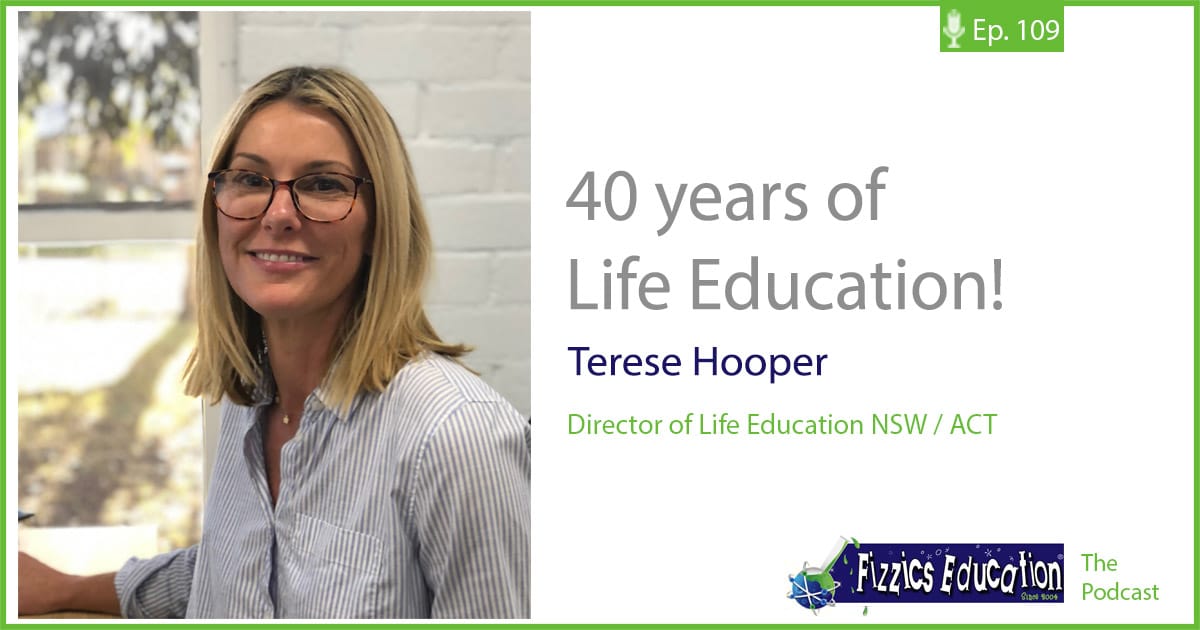
For over 40 years, Life Education has visited schools across Australia with interactive education programs that promote safe and healthy living. We speak with Terese Hooper, the Director for Education for Life Education in NSW / ACT to find out more about the programs and to learn more about their virtual and online programs.
Terese Hooper is the Director of Education for Life Education NSW / ACT. With an extensive pedagogical background as both a classroom teacher and a veteran Life Education Educator, Terese brings a deep understanding of student engagement to her leadership role.
She has been the primary architect and driving force behind Healthy Harold’s recent virtual and online innovations. Working in close consultation with NSW Health and the NSW Department of Education, Terese is dedicated to ensuring that all Australian children have access to evidence-based health and wellbeing education that is both modern and impactful. Her work ensures that the legacy of Life Education continues to thrive in an increasingly digital world.
Top 3 Learnings
Digital Transformation is Essential: The development of TAM-E (The Augmented Multimedia Experience) demonstrates how traditional, face-to-face outreach programmes can successfully evolve into the digital space to maintain relevance and accessibility for students everywhere.
Character-Based Engagement Works: Using a trusted mascot like Healthy Harold helps bridge the gap between complex health information and student understanding, fostering a safe, non-judgmental environment for discussing sensitive topics.
Preventive Education Builds Resilience: Reaching children early with messages about physical health, safety, and Social Emotional Learning provides them with the tools and knowledge needed to make healthier life choices as they grow.
Education Tip
Use Immersive Visualisation for Abstract Concepts: When teaching internal biological processes or social pressures, utilise immersive tools like augmented reality or relatable characters. By moving a lesson from simple ‘information delivery’ to an interactive ‘experience’ involving visual tools like TAM-E, you significantly increase student knowledge retention and empathy.
About Life Education
Life Education is Australia’s largest independent provider of preventive health and drug education for school-aged children. For more than 40 years, the organisation has been a cornerstone of the Australian school experience, empowering young people to make safer and healthier lifestyle choices. Guided by their iconic mascot, Healthy Harold the Giraffe, the programme reaches deep into the heart of Australian communities to foster resilience and physical wellbeing.
Annually, Life Education engages with more than 600,000 children across 1,000 schools and preschools throughout mainland Australia each year. Their impact is driven by 130 specially trained educators who traverse the country in 100 high-tech mobile classrooms, ensuring that students in every state and territory have access to world-class health education.
Digital Innovation and Online Learning
In response to the evolving educational landscape, Life Education has undergone a significant digital transformation. This includes the rollout of sophisticated online modules and the introduction of TAM-E (The Augmented Multimedia Experience), bringing the magic of the mobile classroom into a virtual space using Virtual Excursions technology.
[00:00:17]Ben Newsome: You’re listening in to another Fizz Ed podcast. Glad to have you again for another chat around science and STEM and all that sort of thing. This week is a trip down memory lane. It really is. Anyone who’s been in Australia for the last 40 years in school in some way, shape or form have no doubt come across Life Education. They’re a mobile classroom that go to over 4,000 schools every year. Seriously, all over mainland Australia, they do an amazing job helping kids understand about healthy and safe living in all walks of life. It’s so very important.
[00:00:54]Ben Newsome: Today our special guest is Terese Hooper, who is the Director of Education for Life Education in New South Wales and ACT. She has an extensive background in education as a teacher and a former Life Education educator, but now helps coordinate a lot of the movements of these mobile classrooms right across New South Wales and ACT and is a real driving force behind the Healthy Harold’s online and virtual innovation programme, which is coming up and we’re going to hear more about this through this chat. She works very closely with New South Wales Health and the New South Wales Department of Education and is highly committed, like her team, to make sure that kids all over Australia have opportunities to benefit from health and wellbeing education. Enough about the introduction, really well worth having a listen into Terese Hooper. She’s got a lot to say about education when it comes to healthy living. A really good chat I’ve got to say.
[00:01:36]Announcer: This is the Fizzics Ed Podcast. We’re all about science, ed tech and more. To see 100 fun free experiments you can do with your class, go to fizzicseducation.com.au. That’s physics spelled F I Z Z I C S and click 100 free experiments.
[00:01:54]Terese Hooper: Right, well, where to start? Life Education has been around for 41 years this year, with our iconic mascot Healthy Harold the giraffe. Basically, Life Education’s mission is to empower young people to make safer and healthier choices. The nuts and bolts of what we do is we go into schools and we facilitate learning with students, predominantly primary school students, all relating to health education.
[00:02:28]Terese Hooper: We were born out of the idea from the Reverend Ted Noffs back in 1979. He was working out of the Wayside Chapel in Kings Cross and he was working with a lot of people that were impacted by drug and alcohol use and misuse back then, as was the problem at the time. Ted was seeing all these beautiful young people and they were in the grips of drug addiction and he just wanted to help.
[00:03:00]Terese Hooper: Theoretically, he felt like he was at the bottom of the cliff after these young people had jumped off. They were already in the grips of addiction and he wanted to get in front of it. So preventive education was born in the drug and alcohol space. He started all these lessons over in the Wayside Chapel and people just started flocking and wanting to learn about their bodies and how unique they were, how special they were, and how their bodies’ systems were impacted by some of the decisions that they were making.
[00:03:33]Terese Hooper: It grew from there. Schools wanted to know what was going on and the first mobile learning centre was built. That was 41 years ago and today we go around to schools throughout Australia, but my focus area is New South Wales. In New South Wales, we facilitate learning with nearly 290,000 students last year, and that’s around 700,000 students participating in our programme across Australia annually. He dreamed big, Ted Noffs did.
[00:04:08]Ben Newsome: I was sitting here smiling when you said “grew from there”. Yes it did! Very much did. How many, we’re not allowed to call them vans, but you’ve got these mobile learning units that go out to schools. How many are there actually driving around the place?
[00:04:26]Terese Hooper: We call them Mobile Learning Centres or MLCs. In New South Wales alone, we have 44 of these. They look effectively like really big caravans, but they’re basically classrooms on wheels. We have 44 in New South Wales, and we’ve got 60 educators that move across the landscape. Logistically it’s a big deal. It’s a huge undertaking.
[00:04:54]Terese Hooper: As you can imagine, New South Wales is a big state, so we have to schedule and move in an arc across the landscape. Even just the towing of these Mobile Learning Centres from school to school is a huge monkey puzzle. We rely a lot on the benevolence of local council, a lot of local Rotary groups help us tow the classrooms from school to school. Then of course in metro Sydney we have a bunch of awesome drivers that get out there and move the Mobile Learning Centres from school to school often at 4:00 and 5:00 in the morning and then they just disappear overnight again.
[00:05:30]Ben Newsome: I’ve always wondered where… we go out to schools too, it’s our job, and we know the Life Ed centres pop up all over the place. But I’ve never really seen them on the road. Now I know. It’s done in the early morning!
[00:05:43]Terese Hooper: It sure is. You’ve got to be up early to catch them. Our drivers, Tony and Frank and Bob, they’re out there. They work some funny hours, that’s for sure.
[00:05:53]Ben Newsome: Absolutely. That’s a lot of students. Importantly, if you’ve never seen one of these units, they’re really a class at a time. So you really are doing a bucket load of classes.
[00:06:07]Terese Hooper: Some schools, particularly some of the big metropolitan schools in Sydney, we might be there for five and six weeks at a time so that there’s opportunities for every class group to cycle through one of the sessions with our educators. We often become part of the school community. From year to year, the students actually remember the Life Ed educator’s name and they refer to us by our first name. You’ll hear them calling out your name across the playground. It’s really lovely to go back to schools annually.
[00:06:36]Ben Newsome: I’ve got to say I really love doing regional and remote tours because you’re hanging out in the hotel and you go out to dinner and then you see the kids in the restaurant and they’re all waving to you across the table. They know who you guys are, it’s cool.
[00:06:48]Terese Hooper: Exactly. Most of our educators are out in the regions and it’s a tough gig for them too because they’ll often be away from home for weeks at a time. Being part of these little regional and rural communities, they become their families when they’re away from home. It’s really lovely.
[00:07:08]Ben Newsome: That’s awesome. So 41 years young, the programme, it’s 2020 now, and there’s lots of these running around all over the place and there’s online. I’m very obviously interested in science education and STEM education, and I know that there is a lot that Life Ed does when it comes to science education. What sort of workshops fit this mould, so to speak? There’ll be people who’ve just not come across it, amazingly so. You think, ‘Oh no, everyone’s seen it.’ No, they haven’t. What sort of classes fit from a science point of view?
[00:07:42]Terese Hooper: The kind of content that we cover has grown over the years. It did start out of alcohol and drug education. Now we cover content pertaining to nutrition, the benefits of physical activity, cyber safety, how to deal with bullying, social and emotional learning, which we know underpins mental health. Resilience and how to foster that strength in young people, and also focus on respectful relationships.
[00:08:15]Terese Hooper: As you can imagine, most of those topics have science embedded in them. Core of what we do, coming back to Ted Noffs’ beginnings, was really just trying to instil in young people a respect and an understanding for the uniqueness and how special their own bodies are. To really understand them in depth and know how their choices impact their bodies, their body systems and how they all interrelate.
[00:08:41]Ben Newsome: I imagine that means by the sheer number of classes running programmes around Life Education itself, that means occasionally there’s got to be some challenging conversations that come up that were unexpected.
[00:08:52]Terese Hooper: Sure. One of our longest-running modules or programmes that we run is a programme that really informs people about smoking and the impacts of smoking on the body. We’re really fortunate to be part of, over the last several decades, just watching the smoking rates decline amongst not only adults but young people. The uptake of smoking is so low.
[00:09:24]Terese Hooper: There are some tricky conversations that come up in the sessions. We can’t go in there saying doom and gloom, smokers will get unwell and possibly die of some smoking-related illness later in life because many of their loved ones might be smokers. It definitely has a nuanced approach that we have to be really informative. It has to be strength-based. It absolutely can’t be about fear mongering or just say no. It’s really all about giving kids a deeper understanding and then skills and strategies to then go on and make great choices for themselves and maybe even tackle some of those tricky conversations when they get back home with their family members.
[00:09:59]Ben Newsome: That’s so important. And it sounds like the programme has effectively organically grown. Has it been driven by teachers’ requests?
[00:10:06]Terese Hooper: I think also just community need. How the programme’s really grown and covering such a wide scope is because every community, every school is so different in its needs. For us to go in and have a very prescriptive kind of offering, it simply wasn’t enough. Every time a school said, ‘Hey, we need a little bit of help with this,’ or ‘Cyber safety is really core to what our kids need to be learning about right now,’ we’d really have to go back to looking at what our programme was and how we authentically meet the needs of each individual community. It’s grown out of that.
[00:10:52]Ben Newsome: Absolutely. I mean, Fizzics is a similar deal. We started off with one or two workshops and now there are 80! This is what happens very fast. You look back and go, “Where did all these boxes come from?”
[00:11:06]Terese Hooper: Yeah, and in your case, where are all these vehicles and this crazy network of things? It is, it’s a logistical not nightmare, but certainly a puzzle.
[00:11:18]Terese Hooper: It sure is. It’s definitely big. And I think therein lies the challenge too. Is this the way that it will go forward? And does this really meet the demand of the schools? With that being the case, we’ve had to really look at diversifying our delivery methods in line with what schools want.
[00:11:45]Terese Hooper: Some regional schools, it’s just simply not possible to get out to them. People got together and thought, ‘How can we meet the need? How can we be more agile?’
[00:12:05]Terese Hooper: We developed an inflatable pop-up classroom so that it packs up into the back of a ute and one of our educators can drive it out to a really remote school and inflate it within four minutes inside of a school hall. Or the newer version is an external pop-up, so it literally is anchored to the side of a ute, and we can blow it up under a COLA. That means that we can just be far more agile. If we’ve already moved through that landscape with the Mobile Learning Centres, it’s a little bit hard to do a U-turn and go back. Whereas this means we can really meet the needs of the school. Equity of access policy, that no school gets turned down.
[00:12:30]Ben Newsome: Well, I’ve got to say, I was lucky enough, fortunate enough to visit your site. And I had a little professional jealousy. I went, “Oh my gosh, that ute’s amazing.”
[00:12:44]Terese Hooper: We got some good toys, that’s for sure. We’ve got our innovation manager, Alan Thomas, he’s like a kid in a candy store and you’ve met him haven’t you Ben? He loves getting in there and developing and dreaming big and getting to see some of these ideas come to fruition.
[00:13:00]Ben Newsome: Yourself and Alan definitely have something on your plate when it comes to innovation, because this year especially has driven the online delivery. I know that you’re starting to get requests as you build out that offering. How is it with the educators changing it from completely face-to-face to now looking at how you deliver those same programmes as well and as authentically as possible in a virtual environment? How’s that going?
[00:13:26]Terese Hooper: It’s different. But as you know, with your educators, our educators are a cross between the most fantastic teacher you can remember from your childhood to almost like a Play School presenter to puppeteers to really big characters. To pivot from delivering face-to-face in a Mobile Learning Centre to filming them and getting online packages together and virtual delivery or virtual excursions, it wasn’t such a big shift.
[00:13:58]Terese Hooper: We were really lucky to enlist the help of yourself and Karen Player. I think we thought that it was going to be a much bigger step, but we realised that a lot of the work we’d done before had really set us in good stead for the next 40 years hopefully.
[00:14:20]Ben Newsome: Absolutely. I’ve got this funny feeling that the opportunity is there to do hybrid delivery, whereby you’re out on the road, you’re doing the very cool things you can get in the vehicle to get out to the site. But even just beaming back to head office or head stage, so to speak, whatever you want to call it, that can be really quite interesting too. Because even in the lead up to that pre-work before you actually arrive at site, that can easily be covered virtually, which is so handy compared to having to do a face-to-face or just over the phone.
[00:14:54]Terese Hooper: I like that flipped learning model where we might be sending out some video assets, some conversation starters to introduce the concepts prior to the face-to-face or the online or the virtual delivery sessions. You’ve already got your kids understanding the conceptual elements so that when we are facilitating the learning with our educators, we can dig down deeper.
[00:15:24]Terese Hooper: We can actually get down to not that surface superficial learning, but we can start to really unpack things. Then that idea of those further touch points or increased dosage by having the ability to do Zoom sessions or just layering in further online sessions, means that the learning suddenly goes from being really surface to being really inquiry-based learning for these young inquiring little bodies that we’re working with. It’s an exciting time.
[00:15:55]Ben Newsome: I bet. I was just wondering, do you get many inquiries from teachers to do professional development?
[00:16:01]Terese Hooper: We do. It’s interesting to note that while most of our educators are university-qualified teachers, they’re really specialist educators in health. I remember when I was at uni, as a little fledgling teacher, you do one subject of health in one semester of your whole degree, and then you’re expected to launch yourself out into whatever setting, primary school or secondary school setting, and be able to teach the whole PDHPE syllabus.
[00:16:32]Terese Hooper: I think I remember feeling quite ill-equipped. We are in a fortunate position to really specialise in this area. When we go into classrooms, a lot of the time teachers are saying, “I didn’t know that. This is fantastic.” They join in the conversations and help guide the learning as much as the students do.
[00:16:53]Ben Newsome: There’s nothing like running the sessions and the teacher and the students, everyone’s just one big conversation all together. It’s not like just the students and we just set off the teachers and adults off to one side. Everyone’s involved.
[00:17:05]Terese Hooper: Everyone’s involved. Yes, and it should be like that, because learning is best done in a social construct. When they see the people that they know and respect, and their teachers are far more important to them than our Healthy Harold educators are. For them to see them really joining in, it’s really wonderful and it inspires everybody to get involved in the conversation.
[00:17:28]Ben Newsome: Absolutely. I’ve got to ask, you used to be on the road as one of the educators, not so much now because you have an entire state to manage. But what was your favourite one to run? Let’s be honest, we all like running lots of these programmes, but what was your favourite programme that you used to run?
[00:17:42]Terese Hooper: My favourite one of our modules is one called All Systems Go. It’s a middle primary or a stage two module. It really has a beautiful narrative to it. The kids go on a journey where you get shrunk down, so you’re tiny, and then we pop them into this little tiny spaceship that travels through a boy called Kevin’s body.
[00:18:11]Terese Hooper: You go through all of the body systems, the respiratory, the circulatory, the nervous system, digestion, and you get to see from the inside what everything looks like. It’s just delightful. While we’re travelling through this body, we pause throughout the session and the kids are able to build using what we call Carpet Kid or our new TAM-e 3D software, what a body looks like but as if there’s no skin.
[00:18:41]Terese Hooper: You can place all the organs in the right places as they learn what they do and how they work and where they’re located. There’s this moment sometimes where you just see kids trying to put their hands on their bodies to locate where they think their kidneys might be, or even clutching their hands to their chest to feel their heart beating. All of a sudden you just see this magnificent moment where these little sponges are really starting to recognise that this is about them too. This is not just some fictional story. This is the story of them. It’s really wonderful. I miss that sometimes.
[00:19:14]Ben Newsome: That’s so wild. You actually just triggered a memory. I was at a National Science Week event at a high school, gosh, about 11 years ago. I can’t remember which school it was. It was in Western Sydney. I’m sorry, whoever’s listening. I can just picture this classroom. I was there to run a science show, and the kids took me for a tour. They had opened up the classrooms so that there’s now a double classroom.
[00:19:43]Ben Newsome: What they’d actually done is they did the tour through the digestive system. They’d made this tunnel all the way through both classrooms, and they had interpretive signage at different points all the way along the way. It was really cool. I mean a bit of a guess as to where it ends up at the end of the classroom. But it was so cool because they’d dedicated the two classrooms, and they were quite lucky that they could do this because they had some spare classrooms, which not everyone always has.
[00:20:13]Ben Newsome: The thing was wickedly cool, and what they were doing was, I was there to do a show, but they were actually having the kids guiding the parents and the families and the community through this double classroom but effectively like a human body museum. It was so well done. If you’re listening and going, “Oh my gosh, they must have had a lot of coin.” They didn’t. They did it with garbage bags and paper-mâché and they just done it themselves. It was such a cool project.
[00:20:38]Terese Hooper: That’s excellent. We’re really fortunate because recently we’ve just rolled out this new 3D augmented reality body software where kids can actually see what happens from the minute that they might take a bite of an apple and how that apple would travel down through the oesophagus, into the digestive system through the stomach and the small intestines and large intestines and change colour and then obviously complete with sound effects end up in the toilet. Kids need to see. It needs to be tangible. It needs to be out there for them to be able to understand these things. For them to develop a digestive system throughout two classrooms, that’s next level.
[00:21:24]Ben Newsome: It’s kind of funny. I was actually just imagining walking past one of the classes happening, and you know full well what they’re up to when you hear the kids go, “Eww, oh, ahh.” You know exactly where they are.
[00:21:38]Terese Hooper: Sure do. They love it. There’s nothing like a little bit of potty humour though.
[00:21:46]Ben Newsome: True. Look, this is such a great programme. The thing is, unfortunately, and sadly, the reality is that you can’t get to everywhere. You can’t always be everywhere you want to be. There’ll be people listening in that might actually be in a situation where perhaps they’re overseas, where they’re just not going to be able to connect with Life Education anytime soon. Well, at least yet. Maybe online. What I’m getting at is if they had to set up, at least the beginnings, the first steps to be able to help their students understand about their body is important, they’ve got to look after it, etc. What would be the first steps they should do if they were planning out a unit that could help their kids?
[00:22:27]Terese Hooper: I think ultimately, the first thing you need to do is, like any teacher worth their salt, you need to work out where the kids are at. You really need to develop a real understanding of what their knowledge is and then build from there. It’s so different, as you’d know, Ben, from community to community, classroom to classroom, kid to kid, where their knowledge is at and how you can take them through the next step.
[00:22:57]Terese Hooper: Get them to ask questions. Let them guide the learning. Kids will want to learn and be drawn to different learnings individually anyway. I think get them to follow the things that they’re interested in and build out from there. We’ve got kids that are fascinated by the human body, and then there are other kids that are, “That kind of creeps me out. I really don’t like that. But I’m really interested in the idea of growing my own food and the benefits of that.” Be guided by the kids always.
[00:23:27]Ben Newsome: That’s great advice. You don’t want to shove it down their throat and they’re just not receptive whatsoever.
[00:23:33]Terese Hooper: Not at all. I think key to everything, which is probably the main reason that we use Healthy Harold, our little giraffe friend in our sessions, is learning needs to be pleasurable. It needs to be enjoyable. It needs to be fun and engaging. If it’s not those things, then it’s not memorable. The best way to do that is to make sure that it’s aligned with the individual learner and getting them engaged and excited.
[00:24:00]Ben Newsome: That’s fantastic. I love that. Then you worry about all the curriculum outcomes and stuff later. But learner-centric is usually a good way to start. I agree. Absolutely. There’s going to be some people who would love to get in touch. How do they do that?
[00:24:14]Terese Hooper: Our website is the best place to go. So lifeeducation.org.au. There’s just so much information about who we are, our history, all of the programmes that we cover. Not only do we do primary school programmes, we’ve also got three preschool modules. We’ve also got a secondary programme. That’s the best place to start.
[00:24:39]Terese Hooper: People can just submit an expression of interest, a booking inquiry, and one of us will get in touch and have a chat and see how we might be able to meet your needs. Life Education is Australia-wide, it’s also available in New Zealand, in Japan, in Singapore, over in Great Britain. Chances are there is someone not too far away who’s going to be able to come and talk to you and how we can support your learners and your teachers with health education.
[00:25:04]Ben Newsome: That’s such a great outcome considering what Ted set up 41 years ago.
[00:25:09]Terese Hooper: He was a visionary, that’s for sure. He was pretty cool. I’m just so proud to work for an organisation that started from such a good place. I can put my hand on my heart and know that we’re still really true to his original vision. It’s great to be part of an organisation that’s doing good.
[00:25:28]Ben Newsome: Awesome. Well done. You are doing good. Absolutely. Thank you very much, Terese, for joining us, especially during a very busy term three. We’ve all been busy.
[00:25:39]Terese Hooper: A lot of catch-up to do because a few schools were closed there for a while. We’re really, really busy behind the scenes at the moment, making sure that no student misses out.
[00:25:48]Ben Newsome: A lot of movements of vehicles at 4:00 AM in the morning coming up.
[00:25:52]Terese Hooper: Yep. A little bit of caffeine probably for some of those drivers needed, but not too much.
[00:26:00]Ben Newsome: That’s right. All in moderation, that’s exactly right. Thank you so much. Have a fantastic afternoon.
[00:26:06]Terese Hooper: You too. Lovely to chat with you, Ben.
[00:26:27]Ben Newsome: Well there we go, we just heard from Terese Hooper. You can really tell she loves her education when it comes to health and safety, and so do her team. Over 130 specially trained educators, they go all over every state and territory in Australia, and they visit over 4,000 schools, reaching 700,000 kids. That’s a lot of kids every single year. I imagine it’s quite a logistic feat to be able to make this all happen, but they do a very good job. I think their online and virtual programmes coming up are going to make a massive difference too.
[00:26:57]Ben Newsome: Head on over to their website. Go to lifeeducation.org.au. Have a bit of a browse around, check out what they can offer for your school, and I’ve no doubt they would make a huge benefit for your kids. Thanks very much for listening to this podcast. It was a really good chat with Terese, and I loved hanging out with their team as well through last term. Have a fantastic afternoon, morning, evening, night, whatever time it is that you’re listening to this. I really hope to catch you another time. You’ve been listening to me, Ben Newsome from Fizzics Education, and you’ve been listening to the Fizzics Ed Podcast. I’ll catch you another time.
[00:27:56]Announcer: This podcast is part of the Australian Educators Online Network. AEON.net.au.
Recognised by
22 years, award-winning work, 1 purpose
Recognition from business, education and industry bodies across Australia.
Australian Small Business Champion
Multiple years
CILC Pinnacle Award and Hall of Fame inductee
Center for Interactive Learning and Collaboration
Western Sydney Awards for Business Excellence
Winner
Top 100 Coolest Company
Listed
Local Business Awards
Winner
We value your privacy
We use cookies to improve your experience. Essential cookies are always active. You can choose which optional cookies to allow.We use cookies. Optional ones stay off unless you allow them.Privacy policy