Transcript
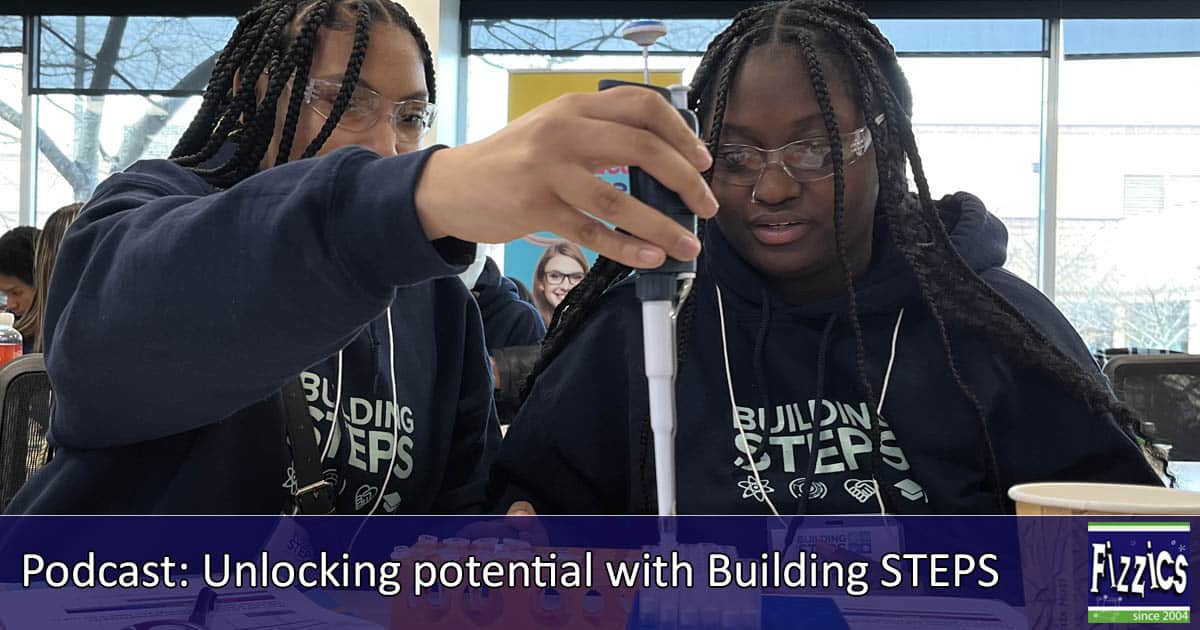
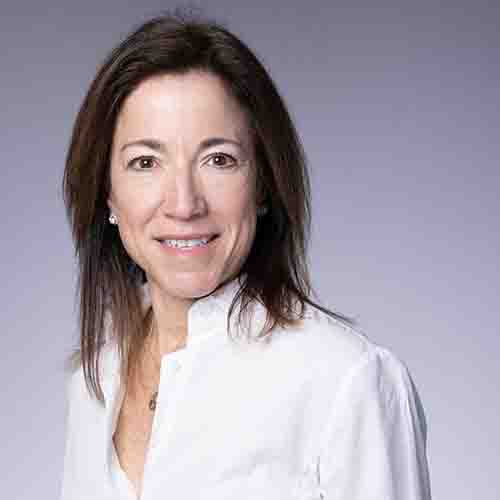
[00:00:00] Ben Newsome: You’re back again for the Fizzics Ed Podcast. Glad to have you again for another chat around STEM and in this particular case, we are hanging out with an amazing person, Debra Hettleman, who is the CEO of Building Steps. And STEPS means Science Technology Education Partnerships. They do an amazing job out of Baltimore looking after underserved communities throughout 15 high schools where they partner and get kids from high school into college degrees.
[00:00:40] Ben Newsome: They do an amazing job and they get kids right behind the scenes to learn exactly what it’s like to be a STEM professional in lots of different ways. An inspiring chat today, a chat that perhaps you could emulate in your area and make a lot of good happen. So, let’s get right into it.
[00:01:21] Debra Hettleman: It was an accident. It was the best accident that ever happened to me. I was having a conversation with someone who was a scientific consultant based in Washington, DC, and his work was global. We were having a conversation—I was in a completely different field—and he said, “I’ve started this non-profit. We’re a bunch of old white guys in my firm and I need diversity of thought.” This was 22 years ago, so he was very much ahead of his curve.
[00:01:57] Debra Hettleman: He said, “And I need more STEM professionals.” Twenty-two years ago, people were not using the term “STEM professionals.” They would say, “I need science professionals, I need engineers, I need physicists.” So, he had started—his name was Matthew Weinberg, still is—and he started this non-profit called Building Steps. The idea back then was he was going to go in the DC school system and find students who were interested in internships with his scientific consulting firm, he’d bring them in, and they would magically become college graduates and they would come work for him.
[00:02:33] Debra Hettleman: After a few years of being in DC and working with the DC school system, he and I would keep talking. I would give ideas and I’d say, “Have you thought about this and have you thought about that? Baltimore would really be a better city than DC.” And there you have it. So, Building Steps moved to Baltimore and I started working for them 10 hours a week. We had this grand idea that we were going to recruit not the brightest students in the school, but the just under the brightest students in the school.
[00:03:04] Debra Hettleman: The kids that everybody thought were going to be fine, but aren’t so fine because everyone thinks they’re going to be fine so they leave them alone. They’re not the top-tier kids, they’re not the bottom kids, and so that was going to be our audience. We were going to give them STEM exposure and then we were going to help them get into college. That was going to be our programme.
[00:03:36] Debra Hettleman: And then we did that. We went to the school systems, we recruited students from three schools, we winged it and we came up with a year of STEM exposure, which I’ll tell you more about in a minute. Then we had a second year, and in the second year, we did college workshops and we wrote essays and we got all the kids into college. I called the chairman and I said, “We did great, and we have a problem because we got all these kids into college and we’ve got to get them out. We can’t just leave them in college, because if we leave them in college, we have done them a huge disservice.” After two years of Building Steps, we had our first mission creep and we were no longer a two-year programme; we became a forever programme. And that is where we are today. We are a forever programme.
[00:04:18] Debra Hettleman: So, what we do is we start with 11th graders. We give them a year of STEM exposure. In the summer, they get a paid summer internship so they are immersed in their area of interest. Then in their senior year of high school, we do a whole year of college workshops. Then we send them off to college, but we kind of go with them. We stay in touch with them, we visit them, we make sure that they’re visiting each other, that they’re connected to their other Building Steps alum on campus. Then when they are on the verge of getting out, we make sure—how’s their resume? How are their interview skills? We provide just enough help to help them launch into their careers. And so that’s where we are.
[00:04:57] Ben Newsome: That’s significant. That’s awesome. And over 22 years, that’s quite the alumni.
[00:05:02] Debra Hettleman: It’s awesome. I just had one of our alum email us and said, “Hey, you’re not in this school and I’m now the assistant principal. Will you consider expanding into my school?” So, when your alum calls you and says, “Will you please?” You say, “Yep.” So now we’re going to be in her school too.
[00:05:24] Ben Newsome: That’s fantastic. I was actually just thinking about what precipitated the call to move to Baltimore over DC? What was it that said that is the city you have to go to?
[00:05:34] Debra Hettleman: What works about Baltimore more than DC and more than many cities—although Building Steps is replicable, that’s the beauty of it, that’s what’s good for other cities and towns—is here’s what you need, what Baltimore has. Baltimore has a breadth of universities. Even within the Baltimore metropolitan area, we have almost a dozen colleges and universities, which make for great partners. We’re very lucky in that regard. We have that.
[00:06:02] Debra Hettleman: The other thing that we have is we have a lot of hospitals. Some of them, two of them are teaching hospitals. We have Johns Hopkins University, which is known fairly globally, and we also have the University of Maryland Medical Centre, also a teaching hospital. So that gave us a feeder for our students in the STEM industries and they were also willing to support what we were doing because we operate free of charge. We’re completely philanthropically funded.
[00:06:30] Debra Hettleman: So, they became our first partners. For a town that has—and the other thing that Baltimore has—we have a lot of philanthropic organisations. We have the Harry and Jeanette Weinberg Foundation here, which is also global. We have the Abell Foundation, we have a community foundation. So, we had funders if we were able to meet their priorities. And because we are working in Baltimore City with underrepresented, underserved students, we fit a lot of priorities, unfortunately.
[00:07:13] Ben Newsome: That’s amazing. Absolutely, and the impact metrics have to be there, that’s a no-choice. But the reality is that you are really working with a segment of the population that does get missed. Because I was just thinking about—we do a lot of outreach, as you know—and I was thinking about, yeah, there’s a lot of stuff that goes towards the top-tier students and often the kids who are right down in struggle street. And those kids, they are often missed. Sometimes they just need a tiny little bit of a help here and there.
[00:07:41] Debra Hettleman: Yes. And it’s exposure. Our students very often, and many students, not just ours, if you don’t have someone at home that is going into a professional job every day, you may not know what happens in the hospital beyond the emergency room because you’ve been to the emergency room. But you don’t know that the hospital is really like a small city. There are engineers, there are architects, everything is at the hospital. Same with the university setting.
[00:08:16] Debra Hettleman: One of our partners is—we have corporate partners that we go see and we have institutional and non-profit. For example, when we go to the National Aquarium in downtown Baltimore, the kids go behind the scenes in the aquarium and they learn what engineering takes place inside. What does it take to make an aquarium operate? Where’s the water come from? I know that sounds silly, but where’s the water come from? What happens when a fish gets sick? Where’s the food? Someone has to take care of this whole place.
[00:08:52] Debra Hettleman: Our kids drive by the aquarium every day on their way to school and they haven’t been in it. That’s where the tourists go. So, there’s all these things right here in Baltimore that they don’t know. We are close to DC, but we have—today, we had a great day for example. Today we partnered with Stevenson University and they have a programme that’s called Medical Laboratory Science. Well, who knows what that is, seriously?
[00:09:20] Debra Hettleman: So, they took us—Stevenson University took us to a hospital, Sinai Hospital, and the kids got to go behind all the closed doors and they learned what happens in the chem lab at the hospital, what happens in the blood bank. They got to go into where the autopsies are done and they got to touch a brain that had been sliced and laid out on the table after an autopsy, and they got to see the different parts of the brain. And then they got to touch other organs on the table and see them. And these weren’t models, these were for real.
[00:09:58] Debra Hettleman: It was “wow.” So now a kid can come home and think, “I kind of like chemistry. I didn’t know there was a career with chemistry.” And now they know that they can go to school because now they have a reason to go to college. They might not have had a reason when they woke up this morning. “What do I need college for?” So now they have a reason, they like chemistry, and now they know they have to do well in chemistry so they can get into college and stay in it. And they’re going to have a job when they graduate because hospitals—the number we got, they’re 7,000 positions short in the medical labs.
[00:10:40] Ben Newsome: It’s true. I was just thinking about what happened when I was a kid going into high school. You only knew about the subjects that were given to you as a selection. You knew there was biology, chemistry, physics, all these different things. And you figure you’d come out, if you like biology, you’d become a quote-unquote “biologist.” That’s all you knew.
[00:10:57] Debra Hettleman: Or a doctor.
[00:10:58] Ben Newsome: Yeah, a doctor. It’s the classic ask the primary kid what they want to be: a doctor, lawyer, fire person, whatever it is. They only know what they know. And a lot of these jobs, as we well know as adults listening into this, they’re intersections of multidisciplinary ideas just shoved together.
[00:11:22] Ben Newsome: I’m a geotechnician, I’m a whatever it is, some form of strange chemist that only works on one particular version of proteins. Whatever it is, there’s so many different ways. I guess it’s really important because not only are you putting them into an immersion space, they’re actually getting connection with those brands, those organisations who produce this work, so they actually, when these job opportunities come up, they actually got a very good idea of what they’re applying for and might even have a network to go, “Oh, I remember you.”
[00:11:46] Debra Hettleman: They totally have a network because what happens is so a kid comes out of today, for example, and they say, “Miss Hettleman, I really liked that.” Great. Now we know that this summer, that’s where we’ll place the kid. We’ll place them at Sinai Hospital so they can work in the lab and they can see. Because we want to make sure before you go to school, do you really like it? Because I would hate for you to waste your time in college doing that when you could do lots of other things. So I want them to be on a clear path.
[00:12:12] Debra Hettleman: But we met two women today, one was a biology major and one was a chemistry major. And they said, “We are both in the same lab and there are lots of pathways that you can go with this education.” And look at the diversity. So it’s important for kids to know they don’t have to be locked in. You don’t have to be the biologist doing the same thing for 50 years.
[00:12:31] Ben Newsome: 100% and actually it reminds me of—we’ve been doing a little stuff with the space industry lately, and a lot of people think it’s space therefore an astronaut or someone who builds a rocket. And the reality is that ain’t the case. There’s so many things from satellite system through the cybersecurity, but frankly, space law is a thing. Space ethics is a real deal right now. And all these other things, there’s all these different other skills that are unanticipated that are generally going.
[00:12:57] Ben Newsome: And bit like the universities and hospitals that you mentioned that are cities, these industries require so many skills in so many different ways. We don’t all need to be the top physicist in one particular area, but you know what? The ancillary staff who build the machines that the physicist works on? They are just as important otherwise the discovery cannot happen.
[00:13:17] Debra Hettleman: Exactly. Exactly. We went last week, we went to a company called Ciena, they’re a global networking company. And what the kids learned again—it’s a global company, it’s like a city. Yes, what they do is networking, so the kids learn what does it take to text a picture from the East Coast of the US to the West Coast of the US? What happens to get the picture from one phone to another?
[00:13:42] Debra Hettleman: But they also learn about cybersecurity, and while they were there, they also learned what happens at a quarterly investors’ meeting because they’re a publicly traded company. And so they learned about the accounting, and the bookkeeping, and the marketing, and the messaging, and the cybersecurity.
[00:14:02] Debra Hettleman: It was fascinating and then the kid can go, “Oh, I had no idea. I like numbers and I like science. I didn’t know that I could work at a place like this.” And they don’t know what an accountant is.
[00:14:13] Ben Newsome: 100%. So we’ve just launched some work with a group called Optus that put satellites in space. And we were talking with someone who’s a trainee engineer who controls these things. And I was thinking, there is no university course for this! It’s on-the-job training. There’s no such thing as a high school you come out with a kid who can now move a satellite around. You’ve got to learn on the job.
[00:14:41] Ben Newsome: And so there’s heaps of these things everywhere. It’s just amazing what’s actually out there. It’s so cool. So with this one-year placement group, do they visit multiple industries and they finally go, “I love this thing, so I now want to dive into this area,” and then you give them exposure to that only? Is that sort of how it works?
[00:15:00] Debra Hettleman: So here’s what happens. So when they are in their 11th grade of high school. It might be different here, but in their 11th grade of high school, we take them out of school every month, once a month, and we take them someplace different so they can see a different angle on STEM.
[00:15:15] Debra Hettleman: So it could be cybersecurity one week and then it could be engineering. Next time it’s going to be engineering. They’ll learn civil, mechanical, architecture, landscape, they’ll learn all about engineering. They’ll go, “Oh, I didn’t know about that.” So every month it’s different.
[00:15:31] Debra Hettleman: And then they say, “This is what appealed to me.” So in the summer, they’ll get a five-week summer programme. They’ll get two weeks of academic enrichment and professional development—because the soft skills are important—and then they’ll get placed in a work environment. And they can see, “This is what it looks like when you’re actually doing it.”
[00:15:50] Debra Hettleman: Then in their senior year of high school, we are all about the college access, the whole process. What do schools look like? How do we write a college essay? How do you apply for money? We do every piece that a parent or a guidance counsellor might do with you if you had those resources.
[00:16:11] Debra Hettleman: But our students are primarily the first in their family to go to college. So in many ways they are doing it on their own, but they’re not because they have us. So today, while our juniors were in this hospital environment learning about the lab, our seniors were together working on the final touches of making decisions. Because that’s the timing where we are here, applications are done.
[00:16:38] Debra Hettleman: So everybody’s busy doing their thing. So that’s what our seniors do. And then what happens is our seniors will get all of their acceptance letters and they’ll get all their financial award letters, and they don’t know what to do with those. Normally you go, “Hey mom, dad, guidance counsellor, what do we do with this?” You get a $25,000 scholarship, but yet the school costs 80.
[00:16:57] Ben Newsome: Oh yeah, I’ve seen that before.
[00:16:59] Debra Hettleman: So we have to make sure that all the pieces fit together and they understand. And then what we do is we stick with them while they are in college. Because what I like to say is a speed bump for some students becomes a roadblock for our students.
[00:17:17] Debra Hettleman: The whole navigation thing. So we stick with them to make sure that they get through on the other end. And while they’re getting through, we’re also urging them, “Hey, did you go to the career centre? Hey, did you go talk to your professor about that? Hey, have you filled out the form for next summer’s summer internship? Because this is the time to be doing it, is now. I know it’s January, but you have to start now for your summer internship.”
[00:17:43] Debra Hettleman: So we make sure that they’re staying on track and if there’s a problem, hopefully they’ll come and they’ll tell us and we can help with the problem. Sometimes we find out serendipitously that there’s a problem and we still help out, but it’d be nice to know two weeks earlier usually.
[00:17:58] Ben Newsome: Isn’t that always the case? I was just thinking, is there a tension where you’ve got students on the margins who could just almost be in the programme, but not quite? That is a difficult problem. Where do you draw the line, hey? It’s hard.
[00:18:12] Debra Hettleman: That is a problem. Because here’s where a bit of the moral compass comes in. The worst thing that I think that Building Steps could do is purposefully send kids to college that aren’t quite ready for college. Only because of the debt incurred and also the moral crushing that happens when a kid doesn’t do well in college and they come home.
[00:18:38] Debra Hettleman: And it’s really hard to get that kid back on track. So to get into—and there are pathways for those students without a doubt. And Baltimore we’re very lucky, we have a lot of apprenticeship programmes and biotech industry programmes, like certification programmes for students because maybe college isn’t for everybody. But we think it is for our slice of kids.
[00:19:01] Debra Hettleman: So to get into Building Steps, students have to have a 3.0 GPA or higher. So it’s a B average. So they have a B average, they have strong attendance in school, because if you’re not showing up for school and you’re just a great student, you get great grades but you don’t show up to school, you’re not going to benefit from Building Steps. We’re so experiential.
[00:19:24] Debra Hettleman: Everything that we learn is by doing it. Last week we had someone come, this is very cool, they’re called Learning Undefeated and they have mobile science labs. They put a lab in an 18-wheeler truck and like a Transformer, the whole thing turns into a lab.
[00:19:38] Ben Newsome: Oh, good fun!
[00:19:39] Debra Hettleman: It was so fun. And the kids learned about the physics of a concussion.
[00:19:41] Ben Newsome: Interesting.
[00:19:42] Debra Hettleman: Yes, and then they made helmets using material engineering. They made helmets. So you can’t learn about the physics of a concussion if you’re not in that mobile lab with us. You can’t make it up by packet. It’s not a school, it’s not class.
[00:19:58] Debra Hettleman: So attendance is part of the application process. So our kids come, we recruit, we go to 15 schools in Baltimore City. We tell them all about us and how great it is, and then they have to apply. And that is their skin in the game because we’re free.
[00:20:12] Ben Newsome: Yeah.
[00:20:14] Debra Hettleman: People might say, “There’s no value in free.” There is a lot of value in free. Look at Building Steps. There’s a ton of value in free, but the kids need the buy-in and once they start, they get hooked. They have to want it.
[00:20:31] Ben Newsome: That’s an interesting thing that comes up a lot. We’re involved in programmes that are either paid, free, or subsidised in some way and they’ve always got their different pros and cons. Always. They will and there’s nothing much you can do about it. The whole point of free is it’s meant to lower the barrier.
[00:20:50] Ben Newsome: It doesn’t always mean the value’s dropped, though I do understand. It’s a bit like the discussion of, would you buy a diamond that’s on sale? Is it a real diamond? But if the content and in your case as we timestamp this discussion in 2023, you’re 22 years in. I think the value’s been proven.
[00:21:07] Debra Hettleman: Thank you. Can you go tell the kids that? Go tell an 11th grader that.
[00:21:12] Ben Newsome: Yeah, well that’s the thing. And the thing is at 11th grade—there’s also the cynical side that comes up as a student. I was one of those kids who went, “Are you for real? Is this a real thing? I don’t quite know what I’m getting into,” and you’re just looking at the glossy brochure with a happy student who’s successful. You go, “Is that me? Is that not me? I don’t know.”
[00:21:35] Ben Newsome: But I suppose this is the power of the alum. That, don’t listen to me, talk to them.
[00:21:39] Debra Hettleman: Which is exactly what we do. We bring back our graduates. We might bring back a graduate from your school, like the principal I spoke about earlier. She’ll go back to the school and say, “I sat in that same seat where you are. And I had Mrs. So-and-so as my maths teacher. And if I can do it, you can do it.”
[00:22:05] Debra Hettleman: So we have hundreds now because it’s been a long time. When we started, we started with 16 kids in three schools. We stayed that size for a very long time because if you take in a new cohort every year—so you have high school juniors every year—and then they become seniors, we take in a new group of juniors. So we always have juniors, seniors, and college kids.
[00:22:27] Debra Hettleman: We stayed small for many years. Well, now we take in 100 kids a year. That’s a lot of kids. So we have a lot of alumni now. So now we have PhDs, and we have MDs, and we have some lawyers even though they’re not STEM—they’re still, I’m still proud of my lawyers. We have nurses and all kinds of young professionals that are Building Steps alum. So they come back and they talk.
[00:22:54] Ben Newsome: Well, the beauty about this is that any good idea has to have a step somewhere. Those three schools who started off, hats off to them. Because the number of times that you’ll get the “show me it’s worked.” And we’re going, “We haven’t started yet, we want to make it work.” It’s always the hard bit. It’s like trying to get a flywheel going. Once it’s going, it’s going, but it’s hard at the start. Well done to those—you’d be working directly with those schools too, I’d imagine, still, because it was a few years ago. That’s awesome.
[00:23:23] Debra Hettleman: Yeah. But what’s funny is some of the schools—not funny—we’ve outlasted. So one of our first schools converted. It’s in the same building but it’s a new school. And I look back and I think, what were they thinking? Here I was, knocking on the door, not even with a pamphlet, probably on a dot matrix printer. Remember those?
[00:23:41] Ben Newsome: Yes!
[00:23:42] Debra Hettleman: And said, “Hey, we’ve got this great idea. And by the way, we’d like to take your kids out of school once a month, and you can trust us, it’ll be fine.” What were we thinking? What were they thinking? But it worked! Here we are.
[00:23:53] Ben Newsome: But what you just proved is something important. I was talking with a bunch of students earlier this week and it was all around the ability to communicate. They had plenty of software packages out there. It used to be called Flipgrid, it’s now called Flip, but they’ve got a couple of minutes to respond to a thing on their phone on video. And some kids had some issues around the idea of talking on video because they didn’t want to do it and I get that.
[00:24:20] Ben Newsome: And I said, okay, let’s just step back for a moment. We’re meant to be becoming these science professionals. And we think that a scientist does the research and that’s all they do, but the reality is you have to pitch your ideas. Whether you like it or not, and sometimes you’re going to have to communicate on the fly with no preparation and just back yourself. And do it with conviction. And so if you are listening in to this particular podcast and you’ve got a particular idea that you think no one’s going to have a shot at, the first person you got to convince is yourself. And then after that, it’s easier.
[00:24:47] Debra Hettleman: Absolutely. They say fake it till you make it, right? We did. We went in there full of confidence and said, “You’re going to want to do this, you’re going to want to partner with us. This is something that’s going to be great for your kids and you’re going to want to do this.” Miraculously they said yes. And now the fact that a school came to us and said, “Will you please come to our school?” was a real testament of—and that a student did it, that an alum did it. You’re like, okay, we did something right.
[00:25:18] Ben Newsome: There’s only a matter of time before someone who is an alum ends up working at Building Steps.
[00:25:31] Debra Hettleman: We have that! See, there you go, Ben, we’re ahead of you. We are housed on Towson University, which is a metropolitan university in Maryland, and they house us, which is lovely and I’m very grateful. So we always bring in a Building Steps college student on campus to be our student worker. That way I get to pay them, because everybody needs money, so we get to pay them and they work for Building Steps part-time. We’re very flexible because we want them to do well in school; we don’t really want them to work.
[00:26:04] Debra Hettleman: So our student worker graduated and she was going into speech pathology and she said, “I’m not ready, I’ve got to save some money before I go back to grad school.” And we said, “Great, I’ve got a job for you.” And she has been with us for three years now and she’s fantastic. And today she led the whole programme with Stevenson University and Sinai Hospital.
[00:26:30] Ben Newsome: That’s fantastic. That’s so cool. Your 22 years in and it’s clearly going for another 22, 42, 52—it’s just going to keep on going, which is fantastic. So I guess there are lots of organisations around the globe trying to do this thing and they’ve all got different versions of how they do it and all have the same good-feeling, well-meaning people who want to make it happen. But some of them are coming against barriers and may not have got past their first three schools. And so I guess the question is, how do you do that? If you had them in front of you and they were just getting going, they’re hitting the walls and all the problems that happen with any version of startup on the planet, what would be suggestion that you’d give them?
[00:27:14] Debra Hettleman: I think the Building Steps magic is its partnerships. When we first started, we were very lucky, the chairman was a businessperson and he said, “You don’t have to raise money, you have to go build a product.” Well, that was brilliant because then I could only focus on building a product. Most non-profits are spread because they have to do the marketing and raise the money and do it all at once. And what I would say is partnerships and your board of directors because those are your people that are going to help you.
[00:27:50] Debra Hettleman: And today, if you think just of our day today—we had a university partner, we had a hospital partner, there were probably 15 people that volunteered today to make the day work. We could never have done this experience without them and frankly, we didn’t pay for today. We go as their guest and they graciously fed the kids lunch. We would have had they not; we always feed the kids. I don’t want them to think oh my god Building Steps is so cheap they don’t feed the kids. So we do. But it’s all about partnerships and cast your net wide for partners because you never know what someone’s got.
[00:28:28] Ben Newsome: And that’s really wise. And I was just thinking about what you said right at the very start. Yes, we need to get the partnerships and all those things in place, but also the ROI of the other organisation that you’re working with. What are they getting out of it? What do they—maybe they need volunteer hours, perhaps?
[00:28:46] Debra Hettleman: All of the above. Some of them need volunteer hours, some of them need future employees, some of them need future students. So there is definitely a value to whoever is hosting us.
[00:29:01] Debra Hettleman: And some of it is just good old-fashioned corporate social responsibility. They’re good corporate partners in their community trying to make their community better. And so to me, the best way to help your community, help your students. Particularly in—I don’t know if you have this in Australia—but we have like the business journals here do the top 40 under 40 leaders, the game changers of the century kind of thing.
[00:29:43] Debra Hettleman: Well, those are our students. When they make the cover, we say, “This is a kid that would not have gone to college.” Not because they weren’t smart, not because they shouldn’t, because they didn’t know. When we first started they said, “Why would I take the SAT?” Because you want to go to college. “Really? My mom didn’t go to college. You think I should go to college?” Yes, I really think you should go to college. So, it’s been a miraculous 22 years.
[00:30:11] Ben Newsome: That’s awesome. And what you’re really doing is finding that untapped potential and go guess what? Just do it. And we’ll help you.
[00:30:22] Debra Hettleman: And you’re doing it. And then they are doing it. And they’re like, “Miss Hettleman, I’m doing it.” I’m like, “Yep, you’re doing it.” I have a great team. Build the team.
[00:30:30] Ben Newsome: Absolutely. And speaking of that team, I bet there’d be some people who’d love to get in touch. How would they do that?
[00:30:35] Debra Hettleman: So our website is pretty good. buildingsteps.org. STEPS stands for Science Technology Education Partnerships, which is a mouthful. So buildingsteps.org is where you find us. And you’re global, so my phone number doesn’t mean anything.
[00:30:59] Ben Newsome: That’s okay. We can use the Zooms of the world these days anyway. But absolutely, go to buildingsteps.org, it’s well worth the time. Have a browse.
[00:31:12] Debra Hettleman: Have a browse. Yes, get in touch. I answer every email. Every one. And I’m happy to help because I think that when we talk about partnership and collaboration, I believe that extends to non-profits and that we need to help each other because we all want our students to succeed. So if there’s something that Building Steps is doing and it resonated with you, I will share how to do it because we need all the kids to rise.
[00:31:38] Ben Newsome: Absolutely. And I think about some of these underserved communities, it’s linkages between government, non-profit, profit, and community groups all coming together to help those students out in a lot of ways. It isn’t just one person trying to lift the thing.
[00:31:54] Debra Hettleman: No, that’s why if something works that we’re doing, ask me. I’m happy to tell you how we did it. Happy to share.
[00:32:04] Ben Newsome: Debra, it’s been so good to have a chat with you.
[00:32:06] Debra Hettleman: Thank you. It was nice to meet you today.
[00:32:08] Ben Newsome: Have a fantastic evening. I know it’s starting to move towards the warmth slowly, surely, and we’re moving towards the cold on this other side of the globe.
[00:32:19] Debra Hettleman: Crazy.
[00:32:21] Ben Newsome: It is. Have a fantastic evening. Thanks so much.
[00:32:23] Debra Hettleman: Thank you very much, Ben.
[00:32:25] Announcer: We hope you’ve been enjoying the Fizzics Ed Podcast. We love making science make sense. Why don’t you book us for a science show or a workshop in your school? If you’re outside of Australia, you can connect with us via a virtual excursion. See our website for more.
[00:32:42] Ben Newsome: Well, there we go, we just heard from Debra Hettleman, who you can really tell loves what she does at Building Steps. And if you want to find out more, go to their website. Go to buildingsteps.org and find out all about how to get involved. And you know what? There’s a genuine chance that this will keep on growing because it does a lot of good. This was so inspiring and I’m really pumped for this week having spoken with Debra. Look, thank you very much and thank you very much for listening for this chat all around STEM, as we usually do on the Fizzics Ed Podcast. You’ve been listening to me, Ben Newsome, at Fizzics Education, and this is the Fizzics Ed Podcast. Hope to catch you another time.
[00:33:18] Announcer: You’ve been listening to another Fizzics Ed Podcast. We’re excited about science. Subscribe to us on iTunes to download the next episode as soon as it’s released. And don’t forget, for hundreds of ideas, free experiments, our new Be Amazing book and more, go to fizzicseducation.com.au. That’s physics spelled F-I-Z-Z-I-C-S, and click 100 free experiments.
[00:33:47] Announcer: This podcast is part of the Australian Educators Online Network, aeon.net.au.
Frequently Asked Questions
What does the acronym STEPS stand for in Building STEPS?
STEPS stands for Science Technology Education Partnerships. The organisation focuses on bridging the gap between underserved high school students and professional careers in the science and technology sectors through strategic institutional and corporate partnerships.
How does the programme support students during their final years of high school?
In the junior year (Year 11), students participate in monthly STEM exposure visits to hospitals, universities, and labs, followed by a five-week paid summer internship. In the senior year (Year 12), the focus shifts to university access, providing intensive support for applications, essay writing, and navigating financial aid award letters.
Who is the target audience for Building STEPS?
The programme specifically recruits motivated students from under-resourced public high schools who might otherwise be overlooked. To be eligible, students typically need a B-average (3.0 GPA) and a strong record of school attendance, as the programme is highly experiential.
Why does Building STEPS continue to support students throughout university?
Debra Hettleman describes Building STEPS as a “forever programme” because simply getting students into university is not enough. Continued support ensures that minor “speed bumps” do not become “roadblocks,” providing students with the mentorship, networking, and career-launching skills needed to earn their degree and enter the workforce.
How is the programme funded and what does it cost students?
Building STEPS is a non-profit organisation that is completely philanthropically funded through foundations and corporate partners. Because of this, the programme is provided entirely free of charge to the students and schools involved.
Extra thought ideas to consider
Supporting the “Missing Middle”
Consider the students in your community who are achieving solid results but aren’t in the top 1%. These students often fly under the radar of support programmes. Providing them with targeted exposure to professional environments can be the catalyst that moves them from a standard career path to a high-growth STEM profession.
Broadening the Definition of a STEM Career
Many students (and educators) only associate STEM with being a doctor, engineer, or lab scientist. By highlighting that scientific institutions operate like “miniature cities,” we can show students that there is a need for STEM-literate accountants, marketers, lawyers, and administrators within those high-tech industries.
Discussion points summarised from the FizzicsEd Podcast, verified and edited by Ben Newsome CF