




Science Show Demonstrations
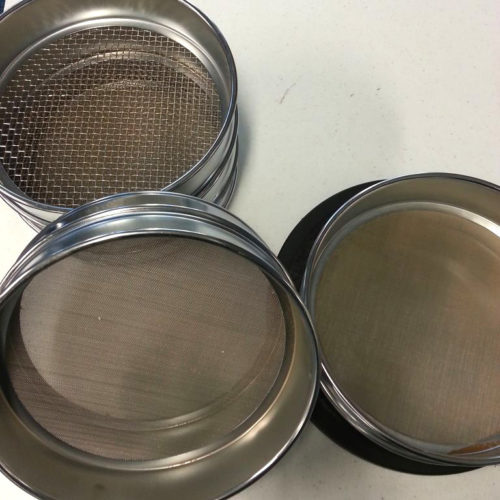
- Does it fit? – Classify the soil – it a sandy loam or loamy clay?
- How hard is it? – Investigate Moh’s scale of hardness
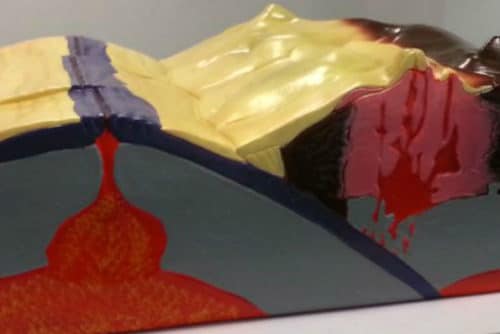
- Moving and shaking – Learn about subduction and others that occur in land formation
- Panning for gold – Use gold pans to find precious metal.
- Sedimentation – Silting the substrate
- Shaky seismograph – Investigate a seismograph in your classroom!
- Sort the rocks – Are they metamorphic, igneous or sedimentary?
- Tectonic Jigsaw – Investigate how plate tectonics form our world
- Tricky topography – A visual representation of a topographic map.
- Volcano – How do they erupt and are they different?
Science workshop content
What Students Experience: The Geology Lab
In this immersive Earth Science workshop, students apply the methodology of field geologists to investigate the composition and mechanical behavior of the Earth’s crust. From analyzing the evidence for tectonic theory to testing the chemical properties of minerals, we bridge the gap between classroom theory and lithospheric reality.
1. Lithospheric Dynamics
We analyze the evidence for Plate Tectonics, investigating divergent, convergent, and transform boundaries. Students examine how the Rock Cycle operates over geological timescales, driven by the internal heat and pressure of the Earth’s mantle.
2. Mineralogy & Petrology
Students engage in hands-on analysis of authentic specimens. This includes Mohs hardness testing, streak analysis, and investigating mineral fluorescence under UV light to understand the crystalline structures that define various igneous, sedimentary, and metamorphic rocks.
3. Seismology & Volcanology
The session concludes with an investigation into seismic energy and magma rheology. Using seismometers to measure physical vibrations, we analyze how different volcanic profiles and eruption types are dictated by gas pressure and tectonic location.
Our Commitment to Quality Science Education
A Trusted School Partner for Over 20 Years
Fizzics Education provides reliable, syllabus-aligned visits that engage secondary students and meet the rigorous practical requirements of the Australian classroom.

Australian Curriculum Mapping
Australian National Curriculum Mapping for all our science incursions
Australian ACARA Content Outcomes:
Science F-10 Version 9.0
Year 8
- investigate tectonic activity including the formation of geological features at divergent, convergent and transform plate boundaries and describe the scientific evidence for the theory of plate tectonics AC9S8U03
- describe the key processes of the rock cycle, including the timescales over which they occur, and examine how the properties of sedimentary, igneous and metamorphic rocks reflect their formation and influence their use AC9S8U04
Year 7 & 8
- explain how new evidence or different perspectives can lead to changes in scientific knowledge AC9S7H01 AC9S8H01
- examine how proposed scientific responses to contemporary issues may impact on society and explore ethical, environmental, social and economic considerations AC9S7H03 AC9S8H03
- develop investigable questions, reasoned predictions and hypotheses to explore scientific models, identify patterns and test relationships AC9S7I01 AC9S8I01
- analyse data and information to describe patterns, trends and relationships and identify anomalies AC9S7I05 AC9S8I05
- construct evidence-based arguments to support conclusions or evaluate claims and consider any ethical issues and cultural protocols associated with using or citing secondary data or information AC9S7I07 AC9S8I07
Year 9 & 10
- explain how scientific knowledge is validated and refined, including the role of publication and peer review AC9S9H01 AC9S10H01
- Investigate how advances in technologies enable advances in science, and how science has contributed to developments in technologies and engineering AC9S9H02 AC9S10H02
- develop investigable questions, reasoned predictions and hypotheses to test relationships and develop explanatory models AC9S9I01 AC9S10I01
- analyse and connect a variety of data and information to identify and explain patterns, trends, relationships and anomalies AC9S9I05 AC9S10I05
- construct arguments based on analysis of a variety of evidence to support conclusions or evaluate claims, and consider any ethical issues and cultural protocols associated with accessing, using or citing secondary data or information AC9S9I07 AC9S10I07
Australian National Curriculum Mapping for all our science workshops & shows

NSW K-10 Science Syllabus Mapping
NSW Science 7–10 Syllabus (2023)
For explanatory points & implementation advice for each dot point, please visit the Science 7 -10 Curriculum site
Stage 4
A student:
- identifies questions and makes predictions to guide scientific investigations SC4-WS-02
– Identify questions and problems that can be investigated scientifically
– Make predictions based on scientific knowledge and observations - describes the effects of forces in everyday contexts SC4-FOR-01
– Conduct a practical investigation on the effects of a range of direct and indirect forces - explains how energy causes geological and chemical change SC4-CHG-01
– Describe the processes associated with the movement of tectonic plates
– Identify the evidence used to develop the theory of plate tectonics
– Identify that earthquakes and volcanoes are natural phenomena that provide evidence of geological changes in the Earth’s crust and surface
– Conduct investigations or simulations to compare the observable properties of different types of minerals and rocks
– Use the rock cycle to explain the geological processes that lead to the formation and transformation of different types of rock
– Model the formation of fossils and explain how fossils show evidence that different organisms existed at different times in the past
– Recognise that the law of superposition allows scientists to determine the relative age of rock strata
Stage 5
- asks questions or makes predictions using observations SCLS-WS-02
– Ask questions about familiar objects and events based on observations
– Make predictions based on observations
NSW K – 10 Science Syllabus mapping for all our NSW incursions

VIC Science Syllabus Content
VIC Curriculum F–10 Version 2.0
For explanatory points & implementation advice for each dot point, please visit the VIC Curriculum F-10 site.
Levels 7 and 8
- Earth is a dynamic planet as demonstrated by tectonic activity, including the formation of geological features at divergent, convergent and transform plate boundaries; the theory of plate tectonics is supported by scientific evidence. VC2S8U10
- key processes of the rock cycle occur over different timescales; the properties of sedimentary, igneous and metamorphic rocks not only reflect their formation but also impact their usefulness and determine the methods used when mined. VC2S8U11
- investigable questions, reasoned predictions and hypotheses can be developed in guiding investigations to identify patterns, test relationships and analyse and evaluate scientific models. VC2S8I01
- scientific methods, conclusions and claims can be analysed to identify assumptions, possible sources of error, conflicting evidence and unanswered questions. VC2S8I06
- evidence-based arguments can be constructed to support conclusions or evaluate claims, including consideration of ethical issues and protocols associated with using or citing secondary data or information. VC2S8I07
Levels 9 and 10
- investigable questions, reasoned predictions and hypotheses can be used in guiding investigations to test and develop explanatory models and relationships. VC2S10I01
- the validity and reproducibility of investigation methods and the validity of conclusions and claims can be evaluated, including by identifying assumptions, conflicting evidence, biases that may influence observations and conclusions, sources of error and areas of uncertainty. VC2S10I06
- arguments based on a variety of evidence can be constructed to support conclusions or evaluate claims, including consideration of any ethical issues and cultural protocols associated with accessing, using or citing secondary data or information. VC2S10I07
Session Requirements
👥 Capacity & Timing
👨🎓 Attendance: Max 32 students per session.
🏫 Target: Appropriate for Years 7 to 10.
⏰ Duration: 60 minutes.
🛠️ Set/Pack: 45 mins setup and 45 mins pack up.
📍 Room Configuration
🏗️ Furniture: Ten tables arranged in a U-shape.
🪑 Seating: Chairs are not required.
Note: Materials may be varied to suit conditions. Please chat with our presenter for any specific focus areas.
Extend the Experience
Pair this workshop with one of our school favourites for up to 240 students:






