
Detect Iron In Food With Tea
Find out how to detect iron in food with this science experiment! Cheap and easy to find materials so all the kids can have fun:)
Adult supervision for setup
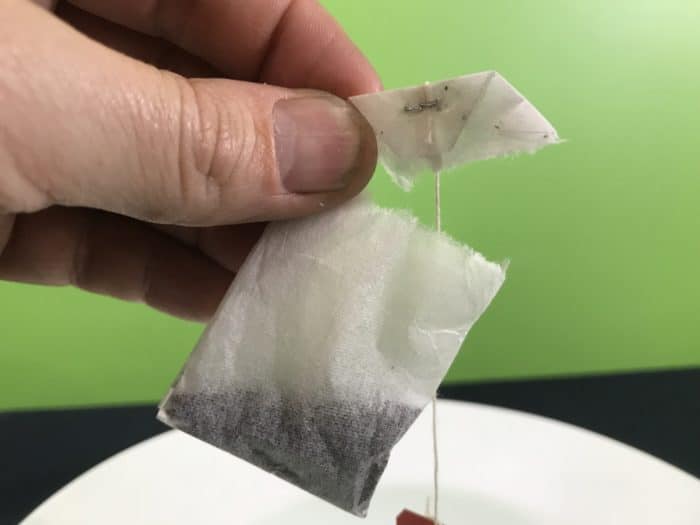
You will need
- Five tea bags
- One litre of hot water
- Different food samples (approx. 100g each)
- Coffee filters and disposable cups
- One blender
Method
-
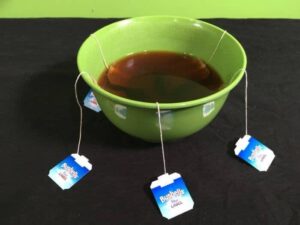
Place the tea bags in the hot water and allow the tea to brew over 10 minutes. You want it strong!
-
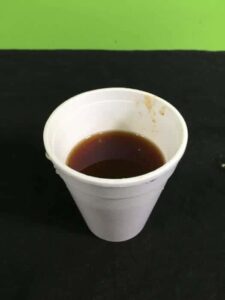
Blend the food samples with water.
-
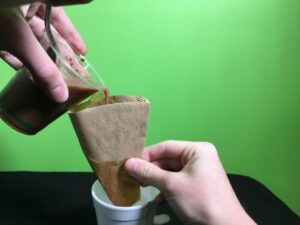
Filter the puree using the coffee filters. Collect the filtrate (the liquid) in the disposable cups.
-
Slowly add the tea brew to the filtrate in the cups whilst stirring. You may see a black solid form as small granules in the bottom of the cup.

-
School science visits since 2004!
– Curriculum-linked & award-winning incursions.
– Over 40 primary & high school programs to choose from.
– Designed by experienced educators.
– Over 2 million students reached.
– Face to face incursions & online programs available.
– Early learning centre visits too!

-

The science behind it
Why Does This Happen?
The Science of Detecting Iron in Food with Tea
Tea is more than just a refreshing drink; it’s a complex chemical solution. It contains naturally occurring compounds called tannins (specifically polyphenols). In the industrial world, tannins are used to “tan” animal hides into leather, and in the culinary world, they provide the distinct “astringency” or dry mouthfeel in red wine and strong tea.
In this experiment, the tannins perform a specific chemical reaction called chelation. When tannins encounter iron molecules, they “grab” onto them, forming a new, heavy complex. Because this new substance is no longer soluble in water, it falls out of the liquid as a tiny amount of dark solid, known in chemistry as a precipitate.
This has real-world health implications! Iron is a vital micronutrient used by your body to create haemoglobin, the protein in red blood cells that carries oxygen. If you drink very strong tea during a meal, the tannins can chelate the iron in your food before your body can absorb it. While tea is generally very healthy, doctors often recommend that people with iron deficiencies wait an hour after eating before having a cuppa!
Variables to test
Find out more on variables here.
-
Source of Tannins
Can you soak brown autumn leaves in water to produce the same effect? Many trees produce tannins in their bark and leaves to deter herbivores. -
Tea Variety
Compare freshly chopped tea, green tea, herbal infusions, and whole tea leaves. Which variety contains the highest concentration of tannins to react with the iron? -
Liquid Solvent
What happens when you use different liquids, like hot water versus cold water? Solubility usually increases with temperature—does hot tea create a faster or more visible precipitate? -
Iron Fortification
Try testing “iron-fortified” breakfast cereals versus “natural” grains. Do the iron filings added to processed foods react more readily with the tea than iron found naturally in plants?
Keep in mind that the amount of iron in food is very small, so you should only expect a subtle colour change or a very fine sediment. This is a great test of your observation skills!

Teacher's note
Curriculums change, and so does the way you implement them in your classroom. Please use your own experience and knowledge of your students to use these resources to best effect for student learning.
Still want the curriculum links?
Here are the suggested links:
Australian Curriculum (ACARA) Science:
NSW Science syllabuses:
Victorian Curriculum Science:
Want this experiment — and many more — running in your classroom?
Have us visit your school — every student gets three hands-on experiments in 60–90 minutes with a qualified presenter.








