




Science Show Demonstrations
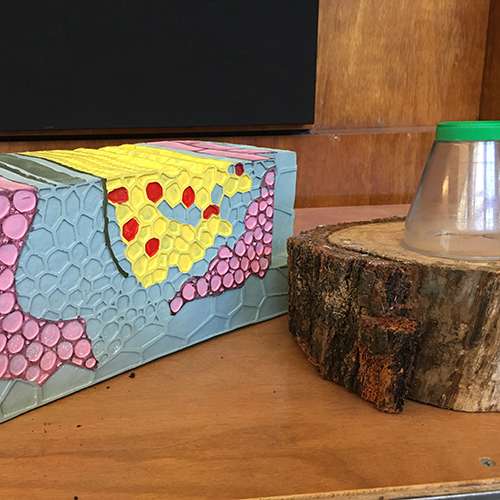
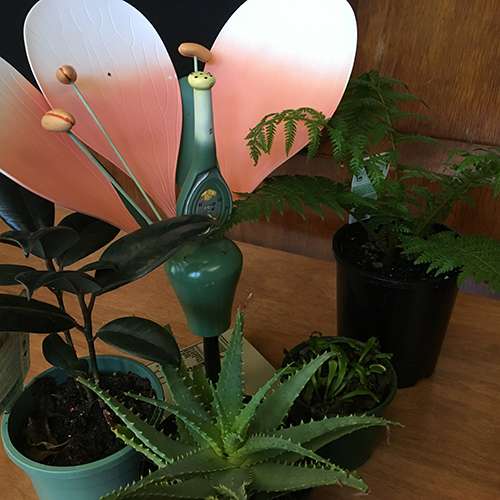
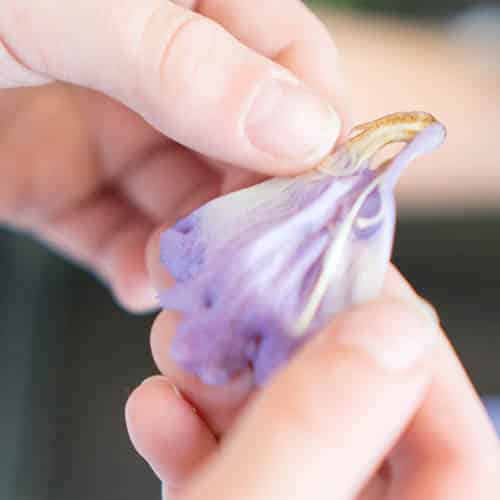
- Flower power – Dissect the flowers; match the flower parts to the flower model
- Life cycles – Explore the life cycles of plants… how do they germinate?
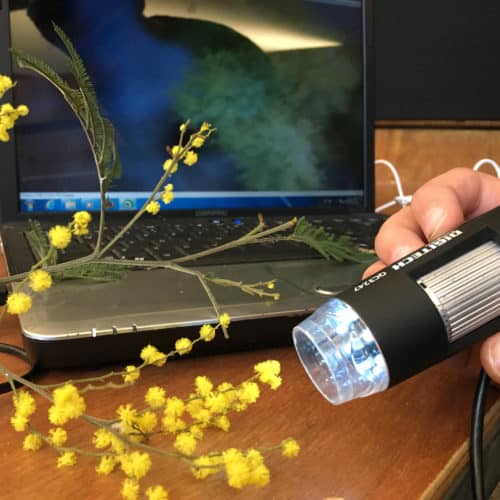
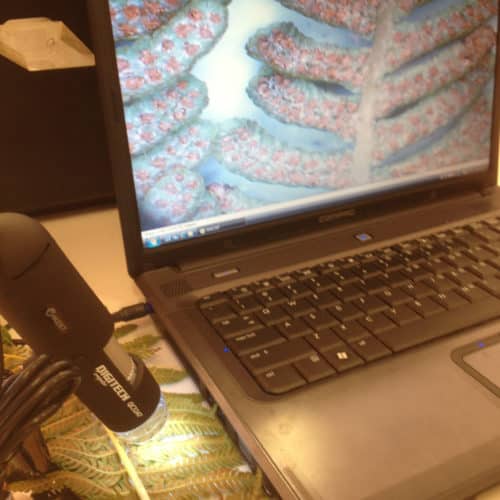
- Microscopes – Check out flowers, bark or your own hand with this digital microscope
- UV flowers – How do insects see flowers?
- Photosynthesis – A great demonstration on how this process works
- Seeing cells – A look at the structure & function of plant cells
- Moving fluids – Discover what drives water, energy & nutrient transport around plants.
- Cabbage chemistry – Plant colour can tell you about pH of soils. How?
- How old is my tree? – Determine the age of the wood by it’s rings.
- Petrified plants – Fossil samples of ancient vegetation. How does this link to plate tectonics?
- Insect adatations – How have plants & insects co-adapted in response to each other?
Science workshop content
What Students Experience: The Botanical Research Lab
In this immersive workshop, students step into the role of botanical scientists. We investigate the hidden biological systems that sustain life on Earth, from the visible structures of giant trees to the microscopic world of plant cells. Students explore vascular transport, reproductive anatomy, and evolutionary adaptations, discovering how plants respond to their environment to protect global food resources.
Vascular Analysis
Students set up colourful experiments to prove the existence of vascular bundles, tracking water movement via transpiration and nutrient flow via photosynthesis through the xylem and phloem.
Micro-Anatomy
Using flower dissections and digital microscopy, students identify reproductive structures and analyse the cellular differences that distinguish plant life from animal life.
Environmental Records
Through dendrochronology (tree ring analysis), students decode the environmental history of local ecosystems and investigate how seed dispersal methods ensure species survival.
The session concludes with an analysis of plant responses to environmental stressors. We discuss the critical work of plant scientists in identifying pests and nutrient deficiencies, demonstrating how botanical knowledge is the first line of defence in maintaining the health of our planet’s biomes.
Real Classroom Highlights
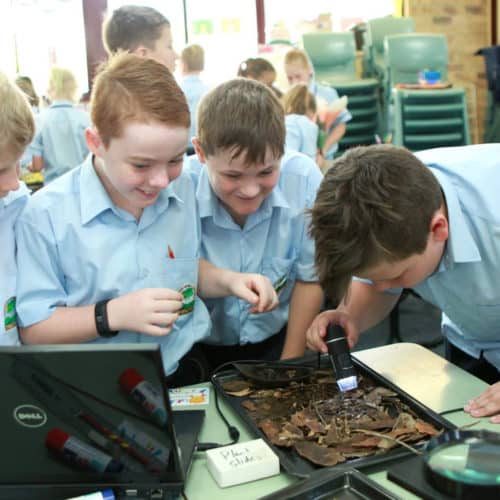
A fantastic day of botanical discovery! Our students loved dissecting flowers and using the digital microscopes to see plant structures up close. A great link to our Living World unit.
Year 3 students are engaging in hands-on learning experiences all about the anatomy of plants with @FizzicsEd! Expertly delivered and highly engaging STEM.
⬅️ Swipe to see more examples ➡️
Professional Botany Field Kits
A Trusted STEM Partner for 20 Years
Fizzics Education brings specialised equipment, botanical models, and real-world samples to provide a scientifically rigorous exploration of the Living World.

Australian Curriculum Mapping
Australian National Curriculum Mapping for all our science incursions
Australian ACARA Content Outcomes:
Science F-10 Version 9.0
Foundation
- observe external features of plants and animals and describe ways they can be grouped based on these features AC9SFU01
- pose questions and make predictions based on experiences AC9SFI01
Year 1
- identify the basic needs of plants and animals, including air, water, food or shelter, and describe how the places they live meet those needs AC9S1U01
Year 1 & 2
- describe how people use science in their daily lives, including using patterns to make scientific predictions AC9S1H01, AC9S2H01
- pose questions to explore observed simple patterns and relationships and make predictions based on experiences AC9S1I01, AC9S2I01
- compare observations with predictions and others’ observations, consider if investigations are fair and identify further questions with guidance AC9S1I05, AC9S2I05
Year 3
- compare characteristics of living and non-living things and examine the differences between the life cycles of plants and animals AC9S3U01
Year 4
- explain the roles and interactions of consumers, producers and decomposers within a habitat and how food chains represent feeding relationships AC9S4U01
Year 3 & 4
- examine how people use data to develop scientific explanations AC9S3H01, AC9S4H01
- consider how people use scientific explanations to meet a need or solve a problem AC9S3H02, AC9S4H02
- pose questions to explore observed patterns and relationships and make predictions based on observations AC9S3I01, AC9S4I01
- compare findings with those of others, consider if investigations were fair, identify questions for further investigation and draw conclusions AC9S3I05, AC9S4I05
Year 5
- examine how particular structural features and behaviours of living things enable their survival in specific habitats AC9S5U01
Year 5 & 6
- investigate how scientific knowledge is used by individuals and communities to identify problems, consider responses and make decisions AC9S5H02, AC9S6H02
- pose investigable questions to identify patterns and test relationships and make reasoned predictions AC9S5I01, AC9S6I01
- compare methods and findings with those of others, recognise possible sources of error, pose questions for further investigation and select evidence to draw reasoned conclusions AC9S5I05, AC9S6I05
Australian National Curriculum Mapping for all our science workshops & shows

NSW K-10 Science Syllabus Mapping
NSW K – 10 Science Syllabus mapping for all our incursions
NSW Science Syllabus Content
A student:
NSW Science and Technology K–6 Syllabus (Implementation from 2027)
For explanatory points & implementation advice for each dot point, please visit the NESA Science and Technology K–6 Curriculum site
Early Stage 1
STE-SCI-01
identifies and describes characteristics of living things, properties of materials, and movement
- Identify the sense organs and describe their functions
- Identify and use tools to aid and extend sensory observations
- Describe how living things get air, water and energy to survive in their environment
- Recognise that plants produce their own food, and animals need to find their food
- Examine flowers, fruit, leaves, roots and stems of plants and describe their purpose
- Pose questions to compare the characteristics of living things and non-living things
STE-PQU-01 poses questions based on observations to collect data
Stage 1
ST1-SCI-01
measures and describes changes in living things, materials, movement, Earth and the sky
- Describe the changes in a plant as it grows using data and scientific models
- Describe the changes in an animal as it goes through its life cycle using data and scientific models
ST1-PQU-01 poses questions based on observations and information to investigate cause and effect
Stage 2
ST2-SCI-01
uses information to investigate the solar system and the effects of energy on living, physical and geological systems
- Describe the relationship between habitat, ecosystem and environment
- Describe ways in which plants and animals depend on each other for survival
ST2-PQU-01 poses questions to create fair tests that investigate the effects of energy on living things and physical systems
Stage 3
ST3-SCI-01
uses evidence to explain how scientific knowledge can be used to develop sustainable practices
- Observe behavioural and structural adaptations of plants and animals, and suggest how these may help them survive in their environments
- Examine and explain how the characteristics of flowers, fruit and seeds are adaptations for reproduction in plants
- Identify and describe how the loss or introduction of plants or animals affects an Australian ecosystem
ST3-PQU-01 poses questions to identify variables and conducts fair tests to gather data
Print a PDF which details K to 6 mapping of all our science visits

VIC Science Syllabus Content
VIC Curriculum F–10 Version 2.0
For explanatory points & implementation advice for each dot point, please visit the VIC Curriculum F-10 site.
Foundation to Level 2
- plants and animals have observable features that can be used to group them in different ways. VC2S2U01
- plants and animals have basic needs, including air, water, food and shelter; the places where they live meet those needs. VC2S2U02
- plants and animals have external features that perform different functions to enable their survival; in plants these features include roots, stems, leaves, flowers, fruit, bulbs, trunks and branches while different features in animals enable them to move, breathe, eat and respond to their environment. VC2S2U03
- experiences can be used as a basis for posing questions to explore observed patterns and relationships, and to make predictions. VC2S2I01
- observations, findings and ideas can be shared with others by using everyday and some scientific vocabulary. VC2S2I06
Levels 3 & 4
- plants and animals have different life cycles; offspring are similar, but not identical, to their parents. VC2S4U02
- living things have characteristics that distinguish them from non-living things and things that were once living, including fossils. VC2S4U01
- scientific investigations to answer questions or test predictions can be planned and conducted using provided scaffolds, including identifying the attributes of fair tests, and considering the safe use of materials and equipment. VC2S4I02
Levels 5 & 6
- organisms have evolved over time, as seen in fossils and scientific records; the structural features and behaviours of living organisms enable them to thrive in their environments. VC2S6U02
- repeatable scientific investigations to answer questions can be planned and conducted, including, as appropriate, deciding the variables to be changed, measured and controlled in fair tests, considering potential risks, planning for the safe and ethical use of equipment and materials, and obtaining permissions for investigations conducted on Country and Place or in protected areas. VC2S6I02
Requirements
Botany Logistics
👥 Capacity & Timing
👨🎓 Attendance: Max 32 students per session.
🏫 Target: Appropriate for Years K to 6.
⏰ Duration: 60 minutes.
🛠️ Set/Pack: 45 mins setup + 45 mins pack down.
📍 Space & Setup
🏗️ Layout: 7 tables arranged around the room for rotation stations.
🔌 Power: Access to 2 electrical power sockets.
🪑 Seating: Chairs are not required for students.
Did you know about our larger stage shows?
Designed to engage up to 240 students, pair this workshop with one of these school favourites:






