Transcript
[00:00:00]
Announcer: You’re listening to the Fizzics Ed Podcast. For hundreds of ideas, free experiments and more, go to fizzicseducation.com.au. And now, here’s your host, Ben Newsome.
[00:00:19]
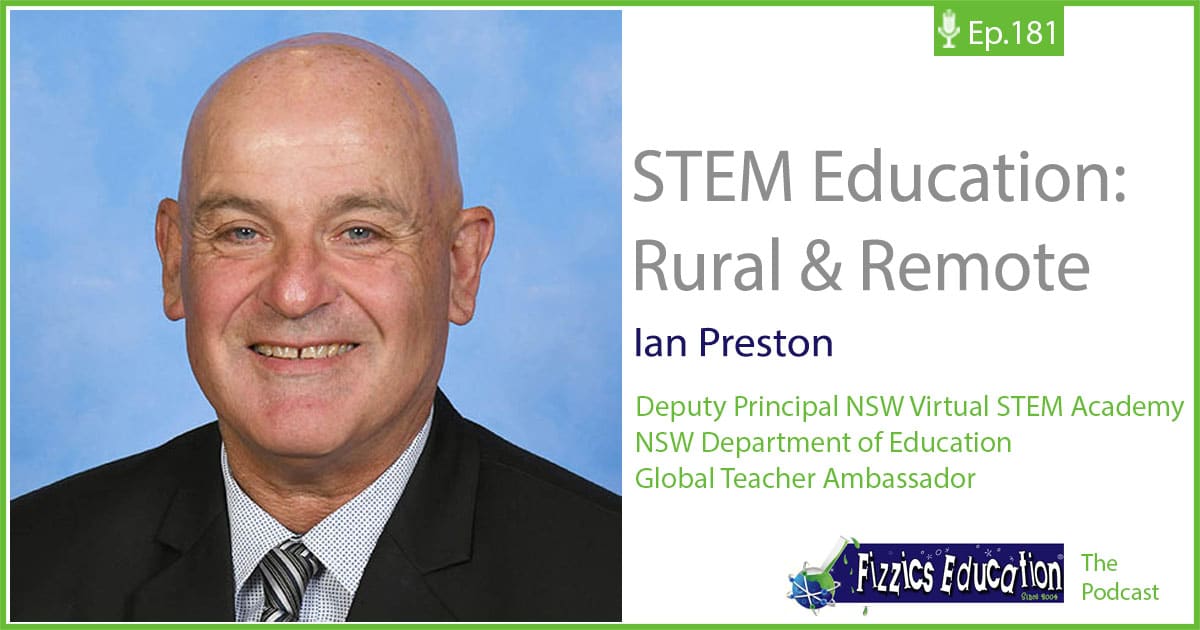
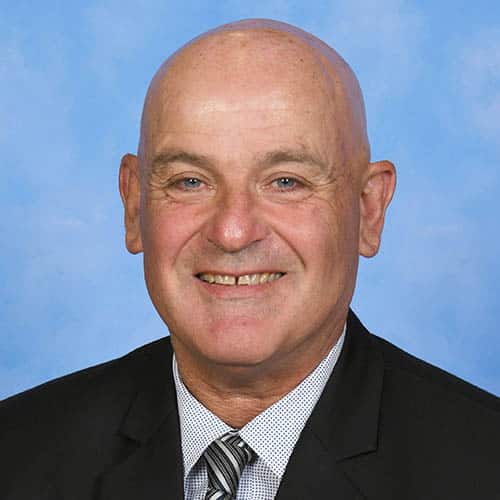
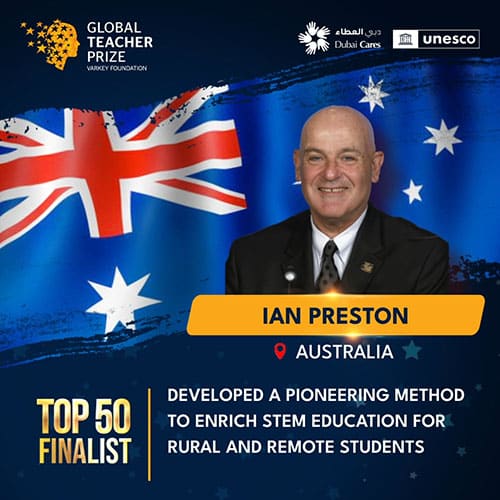
Ben Newsome: Welcome again for another Fizzics Ed Podcast. Glad to have you again for another chat around STEM. We love doing this and today, we’ve got someone who very much loves his STEM. So much so, he was a Top 50 finalist in 2023 for the Global Teacher Prize. Seriously an awesome teacher, Ian Preston really loves his STEM and you’re going to find out just where he’s come from and where he’s going. He has very much been big into STEM. He’s had the New South Wales Premier’s Prize for Innovation in Science, Technology, Engineering and Mathematics teaching and a whole bunch more, including a Schools Plus Commonwealth Bank Teaching Award too. He has a lot of feathers to his cap but very much glad to call him my friend. We’ve worked on a few different things and today we get to hang out and learn a little bit more about why he does what he does. Let’s listen on in.
[00:02:18]
Announcer: This is the Fizzics Ed Podcast. We’re all about science, ed tech and more. To see 100 fun free experiments you can do with your class, go to fizzicseducation.com.au. That’s physics spelled F I Z Z I C S and click 100 free experiments.
[00:02:40]
Ben Newsome: G’day Ian, welcome to the Fizzics Ed Podcast.
[00:02:44]
Ian Preston: Thanks Ben, pleasure to be here. Been looking forward to this moment for a few weeks now.
[00:02:50]
Ben Newsome: Oh my gosh. I mean, everyone listening in the back end, I really do know Ian. We were just chatting for what we term the green room. We don’t really have a green room, we’re stuck on Zoom. But just having a chat about bits and pieces we’ve been getting up to. It’s really nice to catch up again, mate.
[00:03:06]
Ian Preston: Yeah, I think last time we caught up was Christmas time with the Young Space Explorers in Sydney. That was a great event and a good opportunity to take our students to Sydney from the country and see some of the amazing things happening in the space industry. When the kids got into the real exhibition sort of behind the curtain where all the student activities were, that blew their mind. For them to actually meet Andy Thomas, who’s an Australian astronaut who’s flown four shuttle missions, and they also met his wife Shannon Walker, who’s done two shuttle missions and had one as commander. So I was able to get those two really impressive space explorers to actually speak to our kids and that was a really significant moment for those kids.
[00:04:01]
Ben Newsome: It’s amazing. And Ian, you said you’re a country lad, so am I.
[00:04:08]
Ian Preston: Yeah, born and bred in Leeton, which is south-west New South Wales, in the Riverina area, and still live here. I’ve spent my entire career working in regional western schools, western New South Wales and Riverina parts of New South Wales.
[00:04:30]
Ben Newsome: That’s fantastic. So I mean, you’ve done a lot of stuff and we’re going to get into that, that’s 100% going to happen. But I’m just curious, what got you into high school teaching and all that sort of thing right from the beginning?
[00:04:45]
Ian Preston: It wasn’t the path I thought I was going to take. It wasn’t a path that I really thought was possible for me to be quite honest. Being a country kid and being a long way from universities, I was the first person in my family to go to Year 12. So that was a little bit unusual and my goal was to
[00:04:45]
Ian Preston: finish Year 12 and try and get a good job in banking or something like that. And so I started off in the State Bank, which doesn’t exist anymore. I was there for a while then I moved to be a records clerk for the Water Commission in Leeton, and I did that for a little while, but I really wasn’
[00:05:00]
Ian Preston: wasn’t challenged by those occupations and I had thought about doing teaching for some time, and my wife, who was my girlfriend at the time, she wanted to do teaching as well. So we made a decision to go to Newcastle. It was the only place where my wife Nicole could do Social Science teaching and I could do Industrial Arts teaching. So that was the roundabout way that I got into the teaching world.
[00:05:30]
Ben Newsome: And I mean, you wind that forward, gosh, that background, it always matters where people come from because there’s things as you teach kids especially. That’s fantastic, Industrial Arts. There’s a lot of different disciplines in that. I’m kind of putting you on the spot, but what do you prefer making?
[00:05:52]
Ian Preston: Oh, honestly, I prefer woodwork over metalwork, a hundred times over. When I initially became an Industrial Arts teacher, I was convinced to do so by my previous Industrial Arts teacher. His name was Mr John Hayes, so he encouraged me to study Industrial Arts teaching. He actually taught me woodwork and metalwork and he was also my rugby league coach as a kid growing up. And, in a really strange twist of fate, he ended up working for me and I was his head teacher towards the back end of his career.
[00:06:33]
Ian Preston: So we obviously kept in touch for a long period of time, but yeah, when it comes to the Industrial Arts, woodwork definitely as far as making things, but I do love good old-fashioned technical drawing and now computer graphics, but I also always had a really strong passion for Engineering Studies. And that’s probably what got me into the STEM field, teaching Engineering Studies to HSC level as well as teaching Engineering Studies through Stage 5, which is Year 9 and 10. And so I
[00:06:33]
Ian Preston: think that background of being able to build things and draw things and also having that engineering understanding has been really important for me in the STEM field.
[00:06:48]
Ben Newsome: Oh, considering that STEM by definition is solving problems using stuff. I mean, I’m being very broad here, but that’s kind of the point. And so you’ve got to be able to build things.
[00:07:01]
Ian Preston: Yeah, I think sometimes we over-complicate what STEM is. And that’s what it is to me. And it’s also being able to collaborate and communicate with people to do that because it’s pretty hard to do all those things by yourself. So you need to have those collaboration skills and communication skills and a bit of creativity, but you make stuff to solve problems.
[00:07:27]
Ben Newsome: It is. And I mean I even think about the team that we work with and whatnot. I get really excited when our team tinker. I mean, actually I was just looking at one of our team members, they put on a chat only this week. I think they had enough of our seismometer. It was just an old, basically shaking a pen on a stick.
[00:07:49]
Ian Preston: I know that one. I think I know that one. Yeah.
[00:07:54]
Ben Newsome: I know, it’s pretty much all it was. He’s obviously had enough. So they adopted a very old piece of LEGO NXT hardware just hanging around. And yeah, now it’s a little conveyor belt with the paper runs underneath the wheels and now it’s shaking. And I went, “You know what, this works.” And that was just they had a free afternoon, done. Now we have something that’s not so seismometers are pens on sticks, but it’s kind of nice to do a little bit more. And it’s just the ability to tinker. And I mean, I know that for me, prior to doing what I do and just as I was getting going, I got to work with my late father-in-law and he taught me a lot of metalwork actually. We were working in a conveyor manufacturing company and we were building conveyor systems and rollers and all those things. And I learned to use welders and lathes and mills and all those things, which means that some of the stuff we’ve built internally for our work is all handcrafted because you can’t go and buy it. You’ve got to make it.
[00:09:03]
Ian Preston: No, and that’s the thing. If you don’t understand the manufacturing process, you can design some wonderful things, but if they can’t be manufactured, it’s really useless. And so having that background where, even pulling things apart. I encourage kids to pull things apart and done a lot of engineering assignments where, so for example, one year the assignment for Year 11 kids was to pull an iron apart, like a clothes iron apart and look at all the materials that were inside, how they were formed, go and study why was that material used for that purpose, but then also go back and show them an old sad iron from hundreds and hundreds of years ago to say this is what it was like back then.
[00:09:50]
Ian Preston: And even with those, the little development at some stage you put a wooden handle on there rather than all metal so your hand didn’t get too hot, and then develop later put a little briquette in so you’re not on the thing, you can change your briquettes out. So going through those iterations, but yeah, pulling things apart and seeing what goes inside them and then understanding why those materials were chosen is also really important.
[00:10:19]
Ben Newsome: Oh for sure. And so as we think of our students especially, you’ve had the privilege to be able to work with students over the years and watch the tech change. I mean, we’re still looking at how to solve problems using the materials we’ve got at hand. How are they going blending digital with the real?
[00:10:37]
Ian Preston: I think it’s going really well because we’re still going through the same processes as far as a basic engineering design process to solve a problem. Yeah, many of our tools have changed and in many respects, it has improved. But I think it’s important that kids still learn things from first principles in some respects in that Industrial Arts space. But we’ll draw something manually to start off with, but we’ll quickly progress to what is current now. So we’ll quickly progress to using CAD, particularly programmes like Fusion 360. And then when it comes to the manufacture, you’d know yourself Ben that when you’ve got things like 3D printers and mills, which we have all of those.
[00:11:11]
Ian Preston: But putting 25 kids’ jobs through a 3D printer, you could be there for a week waiting for it. So it’s important, and I think because of that bottleneck that you get, we still use a combination of traditional manufacturing techniques as well as the more modern manufacturing techniques. The kids can see the benefit of the modern, they can see the accuracy that it gives, but they also appreciate what goes into making that as well. So yeah, we have a range of different technologies that we use. The 3D printers with your PLAs but also resin printers. We have a nice little bank of CNC routers that we use and we just recently picked up an augmented reality welder.
[00:11:11]
Ian Preston: think that background of being able to build things and draw things and also having that engineering understanding has been really important for me in the STEM field.
[00:11:28]
Ian Preston: Nice, which is really cool. There’s no sparks, there’s no splatter, there’s no heat. The kids get confidence in using it. It actually looks and feels like the real thing. They can do plasma and TIG and electrode arc with different attachments that you go on there. They put a mask on and what they see is a real-world happening, but then also on the screen, it’ll give them data back to say what their feed rate was like, what their angle was like, and it’ll give them a score that they can then go and try to improve. So our plan is to use that, so the kids can get some practice with that before they go onto the real thing.
[00:12:04]
Ben Newsome: Oh, that’s amazing. And having spent some time on a welder, I did a tiny bit of TIG, but mainly MIG and whatnot. If you’re not, if you’re listening and going, “What are we talking about?”, just drop into a Gas and Gear store or some version of that, they’re all over the world. And there’s usually posters that talk about good welds and bad, and you can see why. It’s actually an art blended with science. It’s metallurgy.
[00:12:28]
Ian Preston: Absolutely, absolutely. And for those that can do it really well, they’re absolute tradesmen, no doubt.
[00:12:35]
Ben Newsome: Oh, absolutely. No, that’s amazing. Now, in your position with the work that you do, you get to do some amazing STEM challenges and things. What sticks out?
[00:12:44]
Ian Preston: Honestly, we’ve had so many exciting ones over the last few years, it’s hard to pick one. But I’ll mention a couple and I’m sure you’ll be aware of some of these, and particularly the first one I’m going to mention, the Australian Virtual Astronaut programme. I remember we kicked that off online, I think it was 2020.
[00:13:08]
Ben Newsome: 2020, just right during… oh gosh, it feels like… I know we’re in our fourth year, so what are we? Yeah, 2020. And it was that was a scramble and just an idea that just went.
[00:13:21]
Ian Preston: But it took off really well, I thought. And that one obviously is still running and it’s a wonderful STEM sprint that schools can incorporate or implement pretty much any time of the year when they’ve got their scope and sequence ready for it. They can go into it either in depth or pick out the pieces that they like. But that was a really exciting one to be involved with with yourself and the likes of Wendy Bode and Jim Christensen and of course Scott Slee and Ted Tagami. That was a really exciting time and getting up to do those live crosses every Friday morning, there was always a bit of stress there, but I think we got through it pretty well. And we had our robotics team actually win the Trailblazer robotics section of that in 2022, which was great.
[00:14:13]
Ian Preston: There’s a stack of ones that we do. One that’s been well received in our community with our Murrumbidgee Academy of STEM Excellence is our Aeronautical Velocity Challenge. And we run that in two stages. So one stage is using bottle rockets, and the other one is making planes or gliders to go around a pole. The bottle rocket one, as you can imagine, gives the kids a real thrill. But we don’t just want them to go and build a rocket and fly it and that’s it, pack up and go home. We want them to understand the STEM skills that go behind that.
[00:14:55]
Ian Preston: So we actually have five categories in that competition, and only one of the categories is whose rocket goes the furthest. We also have a bit of a fun one, which is what we call an aesthetics rocket. Often we run our competition around about Christmas time, so kids come in with usually Christmas decorated rockets or Christmas themed rockets, not all the time, but that’s a fairly common one. We get the kids to do a poster, an information poster that outlines the STEM skills that they’ve gone through to get to their final design. We get the kids to produce and present a video, so they’re learning more digital skills with that.
[00:15:34]
Ian Preston: And probably the most important one is we get the kids to do a detailed engineering report based on what we call the iSTEM process. And depending upon whether they’re in primary school or high school depends on the complexity of that. But some of the work that we’ve seen particularly from primary school kids going through the iSTEM process, which we have seven cogs on that process or seven stages, has been absolutely mind-blowing to see kids at Year 5, Year 6, or sometimes Year 4, pumping out this sort of work.
[00:16:02]
Ben Newsome: Oh, absolutely. And hats off to all the elementary, middle school, primary school teachers listening on in. I’ve seen it. In fact, you alluded to the AVA Challenge as well. Yes, I am involved in that with Ian and whatnot. We had to, out of no choice, last year we had to open it up with as a category for primaries as finalists because their work was exemplary. And I think, as I feel like I’m getting a bit ageist here Ian, but I kind of feel I’m starting to lean towards more competency-based in a lot of ways than the grade. I mean, it’s kind of like, “What can you do?”
[00:16:38]
Ian Preston: There is a bit of a shift I think with that. And also with, slightly different but also with explicit teaching and project-based learning. I think there’s a place for all those things. But certainly, I’m with you on the competency-based, I think that’s… what can the kid do? Sometimes the number doesn’t really tell you what they can do.
[00:17:00]
Ben Newsome: No, it doesn’t. And I mean, especially it’s kind of extraordinary when you think about it because we have this hard line in formal education of Grade 12 or Grade 10 or whatever whenever it is you leave, and as soon as you hit the big bad world, the big bad world doesn’t really look at that at all. It’s kind of an extraordinary little microcosm when you think about it because eventually, the big bad world just says, “What can you do?”
[00:17:22]
Ian Preston: Exactly. I’ve had kids of mine go to university and when they got to the university, they said no one asked what the ATAR was. No. You’ve just got to be able to pass your courses. And then I said when you get a job, no one’s going to ask what your ATAR was. It’s “What can you do?” And every organisation on the planet wants people who are functional and understand what they’re doing. Even then, they don’t care about the university or TAFE scores or whatever it is, it’s like, “What can you do? What do you currently know and can you apply and can you adapt to the current problem we’ve got at hand?” Which is those STEM skills as well and those 21st-century learning skills, creativity, collaboration, communication, solving complex problems.
[00:18:12]
Ian Preston: It all is. I mean, especially when you get to get exposed to some real thought leaders, that’s really where they’re at. And as these students get to practice it, it’s really good for them for sure. Just going back a little bit, I think the primary school is a really important space because the sooner we can get these kids thinking in this mindset, they’re going to come into high school and exit high school with a far greater skillset than I think we had a generation or two generations ago. It’s got to be getting the kids early, having seen these skills, this is how we solve problems, this is the process, allow them to make mistakes. And we’re already seeing that with our Murrumbidgee Academy of STEM Excellence which has been running since 2019.
[00:18:54]
Ian Preston: And so now in the high school space, we’ve got a couple of year groups of kids that have been involved in our programme from primary school, now entering the high school, and you can see a marked difference in the capabilities of those kids having had that experience in that primary school space.
[00:19:11]
Ben Newsome: Oh, it makes a difference. And I think as you sort of look forward at a decadale, 20 years, 30 years, 40 years, I actually think, and it’s cliché, I actually think there’s a quote, I can’t vaguely remember and I’m always terrible at this. But something like, it really should be about planting the seed where you never see the tree. It feels a little that way. And I can see that shift as well, and it’s amazing to be involved at least partially in that process. It’s fantastic.
[00:19:42]
Ian Preston: Yeah. Well, this is my 33rd year of teaching and in that time, you can see a real change in kids’ capabilities over that time.
[00:19:55]
Ben Newsome: Oh, for sure.
[00:19:56]
Announcer: We hope you’ve been enjoying the Fizzics Ed Podcast. We love making science make sense. Why don’t you book us for a science show or workshop in your school? If you’re outside of Australia, you can connect with us via a virtual excursion. See our website for more.
[00:20:33]
Ben Newsome: Now, I can’t, we can’t have this chat mate without putting you a little bit in the spotlight, a little bit as a well bloody done. We have to. All right, so Global Teacher, my gosh, getting involved in that. Okay, firstly, what is it, how did you find out and my gosh, well done being a finalist.
[00:20:54]
Ian Preston: Oh, thank you. It’s been a pretty amazing probably 12 to 18 months to be honest. It all came back to I was nominated for what is the Commonwealth Bank Schools Plus teaching fellowships, and I was fortunate enough to be selected as one of the 12 Australian teachers to receive that honour in
[00:20:54]
Ian Preston: 2022. And once you receive that honour, you are encouraged to apply for the Global Teacher Prize because the teacher prizes in different countries feed into the Global Teacher Prize. And Australia is highly regarded on the education space and the processes through the fellowship is regarded by the Varkey Foundation and the Global Teacher Prize. So I was encouraged to apply and I must admit, if they hadn’t extended the deadline, I wouldn’t have got my application in.
[00:21:32]
Ian Preston: So I was fortunate that that was the case, but yeah, so it was a really quite a detailed application process to go through. I believe that there were something like 8,000 nominations from 130 countries, that’s what they quote on it. And from that, obviously, they cull and cull and cull and got down to I think about 200, and I was offered an interview at that time. And from that interview, I managed to be selected in the Top 50, which I was obviously very happy and proud of.
[00:22:11]
Ian Preston: And there was two of us in Australia that made the Top 50, there was myself and a good friend of mine, Brendan Kenna. Brendan’s from Shepparton, he’s a primary school teacher. Brendan and I were both in the same cohort for the Schools Plus Commonwealth Bank Teacher Fellowship. So yeah, we went to Paris together and we went to UNESCO and got to meet some amazing people and do some amazing things. We got to go to the unveiling of the Global Teacher Shortage Report, which was a big thing worldwide. But more importantly, on that night was also the presentation of the winner of the Global Teacher Prize.
[00:22:51]
Ian Preston: So we got to see that happen. We got to meet the other 50 or other 49 or so teachers from around the world that were in that Top 50. Unfortunately, some of those people couldn’t come because where they’re living there’s either conflict or visa problems on short notice. But Brendan and I, yeah, we made strong relationships with quite a number of outstanding educators from all around the world and we still keep in contact with them. So once you get recognised as a global Top 50 teacher, you then automatically become a member of the Global Teacher Ambassador and that opens up another range of opportunities and doors with access to the 400 or so that have made that group in the last seven or eight years or so.
[00:23:45]
Ben Newsome: Oh, this is fantastic. And if you’re listening on in, it is completely within your reach. And one of the things that I hear and well done, I mean, especially across 8,000 applicants, that’s a significant group of people, all of which I mean even to be involved in that would be doing amazing things. There’d be people listening in who’ve been involved in that, absolutely stunning. And one of the things that I feel when I sort of hear about this is sort of it is about the opening of doors, just as much as it is, in fact actually it’s more than that. It’s actually it’s more that than the actual prize in eventually.
[00:24:19]
Ben Newsome: And I’ve met some amazing people over the years who have gone, “Oh, I don’t know if I’m good enough,” and they don’t submit. And I go, “Oh, I don’t know about that, you probably should.”
[00:24:31]
Ian Preston: Yeah. No, if someone thinks that you should submit then definitely submit. And like you say, the doors that open, and even our friendship over the last few years, that opened because of a previous accolade that I received and got to work in the STEM space in New South Wales. And even through that connection, I’ve been able to give my students and my educational community access to a whole range of opportunities that wouldn’t have been available. So we talked about the Australian Virtual Astronaut programme, there’s also the ExoLab.
[00:25:09]
Ben Newsome: Oh yeah, I believe this year we’re sending up clover I think it is on the International Space Station.
[00:25:15]
Ian Preston: We are, we are SpaceX-31, September.
[00:25:19]
Ben Newsome: There’s also what we call the Orbispace Initiative which is an opportunity for girls in Year 8 to learn about entrepreneurship from a really impressive group of female innovators, academics, entrepreneurs etc. that’s a 20-week programme. Just the opportunities that has come my way after getting some recognition has filtered down through to our students and our community and also to our teachers. So we now have organisations that ring up and say can we come out to your academy. So for example, last year the University of Sydney came out with their Biotech Futures programme, which is all about solving any sort of a problem using STEM-based skills for kids in Year 9 to Year 12. And they get paired up with university students and PhD students to be able to do that.
[00:26:16]
Ian Preston: We had the University of New South Wales ring up to come out and talk to the kids about doing a solar car challenge and spent the day with the kids doing this amazing STEM activities with that. We’ve had the opportunity to have the Aldrin Maps from the Aldrin Foundation, the Mars and the Moon map. Last year we had a Formula 1 car in our foyer of our school last year.
[00:26:38]
Ben Newsome: Oh really?
[00:26:40]
Ian Preston: Really. We had Pablo Montoya’s 2007 McLaren that was through the F1 in Schools organisation through Michael Myers brought the car into the school and spent a couple of days with the kids and community came in to have a look at it. Kids learned a whole stack of STEM skills through the excitement of the F1 lens or environment. And all those things have really come available to our academy and our STEM programmes through things like you’re saying before. So putting yourself out there and being recognised, it’s not so much about what it does for you, it’s what it allows you to do for other people.
[00:27:34]
Ben Newsome: Oh, yeah, that’s exactly it. I mean, it just augments what you’re doing already and others then they get that momentum. Really well done. No, it’s fantastic. I guess sort of as you look forward, I mean, it’s always actually hard to answer a “what next” because you sometimes just don’t straight up know because there are lots of things.
[00:27:58]
Ian Preston: Well I can tell you what next. So a couple of years ago I was tasked with implementing the New South Wales Virtual STEM Academy based on the Queensland Virtual STEM Academy model. So Queensland was really instrumental in helping me to do that in New South Wales and particularly people like John Jose and Wendy Bode who gave up a lot of their time and mentored me in how the system works. So I started a really small trial in 2021, I had eight kids from four primary schools and we did a 10-week course on text-based coding using Arduino and then also using electronics to make them talk together. That proved that the system would work. The next year we went from eight kids to 253 kids and the schools went from four to 18.
[00:28:53]
Ian Preston: Last year we went to 451 students from 38 schools and this was all through the one studio that we set up at Murrumbidgee Regional High School and I had four teachers from the school plus myself. This year we’re currently rolling out five new delivery sites across New South Wales. So we are going to have a Virtual STEM Academy studio in Lismore at the university, we’re going to have one at Maitland Grossman High School, one on the Central Coast, going to have one at Corrimal High School in Wollongong and one at Crookwell High School in the Southern Highlands. So that’s what’s next as far as the big project for STEM with my work is rolling those studios out and we’ll be delivering our courses from Term 2 week 2, which is about four or five weeks away.
[00:29:50]
Ian Preston: So with that added capacity, I think pretty confident this year we’ll get up to about 800 kids. We’ve already got a lot of nominations come in that close on Thursday and our school list will grow significantly from 38. I think the capacity of us to deliver is going to start to become an issue because as the programme gets more recognition and more people hear about it, then why can’t my school get involved, get involved and all those sorts of things. So that’s the exciting thing Ben, that’s happening for us at the moment. So I’m off to Crookwell tomorrow to help install that studio, then off to Wollongong the day after and then after Easter heading up to the Hunter Valley and Central Coast and Lismore.
[00:30:37]
Ben Newsome: Oh, that’s amazing and well done. And that is extraordinary uplift from only a couple of students and anyone who’s ever has listened to me on this podcast for a few will know I’m heavily involved in virtual learning as well and heads up to all those people who lead the regional information centres, the Bosses, the various school services and those in the ISTE group, the International Society for Technology Education, love your work with the distance learning programmes. And if you want to listen a bit more about the Queensland Virtual STEM Academy, I did hang out with Wendy and the team gosh couple of years ago now, funny how these things sort of go, and exploring just how it looks like. And that is quite a thing to be putting in a whole bunch of studios. I mean, you’re right, that is less of a bottleneck, that’s a lot of delivery capacity.
[00:31:25]
Ian Preston: Yeah it is. And the thing I’m really proud of with the Virtual STEM Academy is that we cater for students in Years 5 to Year 9. So sort of that middle school space. We particularly target kids in rural regional and remote schools and we have a strong emphasis on making sure that girls are highly represented as well as our Indigenous population. To give you an example to back that up, our stats at the moment, our female participation rate for the Virtual STEM Academy in 2023 was something like 57% female. And a lot of the reports that you read would have the female number between 16% to 19% involved in STEM careers and STEM activities. And our Indigenous population participation rate was 17% last year which is significantly higher than what’s quoted as the average, which I believe is less than 1%.
[00:32:31]
Ian Preston: So we’re really proud that we’re looking after kids in the country particularly who don’t have access to some of the things that their city peers do, but also particularly the girls and the Indigenous kids. To the point where yesterday we ran the Riverina Science and Engineering Challenge. We had the University of Wollongong come down to the Murrumbidgee Academy of STEM Excellence and we had I think about 196 kids involved. And one of our teams was our Murrumbidgee Regional High School Deadly STEMers team. So
[00:32:31]
Ian Preston: it was made up completely of kids from our Indigenous community and we had two teams, we still had Indigenous kids in our other teams, but we had a team that was 100% our Indigenous kids and they had a great day and we all had a great day, so the things that we’re doing I think are making a difference.
[00:32:58]
Ben Newsome: Yeah, exactly. I mean, you can do STEM for STEM sake or you’re ticking a box or whatever, but really you’re giving life skills.
[00:33:07]
Ian Preston: Yeah, exactly. And you know, confidence and getting that aspiration and that passion in the kids and the confidence to give it a go. Because sometimes it’s just breaking down that barrier, a lot of kids think, “Oh STEM’s too hard for me,” but we work really hard to break it down so the kids have the confidence to give it a go.
[00:33:36]
Ben Newsome: And actually, I always like to sort of just as we sort of head towards the end of a bit of a chat, it’s always nice to know a bit of advice. And I really think that as we think about how do we help those kids who think STEM is too hard, there’d be some people here that would have those students in their classroom, I guarantee it. So if you had those teachers in front of you based on your experience, what would you say as some steps that can help that kid out?
Ian:
[00:34:04]
Ian Preston: I think one of the big steps is often it’s also the teacher that doesn’t have the confidence. So one of the things that we do in our Murrumbidgee Academy of STEM Excellence is one of our main KPIs is actually build the staff capacity and confidence to deliver integrated STEM content. So pairing it back a little bit, working with the teacher or teachers, running sessions for teachers both primary school and high school.
[00:34:35]
Ian Preston: And we also have a lending library of STEM equipment so they can come into our academy, they can learn how individual STEM resources work. So for example, we’ve got a nice little computational thinking device called the Cubetto that we use for K-2. And once the teacher sees that it actually isn’t daunting, because most of them at the start are quite hesitant when they see it. But once we break down the barrier with the teacher and then assist them to implement that in the classroom and bring the kids along with them, we’ve found that makes a significant difference.
[00:35:18]
Ian Preston: But I suppose back to the initial question, kids that don’t feel as though they’ve got the ability to do that, I think sometimes just a conversation with them, a bit of encouragement, you know, I think you can do it, just give it a go, come and talk to me if you need some help or I’ll help you through this. Still need those personal skills. I think that’s really important.
[00:35:42]
Ben Newsome: I thoroughly agree. I mean, you kind of reflect on who was your favourite teacher, you don’t remember what they… how did you get ready for question three on a test? No one ever says that.
[00:35:56]
Ian Preston: No, no. It’s how did they treat me and why did I learn from them and why did I enjoy going to their class.
[00:36:05]
Ben Newsome: That’s awesome. And does not surprise me you said that too, I agree. That’s awesome. Look Ian this is fantastic and yeah, I also was very much looking forward to having a chat with you because I mean yeah we’re recording a chat, but frankly it is just a mates’ chat.
[00:36:22]
Ian Preston: Always a good chance to catch up again, yeah. It’s been a little bit too long.
[00:36:27]
Ben Newsome: It has and undoubtedly we’ll catch up pretty soon now for sure. Now there’ll be some people who would love to catch up, to meet you and reach out to you. So how would they go about doing that?
[00:36:38]
Ian Preston: I am on LinkedIn, so if they just search Ian Preston, I’m sure it’s pretty easy to find me on that. So Ian Preston STEM or Ian Preston Murrumbidgee Regional High School, should be able to locate me. I’ll give out my email address, my work email address, so it’s [email protected]. So they’re probably the two main ways that they can do that.
[00:37:10]
Ian Preston: But Ben just while we’re here, I wouldn’t mind just mentioning a couple of STEM resources that might help some of the teachers out there that are looking for something.
[00:37:21]
Ben Newsome: Go for it.
[00:37:22]
Ian Preston: So we’ve already mentioned the Australian Virtual Astronaut programme, so again just highlighting that that one’s out there and it’s a really good opportunity to have your kids pretty much primary school and high school get involved in that. But there’s also one called the iTeachSTEM website. So that’s one that I was a little bit involved with a few years ago along with the SIS programme Scott Slee and Jeff Appleby in particular. So the iTeachSTEM website, it has a range of resources, they’re all free of charge, that go from the primary school space up until the high school space. So I encourage anyone who’s looking for some content to go through and have a look at that as well. They’re probably the two things to look at.
[00:38:12]
Ian Preston: And the third one is just to search the SISP programme, so the STEM Industry Schools Partnership programme for the New South Wales Department of Education. And if you search that you’ll find links to all of our academies, of which the Murrumbidgee is the one that I’m associated with, but you’ll also find a link there to the New South Wales Virtual STEM Academy.
[00:38:34]
Ben Newsome: Fantastic. And actually I implore you, please, if you’re listening in, if you’ve written them down or just go across to the show notes, I’ll always put the links in. They are some solid resources, I know the depth of some of those for sure. And definitely reach out too. And if you are considering this global teacher thing, consider it further.
[00:38:58]
Ian Preston: Absolutely, apply. And also the Commonwealth Bank Schools Plus teacher prize, the fellowships that we mentioned earlier that leads into that award, they are currently open.
[00:39:13]
Ben Newsome: Oh!
[00:39:14]
Ian Preston: So I would encourage you in the first instance to either nominate yourself or more importantly if you think you know someone who deserves that recognition to nominate them. It’s a really nice feeling when you actually get nominated that someone actually thinks that your work is valuable enough that they’ve put you forward. So I was fortunate with that with Dr Scott Slee for the fellowship and that’s then led to all these other things that we’ve been speaking about.
[00:39:48]
Ben Newsome: Absolutely. And again thank you to the foundations and the organisations who do support these things, because without them it doesn’t work as well. Exactly right now. Look, thank you so much and look, enjoy your afternoon. I know we’re we are as we speak winding towards the end of this particular term. But let’s be honest, people we work anyway. But I hope you take get a bit of a break.
[00:40:12]
Ian Preston: Yeah, got a few days up around Sydney with a couple of our daughters and our new grandson, so looking forward to that.
[00:40:21]
Ben Newsome: Oh, you beauty, that’s awesome. Yeah. Oh amazing. Oh mate, thank you so much and I’ll catch you soon.
[00:40:27]
Ian Preston: All right mate, we’ll talk to you soon. Thanks very much.
[00:40:31]
Announcer: We hope you’ve been enjoying the Fizzics Ed Podcast. We love making science make sense. Why don’t you book us for a science show or workshop in your school? If you’re outside of Australia, you can connect with us via a virtual excursion. See our website for more.
[00:40:47]
Ben Newsome: So hope you enjoyed that chat with Ian Preston. I certainly did. He’s an very amazing educator and real good friend of mine. and I hope you enjoyed hanging out with us as we sort of waffled along there but also found just exactly where he’s been going. Now, if you want to find out a bit more, go and check out the New South Wales Virtual STEM Academy, which is part of the STEM Industry School Partnerships programme. So look up SISP for the STEM Industry School Partnerships programme, look up the New South Wales Virtual STEM Academy and you can find out what Ian’s been doing there as the deputy principal and is part of the Murrumbidgee Academy of STEM Excellence, which is hanging out in the Murrumbidgee Regional High School. Awesome stuff coming out of southern New South Wales. Love your work Ian, really really love hanging out with you. Now, if you want to know a bit more about what’s been going on throughout the Fizzics Ed Podcast, go check out all the past episodes, there’s a heap of them. And as usual, there’s more coming up too. So look, I hope you enjoyed this, I’m Ben, hanging out at fizzicseducation.com.au here and you’ve been listening to the Fizzics Ed Podcast and I hope to catch you another time.
[00:41:44]
Announcer: You’ve been listening to another Fizzics Ed Podcast. We’re excited about science. Subscribe to us on iTunes to download the next episode as soon as it’s released. And don’t forget, for hundreds of ideas, free experiments, our new Be Amazing book and more, go to fizzicseducation.com.au. That’s physics spelled F I Z Z I C S.
[00:42:23]
Announcer: This podcast is part of the Australian Educators Online Network. aeon.net.au.
Frequently Asked Questions
What is the New South Wales Virtual STEM Academy?
It is a programme based on the Queensland model that delivers STEM courses to students in Years 5 to 9 through a studio-based delivery system. It specifically targets students in rural, regional, and remote schools to ensure they have access to high-quality STEM education regardless of their geographical location, utilising virtual learning to bridge the distance gap.
How can teachers with low confidence in STEM be supported?
Ian Preston suggests building staff capacity through integrated STEM training and providing access to a STEM equipment lending library. By allowing teachers to familiarise themselves with resources like Cubetto or Arduino in a low-pressure environment and assisting with classroom implementation, educators gain the confidence to lead their students through complex scientific enquiry.
What is the Aeronautical Velocity Challenge?
This is a STEM challenge run in two stages: one involving bottle rockets and the other involving gliders. The competition goes beyond just distance or speed; students are assessed on engineering reports, information posters, and video presentations, ensuring they engage with the full breadth of the design and manufacturing process.
What is the iSTEM process mentioned in the episode?
The iSTEM process is a framework consisting of seven stages or cogs that guide students through an engineering design challenge. It encourages students to understand the scientific principles behind their work and requires them to document their progress in a detailed engineering report, mirroring real-world professional standards.
Why is participation from under-represented groups a priority for the academy?
The academy actively works to break down barriers for girls and Indigenous students, who are historically under-represented in STEM careers. By achieving female participation rates of 57% and Indigenous participation of 17%, the programme aims to boost student aspiration and provide a pathway to technical and scientific careers for all students.
Extra thought ideas to consider
Competency-Based vs. Grade-Based Learning
The conversation highlights how the professional world prioritises what an individual can actually do over their school grades or ATAR. Shifting towards a competency-based model in STEM education allows students to focus on mastering practical skills like problem-solving and collaboration, which are the primary requirements for the modern workforce.
The Importance of Tinkering and First Principles
While digital tools like CAD and 3D printing are vital, Ian emphasises the value of understanding first principles by pulling objects apart. This mechanical intuition helps students understand the manufacturing process and material selection, ensuring that their future designs are not only creative but also functional and manufacturable.
The Planting Seeds Philosophy in Education
Education is often about planting seeds for developments that a teacher may not see for decades. By introducing rigorous STEM concepts in primary and middle school, educators are building a foundation of capability that manifests as students enter higher education and the workforce, long after they have left the initial classroom.
Discussion points summarised by AI from the FizzicsEd Podcast, verified and edited by Ben Newsome CF