Transcript
[00:00:00] Ben Newsome: You’re listening to the Fizzics Ed Podcast. For hundreds of ideas, free experiments, and more, go to fizzicseducation.com.au. And now, here is your host, Ben Newsome.
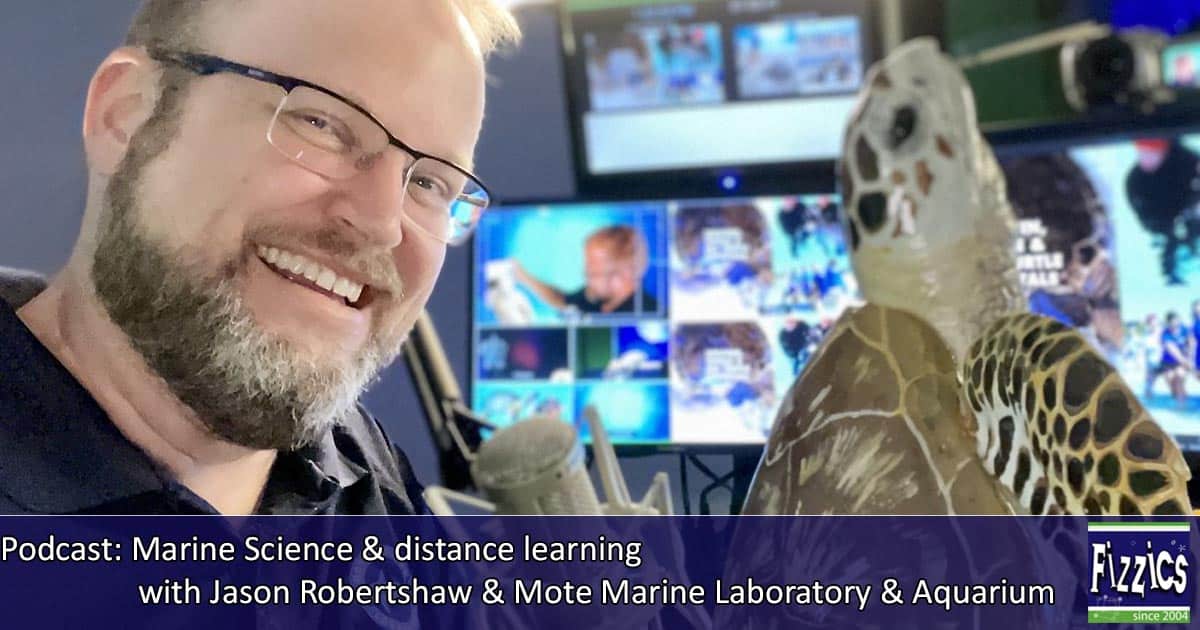
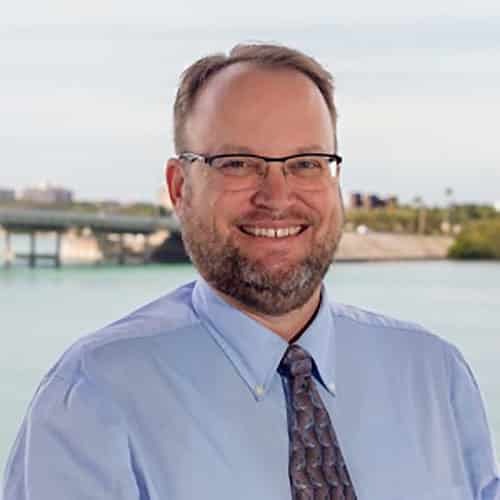
[00:00:18] Ben Newsome: Yes, welcome again for another Fizzics Ed Podcast. Glad to have you again for another chat around STEM, and in this particular case, we’re hanging out with a very good friend of mine, Jason Robertshaw, who’s the programs manager for virtual learning at the Mote Marine Laboratory and Aquarium, which is in Sarasota, Florida. I have loved and followed what Jason’s done for many, many years. He is a distance learning extraordinaire expert. I kid you not, tap him on the shoulder, he really knows what he’s doing, but also he’s highly passionate about marine science education. He is a certified Florida Master Naturalist and instructor, and he’s heavily involved as a board member of the Florida Marine Science Educators Association, and he’s part of the advisory board for the Center for Interactive Learning and Collaboration. Highly varied skill set Jason brings to this chat. So if you love your marine sciences, if you’ve been wondering about how might I teach marine sciences to our grade levels of different ages, Jason is the guy to tap on his shoulder. So let’s dive right in.
[00:01:40] Jason Robertshaw: Hey, thanks Ben. Thanks for having me on.
[00:01:42] Ben Newsome: Mate, I’m really happy to have you here, especially since we’ve known each other for a bloody long time, I just realized. I think I first ran into you in 2014, I think.
[00:01:53] Jason Robertshaw: Yeah, that sounds about right. CILC, were you in Indianapolis or where did we have that conference where we first had the PEC meeting?
[00:02:00] Ben Newsome: I think we were in Atlanta when I first came across—oh no, that might have been actually Philadelphia.
[00:02:06] Jason Robertshaw: Yeah, that’s right. Philadelphia.
[00:02:08] Ben Newsome: It was Philadelphia. How about that? Actually, I remember that. I remember actually holding—we were all in one room in the site we were at, we were doing distance learning stuff, and for some reason we couldn’t get through the firewalls and things. I think there’s a picture of me holding my laptop trying to present a PowerPoint because it would not talk to the data projector or something like that. It’s kind of funny.
[00:02:30] Jason Robertshaw: And nothing’s changed. It’s still that way.
[00:02:33] Ben Newsome: It is like that way. It’s all gaffer tape, really, a lot of this digital stuff. But look, mate, thank you for popping on. I mean, okay, clearly guys, I know Jason quite well. However, perhaps you don’t. So Jason, let everyone know what you get up to.
[00:02:49] Jason Robertshaw: Yeah, so I’m actually speaking to you from Sarasota, Florida. We’re about 60 miles south of Tampa, and I work at a little marine laboratory here called Mote Marine Lab. And we also are a public aquarium open 365 days of the year. And we got our start actually all the way back in the 1960s—or actually 1950s—with a really remarkable woman named Dr. Eugenie Clark. She got famous in the pages of National Geographic for her shark research, and she was one of the first scientists to actually study sharks in a serious and systematic way. And she had the opportunity to open a small lab in South Florida back in 1955. And we’ve since grown from those early humble beginnings to have over 20 research programs here. We study everything from coral reefs to Sirenia, manatee biology—you might be more familiar with their relatives the dugongs over there in Australia—and we also study fisheries biology, sea turtle biology, a whole host of things that are available to us here on the southwest coast of Florida.
[00:03:54] Ben Newsome: Oh, fantastic. And you would have seen a massive change of things as the hurricanes come through.
[00:04:01] Jason Robertshaw: Yep. In fact, here in Florida, we have a phenomenon called red tide. It’s a little tiny microalgae called Karenia brevis, it’s a dinoflagellate, and it’s native to the Gulf of Mexico where we’re located. But whenever it comes in close to shore and is also fed by a lot of nutrients, we end up getting something called a harmful algal bloom. And the particular lifestyle of this microorganism is that it produces a small neurotoxin, but at the volumes of a harmful algal bloom, it becomes quite deadly both to sea life and can also affect humans. It especially affects people with breathing difficulties when they get close to shores that are affected by these places. And during the hurricane events we had locally, we’ve actually had some evidence—still examining it all—but all that nutrients and wash and runoff from the hurricane events did end up having an effect on the sea life through the forms of red tide. Now, fortunately for me and for Mote, most of that major impacts of those particular hurricanes happened a little bit further south of us and so we got a little bit of wind damage but nothing major to our facilities. Unfortunately, a lot of folks further south had their entire communities removed and devastated, sadly.
[00:05:18] Ben Newsome: Yeah, and that’s often the case, especially when we run a program about national disasters. Eventually, it’s people involved. And so, sorry to hear that you likely would know some people heavily affected. But I did pick up on one thing you just said. I didn’t realize that people with breathing difficulties just going near shore to a red tide would have an issue. I love how we just learn these things all the time.
[00:05:35] Jason Robertshaw: Yeah, that little neurotoxin is actually hydrophobic. It doesn’t like to be dissolved in water, so it very quickly adheres to any air bubbles or anything that can get it away from the water. And air bubbles, of course, rise to the surface, and when they get up there, they pop right at the surface. So that layer right at the surface becomes highly concentrated with that neurotoxin, which makes it difficult for things like dolphins and sea turtles and manatees to breathe. But then it also comes into shore and gets mixed up with wave and wind energy and gets mixed up into the surf. So the foam that’s right there at the beach gets highly concentrated with that neurotoxin and can be a problem. It gets concentrated in the tissues of shellfish because they’re filter feeders, and then it becomes aerosolized as the wind and waves kick it up. And it can actually travel over a mile inshore. So even if you’re nowhere near close to the beach, you might still get a little tickle in your throat or your eyes watering and be affected by that neurotoxin. And it happens here in Southwest Florida, but there’s other places around the world that also have similar kind of phenomenon from other species.
[00:06:59] Ben Newsome: What I love about marine science—I mean, typically you ask the student, “Okay, we’re doing marine science, what are we going to study?” and they’ll say fish or coral or something. But you just said hydrophobic. I mean, we’re talking chemistry here. It’s really neat. I’ve been to some museums and the marine archaeology exhibits are amazing, like the redox reactions and all that sort of stuff. There’s so many different paths that you can take when we’re talking marine sciences. So I guess that begs the question: what are the sort of things that you guys teach? I mean, obviously you’ve got the manatees and everything else. In terms of—is it all just pure biology? Do you go down the abiotic factors? What are the sort of programs that you run?
[00:07:14] Jason Robertshaw: Yeah, most of the research programs at Mote have a life science focus. So it’s not specifically physical oceanography, but we do have chemists on our staff. So a lot of it’s biochemistry, but they look at both organic and inorganic contaminants. So when the Deepwater Horizon spill happened, some of our scientists were some of the first able to sample those spills affecting this area of the southeast part of Florida and the United States. And so we have a wide range of interdisciplinary research programs from chemistry to life sciences and beyond. We also have an ocean technology program. And so that red tide I mentioned, we actually send autonomous underwater vehicles—basically ocean drones—out into the environment. And they’re out there 24 hours a day, sampling the water column, taking little sips of water and running it through a photocolorimeter to see if they can detect the specific wavelength of those little microorganisms and report back that they’ve detected patches of this microorganism. And it’s a more cost-effective way than trying to go out with people on boats all hours of the day. And so we have an ocean technology robot program as well.
[00:08:28] Ben Newsome: Yeah, I was going to actually ask about that. I was fortunate enough to visit Mote Marine Laboratories in 2018. It was 2018. And that was amazing because I think you gave me a little peek into that room where you’re doing the drone stuff. So the kids actually make the drones in some ways, or their own little ones?
[00:08:44] Jason Robertshaw: Yeah, so we have summer programs where we’ve had kids come in and they actually get to assemble—out of PVC and hobby motors and other pieces—they can actually assemble their own remotely operated vehicles. And the technology for that, things like Raspberry Pi and Arduinos and those little kits, make it even more accessible and easier to work with than when we were showing those to you even in 2018.
[00:09:08] Ben Newsome: So when those kids arrive, do they know much about programming and that sort of thing or do you have to start from total scratch?
[00:09:14] Jason Robertshaw: Oh, it’s a mix. Yeah, some of them have been doing Minecraft and coding already and some have no idea where they are or why they’re even there. So it’s one of the challenges with informal learning, right? Because we don’t know what we’re going to get and we take them all in and try to have them have a good experience.
[00:09:31] Ben Newsome: I’ve got to ask, what’s your favorite program?
[00:09:34] Jason Robertshaw: Well, what I specifically do here at Mote—well, there’s two things that I do now. Most of what I do is virtual learning, very much like you, where I talk to students and teachers and audiences interactively over Zoom or whatever technology they want to use to communicate. And of course, we’re famous here at Mote for our shark research going all the way back to Eugenie, so the sharks programs are always great. We also have a literacy program called “See Me Read.” Those are fun too, where we’ve gotten permission from authors and publishers to animate the storybooks—some STEM storybooks—and we can actually jump into the pages using green screen technology and read those along with the classroom and then have some comprehension afterwards. And so those are fun. But the other thing that I’m doing more and more nowadays is lifelong learning. I actually start that up on Friday, I’ll have a whole new cohort where we have adult students come to Mote and spend a couple of hours with us learning about marine science, and then we get a tour them around and have them talk with our researchers as well. So if you’re ever in Florida for nine to 10 weeks, you can take that course with me as well. And it’s available online in a kind of abbreviated fashion. So if you’re interested in that information, you can take our Endless Oceans online course.
[00:11:00] Ben Newsome: Oh, that’d be so much fun. What I also love about the work that you do is that you do a lot of work with a lot of the museums and cultural organizations around North America and beyond through the CILC as well, I believe. And that—I mean, I must say, as one of those organizations that gets to hang out with you occasionally, you’ve really cut your teeth with this distance learning thing for a while. How did you fall into distance learning in the first place?
[00:11:07]
Jason Robertshaw: Yeah, so I actually started back at Mote in 2001. It’s hard to believe sometimes and that was a very early days. It was almost really before the internet writ large got underway with video conferencing at least. And so back then we were using high-speed ISDN phone lines and even before that, if we go back in history, we talk about marine archaeology, Mote got its start with distance learning with Dr. Bob Ballard. He was the gentleman who discovered the resting location of the RMS Titanic back in 1985. And that kind of spurred him to develop a distance learning program called the JASON Project, which has nothing to do with me, unfortunately. It has to do with the Argonaut of myth and legend. He named his remotely operated vehicle the Jason.
[00:11:53]
Jason Robertshaw: And he would go to these far-flung locations around the world, the Galapagos, Belize, the Mediterranean, Alaska, and beam back his adventures via satellite and he would take teachers and students along with him. He would call them his Argonauts and they would do that for a short period of time usually during our spring time. And students would come to Mote by the busload to see these satellite-based broadcasts and then that kind of lit a fire under some folks here at Mote to see if we could start developing our own in-house distance learning program. So in the ’90s, Mote actually partnered with Nickelodeon and MCI and a couple of other organizations to start offering that video conferencing experience over those ISDN phone lines.
[00:12:38]
Jason Robertshaw: And that became known as SeaTrek. And so that’s the name of our program, SeaTrek. And those are the programs that we offer mostly to K through 12 audiences. In the early days, we had a partnership between our local botanical gardens, our local school district, and NASA to deliver interactive STEM content to classrooms around the area and to the state of Florida. And then eventually other folks in other locations who were starting to experiment with this technology also started to contact us. So we worked with Schenectady, New York and some other locations in the early days to offer interactive video conferencing.
[00:13:23]
Jason Robertshaw: And that’s when I came on board back in 2001. I had my biology studies from the University of South Florida that I was working on and then that intersected nicely with the technology that I’ve always been interested in and also education. So it’s a nice mixture of science, education, and technology. And I get to do all three of those as well as occasionally get to hang out with sharks and manatees as well.
[00:13:35]
Ben Newsome: Yes, fantastic. And I know you also do a lot of work with teachers as well, I believe.
[00:13:40]
Jason Robertshaw: Yep. So we do some professional development opportunities for teachers locally. And I’m involved with a couple of organizations like the National Marine Educators Association and the National Association for Interpretation where we offer opportunities for teachers and educators to learn more about the research that we do here at Mote.
[00:13:58]
Ben Newsome: What are some of the common misconceptions kids might have about the work you do or even the sea itself?
[00:14:06]
Jason Robertshaw: Yeah, what are some common misconceptions? Well, there’s still a lot of misconceptions about our friends the sharks. And of course, there in Australia, you all are dealing with that always in the news. A lot of people think they are fearsome-toothed creatures, and Dr. Eugenie Clark early on as well as our research since then are trying to dispel a lot of the myths and misconceptions about sharks. Of course, they’re usually apex predators in the environment, they’re top of most food chains, but not always. In South Africa, even Great White Sharks have to be afraid because the orcas go after them and will actually eat them down there. And so maybe in Australia what you need is more killer whales or orcas in your waters to help if you’re worried about the Great Whites—what we call the Great Whites.
[00:14:51]
Jason Robertshaw: And yeah, so there’s a lot of still misconceptions about the ocean, based probably from that movie Jaws back in the 1970s, which instilled a lot of fear. But actually sharks have a lot more to fear from us than we do from them. Millions and millions of sharks are killed each year. A lot of times that’s for the fin trade—the shark fin soup, of course, is still a delicacy in a lot of countries around the world, and it’s kind of a wasteful practice. And a lot of sharks are also facing habitat destruction and a loss of their natural diets through the collapse of various fisheries. So if we lose the sharks, it’s kind of a knock-on effect throughout the ecosystem and we end up losing other species as well.
[00:15:29]
Ben Newsome: Yeah, there’s a controversial thing that happens down this way, especially around the beaches. There’s shark nets out just out the back of the beach, and some of them have been in place for many, many years. But of course, when you have nets, you have bycatch and there’s a lot of it. And there’s a lot of questions around this. So I think they’re playing around with acoustic things and various bits and pieces. It’s hard because the public’s used to the idea of being able to jump in the water and not get eaten, but the reality is, as you well know, you’re probably not going to get eaten.
[00:16:01]
Jason Robertshaw: And that’s another misconception is we don’t think about it when you’re in Sydney Harbor or other places that that’s actually a wilderness experience. If I dropped you in the Outback or in the Alaska National Wildlife Refuge or in other places, you would recognize that immediately as a wilderness experience. But the minute your feet touch the ocean, you’re connected to the whole world of wildlife that’s out there. And even though it may seem very urban, you’re actually in a wilderness experience the moment your toes touch the water.
[00:16:28]
Ben Newsome: Yeah, and that’s the thing. I mean, mind you, down here, we learn about crepuscular feeders, don’t hang around the estuaries around dawn and dusk, they’re rather hungry at that time, and you look rather tasty. In reality, unfortunately, there are attacks, but they are few and far between. And I think the standard stick you would say would be crossing the street is rather dangerous with the cars, but yeah.
[00:16:54]
Jason Robertshaw: And the relative risk is pretty low, but the obvious drama of a shark encounter like that is so severe that it instills that fear in us. And Florida’s actually the shark bite capital of the world off our East Coast. Sharks migrate by the thousands up and down the East Coast of Florida and during certain times of year, it’s a good surfing environment as well. So we get a lot of ankle bites and other encounters with especially blacktip sharks here in Florida.
[00:17:20]
Ben Newsome: Well, looking at it from a STEM perspective too, and even just looking at how tracking happens and whatnot, it’s interesting how, you talk about migration, I mean we were talking Great Whites before, you could see these loops that they do between Western Australia out to South Africa and back again. It’s really neat seeing the tracking in these things and just generally how far they go. It’s amazing.
[00:17:39]
Jason Robertshaw: Yeah, and that’s one of the things that we do with our scientists whenever possible. Some of them work with an outfit called OCEARCH. And when they’re out in the field and having these adventures, if they can get close enough to shore, we’ll try to connect with them via video conferencing and make those opportunities available for classrooms to learn directly from that experience. So this group OCEARCH, they have this remarkable vessel that they can bring out and actually bring a shark alongside the vessel. They have a special platform where they can gently bring it up after a few moments of inspecting it and collecting tissue samples and maybe putting a tag on it. They’ll lower it back into the water and the shark swims away unharmed. But it allows them to get to pelagic species like the Great White and Bull Sharks and Hammerheads and Mako sharks that we don’t normally get an opportunity to work with in a way that is safe both for the researchers and the animals. And then we get lots and lots of information about their pathways. And if you go to OCEARCH’s website, they have a great number of telemetry data sets available for classrooms to use.
[00:18:39]
Ben Newsome: Yeah, genuine bucket list for me one day, who knows—Whale Sharks, Northwest Australia. My gosh, they’re cool. There’s not just there, they’re all over the place.
[00:18:48]
Jason Robertshaw: Ningaloo Reef, am I saying that right?
[00:18:51]
Ben Newsome: Yeah, Ningaloo Reef, yes. It’s less known. Everyone thinks about the Great Barrier Reef, and for good reason, but the Northwest Australia has a genuinely awesome Ningaloo Reef. It is amazing, and I’ve never been there, I’ve just seen photos. But that’s a one-day. But I believe they’re in off Mexico as well, and a few other different places.
[00:19:11]
Jason Robertshaw: Yep. Belize and the Yucatan Peninsula. If you can imagine a world map and the Yucatan Peninsula and Cuba, there’s that little strait between them and the fish come up through the Caribbean Sea, tuna fish species, and broadcast spawn and dump a lot of eggs into the environment. And Whale Sharks will show up over 400 at a time in areas around the Yucatan at certain times of year, usually around April and May. And that’s a great opportunity for our scientists to study them up close, and it’s become a great ecotourism opportunity for that area as well, focusing on a sustainable ecotourism business instead of necessarily an industry which more traditionally would just harvest fishes.
[00:19:54]
Ben Newsome: Yeah, it’s funny how—I mean, this has very much become a shark conversation. I’m always like, hey, is what you guys do. And I just thinking about all the different types. I mean, I’ve never seen a Basking Shark, never happened. I have, however, gone for a dive around Sydney Harbor with Wobbegongs. So those people overseas, Wobbegongs are kind of like—
[00:20:11]
Jason Robertshaw: Yeah, that’s on my bucket list.
[00:20:13]
Ben Newsome: Dude, they’re so cool. Think of like this—okay, anyone listening and you’re going what’s a Wobbegong? Think of like this two-meter, so six-foot shark, also, and it’s got camo, camouflage all over it, and like these frilly-looking things in front of its mouth. And they generally just hang on the bottom, and they’re kind of like, you know, cuddly and don’t—they’re not—there’s not much to—oh, there you go, ha! There you go. So we also have a visual feed here coming from Jason because Jason does distance learning and there’s your Tasselled Wobbegong. They look great.
[00:20:45]
Jason Robertshaw: Yep. And yeah, apparently they’re quite interesting little animals, even though they don’t move around a lot. They kind of—there’s some evidence that they’ll wiggle and waggle their tail to try to attract prey. And just beautiful specimens too with that camouflage.
[00:20:58]
Ben Newsome: Oh, there’s amazing dive sites. I am a diver. North West Rocks—South West Rocks, Australian, yes, South West Rocks. It’s where you come out of a sea cave, or it’s really a sea tunnel, into a gutter about 25 meters deep and you’re up below side to side, you are surrounded by Grey Nurse Sharks. These are the ones that became critically endangered because they had lots of teeth and therefore people thought they were eating people. And they don’t, they’re like puppies. They very much are. And it was just such a cool experience to just come out of this cave and then suddenly they’re everywhere around you. It’s wild and cool. Now that’s awesome. So I guess, like, so if you had a bunch of teachers in front of you and they were looking to really start to lean in and to do some marine sciences, do some education around this, what are some first steps that you would suggest for them? And let’s say they’re middle school, yeah?
[00:21:52]
Jason Robertshaw: Yeah, yeah. So I was just talking to a scientist and she’s ahead of our coral reef research program. And she said that she actually spends 80 percent of her time writing. She’s writing grants and trying to get funding, which you don’t always think about if you’re going to be a marine biologist that writing and maths are going to be hugely important. So actually learning PowerPoint, Excel, and Word are fundamentally important aspects of becoming any kind of scientist in order to communicate the research that you’re going to ultimately study.
[00:22:37]
Jason Robertshaw: And if you’re especially interested in the life sciences, take every advantage and opportunity you can to actually work with animals. So if you have an opportunity to go to a summer camp at an aquarium or a zoo, like you might have there in Australia, that’s a great opportunity to learn about those kind of creatures. And then if you’re in high school or what we would call high school or upper grade levels or in college, you want to work with animals, try helping out at a veterinarian, getting a job there.
[00:23:22]
Jason Robertshaw: Because even if you’re working with a seal or a sea lion, a dolphin or a sea turtle, oftentimes working with cats and dogs is a great opportunity to learn which side is the bitey end and what comes out the other side and what to do with it. And so working at a vet is a great experience and much more approachable and available to a lot more people—big animals and small. And then like I said, learning some of those basic communication skills are absolutely essential too.
[00:23:42]
Ben Newsome: No, it’s amazing. And by the way, hats off to any vets listening in. I’ve got so much respect that you actually understand the structure and function of multiple species. That’s just wild. Hard enough learning a human, but vets, my gosh, that’s so cool. Wise words, absolutely. So how do people get in touch with you?
[00:24:02]
Jason Robertshaw: Yeah, so they can go to MOTE.org. Mote.org and that is the website for Mote Marine Laboratory and Aquarium. And if you go to mote.org/seatrek, which I’m sure Ben will put into the show notes for us if those are available, S-E-A-T-R-E-K, you’ll find out more information about the distance learning opportunities we have. And of course, Ben also mentioned the Center for Interactive Learning and Collaboration, cilc.org. You can search for us on their website as well and you’ll find content.
[00:24:51]
Ben Newsome: And one of the new things that we’re offering, which might be of special interest to your audience over there on the other time zone of the world from me, is that we’re actually offering a new series of programs that’ll be after our aquarium closes. So right now, Ben and I are recording this, it’s around 5:30 my time. What is it, PM my time and it’s what there?
[00:24:55]
Ben Newsome: It’s 9:30 in the morning right now for me.
[00:24:58]
Jason Robertshaw: Yeah, so if your class or audience wants to connect with me at 9:30 in the morning, we now have programs available. I’m going into the aquarium galleries after the aquarium closes, all of our guests have exited. So we’ll have it all to ourselves. I’m calling it “Goodnight at the Aquarium.” So it’s nighttime here, and so we’re going to look at the animals as it’s become sleepy time for some of them and wake-up time for others, like our octopus, which actually becomes a little bit more active as the lights go out.
[00:25:21]
Ben Newsome: That’s really cool because I mean I know of other places that actually go “I’m sorry, we have no light, we can’t do anything,” but in this case, it’s an advantage. Interesting.
[00:25:30]
Jason Robertshaw: Yep. Yep. And so all the guests have left, and so I have much better reception with my Wi-Fi for the areas where I need that. And I can go around the entire gallery and have it all to ourselves as we explore that space.
[00:25:43]
Ben Newsome: Oh, that’s awesome. Well done. And hey, well done with the work you’ve been doing. I mean I know you’ve been at Mote since 2001. You’ve influenced a lot of people. You’ve taught a lot of people around marine science and hopefully inspired some people as well. And I reckon you have, definitely.
[00:25:56]
Jason Robertshaw: Yeah, thank you so much for being such a partner on all this over the years too. It’s been great collaborating with you over CILC and other adventures.
[00:26:04]
Ben Newsome: 100 percent. I’ll have to come over to the States again.
[00:26:07]
Jason Robertshaw: Or maybe I could come visit you and finally see a platypus.
[00:26:09]
Ben Newsome: Hey, that’s time. And you know what? That means both of us. I’ve only seen them in captivity. I’d love to see them in the wild. That sounds like a great plan.
[00:26:17]
Jason Robertshaw: Or even a saltwater or freshwater crocodile like you have over there. That would be great too.
[00:26:21]
Ben Newsome: Yeah, oh my gosh. They are very cool. Oh, well tell you what, we’re going to take this offline because we could totally chat about that sort of thing. But look, thank you so much, Jason. I hope to catch you very soon.
[00:26:33]
Jason Robertshaw: Thank you.
[00:26:35]
Announcer: We hope you’ve been enjoying the Fizzics Ed Podcast. We love making science make sense. Why don’t you book us for a science show or workshop in your school? If you’re outside of Australia, you can connect with us via a virtual excursion. See our website for more.
[00:26:52]
Ben Newsome: Well there we go, you just heard from a really good friend of mine, Jason Robertshaw, who does love his distance learning. But trust me, he really knows marine sciences. He really does. So go on over to their website. Head on over to mote.org. Just go to Mote Marine Laboratory and Aquarium and find out about their manatees, their sharks, their sea turtles, otters, all sorts of things, and how you might get in touch with Jason to run a distance learning program. Well worth your time. Trust me, he really really is good at what he does. So look, I hope you enjoyed this particular episode. I certainly did. It was like catching up with an old friend of mine, it really was. And in the greenroom we definitely did have a bit of a chat either side of this because, you know, we’re actually good mates and I was so happy for him to join us. So look, I hope you enjoyed this. That’s enough for this particular episode. But as usual, more are coming up. You’ve been hanging out with me, Ben Newsome from Fizzics Education. This is the Fizzics Ed Podcast, and I hope to catch you another time.
[00:27:46]
Announcer: You’ve been listening to another Fizzics Ed Podcast. We’re excited about science. Subscribe to us on iTunes to download the next episode as soon as it’s released. And don’t forget, for hundreds of ideas, free experiments, our new ‘Be Amazing’ book and more, go to fizzicseducation.com.au. That’s physics spelled F-I-double Z-I-C-S.
[00:28:11]
Announcer: This podcast is part of the Australian Educators Online Network, AEON.net.au.
Frequently Asked Questions
What is ‘red tide’ and how does it affect the coast?
Red tide is a harmful algal bloom caused by the microscopic organism Karenia brevis. It produces a neurotoxin that can be fatal to marine life such as dolphins, sea turtles, and manatees. For humans, these toxins can become aerosolised by wind and waves, causing respiratory irritation even if you are not directly in the water.
How did Mote Marine Laboratory get its start?
Mote was founded in 1955 by Dr Eugenie Clark, a pioneering scientist known as the ‘Shark Lady’. She was one of the first to study sharks systematically, and her work helped grow the lab from a small building into a world-class research facility with over 20 diverse programmes.
What technology is used to study the ocean at Mote?
Mote employs autonomous underwater vehicles (ocean drones) that patrol the Gulf of Mexico 24 hours a day. These drones use photocolorimeters to ‘sip’ the water and detect the specific light wavelengths of harmful algae, providing researchers with real-time data on bloom locations.
What is a common misconception about sharks mentioned in the podcast?
A major misconception is that sharks are mindless killers to be feared. In reality, humans pose a far greater threat to sharks through the fin trade and habitat destruction. Sharks are essential apex predators, and their loss can cause a detrimental knock-on effect throughout the entire marine ecosystem.
What skills are essential for someone wanting to become a marine biologist?
Beyond biology, proficiency in writing and maths is crucial. Scientists spend a significant amount of time writing grants and using software like Excel and PowerPoint to communicate their findings. Additionally, gaining experience with animals—even through local veterinary clinics—is highly recommended.
Extra thought ideas to consider
The Ocean as an Urban Wilderness
We often think of wilderness as remote areas like the Outback, but the moment you touch the ocean—even in a metropolitan harbour—you are entering a wild, interconnected ecosystem. Treating local waterways as wilderness experiences can help students develop a stronger sense of environmental stewardship.
The Importance of Nocturnal Observations
Many marine species change their behaviour significantly after dark. For instance, octopuses often become more active once human visitors leave an aquarium. Exploring ‘after-hours’ biology through virtual excursions provides a unique window into the hidden rhythms of marine life.
Discussion points summarised from the FizzicsEd Podcast, verified and edited by Ben Newsome CF