
Ocean cleanup activity
How well can you complete the ocean cleanup activity? This marine cleanup science activity is great for classes looking to model global marine issues.
Adult supervision for setup

You will need
- A kid’s wading pool or a large plastic tray
- A bucket & running water nearby
- Sand, dirt & gravel
- Vegetable oil
- Shredded paper
- Plastic bags & straws
- Brown paper bags & coffee filter paper
- Cups & tongs
- Sorting trays
- Rubber gloves & rubber bands
- Detergent & dish cloths
- Sticks and mulch
- Food colouring & potting mix (optional)
- Plastic animal figurines (optional)
- Towels for cleaning up!
Method
-
Create a mini ocean that needs to be cleaned up.
- Use the sand to build a beach on one side of the kid’s wading pool.
- Pour in the water around the beach
- Use the sticks & mulch or the potting mix to create debris around the edge of the beach.
- Pour vegetable oil into the water and along the beach edge.
- Add the shredded paper and straws to the water & give the mix a stir.
- Add some optional marine animal replicas to the scene

-
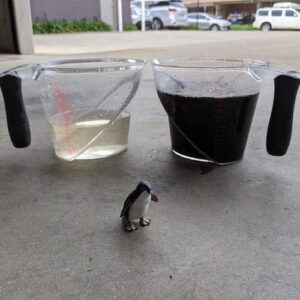
You could also try adding different types of oil to the mess that you’re making. Just be sure that you wear rubber gloves if you choose to use motor oil (not recommended unless you have an environmentally sound way to dispose of the waste plus you have appropriate protective gear available).
-
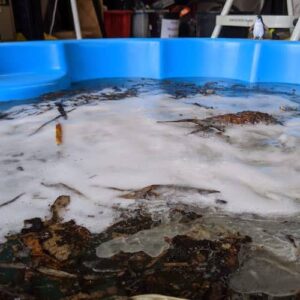
If you want you can make it even messier by adding some flour, water & detergent and giving the mix a stir to aerate it (vinegar & bicarbonate soda could do this too).
-
Begin to sort out the mess! Look at the tools you have to work out a plan…
- What will you use to remove the large plastic solids?
- What can you do about the shredded paper?
- How will you remove the oil from the top of the water?
- How would the animals be cleaned?
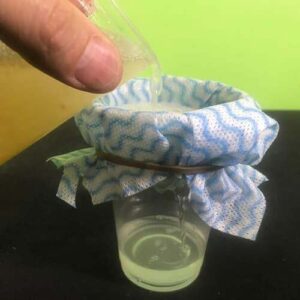
- How can you filter the water?
- Be sure to dispose of the waste sensibly!
How did you go? What would it be like if you had to clean up an environmental disaster?
-
School science visits since 2004!
– Curriculum-linked & award-winning incursions.
– Over 40 primary & high school programs to choose from.
– Designed by experienced educators.
– Over 2 million students reached.
– Face to face incursions & online programs available.
– Early learning centre visits too!
-

The science behind it
So, what was this all about?
The Science of Ocean Cleanup
Ocean pollution is a massive global challenge. Beyond the visible rubbish floating on the surface, our oceans are filled with toxic oil spills and nearly invisible microplastics. Cleaning these up is a complex task because pollutants often bond with the water or stick to marine life, making separation incredibly difficult.
Microplastics and Oil Spills
Pollutants enter our oceans from many sources. While oil spills are often the result of industrial accidents, microplastics come from everyday activities—including synthetic clothing breaking down in washing machines.
- The Toxicity Factor: Oil is not just messy; it’s highly toxic. It coats the feathers of birds and the fur of marine mammals, stripping away their natural insulation and buoyancy.
- Chemical Carriers: Microplastics can absorb and carry harmful chemicals like BPA and phthalates. When small marine animals ingest these plastics, the toxins enter the food chain, eventually affecting larger animals and even humans.
Innovative Solutions
Scientists and students around the world are developing new ways to tackle this issue:
- Magnetic Separation: Research into using ferrofluids (magnetic liquids) to bind to microplastics allows them to be lifted out of the water using magnets.
- Bioremediation: Some scientists are studying microbes that have naturally evolved to “eat” and break down oil hydrocarbons.
- Harbour Solutions: Australian startups like Seabin are creating automated rubbish bins that sit in marinas to intercept floating debris before it reaches the open ocean.
The Great Pacific Garbage Patch
Ocean currents and wind patterns create massive swirling “gyres.” These act like giant conveyor belts that gather floating plastic into massive areas like the Great Pacific Garbage Patch.

What can you do?
- Reduce Single-Use Plastic: Choose reusable bottles and bags to stop the problem at the source.
- Mind the Drains: Never tip oil or chemicals down the sink or street drains, as these often lead directly to the ocean.
- Fabric Choices: Natural fibres like cotton or wool don’t release plastic microfibres in the wash like polyester or nylon do.
- Local Action: Join a local beach or “Clean Up Australia” group to help remove debris from your local shorelines.

Teacher's note
Curriculums change, and so does the way you implement them in your classroom. Please use your own experience and knowledge of your students to use these resources to best effect for student learning.
Still want the curriculum links?
Here are the suggested links:
Australian Curriculum (ACARA) Science:
NSW Science syllabuses:
Victorian Curriculum Science:
Want this experiment — and many more — running in your classroom?
Have us visit your school — every student gets three hands-on experiments in 60–90 minutes with a qualified presenter.








