
Soap in the Microwave?
Ever wondered what happens when you put strange thing into your microwave? Try throwing some soap in there… You'll find some interesting results.
Adult supervision for setup
You will need
- A microwave
- A microwave-safe bowl
- Household soap (wet soap from the shower works best!)
Method
-
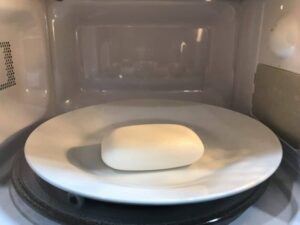
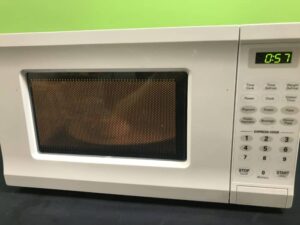
Place the bar of soap in a microwave-safe dish and zap it in a microwave on high for between 30-60 seconds.
-
You may need longer for low power microwaves.
-
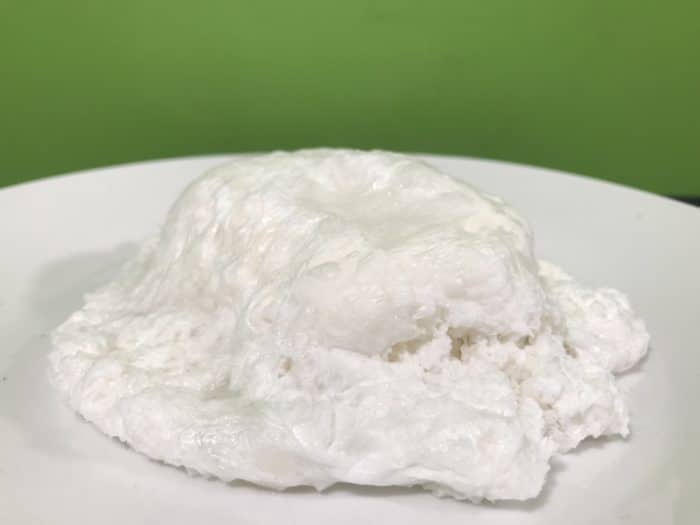
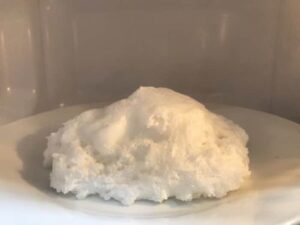
Watch as a foamy mass grows from the soap! (Careful; do not touch until the soap is cool).
-
School science visits since 2004!
– Curriculum-linked & award-winning incursions.
– Over 40 primary & high school programs to choose from.
– Designed by experienced educators.
– Over 2 million students reached.
– Face to face incursions & online programs available.
– Early learning centre visits too!
-

-
Get the Unit of Work on Heat Energy here!
- What actually is heat?
- How does heat move through different materials?
- How does heat change the properties of materials and more!
Includes cross-curricular teaching ideas, student quizzes, a sample marking rubric, scope & sequences & more

The science behind it
Why Does This Happen:
The Science of Soap in the Microwave
When you put a bar of soap (specifically one that floats, like Ivory) into the microwave, you are witnessing two distinct physical changes happening at once. The first involves a phase change. Soap contains a small amount of water trapped within its structure. As the microwave’s radiation excites these water molecules, they heat up and turn into steam (water vapour).
The second part of the reaction involves Charles’s Law, which states that as the temperature of a gas increases, its volume also increases. Soap is manufactured with tiny pockets of air trapped inside. When heated, these air bubbles and the newly formed steam expand rapidly. Because the soap becomes soft and pliable when warm, it acts like a balloon, stretching out to accommodate the expanding gases and creating a giant, fluffy foam!
V₁ / T₁ = V₂ / T₂
Once the microwave stops and the soap cools down, the air pockets contract and the soap hardens again, leaving you with a brittle, “cloud-like” structure that is still perfectly good soap—it just looks a lot bigger!
Variables to test
Find out more on variables here.
-
Soap Density
Which soap bars work the best? Compare a bar that sinks in water to one that floats. Since floating soap has more trapped air, does it expand more than the denser soap? -
Energy Intensity
Does it matter if you change the power setting of your microwave? This tests if the rate of heating affects how high the foam grows before the soap dries out. -
Initial Water Content
What happens if you soak a “dry” bar of soap in water for an hour before microwaving it? Does increasing the available solvent for steam production change the final volume? -
Surface Area
Does a whole bar of soap expand differently than a bar that has been grated into small flakes? This explores how structural integrity influences gas expansion.
Remember, for a “fair test,” ensure you only change one variable at a time while keeping the rest identical. This is the only way to know for sure what caused your results!

Teacher's note
Curriculums change, and so does the way you implement them in your classroom. Please use your own experience and knowledge of your students to use these resources to best effect for student learning.
Still want the curriculum links?
Here are the suggested links:
Australian Curriculum (ACARA) Science:
NSW Science syllabuses:
Victorian Curriculum Science:
Want this experiment — and many more — running in your classroom?
Have us visit your school — every student gets three hands-on experiments in 60–90 minutes with a qualified presenter.








