
Dancing sultanas
Run the dancing sultanas experiment and have a wild time! In this experiment all you need are some sultanas and soda water. Mix them and watch it go!
Adult supervision for setup
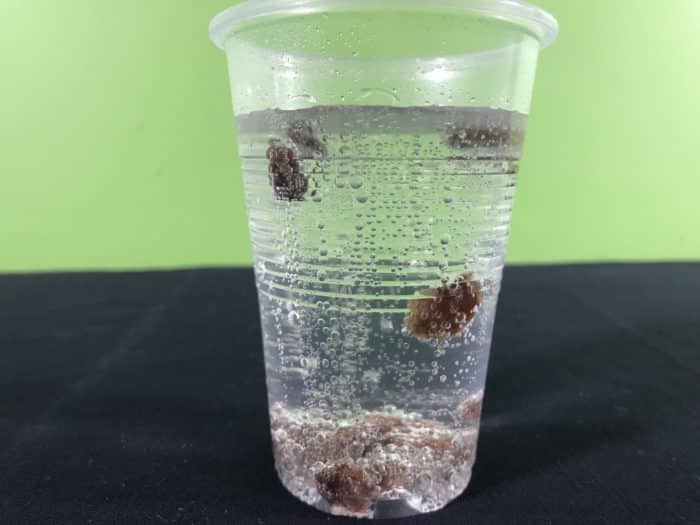
You will need
- Ten sultanas or raisins
- 1L of Soda water
- 1 Plastic container
Method
-
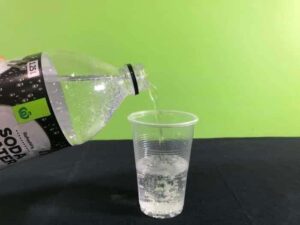
Pour the soda water into the container.
-
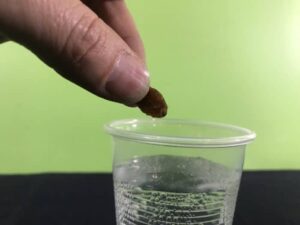
Gently add the sultanas one at a time to the soda water.
-
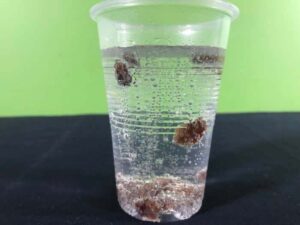
Watch them float to the surface and drop down over and over again.
When will this movement stop? Why?
-
School science visits since 2004!
– Curriculum-linked & award-winning incursions.
– Over 40 primary & high school programs to choose from.
– Designed by experienced educators.
– Over 2 million students reached.
– Face to face incursions & online programs available.
– Early learning centre visits too!
-

The science behind it
Why Does This Happen?
The Science of Dancing Sultanas
The “Dancing Sultanas” experiment is a delightful way to observe buoyancy, density, and surface tension. Soda water is “carbonated,” meaning it has a large amount of carbon dioxide (CO2) gas dissolved in it under pressure. When you pour it into a glass, that pressure is released, and the gas begins to escape in the form of bubbles.
Why do they dance?
Sultanas (dried grapes) are slightly denser than soda water, so they initially sink to the bottom. However, their skin is rough and full of tiny pits that act as nucleation sites—perfect places for CO2 bubbles to form and grab hold.
- Buoyant Force: As the gas bubbles attach to the sultana, they act like tiny life jackets. Because the gas is much less dense than the liquid, it creates an upward buoyant force.
- Rising to the Top: Eventually, enough bubbles attach to overcome the weight of the sultana, and it rises to the surface.
- The “Pop” and Drop: At the surface, the bubbles pop as they hit the air. Without the lifting power of the gas, the sultana’s density takes over again, and it sinks back down to collect more bubbles, starting the “dance” all over again!
Real-World Applications
This principle isn’t just for snacks! Marine archaeologists use this exact concept of displacement and buoyancy to recover history. They attach large “lift bags” to heavy shipwrecks or sunken treasures and fill them with gas. Just like the bubbles on the sultana, the gas-filled bags provide the buoyant force needed to lift massive weights from the ocean floor to the surface.
Variables to test
Find out more on variables here.
-
Surface Texture and Mass
Compare dried sultanas, cranberries, blueberries, and apricots. Does a smoother skin (like a blueberry) make it harder for bubbles to attach? Does a heavier fruit (like an apricot) require more bubbles before it begins to move? -
Gas Concentration
Does it matter which carbonated drink you use? Compare soda water, ginger ale, or sparkling mineral water. Does a higher carbonation level make the sultanas dance faster? -
Inorganic Materials
Can you make this work with non-fruit items like small pieces of pasta, buttons, or corn kernels? Which physical properties (weight vs. surface roughness) seem to matter most? -
Temperature
Does cold soda work better than room-temperature soda? Gases stay dissolved in cold liquids better—how does temperature affect the rate of bubble formation?
To ensure a fair test, try to use the same amount of liquid in the same shaped glass for each trial, changing only the fruit or the type of drink!

Teacher's note
Curriculums change, and so does the way you implement them in your classroom. Please use your own experience and knowledge of your students to use these resources to best effect for student learning.
Still want the curriculum links?
Here are the suggested links:
Australian Curriculum (ACARA) Science:
NSW Science syllabuses:
Victorian Curriculum Science:
Want this experiment — and many more — running in your classroom?
Have us visit your school — every student gets three hands-on experiments in 60–90 minutes with a qualified presenter.








