
Make a ‘beanhouse’
Ever wanted to make a beanhouse from scratch? Well luckily for you this experiment will show you step by step on how to make one from simple materials!
Adult supervision for setup
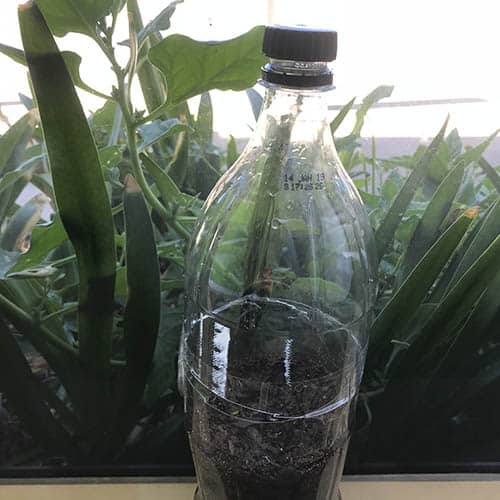
You will need
- One PET bottle with lid
- Compost soil mixture from a nursery or supermarket *
- One packet of bean seeds
- Clear masking tape
- Scissors – make sure you are allowed to use them!
- Optional – Box cutter (adults only)
Method
-
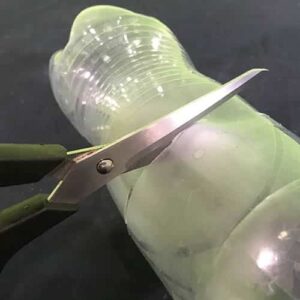
Cut your PET bottle in half. You may need to make a small hole using a box cutter (away from children) or alternatively pinch the side of the bottle and you should be able to make the initial cut.
-
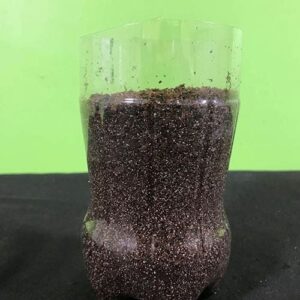
Using compost soil, fill the bottom half of the PET bottle to within 4 cm of the cut edge.
-
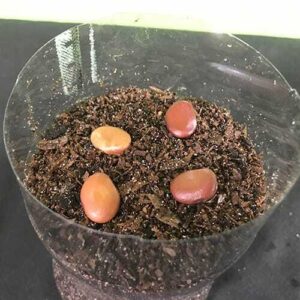
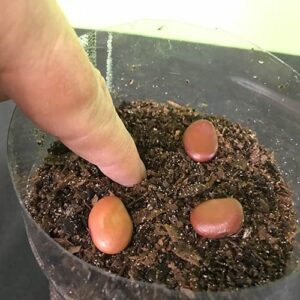
Place 4 bean seeds onto the soil surface, at least 2 cm away from the PET bottle sides.
-
Using your finger, poke the bean seeds 2.5 cm into the soil. Water the soil well.
-
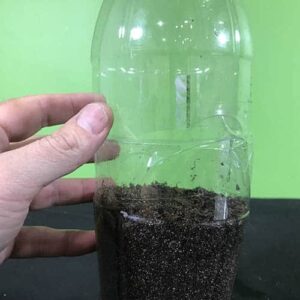
Connect the top half of the PET bottle to the bottom half and secure with masking tape.
-
Leave the lid loose and place the bottle on a window ledge that receives good sunlight.

-
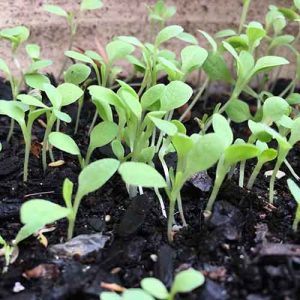
Your plants should begin to sprout within 2 weeks!
-
Get the Unit of Work on Plant Biology here!
- Learn about the parts of a flower
- Discover how vascular tissue transports water & sugars around the plant
- Learn about plant pigments and adaptations to the environment
- From photosynthesis to transpiration & more, there’s a heap covered!
Includes cross-curricular teaching ideas, student quizzes, a sample marking rubric, scope & sequences & more
-
School science visits since 2004!
– Curriculum-linked & award-winning incursions.
– Over 40 primary & high school programs to choose from.
– Designed by experienced educators.
– Over 2 million students reached.
– Face to face incursions & online programs available.
– Early learning centre visits too!

-

The science behind it
Why Does This Happen
Growing your own beans in a PET bottle can be a lot of fun, but you can also use these beans to investigate factors that affect plant growth.
Variables to test
- Beans favour a combination of growing conditions that you can experiment with. Try changing the amount of heat, light or nutrients or the growing media that the seeds ar in.
- Try setting up different bottles and changing one thing to see the effect (eg. the amount of water or light they get or adding salt to the soil). Changing one variable and seeing the result is part of the scientific method and we strongly encourage it!

Teacher's note
Curriculums change, and so does the way you implement them in your classroom. Please use your own experience and knowledge of your students to use these resources to best effect for student learning.
Still want the curriculum links?
Here are the suggested links:
Australian Curriculum (ACARA) Science:
NSW Science syllabuses:
Victorian Curriculum Science:
Want this experiment — and many more — running in your classroom?
Have us visit your school — every student gets three hands-on experiments in 60–90 minutes with a qualified presenter.








