
Make a leaf skeleton
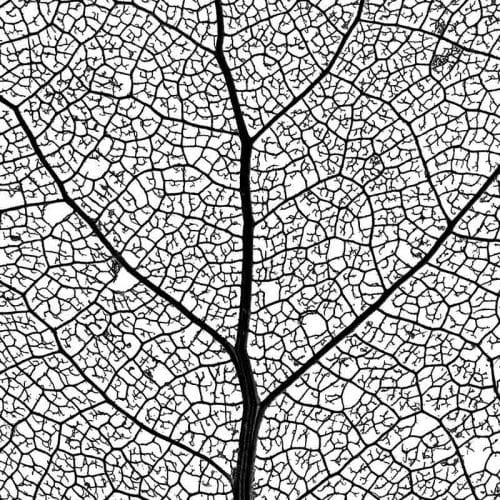
You've probably seen a human skeleton before but have you ever seen a leaf's skeleton? In this experiment grab an adult because it might get dangerous!
Adult supervision for setup
You will need
- One leaf, try both Australian native plants and exotic plants. Make sure an adult identifies the plants as safe & free from toxins
- 500mL water
- One saucepan
- Two Tsp Bicarbonate Soda
- Household Bleach
- Paper towels
- Adult help
Method
-
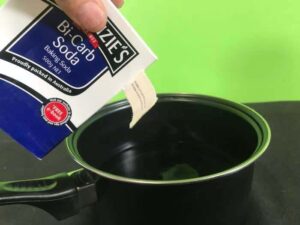
Place the water into pot and mix the bicarbonate soda and baking soda.
-
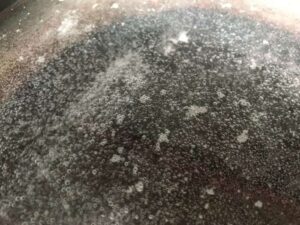
Only with adult help, bring the water to boil *DANGER – be careful!
-
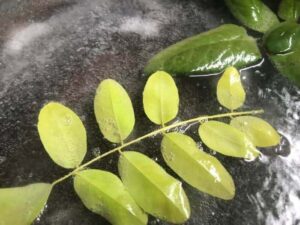
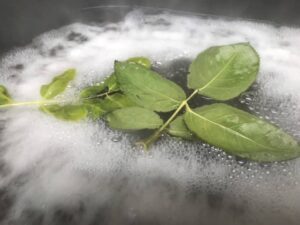
Add your leaf to mix and reduce the heat. Simmer for at least an hour, stirring occasionally.
-
Only with adult help, remove the leaves and place them into a strong solution of bleach.
-
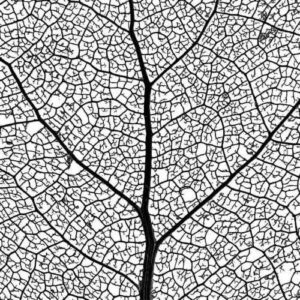
Leave overnight. The green plant tissue between the ‘veins’ will have floated away.
Dry the leaves on a paper towel.
-
Get the Unit of Work on Plant Biology here!
- Learn about the parts of a flower
- Discover how vascular tissue transports water & sugars around the plant
- Learn about plant pigments and adaptations to the environment
- From photosynthesis to transpiration & more, there’s a heap covered!
Includes cross-curricular teaching ideas, student quizzes, a sample marking rubric, scope & sequences & more
-
School science visits since 2004!
– Curriculum-linked & award-winning incursions.
– Over 40 primary & high school programs to choose from.
– Designed by experienced educators.
– Over 2 million students reached.
– Face to face incursions & online programs available.
– Early learning centre visits too!
-

The science behind it
Why Does This Happen
Vascular bundles in plants transport water and nutrients around the plant.
- Xylem transports water and minerals up from the roots and
- Phloem transports sugars from the leaves to throughout the plant.
You’ll often find leaves on the ground showing natural degradation down to their vascular bundles due to microbial action. These vascular bundles are the vein shapes you see in the leaves of a plant.
Variables to test
- Try different types of leaves
- Try monocot vs. dicot leaves (more on the differences here)

Teacher's note
Curriculums change, and so does the way you implement them in your classroom. Please use your own experience and knowledge of your students to use these resources to best effect for student learning.
Still want the curriculum links?
Here are the suggested links:
Australian Curriculum (ACARA) Science:
NSW Science syllabuses:
Victorian Curriculum Science:
Want this experiment — and many more — running in your classroom?
Have us visit your school — every student gets three hands-on experiments in 60–90 minutes with a qualified presenter.








