
Make your own biosphere
he Biosphere is all around us but with this Amazing Science Experiment you can have in the palm of your hand. Get your Hands dirty and have some fun!
Adult supervision for setup
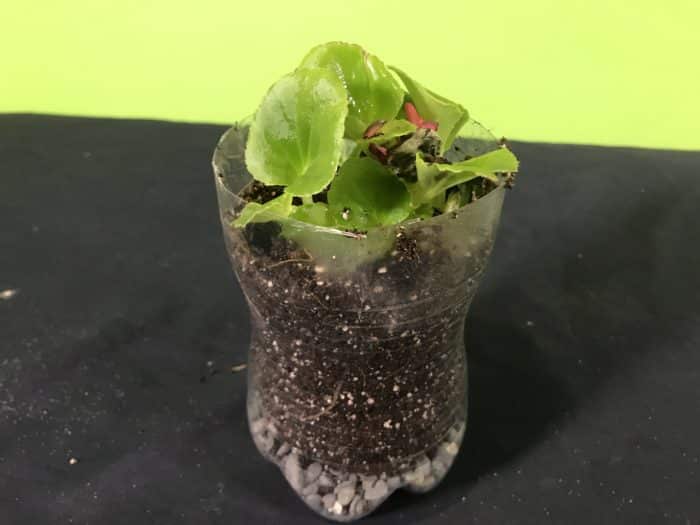
You will need
- A clean, transparent 2L PET bottle
- Scissors
- Sticky tape
- Soil
- Pebbles
- Charcoal fragments
- Small plants
Method
-
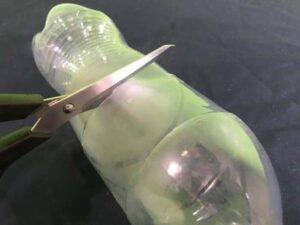
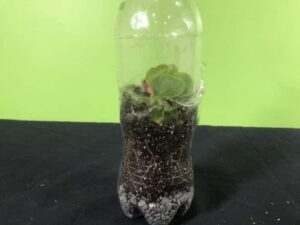
Cut the top off the PET bottle using scissors or a sharp knife.
-
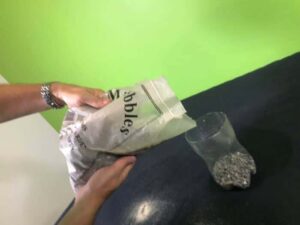
Add a layer (about 1 cm deep) of charcoal, followed by a layer of pebbles (about 2 cm deep) and a layer of soil (about 5 cm deep).
-
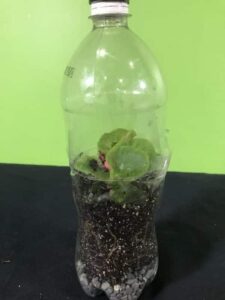
Stick some holes in the soil and add some small plants. You could also add a layer of moss. Tape the top of the bottle back on.
-
Place your mini biosphere in direct sunlight and water occasionally but not too often – the water in the container should evaporate and condense on the sides of the container, creating its own water cycle.
-
Get the Unit of Work on Plant Biology here!
- Learn about the parts of a flower
- Discover how vascular tissue transports water & sugars around the plant
- Learn about plant pigments and adaptations to the environment
- From photosynthesis to transpiration & more, there’s a heap covered!
Includes cross-curricular teaching ideas, student quizzes, a sample marking rubric, scope & sequences & more
-
School science visits since 2004!
– Curriculum-linked & award-winning incursions.
– Over 40 primary & high school programs to choose from.
– Designed by experienced educators.
– Over 2 million students reached.
– Face to face incursions & online programs available.
– Early learning centre visits too!
-

The science behind it
More Information
The biosphere is a closed ecosystem
…you just need to add sunlight and some water. The charcoal acts as a filter, purifying the water as it cycles through the system. You can also create an aquarium in a PET bottle, with water plants, rocks and some water from your local creek.
Applications
Scientists have long been interested in studying the interactions between living organisms and their environment in order to better understand how life functions on Earth and potentially on other planets. One way that scientists study these interactions is by creating biospheres, which are self-contained, closed ecosystems that can sustain life for an extended period of time.
Biospheres are designed to mimic natural ecosystems and are often used to study how living organisms interact with each other and with their environment. One area of particular interest is nutrient use, as understanding how nutrients move through an ecosystem can help us better understand how to manage natural resources and ensure the sustainability of life on Earth.
One example of a biosphere experiment is the HI-SEAS mission, which takes place in Hawaii. This mission involves a team of scientists living and working in a simulated Martian habitat for extended periods of time, studying the psychological and physiological effects of long-duration space missions. The habitat is designed to be self-sustaining and provides the crew with all the resources they need to survive, including food, water, and air.
The HI-SEAS mission is an example of how biosphere experiments can help scientists better understand how living organisms interact with their environment and with each other. By studying the nutrient cycles within the habitat, scientists can learn about the best ways to manage resources in space and on Earth. They can also study the psychological and physiological effects of living in a confined space for extended periods of time, which is essential for future long-duration space missions.
Variables to test
- Vary the initial growing conditions in terms of nutrients or the different plants used
- What happens when you vary the heat or light exposed to the biosphere?

Teacher's note
Curriculums change, and so does the way you implement them in your classroom. Please use your own experience and knowledge of your students to use these resources to best effect for student learning.
Still want the curriculum links?
Here are the suggested links:
Australian Curriculum (ACARA) Science:
NSW Science syllabuses:
Victorian Curriculum Science:
Want this experiment — and many more — running in your classroom?
Have us visit your school — every student gets three hands-on experiments in 60–90 minutes with a qualified presenter.








