
Sea Monkey Science
Look after brine shrimp in your very own self-contained ecosystem! A classic science activity you can do in the home or classroom.
Adult supervision for setup
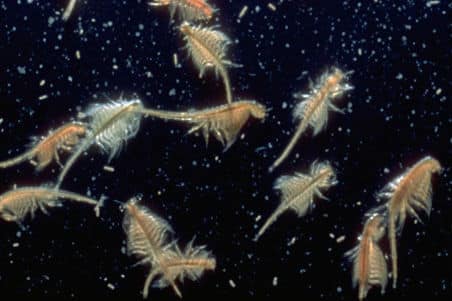
You will need
- Brine shrimp! These are also known as Sea Monkeys and you should be able to source them from a local pet shop or online. Keep the packaging to refer to for care & maintenance (eg. water salinity).
- An aquarium or clear container to keep the brine shrimp. Ideally, the container should have an aerator to keep oxygen levels level and a water filter.
- A thermometer to measure water temperature.
- A pH meter or litmus strips to measure water pH
- Ask your pet store for test papers to monitor nitrogen levels.
- Ask your pet store if they have feedstock for the brine shrimp, which usually consists of an algal paste.
Method
-
Prepare the brine shrimp holding tank and the water as per discussed above. This experiment is about watching brine shrimp for changes as they grow… a great chance to record your observations via some classroom blogging!
-
pH test unit
Take an initial reading of the water temperature, salinity, pH and nitrogen levels. You can get the materials you need from most pet supply stores.
Optimum levels
– pH between 7.5 and 8
– Temperature between 20oC and 25oC
– Nitrogen levels below 320 mg/L
– Salinity levels at 35mg/L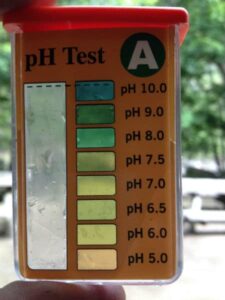
-
Observe how your brine shrimp first look when they are in the packet. The brine shrimp have most likely arrived as eggs although sometimes they might arrive in their dormant state.
-
“Brine shrimp swimming”
Once your brine shrimps hatch in the water there are several things you could do:
– you can use a digital camera or smart phone to take photos; this is handy if you want to observe them to count their swimming appendages, segments or similar.
– you could use a digital microscope to look at the brine shrimp in action (especially if you can isolate some in a small tray or petri dish)
– you could see the behavioural responses of the brine shrimp to light & dark (variable testing!)
– try to estimate how many brine shrimp there are in your container.
– compare the anatomy of the brine shrimp with that of crustaceans found in your seafood shop.
– look for when the exoskeleton of the brine shrimp moults
You will have to explore with your students whether they want to see if the changing the salt concentrations effects the growth and hatching of the brine shrimp; some students may not feel comfortable with this.
-
School science visits since 2004!
– Curriculum-linked & award-winning incursions.
– Over 40 primary & high school programs to choose from.
– Designed by experienced educators.
– Over 2 million students reached.
– Face to face incursions & online programs available.
– Early learning centre visits too!
-

The science behind it
Did You know ?
Brine shrimp are small crustaceans (Artemia spp.) that feed on blue-green algae. These shrimp have a pink colouration due the carotenoid pigments they ingest when eating algae. The Greater Flamingo (Phoenicopterus roseus) eats brine shrimp, which in turn gives these birds their classic pink colour!
Teacher's note
Curriculums change, and so does the way you implement them in your classroom. Please use your own experience and knowledge of your students to use these resources to best effect for student learning.
Still want the curriculum links?
Here are the suggested links:
Australian Curriculum (ACARA) Science:
NSW Science syllabuses:
Victorian Curriculum Science:
Want this experiment — and many more — running in your classroom?
Have us visit your school — every student gets three hands-on experiments in 60–90 minutes with a qualified presenter.








