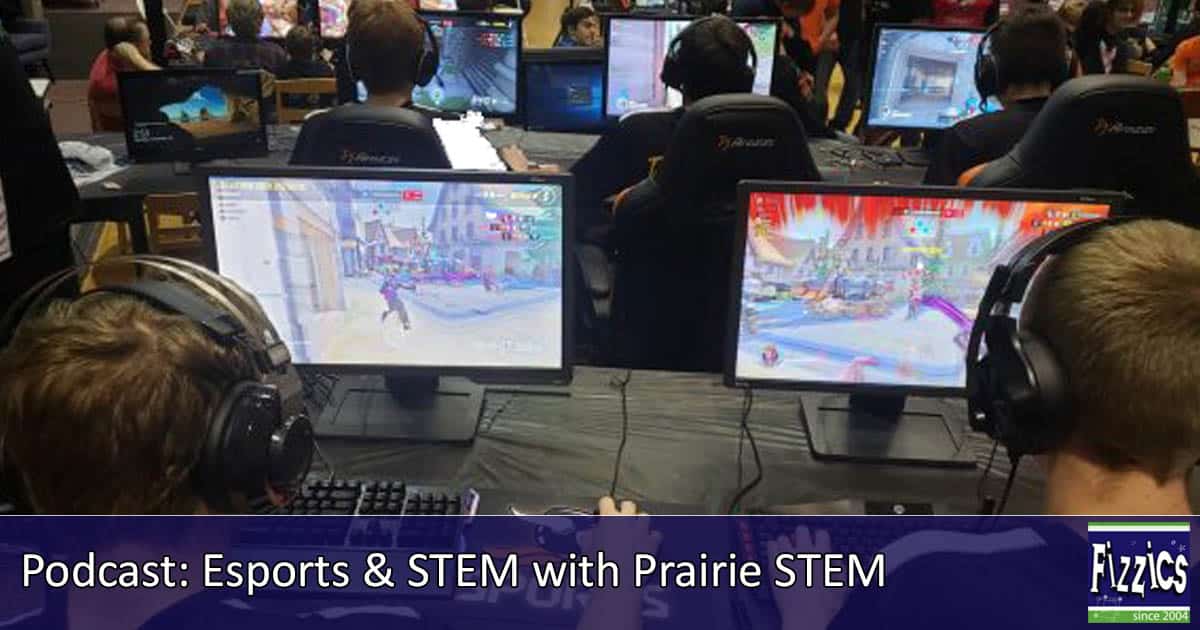
Find out how Prairie STEM is changing lives by empowering kids to use Esports as a vehicle to raise money for charity. Plus, learn about Prairie STEM’s philosophy when it comes to teaching kids critical thinking skills using STEM as we chat with CEO Alan Wang, COO Jeffrey Ingraham & Community Outreach Director Jen Miller.
The Prairie STEM model integrates the rigour and innovation of instructional leadership programmes with authentic community partnerships and deep family engagement. Their mission is to transform regional economies by developing the diverse talents of both urban and rural students, effectively dismantling old educational paradigms.
This effort is driven by the necessity for transformational, system-wide reforms tailored to the demands of the future economy. By centring on accessibility, Prairie STEM ensures that students are not just participants in the workforce, but leaders and innovators within it.
Top 3 Learnings
STEM as a Tool for Equity: STEM education can be used to bridge the gap between urban and rural communities, providing equal opportunities for students regardless of their postcode.
The Educational Power of Esports: Competitive gaming is an effective vehicle for teaching critical thinking, digital citizenship, and collaboration, making it a valuable addition to modern school curricula.
About Alan Wang
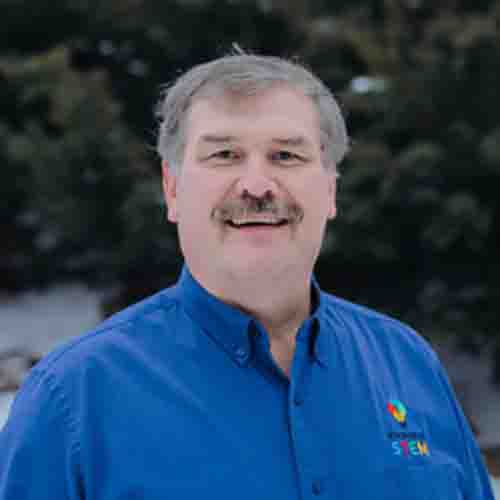
Alan Wang
With over a decade of postgraduate education and 20 years of experience across the biotech industry, digital marketing, and clinical fields, Alan Wang possesses formidable C-suite leadership expertise. His background covers strategic planning, B2B product development, and SaaS implementation and exit strategies.
Throughout his career in biotechnology and medicine, Alan has been motivated by a core belief in equity—ensuring all students have the same high-level access and opportunities he experienced. Since 2015, he has led the Prairie STEM team from its early programmatic stages to its current standing as a major solution provider and a value-add networked organisation within the global STEM ecosystem.
About Jeff Ingraham
Jeff Ingraham
Jeff has written and presented extensively on the topic of technology and music technology in education including monthly technology articles for the Nebraska Educational Technology Association (NETA) newsletter under the name of “The Windows Wizard”. He has presented or Keynoted at a wide variety of Music/Education conferences including: Nebraska State Bandmasters Association conference (NSBA)Nebraska Choral Directors Association conference (NCDA), Nebraska MENC conference (now NAFME), National MENC conference in Washington DC, (now NAFME), Omaha Public Schools Technology Institute (Keynote), Westside Community Schools Technology Inservice (Keynote), Gretna Public Schools Internet Safety Institute (Keynote), 21st Century Skills Fair (ESU3), Nebraska Association of School Boards Conference (NASB), International Interactive Whiteboard Summit in London, UK (2006) & Nebraska Educational Technology Association conference (NETA).
About Jennifer Miller
Jennifer Miller
Jennifer graduated from Charles W. Flanagan High School in Pembroke Pines, Florida a few days later she embarked on her journey at Full Sail where she graduated Salutatorian and received an Associates in Computer Animation. Shortly after Jennifer joined the U.S. Air Force as an F-16 Avionics Technician. She performed flightline maintenance on F-16 Avionics equipment and performed air-to-air missile evaluations. During her career in the Air Force Jennifer cross-trained to become a Sensor Operator for the MQ-9. She conducted reconnaissance and surveillance missions utilizing a variety of acquisition and tracking systems, provided terminal weapons guidance, and performed co-pilot duties. Upon retirement, Jennifer attended the University of Nebraska at Omaha where she graduated Magna Cum Laude with a Bachelor’s in Emergency Management concentrating on Natural Disasters and Unmanned Aircraft Systems with minors in Aviation Administration, Geography and Supply Chain Management. Jennifer spends her free time with her 2 daughters and volunteering with Girl Scouts.
[00:00:19] Ben Newsome: You’re listening to the Fizzics Ed Podcast. I hope you’re having a fantastic day or evening, or wherever you are. This chat, I’ve got to say, is going to be quite different. It’s got a lot of things we’re covering. We’re speaking with Alan, Jeffrey, and Jen from Prairie STEM, which is this amazing organisation that really helps kids get into STEM in many, many different ways. We’re going to be talking about Esports and STEM and robotics, and the “why do we do this in the first place?” It’s really worth your time.
[00:00:46] Ben Newsome: If you’re wondering, go check out prairiestem.org. As you listen to this chat, you’re going to find there are many, many layers to this particular onion. They do many different things, and it is really well worth listening on in. You know what? You might go, “I think this might be something we can do,” which would be awesome if you can emulate. So listen on in, it is well worth your time.
[00:01:06] Announcer: This is the Fizzics Ed Podcast. We’re all about science, ed tech and more. To see 100 fun free experiments you can do with your class, go to fizzicseducation.com.au. That’s physics spelled F I Z Z I C S and click 100 free experiments.
[00:01:25] Ben Newsome:Alan, Jennifer, Jeff, welcome to the Fizzics Ed Podcast.
[00:01:29] Jennifer Miller: Thanks for having us.
[00:01:31] Ben Newsome: Look, I’m really stoked to honestly have everyone here to have a bit of a chat about STEM. This is what we all do for a living and obviously we’re very passionate about it. We got to hang out last week and chat a little bit more about Prairie STEM and all the things you’ve been doing. I really wanted to learn a lot more. Alan, I might just quickly flick to you. Let’s be honest, I kind of got a bit of an idea, but some people might not know what you get up to. Can you just describe what does the organisation do?
[00:01:57] Alan Wang: Absolutely. Thanks for taking time out to speak with us, Ben. What our space is, is specifically K to 12 education, where we focus on STEM integration and bringing technology to students, not for the sake of bringing technology as the bright shiny object, but for the sake of bringing students along so that they understand their greatest value. So that when students are going through and learning about robots, they’re learning about drones, AR, VR, it’s all about trying to connect themselves to the story that we’re sharing, which is you can be good in maths and science and all these different areas. But by bringing all these different areas of technology into education, that you’re able to teach those standards in education. That it’s more than just the maths, it’s more than just the reading, it’s everything else in between. It’s the SEL, the social emotional learning. It’s the culture, it’s the empathy, and it’s all those areas that reaches out to the heart that we’re trying to connect with our students.
[00:02:58] Ben Newsome: So much fun. I mean, I remember you describing some of the lessons that were happening honestly just outside the room where you were last week. I mean, these are seeming like a lot of fun. I mean, I was just wondering, Jennifer, you are heavily involved with this as well. What’s your favourite sort of class that you get involved with or created? I’d just love to give people listening in just a bit of a feel of how you do the things, how you teach the STEM with the kids.
[00:03:24] Jennifer Miller: So my favourite class or series that we teach is Girls in STEAM. Right now, girls ages 8 to 14, that’s typically when they start trying to see themselves as not someone that can succeed in maths or in science, and they start kind of doubting their worth in those fields. And that’s when most girls will drop out of those fields. So we have a programme called Girls in STEAM. We focus on the 8 to 14 range, and it’s an empowerment piece. So they come in thinking, “Oh, we’re going to do some really cool stuff with robots,” which they do. This year we’ve had to take it virtually, but we’re still having fun with them. They come in, they do a week for science, technology, engineering, arts, and maths, and then we have a big robotics competition. And by the end of it, they’re ready to compete right beside everyone else. All those boys that are out there that they thought in the beginning that they weren’t good enough to do these kind of projects. By the end, they’re competing side by side, taking home trophies. They’ve got huge smiles on their faces. Many of them have come in never even using a robot before, never even opening up code before. And by the time they’re done with it… last year we had a little girl bring home number one for the coding, first place trophy, and she’d never coded anything in her life.
[00:04:34] Ben Newsome: I love that. That’s really cool because I love how people think they’re never good enough, but the reality is they always were, they just didn’t know it. It’s very much the case. That’s awesome. Can I just ask quickly, there’s so many robotics platforms, what’s the one that you guys play with a bit?
[00:04:51] Jennifer Miller: So usually we use the Edison bot. That was developed here in Nebraska. This year, with it being virtual, those bots we couldn’t really send home to everyone. So this year, each girl got a Sphero littleBits Space Rover. And with this landing on Mars with the Perseverance, the whole season’s been about space travel, space exploration. And then with getting ready for the Artemis, the female launch that’s going to the moon, we really try to hone in on that female empowerment with space travel and space exploration.
[00:05:21] Ben Newsome: That’s awesome. And Jeff’s here as well. It’s kind of like a party in this particular podcast this time. Jeff, how do you get involved with Prairie STEM? What do you get up to?
[00:05:31] Jeff Ingraham: So I started off as a music teacher, putting the A in STEAM instead of STEM. And then I got my masters. My first masters was in technology, and then I worked with a bunch of school districts, and then I’ve done professional development for teachers in technology for the last 25 years. And then I retired a year and a half ago. And then Prairie STEM seemed like a perfect fit because it was kind of the same stuff I’d been doing for the past 35 years, and so it just seems like a match made in heaven. And they’re stuck with me, so.
[00:06:08] Ben Newsome: And that’ll happen. It’s funny how what you fall into. But that’s really cool. I love the fact that you’re doing the A in STEAM. I mean, the STEAM thing is not going to go away. It is highly creative. And honestly, with all that background and knowledge, I’d love to know… and this is sort of I suppose putting you on the spot, so I’ll let you think about it for a little bit. But you know how getting arts into STEM is a thing, and there are different ways of teaching the lessons. And maybe if you had to teach, I don’t know, just say you had… in two days’ time. No, that’s not going to happen, because that’s the weekend. Let’s just say it’s Monday next week for you. But you have a brand new bunch of kids, let’s just say they’re, I don’t know, 13 years old. And they honestly think that arts has got nothing to do with science whatsoever. It’s got nothing to do with technology. What sort of lessons would you kind of do to go, “You know what kids, there’s more to it than you think.” What sort of things would you like to run to kind of break that sort of headspace?
[00:06:59] Jeff Ingraham: Yeah, so I think engineering is probably the natural place to start in the world of STEM, just because when you think of engineering a bridge, you can make a bridge that’s the strongest, greatest bridge in the history of the world, but if it is ugly or disgusting and nobody wants to be around it because it’s simply utilitarian… we like beauty in nature. The Rule of Thirds, the Golden Rule, all those things that make life beautiful. I’m a musician, so I like to equate a lot of things to maths. There’s a whole lot of music folks specifically in coding. There seems to be… whatever Seymour Papert said in his Mindstorms book, that if Bach were alive today, he would be a computer programmer. And he equates the fugues and the meticulous nature of his composing style to computer programming in these days. So those are a few of the ways. And you know, again, everything we do, whether you’re designing a robot or doing a scene for a video game, coding, all of that, the music adds into it, the sound effects, the beauty of the scenery, all of that, art is everywhere in everything in STEM. And so, yeah.
[00:08:28] Ben Newsome: Absolutely. Jeff, you’ve just reminded me of a thing that we did last week on that new app, Clubhouse, where I was hanging out with some AI educators. And we thought we’d have a bit of fun with this thing, and it was sort of a bit weird. What we had, we had people from the audience throw different words at the person who would then type it into the AI, a bit like a song-in-an-hour challenge, where you send a song in in an hour and the musician then has to create a song. But we thought, “You know what? What if we throw some words at the AI and say, ‘Make a song to the tune of Dancing Queen with these weird words?’” And then we had a musician in there try and play it after, which was kind of a lot of fun. And then we had everyone trying to sing, like we were all hooked into it. We could see it being live created. This particular platform was GPT-3. And it was just a bit wild to mix the art and the STEM together. And everyone was just having fun. We forgot we were actually learning how AI actually works. Anyway, it was really good to hang out.
[00:09:25] Ben Newsome: Actually, I’d love to throw to any of you… I suppose we can talk over each other, but I don’t really mind. As technology evolves… and this is very much that particular session I was doing last week was watching the evolution of the next things coming… as technology evolves, how do you handle that from trying to get all the equipment in to be able to teach the next stuff? It feels like it’s almost like an arms race to try to have the next coolest shiny thing. And then reality, I was hanging out with a coder two weeks ago, and he was talking about going, “Look, mate, LEGO robotics, like you mentioned LEGO Mindstorms, honestly isn’t that much different to Turtle that I learned as a kid, this little triangle that would move around the screen and draw the little squares and whatever.” It’s not that much different until you start messing with the sensors, even though it’s a pretty-looking robot. How do we do this as educators? Because there will be people listening in going, “Hey, do I have to buy the new stuff?” Do we always? I don’t know, what do you guys reckon?
[00:10:21] Jennifer Miller: I think you have to just find a good partner. So, we go into the schools. The teachers don’t have to upgrade every year to whatever the newest item is. They partner with some outside organisations, some different non-profits that can bring the education to them. So you don’t have to have a classroom set of Oculus, you don’t have to have a classroom set of these robots. You contract with someone like us to come in, we bring in the cool shiny toys, we teach them about the science, the technology behind it, and then they can keep their students up to date without having to go through the cumbersome red tape of trying to get new items in their classroom, which by the time they finally get it to the classroom, it’s outdated because it took so long to get the money and the paperwork done to get it into the classroom.
[00:11:03] Ben Newsome: This makes a lot of sense, Jennifer. I mean, that’s sort of what Fizzics does honestly. I mean, our job is to keep up with the bits and pieces. I mean, of course there’s an expense to that but if we’re going out to multiple schools, I mean that then halves, breaks that cost down very, very fast. And the schools don’t have to front 10 grand, 15 grand, or even 5 grand for a thing that might be used for a block of time, and then it’s really good at collecting dust for a while. And then it goes again, and off we go. So, I mean, I remember we were chatting last week about some… I was amazed just how much you guys actually did. I mean, yeah, Prairie STEM has been doing some stuff in your area, but honestly, you’ve got some global chapter stuff going on there. Alan, I’d love to hear a bit more about what you were describing that was going around all over the place. That was really interesting.
[00:11:46] Alan Wang: Yeah, so, a lot of that is credited to our high school volunteers, where we work with a group called Just Imagine, and these high school volunteers have really kind of taken the service volunteer heart work. When they worked with us in the past, it was working with our students in the schools. In light of the last year’s events, most everything that we’ve done has transitioned to virtual programming. So that all of the in-school lessons that we used to do is now available online. So with our high school partners, what we’ve done is allowing them to get service hours through virtual mentoring. So what they do is they work with these students, and, you know, we all know in terms of education that teachers are struggling. Everybody is in survival mode, and so to the best of our ability has been to try to deliver programming, to deliver service in a way that kind of makes their full plate of education delivery that much easier to deliver.
[00:12:44] Alan Wang: And so with the partners that we have, these Just Imagine chapters that are springing up as new chapters across the country in different cities, as well as in different countries, it is taking what Prairie STEM has already built on the website with virtual curriculum, it’s taking what Prairie STEM has done with Esports, it’s sharing our Girls in STEAM programming, so that we have women leaders, not just in technology as professionals, but all the way down through the continuum of education. So that we have college leaders in their programmes that are females, high school leaders in their programmes that are females, coming together through our Girls Sisters in STEM Leadership Summits, for example, and then working specifically with those middle school girls that are really kind of facing those challenges in a very personal, deep sense, where they don’t have anybody to connect to because they’re in a remote learning environment. Where 50% of most of these students are still not in person in schools.
[00:13:48] Alan Wang: And so this becomes the only opportunity for them to really be able to connect, and they’re connecting in a way that is stronger than what we ever imagined. You know, when we had planned this, it was just to try to get the inspirational stories to these girls along with some great content, where you have PhDs in brain biology talking about the amazing stuff they’re doing with their underwater laboratory and bringing that to the middle of Omaha, Nebraska, which is landlocked, but they’re able to connect with this phenomenal marine biologist that works on the eastern seaboard. Across all the different levels, being able to have these girls see themselves in a different light. And a lot of these girls don’t have access or opportunities to connect with that high level of talent.
[00:14:35] Alan Wang: And so when you’re bringing in these role models, whether it’s from career professionals to undergraduate students to high schoolers, and then you bring them all together to basically lift and carry and support these middle school girls, what does it do for those middle schoolers looking ahead into their own future where they understand that these phenomenal people ahead of them, they all dealt with their own struggles. And so whenever they come together to talk, we give them three questions to answer, and it’s always been ‘How did you get interested in STEM or STEAM?’, ‘What were some of the obstacles or challenges that you had to personally overcome?’ (and again, by sharing those personal authentic stories, it really gets these girls to open up and see that they’re not alone in their own struggles), and the last thing are ‘What are those advice, life advice things to get these girls through the next few years as they’re trying to decide not just what they want to do, but who they are?’.
[00:15:31] Alan Wang: So it’s been extremely powerful. That is one aspect that has translated and transcended not just the city limits or the state lines, it’s one of those things that everybody, every girl in middle school across the world is struggling with and would love that opportunity to connect with those that are at different points in their life.
[00:15:52] Jennifer Miller: And for the girls that are in other states or other countries, our social media accounts, we have flyers with the registration codes. So if they want to get in on any of the Sisters in STEM leadership conferences, or our summer camps that come up, or any of the lessons that Alan talked about, the lessons are on the website under our STEM kits that anyone in the world can access, and it has the logo for our Just Imagine high school students that created those ones, and then our staff members have the other logos on them. So they can go to any of the age groups right there.
[00:16:26] Ben Newsome: That’s awesome. I mean, so while you mentioned that now, what’s that website so people can jot it down wherever they are?
[00:16:33] Jennifer Miller: It’s www.prairiestem.org. And then if you’re looking on social media, Prairie STEM is on Instagram, Facebook, Twitter, and LinkedIn.
[00:16:44] Ben Newsome: Well definitely, as usual, we’ll put those in the show notes for sure. I mean, very important. That’s why these are here, so you can connect with people and use these resources, absolutely. Hey, one of the things that was mentioned briefly, we only dropped in just a slight hint, like opened the door just a little bit, about the Esports thing. Now I thought that was really cool because there’s not many places that integrate Esports into a STEM organisation. So I’d just love to know a bit more about how that all works.
[00:17:11] Alan Wang: Yeah, that’s a great… thanks for that lead-in. That was perfect. The Esports programme for us is all about meeting students where they’re at. We all know, I’m a parent of three, that as soon as they’re done with their schoolwork, as soon as they’re done with their chores and homework and those things, they all want to jump on their devices. They all want to jump on their consoles or their computers to play games. And in this world of remote learning, this sometimes is their only chance to connect with their friends outside of the learning environment where they can be their own true authentic selves. And then when you hear them talking in their headsets, you know, it’s a whole new ball game.
[00:17:48] Alan Wang:Esports is the fastest growing global sport/activity in the world. If you just do a quick Google search, you’ll see you can judge the impact of any activity or event based on the dollars going into it, and you can see on the Esports side, I know that there are initiatives, businesses, hedge funds that are pulling money out of fossil fuels and putting them into Esports, which gives an indication of how impactful this is. There are major corporations that are sponsoring Esports teams in the big cities where these team sponsorships rival that of professional sports. Whether it’s football, soccer, baseball, basketball, there are Esports teams forming now in the different cities and getting and attracting the kind of crowds that previously was only reserved for these massive media-rich events, like the Super Bowl or the NBA playoffs or FIFA World Cup.
[00:18:46] Alan Wang: When you click into or, again, do a quick Google image search at any of these Esports events, you’ll see stadiums, you’ll see arenas packed full of kids, adults coming out to watch the Esports games. So what we’ve done is we’ve taken that affinity that kids already have… it’s nothing that we have to do, they’re already there. We’re just connecting it to education because, more than the maths, the reading, the hard skills that you are expected to learn and test on standardised testing in schools, it’s really about the soft skills for us. It’s about the communication, the collaboration, the teamwork, empathy, leadership… those skills that are not specifically taught or tested over, but those are the starting-one skills that you need to get and get onboarded successfully into any company.
[00:19:40] Alan Wang: So for us, when you’re doing games, especially if they’re team games, whether it’s League of Legends, Overwatch, Fortnite, those things… and you hear these students, some of them as young as 10, 11, 12 years old, communicating through the headsets. Now you’re listening to these students that if they were to give a speech, they might clam up and not look at the camera, eye contact, that kind of stuff. But then if they’re on Twitch playing Fortnite and you hear the stuff they’re talking about, they’re talking about and using terminology and vocabulary that you typically would ascribe to somebody in a special forces elite team doing some sort of a cyber assault on a building kind of deal. Where they’re talking about flanking and covering the front or watching their six, and they’re doing this in a way that’s real-time, using critical thinking skills, adapting to the situation, working cohesively as a unit.
[00:20:43] Alan Wang: And the best part is, and this is where we differ I think, is when they fail. When they fail, that’s when the best learning comes. When they get disappointed and when you see those emotions coming to the surface, they’re just playing a game, but for them it’s much more. For them it’s letting their buddy, their friend, their partner down, so that the next time around on the next round, they immediately come together, they work on their strategy, they work on their skills, and then they address whatever caused that failure and then they’re able to be better the next time around.
[00:21:15] Alan Wang: And then so it’s these iterations of constant failure that they find towards success. And it’s all those concepts of team sports that you find on the pitch, on the field, on the courts, that we’re now bringing in a virtual environment. Number one, because we’re in COVID and everybody is in front of their screens anyway, but number two, because this is really kind of the next level where the future of our society is all at some level technology-based. And so how much better is it for these kids, for them not just at this point to be users of it or consumers, but then for those that want to take it to the next level to then become the creators and the content experts in those.
[00:21:58] Ben Newsome: Totally. I mean, I was actually thinking about the collaboration skills, all these soft skills that we often talk about. It’s a thing, we need to be able to use these in any platform that the kids are going to want to hang out. Let’s hang out there. That makes a lot of sense.
[00:22:11] Jennifer Miller: And then we have this programme with the Esports, it’s… we call it Gaming for Good. Gaming, the number four, and then Good. We have a hashtag associated with it. So at the end of these tournaments, when the kids enter the tournaments, which we have monthly, they have to select a charity that they want to compete for. And then the top three teams for both brackets (we have a teenage bracket and a 12 and under bracket), they get donations under their name given to their favourite charity. So the top place team would get $150 sent to their charity of choice.
[00:22:42] Jennifer Miller: So every month we have the tournaments.
[00:22:44] Alan Wang: Yeah, it’s been so powerful. For us, the lightbulb moment was when one of these young players… I believe… well, we won’t give specific names, but he’s a young player, I think he’s all of 10 years old, and he played in a FortniteEsports charity event, our Gaming for Good event. He did phenomenal. He won the whole event at 10 years old and then he donated to the cause of his choice which is called Sammy’s Superheroes. Had no idea, never heard of Sammy’s Superheroes. When we dug a little deeper and learned about the story, this kid Joseph was himself… Sammy’s Superheroes is a non-profit charity that works with kids with cancer. And they provide support to those families of kids with cancer and they help with the research for leukaemia specifically. Well, it turns out this kid Joey a year prior was one of those patients. Had leukaemia, beat leukaemia, came out, is now surviving and thriving and in playing this game that he loves to play, he’s now able to have a sense of community service where he’s giving back to the same foundation that literally helped save his life.
[00:23:56] Ben Newsome: So amazing. And I was just thinking like gamification has got a bit of a roll-on in education lately. And I love that you’re actually using the games that kids actually want to use themselves at their own home. Let’s just ignore schools for a moment, let’s just use the stuff they like using themselves. Actually, I was hanging out with a teacher yesterday who’s a maths educator and I cannot remember for the life of me the name exactly of this particular platform, but I’m sure you can Google this. You know how there’s Among Us? Like kids love that Among Us game and they’re running around everywhere. Well, there’s a maths version. And the maths version… yeah, I know, it’s come out… I wish I could remember this but my memory’s sort of gone. It is currently, if you’re wondering, 3:30 AM in the morning on a Friday, so my brain’s not going to work so well. But so look up maths and Among Us, I’m sure you’ll find whatever it’s called. And the thing is, the kids are running around through the rooms racing to finish the problem… getting, learning how the integers work, how the calculus works and whatever, and they’re doing it as teams as well. And I thought that was really cool.
[00:24:53] Ben Newsome: And so there’s, I mean, there’s so many different education spin-offs. I mean, I think like, I mean this is a few years now, let’s be honest, people have been using Minecraft for many years now, but Minecraft: Education Edition‘s a real thing. I mean, I know of a geology programme that teaches honestly rocks using Minecraft. Like why not? So you can do whatever you want with gaming, and if kids are having fun, hey, I’m cool with that. Absolutely.
[00:25:15] Alan Wang: Well, and again, it’s that aspect of they’re playing a game, they’re not trying to learn a lesson. But along the way, you know, they’re able to learn that lesson and learn it at a much higher degree than if you’re trying to teach a topic specifically like coding. You know, and I heard this recently from a good friend of mine who shares this example all the time when you’re talking about integrated learning. And he talks about trying to teach someone how to skate, ice skate. We’re here in middle Nebraska, it was minus 20 just a few days ago, so the cold weather has affected our brain. But if I wanted to teach a kid to skate, it’s one thing to teach them the physics of edges on ice and coefficient of friction and balance and those things. But if you really want to teach a kid to skate, give them a hockey stick, a puck, and a net, and you say, “Go have fun.” Before the afternoon is over, these guys are doing tricks and turns and twists on the ice without even thinking about it because they’re playing this game of hockey.
[00:26:23] Ben Newsome: Yeah, that’s it. I mean education by stealth. I’m pretty sure there was a book like Teach Like a Ninja, or there’s lots of Teach Like a Pirate, there’s Teach Like Anything books these days. It’s one way to sell a quick book is give it a weird title. But this whole idea of doing an education thing and, I mean, if the kids don’t really… they don’t really mind if they’re going to learn something if it’s not being forced upon them and they don’t want to do it. If they want to do it, they’re going to learn anyway. Like it’s just pretty… it’s like a no-brainer really. And I love what you guys are doing. It’s just awesome. So again, I mean… is there anything… I was just thinking Jeff, I mean you’re heavily involved with arts and STEAM and music education and all the rest. I mean, how do you sort… how do you sort of integrate things like these games and whatnot into arts as well? Or what else could you imagine happening as the world grows further?
[00:27:14] Jeff Ingraham: Yeah, I want to share one of our projects. We have a partner with a group called NeuroTrainer, which is a software, it’s called REAC is the game that they have available on the Oculus store. And it improves peripheral vision, reaction times… it started off with professional sports players. And now there is anecdotal evidence that it seems to improve academic performance as well. So we are trying to begin some research to study this and see if academic skills are improved through the use of this virtual reality environment. I know you said you were just on a VR call yesterday or recently and so you’re probably up on some of this stuff too, but it’s just amazing how all these things intertwine and reactions in the brain.
[00:28:09] Jeff Ingraham: And so one of the Esports teams that we kind of work with in the Gretna Public Schools, they did a study with NeuroTrainer where the Esports students used NeuroTrainer for, I don’t know, 15 minutes a day or whatever over the course of several months, and then they did some not only statistical analysis of their performance but also anecdotal and stories about their experiences, how it improved them, how it shaped them. And every one of the students said they felt that they had improved their skills, their attention, their reaction times had all been improved through the use of this. So I think that’s one of the cool things. I’m a big proponent of GarageBand on Macintosh computers. I don’t know if you use that. I was there the day that Steve Jobs introduced that in 2004 at Macworld, and being a music teacher having music and computers come together, and so that’s been one of my favourites for a long time. And so, yeah. I love photo and graphic design, artwork, Photoshop, all that good stuff. So anyway.
[00:29:28] Alan Wang: You know, so here’s a kicker, Ben.
[00:29:30] Jennifer Miller: On our YouTube channel, you can see some of our students’ videos. They… we took them to an art gallery and had them make their own GarageBand music to partner with the… pair with the art gallery, and then had them do some greenscreen work. And we’ve got all those student videos up on our Prairie STEM YouTube channel.
[00:29:46] Alan Wang: Awesome. Yeah, and there’s really nothing that… what we found is there are no limits to where we can do this translational learning. You know, we talk about technology, we talk about music and arts. Our conversation just before this call was with this phenomenal organisation called No More Empty Pots where it’s all about addressing food insecurity. So food insecurity and STEM. At first blush, you don’t think there’s any connection. But then when you’re talking about what it is that we’ve been doing on our end, which is all about creating STEM kits, which are these box supplies with lessons that we send out to students to have this connection, the hands-on piece with their teachers, and then you connect this to the food element. You know, and the culture and the science behind that food.
[00:30:40] Alan Wang: When they’re talking about things like they’ve created some amazing lessons using the simplest of ingredients, of popcorn. Where what does popcorn and the science of popcorn look like for a student, and then when you add in, you know, the soft skills of different seasonings where they can do a taste test with their families and then talk about the communication skills, the surveying, the statistical skills that’s needed in trying to get those responses, and how that relates to the food, which then relates to the culture, which then relates to the life… all this is based in all those different areas of interconnectedness of learning. How much better? We feel we do a pretty good job with Esports getting kids where they’re at. There’s nothing more connected than food.
[00:31:25] Alan Wang: And if you can make the food the thing that gets them talking or the thing that gets them even better, more than talking is asking questions… when they’re talking about why does this chocolate concoction turn into hard shell on top of ice cream? How great is that? Or give them a bag of ingredients and then allow the student themselves to make ice cream. You know, and what that does to the kid… not just because of the love of food and because they want to eat something (which again, there’s all sorts of different elements of teaching nutrition, healthy eating, all those areas), but then what does it do to empower that student… especially if they’re in a single family home, a single parent home where the parent is working and the kid is left at home to their own devices… better than eating junk food that they grab out of a snack pantry or whatever, they can now figure out how to make something on a… well, arguable whether popcorn is the healthy component, but they can basically learn to cook and learn to create things that they would like to eat themselves and share with their families.
[00:32:33] Ben Newsome: 100%. I mean, I was just thinking, and by the way, it only is as how much butter you put on your popcorn, I suppose. But popcorn… I mean, yeah, Jeff’s like… it’s audio, Jeff’s like thumbs up, “Yeah, I’m totally up with it, yeah, add more butter and I’m go for it.” But in moderation, of course, we should be doing the healthy eating. Hey, speaking of which, funnily enough, it’s National Science Week in August for Australia. The theme is around food. And it’s actually around technology. And so we’re actually looking forward to it. We’ve just thrown together a food science show and a food science workshop. They are two very different programmes. So one’s designed for 30 kids and they learn what food technologists actually do and how they test food and why should that matter. And the food science show, we’re going into molecular gastronomy and kind of doing some funky stuff that Heston Blumenthal does with the liquid noodles.
[00:33:18] Jennifer Miller: Yes.
[00:33:23] Alan Wang: Well and the science of food… you know, when… have you read Kenji’s book, Food Lab?
[00:33:30] Alan Wang: Oh my goodness, that is a must-read. Basically, there’s a whole chapter dedicated to how to boil an egg. Which at every single level it talks about the differences of a raw egg all the way to a majorly overcooked hard-boiled egg and all the changes that happen throughout.
[00:33:53] Ben Newsome: Chemically, the albumin does lots of funky stuff. Yes, absolutely. Very much so.
[00:33:58] Alan Wang: And then how, you know, there’s the science of applying salts and fats and those things and how it changes the flavour profile. And what’s the… if you’re looking on a bell curve, what’s the maximum optimum heat that you want for the perfectly cooked medium-rare steak, you know, that kind of stuff. So, yes, there is all of this science that goes into it, but in the end, nobody cares about how long or how high the temp is. What they care about is how that tastes and how it makes them feel. And yes, the empathy, the culture, all of those things wrapped into it is exactly why we do what we do.
[00:34:32] Alan Wang: And then layer on top of that when you’re teaching these young kids an appreciation or love or passion for food, and as they go through, seeing themselves as someone that can create, being the content creator of that food rather than a consumer of the food, what does that kid look like when you start throwing in principles of entrepreneurship? When you can start talking about now you’re looking at a Career Technical Education. Now you’re talking about that popcorn with the perfect amount of butter and the right amount of seasoning. For us, it’s all about trying to give these kids an ownership of their ideas. And again, looking at their true self and seeing value in it, and that their ideas merit something more than just a good grade. That their ideas can translate into something of much greater value down the road. And so we want to teach those areas of STEM entrepreneurship, you know, in all these areas.
[00:35:36] Ben Newsome: Absolutely. I mean, I was just thinking like, no matter what we talk about, whether we’re talking Esports, technology, popcorn, whatever we’re talking about, if you strip back the layers, they’re really conversation pieces. And they’re designed to be able to go, “You know what, kids, there’s something bigger here. Maybe we want to go a bit deeper and it’s something they might want to connect with.” And I just love what you guys are doing at Prairie STEM. It’s really, really cool. And just in case people missed where they want to go to find out more, where would they need to head off again?
[00:36:06] Jennifer Miller: www.prairiestem.org.
[00:36:08] Ben Newsome: Easy, hey. prairiestem.org. So pop on over there and find out all what it is. And just before you guys head off, I mean, there will be all sorts of people listening to this podcast from all different walks of life and all around the world. I mean, perhaps if you had… I don’t know, just say you had a bunch of teachers coming in, and they were going, “You know what, we want to emulate what you’re doing in our own classrooms.” What would you suggest as a potential piece of advice that they could take away as a starting point to making cool stuff happen in their school?
[00:36:37] Jennifer Miller: Ask the kids what they’re into right now. So if you can connect what your lessons are to what they’re passionate about, what they’re doing on their own personal time, if you can bring that and implement that with the lesson, it’s going to stick more than if you’re just pulling something that you find interesting versus what they find interesting. So with our Esports and our different initiatives, we ask some students and we get a feel for what they’re really into. If they’re really into Among Us and you want to do the maths from Among Us like you were talking about, it’s going to stick more than if we just go up to the whiteboard and start doing maths problems.
[00:37:12] Ben Newsome: Yeah, I love it. So student-centred.
[00:37:15] Alan Wang: Yeah, and I want to throw out there, too, probably the best advice is to keep it simple. You know, for what we do, I don’t want someone to say, “Oh, well they’re using these fancy VR AR goggles or they’re using drones or robots and all these great best and greatest things in technology.” That’s not the case. You know, those are some of the elements that we bring in, but some of our most engaging lessons have to do with the basics. And it’s taking straws and tape and trying to build a straw bridge. And then seeing how heavy that bridge can carry a weight.
[00:37:56] Alan Wang: That simple lesson, by keeping it simple, translates into a design engineering lesson, but beyond that, it’s an SEL social emotional lesson where they’re teaching not just the strength and resilience of their bridge and carrying that weight, but the strength and resilience of the individual, the student, during a very difficult time, and how do you carry the weight of society, the burdens of society? How do you carry the weights of struggling in school or a hard or difficult family life? And then relating that back to the simplest of objects, which is basically just straws.
[00:38:25] Jeff Ingraham: I would just say make it fun, you know, don’t take yourself too seriously, enjoy yourself. I think all of us have kind of a laid-back approach to things. We just enjoy the kids, enjoy the learning, make it about passion and social emotional, working together in teams… all those soft skills. I think that’s one of the hallmarks of what we do is we really try and focus on the whole child… the art side of them designing, the social emotional getting along working in teams. Relaxing. It’s not rocket science. Well, sometimes it is, but it’s not always rocket science and even that you just enjoy it.
[00:39:23] Alan Wang: And sometimes the teachers… I was going to say the last thing, the teachers sometimes feel like they can’t teach it if they’re not the experts. That’s totally not the case. You know, at this point, we’re at a point, I’m at a point where I know when I go into this room of middle schoolers or high schoolers, I am not the expert on whatever that technology is. That there is someone if not a lot of them that know way more than I do, and so I let myself take a back seat following their lead, which I know might be difficult for leaders in the classroom. But that’s one of those things where again, how we view ourselves is not to teach from the top down, it’s facilitating from the bottom up.
[00:40:05] Jennifer Miller: And then we mentioned a few times the social emotional learning. If you are looking for ways to incorporate that into your class, on our website under the STEM kit lessons, we have social emotional learning links on every lesson that we produce because we work with an organisation called Spark Positivity and they assign traits and help incorporate that learning into some science and maths.
[00:40:28] Ben Newsome: Fantastic. Look, this has been a fantastic conversation. I’ve really enjoyed it. Look Jeff, Alan, Jennifer, thank you very much for joining me. I know it’s actually probably a better time for you than it is for me! But I am actually… for people listening in, there is a reason I’m up at this time. Apart from connecting with and chatting with some really cool educators, I actually am about to teach a lesson on science of sound to a group in Cleveland. But I’ve been having a lot of fun having a chat with you and really love hanging out. So look, thank you so much for joining here on this podcast.
[00:40:55] Jennifer Miller: Thank you for having us.
[00:40:56] Jeff Ingraham: My pleasure. Great talking to you, you were awesome.
[00:41:03] Ben Newsome: Much appreciated. Well, have a fantastic afternoon, I will have a fantastic morning and one day I’ll sleep.
[00:41:10] Jennifer Miller: Sleep’s overrated.
[00:41:12] Ben Newsome: That’s right. Alright, thanks very much guys.
[00:41:35] Ben Newsome: Well, there we go, we just heard from Alan Wang, Jeffrey Ingraham, and Jen Miller who are from Prairie STEM. And you can really tell, gosh, they’re doing an amazing job. How cool is Esports as a way of getting kids not only into STEM, but into charity? How awesome is that? So look, if you missed that website that you’ve got to go to, seriously go to prairiestem.org and check out what they’re doing and have a think about how can you get involved.
[00:42:02] Ben Newsome: So I hope you’ve enjoyed this particular chat. As usual, we have more things coming up on the Fizzics Ed Podcast. And I hope you’ve been having a fantastic day or evening or whatever you’ve been doing. You’ve been listening to me, Ben Newsome from Fizzics Education, and as usual, we’re doing all that we can to make science and STEM and engineering and maths and all that sort of thing as engaging as hopefully as useful as possible for the kids. So have a fantastic time and I’ll catch you another time.
[00:42:50] Announcer: This podcast is part of the Australian Educators Online Network. aeon.net.au
Frequently Asked Questions
What is the primary mission of Prairie STEM?
Prairie STEM aims to transform regional economies by developing the diverse talents of both urban and rural students. They focus on dismantling old educational paradigms through instructional leadership programmes, community partnerships, and deep family engagement to ensure STEM accessibility for all.
How does Esports contribute to a student’s STEM education?
Esports is used as a powerful engagement tool that fosters critical thinking, teamwork, and strategic communication. It provides a platform for students who may not participate in traditional sports to develop technical literacy and collaborative skills that are highly valued in the modern workforce.
Why is equity such a significant focus for the Prairie STEM team?
The organisation believes that every student, regardless of their background or location, deserves access to high-level STEM opportunities. By addressing the gap in resources for underrepresented and rural populations, they aim to create a more inclusive and innovative future economy.
How does Jennifer Miller’s military experience relate to her work in STEM?
Jennifer’s background as an F-16 Avionics Technician and an MQ-9 Sensor Operator demonstrates the high-stakes, real-world application of STEM skills. Her transition from technical military roles to education highlights how specialised skills like maintenance and surveillance are built on a versatile STEM foundation.
What makes the Prairie STEM robotics programme unique?
Their approach integrates robotics as a vehicle for authentic learning rather than just an extracurricular activity. It connects students with future career paths in automation and technology, emphasising the rigour of instructional leadership and the importance of community-wide involvement.
Discussion points summarised from the Esports, robots & more with Prairie STEM with AI assistance, verified and edited by Ben Newsome CF
Extra thought ideas to consider
The Gamification of Collaborative Problem Solving
Consider how the competitive environment of Esports can be used to simulate high-pressure professional scenarios. How might the communication protocols used in gaming be adapted to teach students effective digital collaboration in a globalised workforce?
Closing the Rural-Urban Resource Gap
With the rise of virtual excursions and remote learning, geography should no longer be a barrier to quality science education. What strategies can regional schools use to build sustainable partnerships with urban tech hubs to ensure their students remain competitive?
Recognised by
22 years, award-winning work, 1 purpose
Recognition from business, education and industry bodies across Australia.
Australian Small Business Champion
Multiple years
CILC Pinnacle Award and Hall of Fame inductee
Center for Interactive Learning and Collaboration
Western Sydney Awards for Business Excellence
Winner
Top 100 Coolest Company
Listed
Local Business Awards
Winner
We value your privacy
We use cookies to improve your experience. Essential cookies are always active. You can choose which optional cookies to allow.We use cookies. Optional ones stay off unless you allow them.Privacy policy