Podcast: Lab techs supporting schools with Margaret Croucher – ASETNSW
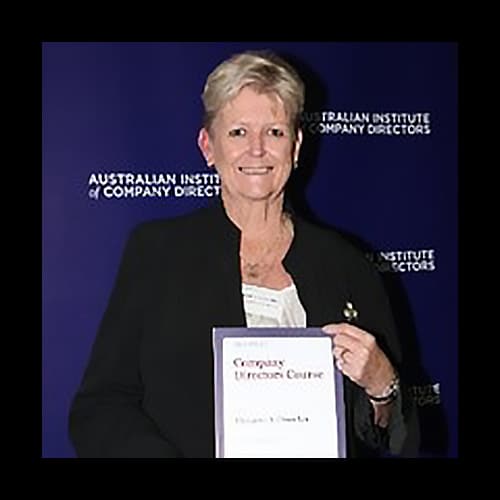
Margaret Croucher has worked as a laboratory technician for schools for over 30 years and as chair of the Association of Science Education Technicians NSW, she brings a wealth of knowledge & support to labbies for schools across NSW & beyond!
Margaret Croucher, based at La Salle College Bankstown, is a highly respected Laboratory Technician with an unwavering passion for supporting the ‘labbie’ community across New South Wales. Their work is foundational to the success of practical science, as they dedicatedly assist educators in delivering high-quality, hands-on learning experiences for students.
Margaret’s immense contribution to the sector was officially recognised with a Parliament of NSW Award, acknowledging decades of volunteer work and a pivotal role in establishing the Association of Science Education Technicians NSW (ASETNSW). Margaret also serves on the national council for Science Education Technicians Australia (SETA), helping to shape professional standards and resource sharing. Her extensive expertise is sought after across the educational spectrum, having worked within State, Independent, and Catholic school sectors, as well as Tertiary and TAFE institutions.
Top 3 Learnings
The Power of Networking: Connecting with other laboratory technicians through associations like ASETNSW is essential for sharing technical knowledge, staying updated on safety regulations, and reducing professional isolation in the workplace.
Safety as a Shared Priority: Lab technicians play a critical role in managing chemical safety, GHS compliance, and risk assessments, ensuring that the school environment remains safe for both students and staff during experiments.
Collaborative Success: A strong partnership between teachers and technicians leads to more successful practical lessons, as technicians provide the technical troubleshooting and preparation work that allows teachers to focus on student engagement.
Education Tip
Establish clear and consistent communication channels between the science faculty and the preparation area. Providing technicians with ample lead time and detailed requirements for practical lessons allows them to properly assess risks and prepare high-quality equipment, ultimately leading to a better educational outcome for the students.
Professional Associations & Resources
Laboratory technicians are the unsung heroes of the science classroom. Explore the organisations Margaret supports to find out more about professional development and technical safety in schools:
ASETNSW – The Association of Science Education Technicians NSW, providing support and networking for NSW lab staff.
SETA – Science Education Technicians Australia, the national body representing laboratory technicians in schools.
Learn more about: Lab Tech Professionalism, Laboratory Safety, and STEM Education Support.
[00:00:20] Ben Newsome: Yes, welcome in for another Fizzics Ed Podcast. Hey, glad to have you again for another chat around science and STEM and all that sort of thing. This week, it is no different. We are talking with Margaret Croucher, who if you’ve been in New South Wales high schools, you just might have come across Margaret before. You see, she’s the chair of the Association of Science Education Technicians New South Wales. She’s a labby at heart, and she’s been doing lab tech work for over 30 years and supporting schools right across New South Wales and beyond through the Council with the Science Education Technicians Australia.
[00:00:57] Ben Newsome: Highly experienced when it comes to helping teachers and students. This week, we do talk about just what it’s like to do that. We talk about safety aspects when it comes to classroom management and classroom science experiments. We talk about the differences between virtual dissections versus real dissections, what works, what doesn’t, and how to sort of do it ethically and all that sort of thing. We also talk about what it’s like working as a lab tech in the different states across Australia and in the different types of schools: public versus private and everything in between.
[00:01:31] Ben Newsome: You see, she gets to speak with lots of labbies and really get to talk about what it’s like on the ground and what it’s like trying to support education in its purest in a science classroom. So, a lot to talk about. By the way, this recording was done back in Term 2 of 2020. It’s been really flat out; I’ve been trying to deal with a big backlog of interviews, but we are definitely getting through. Margaret is a fantastic guest and also a good friend of Fizzics. We’ve been working with ASET New South Wales for a number of years, and I’m very proud to be one of the ambassadors for ASET New South Wales. They do a fantastic job supporting labbies all over New South Wales, and I really was quite stoked to talk with Margaret. So, let’s get right into it.
[00:02:01] Announcer: This is the Fizzics Ed Podcast. We’re all about science, ed tech and more. To see 100 fun free experiments you can do with your class, go to fizzicseducation.com.au. That’s physics spelled F I Z Z I C S and click 100 free experiments.
[00:02:20] Margaret Croucher: Yeah, still a bit quiet at school because we’ve only had Year 12s back last week and this week, and they’re staggering the rest of the school from this week and the same next week. I don’t know what’s going to happen after that.
[00:02:37] Margaret Croucher: So, there’s been…
[00:02:39] Ben Newsome: Yeah, I was just thinking there’s quite a bit of a challenge with Year 12. I mean, they’ve got actual formal studies to do for their student investigations.
[00:02:48] Margaret Croucher: Yeah, they’ve got their pracs to do. Some of the Year 12 stuff is research assessment-based rather than hands-on assessment-based, so that’s not too bad. We’ve only got one Physics, Biology, and Chemistry in Year 12. This year in Year 11, we’ve got three Biology classes, one Physics, one Chemistry, and one of the new subjects is Investigating Science, which has been a bit of a nightmare because they’ve got to do individual assessments. Thankfully, they’ve been working in groups, so when it’s a big class of about 26, we just don’t have the resources to do it all individually.
[00:03:47] Ben Newsome: Right. So, with the kids doing their individual investigations by themselves, what sort of investigations are they hoping to actually do that makes it such a challenge?
[00:04:01] Margaret Croucher: Some of the groups are doing Physics because Investigating Science covers the three big topics: Physics, Chemistry, Biology. But the kids, it’s a bit like Senior Science, it covers all of science, not just one particular area of it. So we’ve had kids making agar plates and putting them in different areas of the school, and they’ve been writing up what’s grown. The other thing is too, they’ve been using RiskAssess, so getting familiar with that, knowing what the risks are in whatever the equipment is they’re using.
[00:04:59] Ben Newsome: Okay, and how do the kids go with that? I mean, risk assessment is a thing that adults sometimes struggle with. If kids can get into that, that’s actually a really good thing to get into really.
[00:05:08] Margaret Croucher: I think once you’ve got the gist of it, it’s just so easy because it puts the onus back on… like we use it for teachers. We’ve had the student trial of it for that period that the kids were doing Investigating Science. But we’re looking at buying it for the whole school once this is all over.
[00:05:39] Ben Newsome: That’s definitely quite a rollout. Is it hard for them to learn that platform?
[00:05:48] Margaret Croucher: No, no. Are you familiar with RiskAssess?
[00:05:59] Ben Newsome: No, I haven’t actually come across it. We have to do our own risk assessments as I’m an external to a school these days. I mean, the world’s changed a lot since I was at school. So in that environment itself, if you’re to roll it out, I’m just sort of trying to picture how the students interact with it, how the teachers interact with it, and how the lab techs interact with it.
[00:06:10] Margaret Croucher: Okay, well, just say for example, a teacher writes a risk assessment for a practical and it lists every piece of equipment that they need, whether it’s like a Bunsen burner, wire gauze, beaker, matches. They’re going to use copper sulphate and what strength, and they type all that in, they type in the name of the experiment or send a reference where it can be found. The author of the book that it’s come out of, the teacher, what day, what period or periods they want it. Hit the send button and it prints out the risks for every bit of that equipment and chemicals that they’ve asked for.
[00:07:12] Ben Newsome: Oh, that’d be really handy because some of it is unpredicted, especially for a student trying to work out what the risks are for copper sulphate or whatever, they may not always pick it.
[00:07:20] Margaret Croucher: So even something like a ruler.
[00:07:28] Margaret Croucher: You know, the risk of using a ruler. It might make you laugh, but it can be used as a sword, you know, not a sharp sword, but you know.
[00:07:35] Ben Newsome: No, I know exactly what you’re talking about. We have to deal with risk assessments too because we have to submit it to places before we get to go there. I’ve had to eventually have an all-encompassing line which is sort of “miscellaneous misuse occasioning harm.” It’s hard to say what it’s going to be.
[00:07:53] Margaret Croucher: So I should put you in touch with Phillip Crisp who wrote the programme, and he might be agreeable to giving you a two-week trial of it and you can see what it’s all about.
[00:08:06] Ben Newsome: Oh gosh, well I’ll tell you what, we’ll have to let people know exactly how to do this. What I love about these chats is we never know what rabbit hole we go down. This risk thing is seriously a genuine thing because as educators, irrespective of whether you’re a formal educator or an informal educator, we have risk to manage no matter where you are. And having a platform like that would be very, very handy. Is that something just available for high schools or is it available for lots of places?
[00:08:30] Margaret Croucher: Mainly schools, high schools, primary schools. With the student one, the student writes the risk assessment, sends it to the teacher who signs off on it, and then the teacher sends it to the lab technician. Now there’s three areas of risk: low, medium, high. The teacher might put that it’s a medium risk bearing in mind the class that it’s going to, or it could be low risk. The risk for the lab technician is usually low because we’re not doing the experiment. And then if it’s a high risk, it’s got to be signed off by the coordinator. So the principal would have to sort of sign off on it.
[00:09:24] Ben Newsome: So over the years, the world has changed certainly. For people listening in who might think, “You know what, I remember back in the 70s I used to do this,” the landscape has changed. If you compare what’s happening in the 2020s compared to 20 years ago, do you feel there’s been much of a change in terms of what you can do and can’t do, or does it really not matter too much? What have you seen?
[00:09:47] Margaret Croucher: There has been a lot of changes. Well naturally, the curriculum has changed in that time as well.
[00:10:00] Ben Newsome: That’s right. I mean, the requirements on certain first-hand investigations have totally changed.
[00:10:07] Margaret Croucher: And the class of the chemicals has changed too.
[00:10:17] Ben Newsome: That makes it difficult, especially if you’re operating with a large stock of not just equipment but reagents in all their different forms. Just even knowing what you’ve got on stock, you’ve got to keep track of that stuff. I always hear these stories where you rock up to a school and they go, “Oh, we haven’t quite finished this stuff off yet.” You go, “What stuff do you mean?”
[00:10:41] Margaret Croucher: Are you familiar with the Chemical Safety in Schools package? CSIS? It’s a very famous New South Wales document, isn’t it? Well, that tells you with a chemical and the strength, what year groups can use it and whether it’s teacher-only use or whether it’s got the black dot, whether it’s been banned. Phillip Crisp, who has written RiskAssess, Phillip was one of the writers of CSIS.
[00:11:21] Margaret Croucher: So when a risk assessment is done, again it tells you what year groups can use the chemical of that strength.
[00:11:38] Margaret Croucher: Ben, you’ll just have to get a trial of it.
[00:11:43] Ben Newsome: No, I have to check that out because it sounds… I get it. I mean, in a lot of ways, sometimes in this podcast we talk often about all the engagement tools and things from a student’s point of view, and they are very valid. But at the same point, there’s always the heart and bedrock of it still around the safety. As much as a database may not be the most wild thing to talk about, when you think about it, I’m thinking about how much time that thing saves. Just wading through, for example, the CSIS document, I’ve got the folders, the old folders before we went to DVD, they’re still sitting on the shelf somewhere. Just wading through that takes so much time, and that’s really a commodity no educator has.
[00:12:26] Ben Newsome: So, you’re heavily involved with ASET New South Wales. Tell us a bit about what that’s all about.
[00:12:34] Margaret Croucher: Well, it’s a state association for lab technicians. It’s ASET, Association of Science Education Technicians New South Wales. And it’s open for lab technicians working in schools and universities should they so desire to join the association. We’ve only been going since 2011. New South Wales was the only state that didn’t have its own association. We sort of… I was on STANSW for four years as the lab technician rep, so whenever they had any conferences, we got the lab techs involved in that. So it just came to the point where, okay, let’s get our own association going.
[00:13:33] Margaret Croucher: Back in 2010 when CONASTA was in Sydney, prior to that they were talking about getting a national association. And as I said, because New South Wales was the only state that didn’t have their own association, the national association is called SETA, Science Education Technicians Australia. And its membership is made up of each state association, with two delegates per state with one voting right. We meet every year at CONASTA for an AGM, and that’s not going to happen this year because Canberra got cancelled. So we’ll still have our AGM, but it’ll be by teleconference or Zoom, however we deal with it.
[00:14:48] Margaret Croucher: So as an offshoot of that, we’ve developed national standards for the lab technicians. It’s been accepted and signed off by ASTA, so we’re asking our state science teachers’ associations to sort of sign off on it. But because ASTA is above them, it sort of all systems go. But where it goes from here… because each education sector has got different pay scales.
[00:15:36] Margaret Croucher: So it’s just finding the right level to make it sort of across-the-board pay scales. But as you would be aware in each education sector, the lab technicians… like I know the independent and the Catholic system, you’ve got to have some sort of training. Whereas in the state system, they can move you from the office to science without any formal training.
[00:16:17] Ben Newsome: Right. That’d be somewhat challenging.
[00:16:21] Margaret Croucher: Yes, as a lab technician. So there’s three scales of lab technicians. There’s your basic lab technician who works under maybe a senior technician who then works under a lab manager. So that’s been toing and froing since 2010 basically.
[00:16:50] Margaret Croucher: There was in 2008, there was a survey that was financed by Edith Cowan University in WA, and a lot of schools weren’t allowed to participate. So as a result of that survey which the results came out in 2009, we had a meeting of all states and people involved in the different education sectors. But I don’t think much has sort of come of that. But at least we’ve signed off on the national standards.
[00:17:37] Margaret Croucher: One other thing, and I’m not sure whether you’re aware of this, a programme called Science Assist?
[00:17:46] Ben Newsome: Yes, I do know about that one.
[00:17:49] Margaret Croucher: Which has been… it’s a great resource. When it was first funded, there was a lab technician and a teacher in each state responsible for the running of it under the umbrella of ASTA. But now, when funding sort of dried up and they’ve only been getting funding for 12 months at a time, that’s been reduced to sort of one person to answer the questions. And a lot of people are very hesitant to spread the word about it, but it’s mainly used by the lab technicians.
[00:18:34] Ben Newsome: Right. So this is assist.asta.edu.au, yeah?
[00:18:40] Margaret Croucher: Science Assist, yeah.
[00:18:43] Ben Newsome: Yeah. It’s an interesting one because there is a wealth of knowledge that lab techs have. It kind of reminds me, excuse me if I get the analogy wrong, but it reminds me of what happens when you go into the hospital and you’ve got all these different types of clinicians in different ways. And it really comes down to the heart and soul of the hospital often is the nurses and the people who actually really get all the stuff together and make it happen and look after the people directly. It is just as important, and I’ve seen a lot of high schools where lab technicians straight up are the go-to people who have been around there for 30 years and just know so much information that can help especially beginning teachers for sure.
[00:19:28] Margaret Croucher: Yeah. One of our teachers left a couple of years ago and in her farewell speech, she thanked… I don’t want to sound big-headed, but she thanked me and said that I was the backbone of the science department. So that sort of… I thought well, you’re there to guide the teachers. If you think that an experiment will work, great. If you know a simpler way that will get the same results. I mean I’ve been doing this job, this is my 33rd year, and whenever I go to conferences or PD days, if I bring back one new idea, it’s been worth it.
[00:20:14] Ben Newsome: I have to ask you then, knowing that it’s always hard to pinpoint which ideas grabbed your brain and went, “Oh my gosh, that’s just awesome,” they keep changing every year because new stuff comes out. What have you seen in the last couple of years that you thought, “You know what, I wish this was around 15 years ago?” You know how I mean? I know recently at the ASET conference, I was eyeing off those MERGE Cubes. I was going, “Those things are really cool, trying to work out what I was going to do with them.” But there are things coming out all the time that are used either in pure pedagogy, pure teaching this way, or it’s a funky cool science thing that might teach a concept. What have you seen out there going, “You know what, that’s just awesome” in the last couple of years?
[00:20:58] Margaret Croucher: Like making ice cream with liquid nitrogen.
[00:21:08] Margaret Croucher: Yeah. Did that up in Darwin last year. That was fantastic. And as a result, we’ve done that with Science Club and just demonstrated at open night, open day. The other idea is burning a chemical to get the coloured flame, just doing it either in a beaker or an evaporating dish. Except what did Margaret do one day? It was open night, she couldn’t see the flame and nearly got burnt.
[00:21:55] Ben Newsome: Oh. First time you do anything is probably the worst.
[00:21:58] Ben Newsome: No, that and sometimes they don’t, actually. I mean, I know that a number of chemical societies around the planet, not just one, lots have talked about the cool teacher demonstrations, especially the ones that are done by celebrity teachers or celebrity science presenters. And then they’re repeated, but then someone’s missed a step, often out of enthusiasm, and then it goes bad.
[00:22:18] Margaret Croucher: I know you get a lot of oohs and aahs at your shows when you come around to the schools.
[00:22:31] Ben Newsome: Yeah, and the thing is though, as much as that’s the case, we always say to the kids and also the educators, there’s actually a bit of time spent training in these things. It’s not just the whiz-bang fireball goes up and it’s all okay. There have been times actually where we’ve gone, “Actually no, we really can’t do this experiment.” And the reason why is there might be a big wind draft going straight down the hallway into where you’re about to run a thing, and now that’s going to pull a flame across where it shouldn’t ever go. So it’s usually that stop and think.
[00:23:01] Margaret Croucher: Or using potassium permanganate to do the volcano experiment.
[00:23:07] Ben Newsome: Yeah, well that’s the thing. I mean, that one there, that’s a no-no.
[00:23:13] Margaret Croucher: And a lot of schools have got speckled ceilings as a result of it.
[00:23:18] Ben Newsome: Oh, that’s right. And I mean it’s kind of a… yeah, keep up to date. And actually, that’s where the labbies 100% can support you because your role is very much to know what should be in a school, what shouldn’t be, and what not to put with what.
[00:23:37] Margaret Croucher: Can I tell you a funny story? It wasn’t funny at the time. At a previous school I worked at, I used to breed the rats for dissection. And this particular, I think it was a Monday morning, I sort of raced in, got to school early to chloroform the rats. And I tied them up because I found that if you put a tack through the arms and legs, it didn’t hold, so I just had a board with four nails and I used to tie them up like crucify them.
[00:24:24] Margaret Croucher: And I just happened to be in the lab when the class, Year 10, was doing the dissection. And one of the students said, “Sir, is its heart still supposed to be beating?”
[00:24:32] Margaret Croucher: No, quick! Wow, yeah, that wasn’t… but the first time I chloroformed a rat, I put it in a big metal bucket, you know, probably a 40-litre old paint tin. Put some chloroform on a wad of cotton wool, put it in the bottom, dropped the rat in, put the lid on, and I could hear this scrambling up the side of the tin. And I sort of pulled the lid away and here’s the rat, if you can imagine, sort of staring up. And I went, “Oh my God, it’s not dead!” So I poured some more chloroform in, but it really was dead.
[00:25:26] Ben Newsome: Well, that’s the thing. I mean, I know these days especially, there are virtual dissections to help with places for that. I also know there are suppliers, I’m going to give a bit of a shoutout to a past guest from Dissection Connection that will get these things to you from an ethical source. It’s a challenging one, isn’t it? And especially years ago that just wasn’t around.
[00:25:48] Margaret Croucher: That’s right. But everything, you know, there’s so much virtual stuff these days.
[00:25:54] Ben Newsome: How do you find it, especially with the virtual stuff? The connection for students between the real and the screen? There’s something to be said like you get a cow’s heart and actually measure the volume of the heart by putting liquid inside the heart and all that sort of thing. It’s gross, it goes everywhere. But kids will have that weird fascination with that going on. They can learn it on a screen, but I kind of wonder… I learn off screen and diagrams, actually more diagrams because I’m old enough not to need the tech side of things. I learn things out of textbooks mostly. Seeing the real thing versus what was a 2D diagram, there’s something to be said for the actual real thing and seeing where the aorta comes in and the vena cavas and all the rest. You just don’t get that on a screen really.
[00:26:45] Margaret Croucher: No. You get… well, most of the kids are okay with it. You get the ones that are squeamish, so you just say just go and sit down outside, man up.
[00:27:00] Margaret Croucher: But I think the virtual ones are probably just as good because I think it shows you more. It does work. Seeing the real thing, they do that if you do that first and then do the virtual thing, the kids think, “Oh yeah, that was such and such.” But we’ve been doing the last couple of years, dissecting a piglet. And I mean that can be shown… cover it up, put it in the fridge till the next class wants it, so that gives them a different perspective of where everything is inside rather than just putting a heart in front of them or a kidney. And the same with the pluck, that’s usually done as a teacher demonstration. But because the abattoirs, they usually cut one of the airways or the same with the hearts, you don’t always get a full pluck.
[00:28:58] Margaret Croucher: They put a cut in it so that I don’t know what their reason is. And a lot of butchers won’t sell you the offal. I go to a meat distributor, but again, they get their meat from the country, so they don’t know what’s actually going to arrive until it turns up.
[00:29:28] Ben Newsome: Sounds like you forever are just sourcing resources from everywhere. I mean, imagine your bookmarks in your browser or your books filled with “this supplier does this thing.” You must have a lot of that.
[00:29:41] Margaret Croucher: I do, you should see all the books I’ve got in my prep room. Just a recent one, I was home last Thursday and I watched the 12 o’clock news on Channel 2, and straight after was a Catalyst programme on asteroid hunters. And I just sat and went, “God, this is amazing.” It’s an Australian-based programme. And I’m sitting there madly taking notes on the back of an envelope. And after the show was over, I transcribed it into a book so that it was in some sort of order, and just all the context and the contacts from it. And there was a resource that I shared with my science department and I had a couple of the booklets printed off about meteors, asteroids, meteorites, and what’s in them and how they’re formed. It was just amazing. Everyone said, “Oh great, we can use this.”
[00:30:48] Margaret Croucher: And then again from CONASTA, are you familiar with WASP? W-A-S-P?
[00:31:00] Ben Newsome: I feel like I know it but…
[00:31:02] Margaret Croucher: It’s a WA company and they’ve got all these resources in there as well for the different year groups and the different topics. And also on awesome, on Facebook, awesome New South Wales Science Teachers. There’s a lot of sharing goes on there and the Physics teachers one as well.
[00:31:26] Ben Newsome: Yeah, and that’s the beauty about this now is the networks totally can just reach out to all sorts of people from all sorts of ways. Do you connect much with people outside of Australia?
[00:31:37] Margaret Croucher: I belong to a UK labbies Facebook group. They do a lot of things different to us that’s in their curriculum. Equipment that they show pictures of, you think, “God, that was around when Adam was a lad.”
[00:32:04] Ben Newsome: It’s funny you know, like I remember going into a prac room at a high school, it must have been a couple years ago, and they had these vacuum pumps from the 50s… asked them, “Are you guys using this equipment?” They said, “Yeah, some of us do, but some of us don’t know what to do with it yet.” So it’s just a matter of actually turning the things on and working them out. Sometimes older equipment, they just do a great job. But at the same point, every system’s different. No, it’s cool that they’re sharing those sort of things.
[00:32:46] Margaret Croucher: Yeah. And as I said, anything I find at conferences and that, I share with my faculty and I also share it out with… there’s a website called Chemtalk. That’s an Australia-wide website that’s sponsored by Lab Supply. And people are asking questions and you know, the silly question is the one that you don’t ask. And it’s helped a lot of people. So again, anything that I feel might be useful, I post on there and if it helps one or two people, well, that’s good.
[00:33:30] Ben Newsome: And that’s the thing, sometimes just having people have a chance to actually unload… it’s amazing what people actually have. Someone actually said to me once, “Where did this podcast come from?” I was honestly just running a professional development programme for some teachers and someone just said, “Can I just hear from people who do stuff?” We said, “Sure, we totally can.” And we’ve learned so much. And the beauty about things, it’s a reference tool, you can go back to it… indexing your information is probably half the thing. I use a lot of Pinterest. Pinterest is very handy for me.
[00:34:28] Margaret Croucher: Ah right.
[00:34:31] Ben Newsome: Just visually I just go, “This is really handy, it’s kind of cool.” Everyone’s got their own different ways, so how do you sort of in your head go, “Right, so I remember seeing this experiment 26 years ago,” do you just intimately know it or do you have a cataloguing system? How do you deal with it?
[00:34:48] Margaret Croucher: Usually remember things. And every now and again I find a book and I went, “Oh yeah, I forgot about that,” so that comes to the top and I photocopy it and just keep it in a folder. When I first started off being a labby, after 18 years in insurance and banking, and not having any… I was in my second year of TAFE training, that’s right. And I made friends with a girl at another school, and between us, she shared her prac book, you know, like how to make up different chemicals and tips and that. So I was agreeable to me photocopying it and made a few copies for people that were sort of new to the job. And I refer back to that quite often.
[00:35:54] Margaret Croucher: There’s highlights and there’s notes. And the same with our textbooks, a lot of things get left off pracs in textbooks, or they’ve used the wrong chemicals. So if a teacher gives me a RiskAssess for a certain prac, I just go to the textbook and then I see my notes that I’ve made in pencil, “Oh yeah, don’t use that, you’ve got to use this.” It’s a job where you’re always learning something new.
[00:37:07] Margaret Croucher: Well, that’s how I find it. You get a lot of people that they come in at 9, they leave at 3, and that’s it. They don’t go to any PD, they don’t go to any conferences, they’re just there to do a job. And I think, you know, I feel sorry for you because you’re not learning. And a lot of our learning comes from networking as well.
[00:37:30] Ben Newsome: Oh yeah, I mean the old saying is that the smartest people in the room should not be you. Just listen to everyone, it’s usually the best thing. It’s so important. I was just wondering, if you had a bunch of brand new lab technicians in front of you and they were about to end up in high schools, museums, all over the place, what would be some advice that you’d give this brand new cohort who is about to impact the world, so to speak?
[00:38:08] Margaret Croucher: Get out now! No… It’s a great job and you know, just don’t be afraid to ask questions. I think that’s important.
[00:38:25] Ben Newsome: Yeah, and that’s pretty much simple, isn’t it? Ask questions, learn more, rinse and repeat. That’s it. Well look Margaret, thank you very much for taking the time this afternoon to have a bit of a chat. And all the best as obviously it’s a bit of an unusual environment, I mean eventually the schools will all be back and humming along again at some point. But in the meantime, this is a time if it’s quieter to actually gather those resources, actually spend the time in those databases and work together.
[00:38:58] Margaret Croucher: Yeah, absolutely, and just work together.
[00:39:01] Ben Newsome: Absolutely. Well thanks very much for your afternoon and I hope you have a fantastic one and I’ll catch you soon.
[00:39:07] Margaret Croucher: Thanks Ben, it was great to talk, and we’ll see you around the traps no doubt.
[00:39:32] Ben Newsome: Well there we go, we just heard from Margaret Croucher who is a very passionate lab technician. Very much so. She does love supporting all sorts of students, and especially her own students at LaSalle College. Really, really fantastic person. And if you want to reach out to her on Twitter, look up CroucherMCR, so C-R-O-U-C-H-E-R M C R. Also, you can reach out to ASET New South Wales through their website, asetnsw.org.au, and you can find out all about what they get up to. And also if you want to go a bit further, check out seta.edu.au, which is the Science Education Technicians Australia website too. Look, thank you very much again for listening to this podcast and as usual, we have more and more things coming up throughout the year. We’re winding up this year, we’re nearly almost finished I must say, but we do have some more chats coming up. So I hope you have a fantastic time wherever it is and I hope you’re making your education awesome, fun, relevant for students, and also safe as well, just like Margaret was saying. Listen, you’ve been listening to me, Ben Newsome from Fizzics Education, and you’ve been listening to the Fizzics Ed Podcast. I will catch you another time.
[00:41:17] Announcer: This podcast is part of the Australian Educators Online Network. aeon.net.au.
Recognised by
22 years, award-winning work, 1 purpose
Recognition from business, education and industry bodies across Australia.
Australian Small Business Champion
Multiple years
CILC Pinnacle Award and Hall of Fame inductee
Center for Interactive Learning and Collaboration
Western Sydney Awards for Business Excellence
Winner
Top 100 Coolest Company
Listed
Local Business Awards
Winner
We value your privacy
We use cookies to improve your experience. Essential cookies are always active. You can choose which optional cookies to allow.We use cookies. Optional ones stay off unless you allow them.Privacy policy