


Science workshop content
What Students Experience: The Electronics Lab
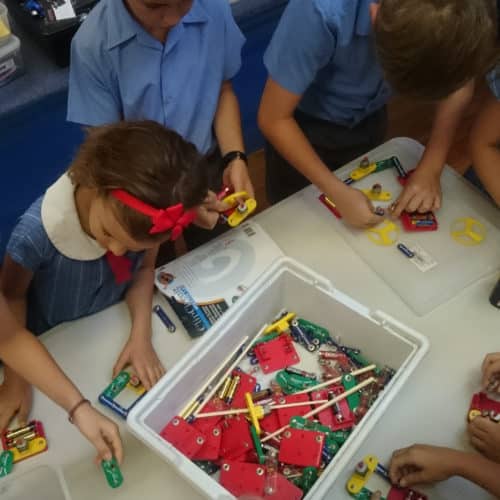
This workshop transforms theoretical physics into a tangible engineering challenge. Students progress from basic power flow to constructing complex, multi-component systems using professional-grade electronic kits.
1. Path of Resistance
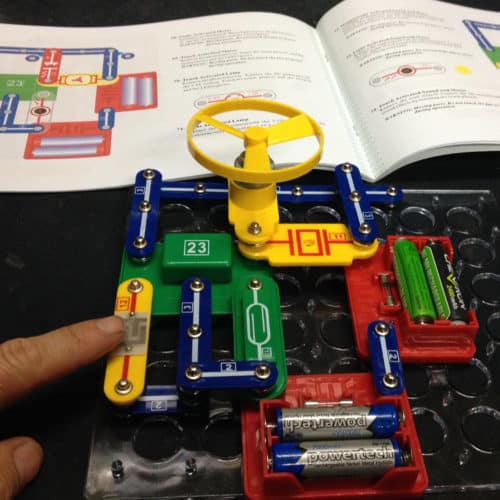
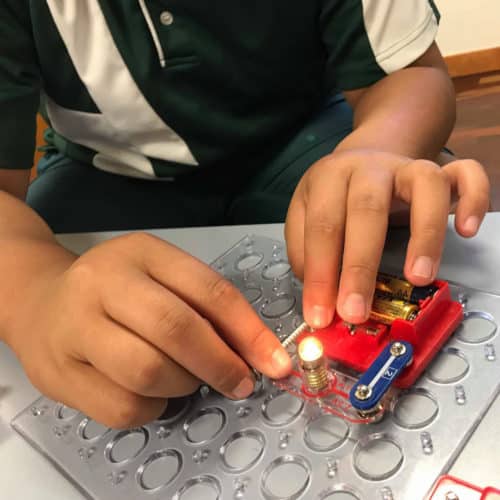
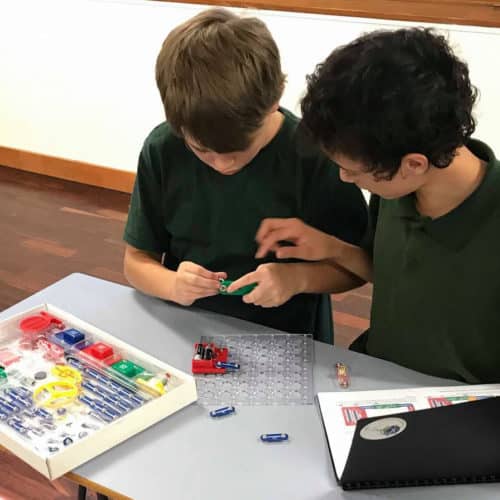
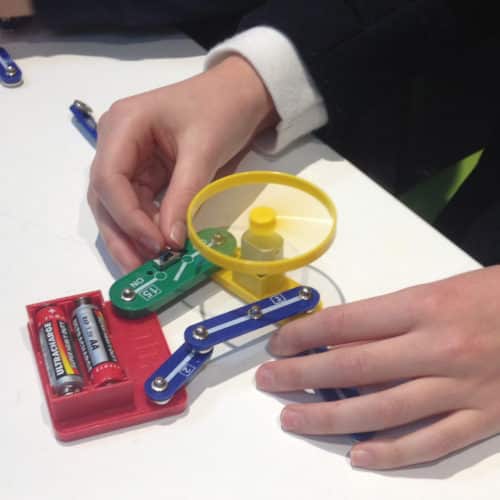
We begin by investigating open vs. closed circuits. In small groups, students undertake guided investigations into series and parallel circuits, discovering the “path of least resistance” while learning to read and draw formal circuit diagrams.
2. The Component Challenge
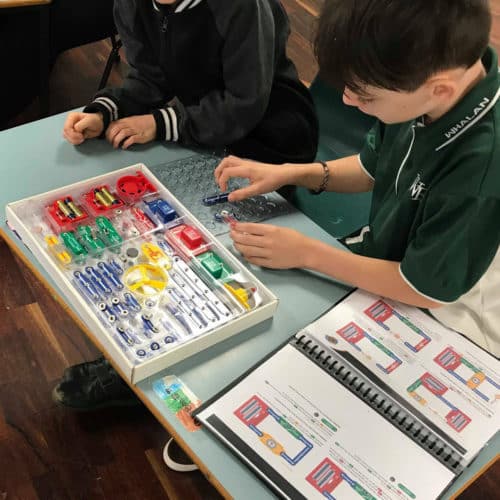
Students move through an electrical experiment booklet to master advanced components. They learn to integrate LEDs, diodes, and switches into their builds, controlling DC motors and integrated circuits.
3. Real-World Logic
The session concludes with reinforcement of circuit logic and a deep-dive discussion on electrical applications. Students connect their classroom experiments to the global infrastructure and technology they use every day.
Which electricity workshop is right for me?
We offer several specialised programs. Click a title below to see if another focus fits your current lesson plan better:
Real Classroom Feedback
Our Year 6 students had a brilliant time building circuits! It was great to see them apply their knowledge of integrated circuits and motors in such a hands-on way.
The students were totally engaged in their electrical engineering task today. Building multi-component systems really brought their classroom learning to life!
A fantastic day of electrical discovery for our Stage 3 students. The experiment booklets and professional kits were outstanding. Thank you Fizzics team!
⬅️ Swipe to see more examples ➡️
Our Commitment to Quality Science Education
A Trusted School Partner for 20 Years
At Fizzics Education, our 20-year history is built on delivering reliable, syllabus-aligned visits that engage students and meet the curriculum & practical requirements of the Australian classroom.

Australian Curriculum Mapping
Australian National Curriculum Mapping for all our science incursions
Australian ACARA Content Outcomes:
Science F-10 Version 9.0
Year 3 & 4
- examine how people use data to develop scientific explanations AC9S3H01, AC9S4H01
- consider how people use scientific explanations to meet a need or solve a problem AC9S3H02, AC9S4H02
- pose questions to explore observed patterns and relationships and make predictions based on observations AC9S3I01, AC9S4I01
- compare findings with those of others, consider if investigations were fair, identify questions for further investigation and draw conclusions AC9S3I05, AC9S4I05
Year 6
- investigate the transfer and transformation of energy in electrical circuits, including the role of circuit components, insulators and conductors AC9S6U03
- compare reversible changes, including dissolving and changes of state, and irreversible changes, including cooking and rusting that produce new substances AC9S6U04
Year 5 & 6
- investigate how scientific knowledge is used by individuals and communities to identify problems, consider responses and make decisions AC9S5H02, AC9S6H02
- pose investigable questions to identify patterns and test relationships and make reasoned predictions AC9S5I01, AC9S6I01
- compare methods and findings with those of others, recognise possible sources of error, pose questions for further investigation and select evidence to draw reasoned conclusions AC9S5I05, AC9S6I05
Design and Technologies F-10 Version 9.0
Years 5 & 6
- explain how electrical energy can be transformed into movement, sound or light in a product or system AC9TDE6K02
Australian National Curriculum Mapping for all our science workshops & shows

NSW K-10 Science Syllabus Mapping
NSW K – 10 Science Syllabus mapping
NSW Science Syllabus Content
A student:
- ST2-8PW-ST describes the characteristics and effects of common forms of energy, such as light and heat
- ST2-9PW-ST describes how contact and non-contact forces affect an object’s motion
- ST3-8PW-ST explains how energy is transformed from one form to another
- ST3-9PW-ST investigates the effects of increasing or decreasing the strength of a specific contact or non-contact force
- ST3-2DP-T plans and uses materials, tools and equipment to develop solutions for a need or opportunity
NSW Science and Technology K–6 Syllabus (Implementation from 2027)
For explanatory points & implementation advice, please visit the NESA Science and Technology K–6 Curriculum site.
Stage 2
ST2-SCI-01 uses information to investigate the solar system and the effects of energy on living, physical and geological systems
- Recognise that matter is anything that has mass, takes up space and consists of very small particles
ST2-PQU-01 poses questions to create fair tests that investigate the effects of energy on living things and physical systems
Stage 3
ST3-SCI-01 uses evidence to explain how scientific knowledge can be used to develop sustainable practices
- Recognise that an electrical circuit transfers electrical energy from a source, through a pathway, to a device that transforms electrical energy into other forms of energy
- Plan and construct simple electrical circuits to model the transfer and transformation of energy
- Pose questions, identify variables and safely conduct fair tests to identify materials that act as electrical conductors or insulators
- Explain how electrical insulators can ensure electrical safety in everyday life
ST3-PQU-01 poses questions to identify variables and conducts fair tests to gather data

VIC Science Syllabus Content
VIC Curriculum F–10 Version 2.0
For explanatory points & implementation advice, please visit the VIC Curriculum F-10 site.
Science
Levels 3 & 4
- forces, including frictional, gravitational, electrostatic and magnetic, can be exerted by one object on another through direct contact or from a distance and affect the motion (speed and direction) of objects. VC2S4U10
- scientific investigations to answer questions or test predictions can be planned and conducted using provided scaffolds, including identifying the attributes of fair tests, and considering the safe use of materials and equipment. VC2S4I02
Levels 5 & 6
- materials may be electrical insulators or conductors; energy can be transferred and transformed in electrical circuits where the components of a circuit play particular roles in the function of the circuit. VC2S6U09
- repeatable scientific investigations to answer questions can be planned and conducted, including, as appropriate, deciding the variables to be changed, measured and controlled in fair tests, considering potential risks, planning for the safe and ethical use of equipment and materials, and obtaining permissions for investigations conducted on Country and Place or in protected areas. VC2S6I02
Design and Technologies
Levels 5 & 6
- explain how electrical energy can be transformed into movement, sound or light in a product or system VC2TDE6C01
- select, explain and use suitable materials, components, tools and techniques to safely make designed solutions VC2TDE6D03
- negotiate design criteria that address ethical considerations, including sustainability, to evaluate design ideas, processes and solutions VC2TDE6D04
- develop project plans that include consideration of resources to individually and collaboratively make designed solutions VC2TDE6D05
Session Requirements
👥 Capacity & Timing
👨🎓 Attendance: Max 32 students per class.
🏫 Target: Designed for Years 3 to 6.
⏰ Duration: 60 or 90-minute versions.
🛠️ Set/Pack: 30 mins setup + 30 mins pack down.
📍 Space Requirements
🏗️ Layout: Access to 7 tables (or equivalent floor space) is required to spread out the circuit kits.
🔌 Power: Standard electrical access is not required for the battery-powered student kits.
🪑 Seating: Chairs are not required for students.
Go Further!
Complete Units of Work to Support Your Teaching
Support your classroom with 270+ syllabus-linked lessons, high-quality videos, and marking rubrics.
Save time and engage students in STEM year-round with high-quality videos, printable experiments, vocabulary lists, and marking rubrics.
Extend the Experience
Pair this workshop with a larger stage show for groups of up to 240 students:






