


Science Show Activities
- Sunsets – Just why are sunsets red anyway? Why not blue or green?
- Colour mixing – Mix primary light colours … why are the secondary colours different to paint?
- Bubble Films – See light split through a bubble film. Nice… and demonstrates wave theory
- Float that image – Create a 3D floating image hovering in mid-air
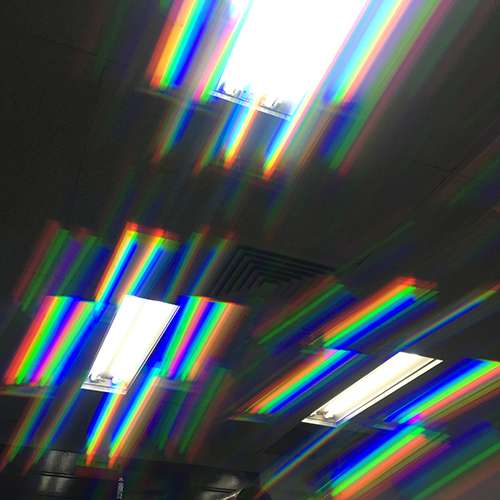
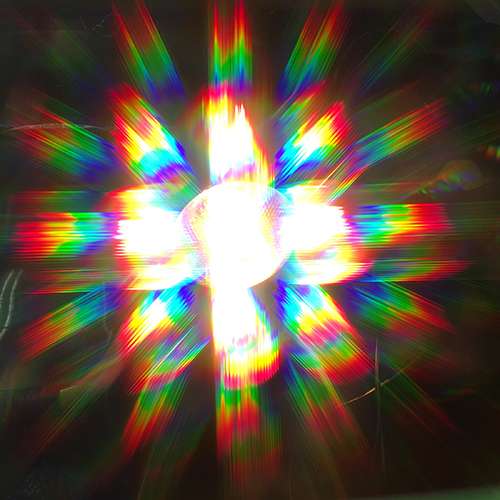
- Magic specs – See rainbows all around with these diffraction glasses
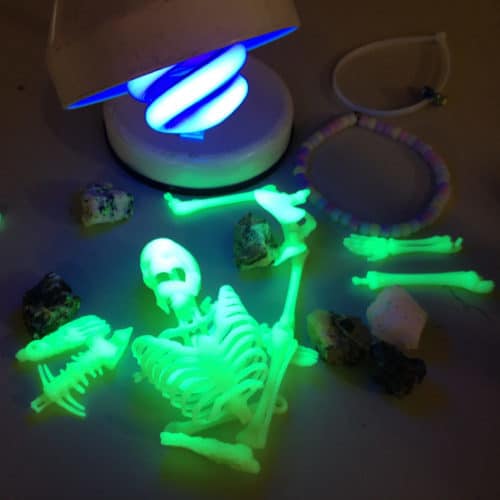
- Glowing rocks – Some minerals fluoresce under UV light… can you identify which ones?
- Hidden beaker – Canola oil and this beaker have almost the same refractive index… lets hide it
- Talking telescopes – Make a telescope in class
- Hide me – Transparent materials are quite difference to translucent ones.
- Cartoon capers – Make a number of cartoons work with these zoetropes and flip charts
- Optical illusions – Light can be quite tricky, can you spot how they might work?
- Mirror boxes – Hidden compartments can create ‘magical’ illusions. How do they work?
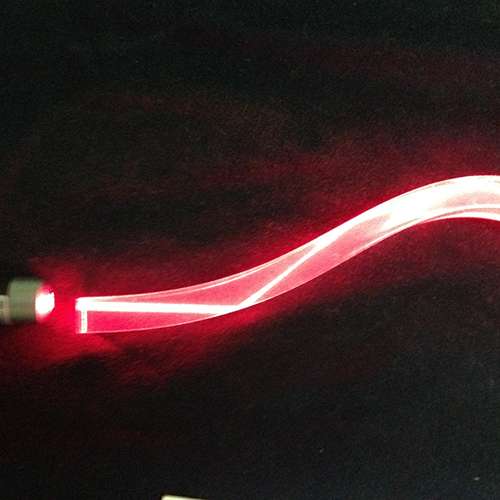
- Optical fibre – Pretty…. and it can be used to transport massive amounts of information
- Perfect plasma – A plasma ball can demonstrate light energies… and the students love it
- Colourful chemistry – Some chemicals react to heat and change in colour… check them out!
- Colour vision – Our Director is colour blind… are your students?
- Flys eye scopes – What is the difference between human and insect eyes?
- Shiny disco ball – Mirrors and light… what more can we say? Send images around the room!
- Mega lens – Use this lenticular lens and magnify things, including you.
- Lasers – Investigate how lasers work and see them through a cloud… neat!
Science workshop content
What Students Experience: The Light & Colour Lab
In this vibrant workshop, students journey from the fundamental physics of the visible spectrum to the high-tech applications of light in modern communications. By manipulating photons, lenses, and logic, they discover how light shapes our perception of the world.
1. Spectral Foundations
The workshop begins with a spectacular light show. Students investigate the difference between colour addition and subtraction, exploring the wavelengths of ROYGBIV and the creation of “coloured shadows” that challenge their visual expectations.
2. Optics in Motion
Students rotate through hands-on stations to experiment with image formation, persistence of vision, and optical illusions. They utilise professional lenses to construct telescopes and create “floating” images through precise reflection techniques.
3. Applied Science
The session concludes with high-level demonstrations showing how light powers our world. We explore the mechanics of animation and look inside the National Broadband Network to see how pulses of light transmit data at incredible speeds.
Light & Colour in Action
Authentic Physics Equipment
A Trusted Science Partner for Over 20 Years
We bring specialised apparatus, prisms, and light boxes into your classroom, providing inquiry-based experiences that Australian students love.
✓
✓

Australian Curriculum Mapping
Australian National Curriculum Mapping for all our science incursions
Australian ACARA Content Outcomes:
Science F-10 Version 9.0
Foundation
- Explore the ways people make and use observations and questions to learn about the natural world AC9SFH01
- Pose questions and make predictions based on experiences AC9SFI01
Year 1 & 2
- Describe how people use science in their daily lives, including using patterns to make predictions AC9S1H01, AC9S2H01
- Pose questions to explore observed simple patterns and make predictions based on experiences AC9S1I01, AC9S2I01
- Compare observations with predictions and consider if investigations are fair AC9S1I05, AC9S2I05
Year 3 & 4
- Examine how people use data to develop scientific explanations AC9S3H01, AC9S4H01
- Consider how people use scientific explanations to meet a need or solve a problem AC9S3H02, AC9S4H02
- Pose questions to explore observed patterns and make predictions AC9S3I01, AC9S4I01
- Compare findings with others and identify questions for further investigation AC9S3I05, AC9S4I05
Year 5
- Identify sources of light, recognise that light travels in a straight path and describe how shadows are formed and light can be reflected and refracted AC9S5U03
- Explain observable properties of solids, liquids and gases by modelling the arrangement of particles AC9S5U04
Year 5 & 6
- Investigate how scientific knowledge is used to identify problems and make decisions AC9S5H02, AC9S6H02
- Pose investigable questions to identify patterns and make reasoned predictions AC9S5I01, AC9S6I01
- Compare methods and findings, recognize error, and select evidence to draw conclusions AC9S5I05, AC9S6I05
Design and Technologies F-10 Version 9.0
Years 5 & 6
- Explain how electrical energy can be transformed into movement, sound or light in a product or system AC9TDE6K02
Australian National Curriculum Mapping for all our science workshops & shows

NSW K-10 Science Syllabus Mapping
NSW K – 10 Science Syllabus mapping
NSW Science & Technology Syllabus Content
A student:
- ST1-8PW-S describes common forms of energy and explores some characteristics of sound energy
- ST1-9PW-ST investigates how forces and energy are used in products
- ST2-8PW-ST describes characteristics and effects of energy, such as light and heat
- ST3-7MW-T explains how properties of materials determine their use
NSW Science and Technology K–6 Syllabus (Implementation from 2027)
Implementation advice at the NESA Science and Technology site.
Stage 1
ST1-SCI-01 measures and describes changes in movement and materials
- Recognise that light and sound can travel through air, water and some solids
- Pose questions, test and describe how light can be reflected, refracted, dispersed or absorbed
- Describe how translucent, transparent, opaque and reflective materials interact with light
- ST1-PQU-01 poses questions based on observations to investigate cause and effect
Stage 2 & 3
- ST2-PQU-01 poses questions to create fair tests that investigate the effects of energy
- ST3-PQU-01 poses questions to identify variables and conducts fair tests to gather data

VIC Science Syllabus Content
VIC Curriculum F–10 Version 2.0
Science
Foundation to Level 2
- Materials have observable properties and can be used to make objects. VC2S2U04
- Pose questions to explore patterns and make predictions. VC2S2I01
- Share observations and ideas using scientific vocabulary. VC2S2I06
Levels 3 & 4
- The properties of glass and plastics influence their use and re-use. VC2S4U05
- Plan and conduct fair tests considering the safe use of equipment. VC2S4I02
Levels 5 & 6
- Light travels in a straight path and can be absorbed, reflected or refracted. VC2S6U08
- Plan and conduct repeatable fair tests, deciding on variables and potential risks. VC2S6I02
- Design & Tech: Explain how electrical energy can be transformed into light. VC2TDE6C01
Session Requirements
Looking for a combined workshop? Explore our Light & Sound Program here!
Go Further!
Complete Units of Work to Support Your Teaching
Support your classroom with 270+ syllabus-linked lessons, high-quality videos, and marking rubrics.
Save planning time with high-quality videos and experiments designed for K to 6 learners to engage with the physics of energy.
Extend the Experience
Pair this workshop with a larger stage show for groups of up to 240 students:






