

Immerse your students in the real scientific process!
Designed for Years 7 & 8 to investigate the scientific method in detail, this workshop introduces and expands a variety of core scientific principles:
- forming a hypothesis
- identifying variables
- fair testing
- experimental design and reporting
- critical thinking and problem solving
These 5 elements are essential for students to plan and undertake their own first-hand investigations as well as evaluate their results correctly, regardless of what unit of work they are studying!
Use this workshop to help students understand the core components of scientific literacy as well as kick-off their entry into high school science.
 Rated Excellent on Trustpilot – read our reviews
Contact us
Online Class Version
We’ve run live interactive distance programs since 2010 and are highly experienced in making online classes engaging for students on a variety of web conferencing platforms.
- All of the activities listed below will be covered during the conference.
- Upon booking, you will receive a PDF outlining the materials that you can have on hand to make the workshop more interactive. It’s not a problem if you can’t source all of the materials, as we’ll have these on hand for the workshop
- Full child protections are in place
- We usually connect to classes & homes via Zoom, however if you wish to use a different software we can work with you on getting the connection live.
If you connect with us via Zoom
- Full system requirements for Zoom here
- Each student should test their Zoom connection here.
- Once the date & time is arranged we will send you simple connection instructions (one click & you’re in!)
Science Show Demonstrations
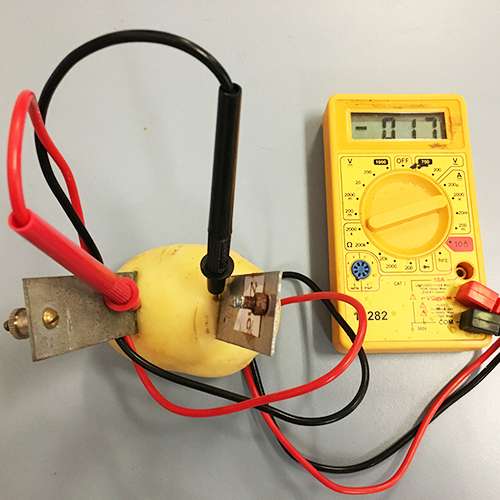
- Potato problems – Which pair of electrodes produce the largest voltage?
- Piaget’s Pendulum – Is it the length of string or the mass that matters?
- Eulers Disc – Statistically, what is the average length of spin. Why?
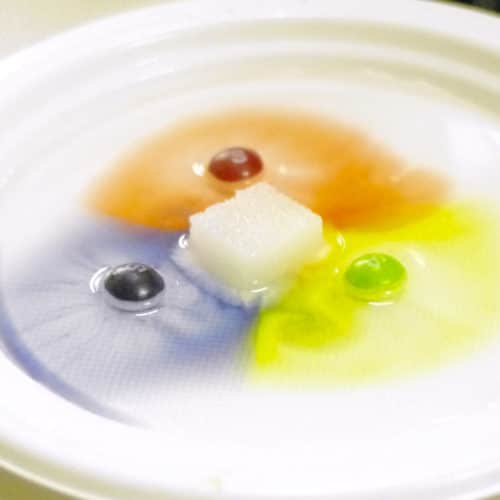
- Mixing it up – Does surface area make a difference with dissolving rates?
- Hot or cold skittles – How much of an impact does heat have?
- Gas release via displacement – Which product releases the most carbon dioxide?
- Bicarbonate soda rocket – Does more vinegar make it go higher?
- Crushers – How much pressure can paper cylinders take?
- Ice block conundrum – Which will melt the ice first… metal or plastic?
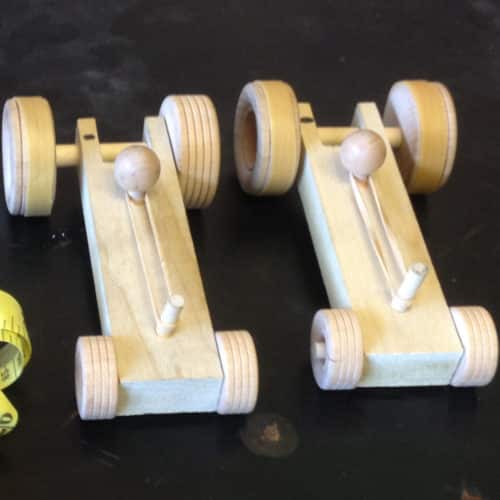
- Rubber band race cars – Does a car go twice as far when you stretch the band twice as much?

Australian Curriculum Mapping
Australian National Curriculum Mapping for all our science incursions
Australian ACARA Content Outcomes:
Science F-10 Version 9.0
Year 7
- investigate and represent balanced and unbalanced forces, including gravitational force, acting on objects, and relate changes in an object’s motion to its mass and the magnitude and direction of forces acting on it AC9S7U04
- use particle theory to describe the arrangement of particles in a substance, including the motion of and attraction between particles, and relate this to the properties of the substance AC9S7U05
Year 8
- compare physical and chemical changes and identify indicators of energy change in chemical reactions AC9S8U07
Year 7 & 8
- explain how new evidence or different perspectives can lead to changes in scientific knowledge
AC9S7H01 AC9S8H01 - examine how proposed scientific responses to contemporary issues may impact on society and explore ethical, environmental, social and economic considerations AC9S7H03 AC9S8H03
- develop investigable questions, reasoned predictions and hypotheses to explore scientific models, identify patterns and test relationships AC9S7I01 AC9S8I01
- analyse data and information to describe patterns, trends and relationships and identify anomalies AC9S7I05 AC9S8I05
- construct evidence-based arguments to support conclusions or evaluate claims and consider any ethical issues and cultural protocols associated with using or citing secondary data or information AC9S7I07 AC9S8I07
Year 9
- use wave and particle models to describe energy transfer through different mediums and examine the usefulness of each model for explaining phenomena AC9S9U04
Year 9 & 10
- explain how scientific knowledge is validated and refined, including the role of publication and peer review
AC9S9H01 AC9S10H01 - Investigate how advances in technologies enable advances in science, and how science has contributed to developments in technologies and engineering AC9S9H02 AC9S10H02
- develop investigable questions, reasoned predictions and hypotheses to test relationships and develop explanatory models AC9S9I01 AC9S10I01
- analyse and connect a variety of data and information to identify and explain patterns, trends, relationships and anomalies AC9S9I05 AC9S10I05
- construct arguments based on analysis of a variety of evidence to support conclusions or evaluate claims, and consider any ethical issues and cultural protocols associated with accessing, using or citing secondary data or information AC9S9I07 AC9S10I07
Australian National Curriculum Mapping for all our science workshops & shows

NSW K-10 Science Syllabus Mapping
NSW Science 7–10 Syllabus (2023)
Stage 4
A student:
- identifies questions and makes predictions to guide scientific investigations SC4-WS-02
– Identify questions and problems that can be investigated scientifically
– Make predictions based on scientific knowledge and observations - explains how the properties of substances enable separation in a range of techniques SC4-SOL-01
– Compare the properties of dilute, concentrated, saturated and supersaturated solutions - explains how uses of elements and compounds are influenced by scientific understanding and discoveries relating to their properties SC4-PRT-01
– Identify some common elements in everyday objects
– Conduct a series of investigations to identify and compare the physical properties of metals, non-metals and metal - explains how energy causes geological and chemical change SC4-CHG-01
– Undertake experiments to identify the indicators of physical and chemical changes
– Describe the initial and final changes that are observed in a chemical reaction, including writing a word equation to represent a chemical reaction. - describes the effects of forces in everyday contexts SC4-FOR-01
– Explain forces as either direct (contact) or indirect (non-contact)
– Conduct a practical investigation on the effects of a range of direct and indirect forces
– Investigate examples of forces and magnetism in familiar contexts
Stage 5
- asks questions or makes predictions using observations SCLS-WS-02
– Ask questions about familiar objects and events based on observations
– Make predictions based on observations - explains the factors that affect the rate of chemical reactions SC5-RXN-02
– Investigate and explain how concentration, surface area, temperature and catalysts affect the rate of reactions
- describes the features and applications of different forms of waves SC5-WAM-01
– Investigate the properties of light, including absorption, reflection, refraction and scattering
– Investigate applications of absorption, reflection and refraction in everyday life
NSW K – 10 Science Syllabus mapping for all our NSW incursions

VIC Science Syllabus Content
VIC Curriculum F–10 Version 2.0
For explanatory points & implementation advice for each dot point, please visit the VIC Curriculum F-10 site.
Levels 7 and 8
- the particle and kinetic theories of matter can be used to describe the arrangement and motion of particles in a substance, including the attraction between particles, and to explain the properties and behaviour of substances, including melting point, boiling point, density, compressibility, gas pressure, viscosity, diffusion, sublimation, and expansion and contraction. VC2S8U05
- physical changes can be distinguished from chemical changes; a chemical change can be identified by a colour change, a temperature change, the production of a gas (including laboratory preparation and testing of oxygen, carbon dioxide and hydrogen gases) or the formation of a precipitate. VC2S8U08
- balanced and unbalanced forces acting on objects, including gravitational force, may be investigated and represented using force diagrams; changes in an object’s motion can be related to its mass and the magnitude and direction of the forces acting on it. VC2S8U14
- investigable questions, reasoned predictions and hypotheses can be developed in guiding investigations to identify patterns, test relationships and analyse and evaluate scientific models. VC2S8I01
- scientific methods, conclusions and claims can be analysed to identify assumptions, possible sources of error, conflicting evidence and unanswered questions. VC2S8I06
- evidence-based arguments can be constructed to support conclusions or evaluate claims, including consideration of ethical issues and protocols associated with using or citing secondary data or information. VC2S8I07
Levels 9 & 10
- wave and particle models can be used to describe energy transfer (conduction, convection and radiation) through different media; waves (electromagnetic and mechanical) have different properties, features (including amplitude, wavelength, frequency and speed) and applications. VC2S10U14
- chemical reactions include synthesis, decomposition and displacement reactions and can be classified as exothermic or endothermic; reaction rates are affected by factors including temperature, concentration, surface area of solid reactants, and catalysts. VC2S10U09
- investigable questions, reasoned predictions and hypotheses can be used in guiding investigations to test and develop explanatory models and relationships. VC2S10I01
- the validity and reproducibility of investigation methods and the validity of conclusions and claims can be evaluated, including by identifying assumptions, conflicting evidence, biases that may influence observations and conclusions, sources of error and areas of uncertainty. VC2S10I06
- arguments based on a variety of evidence can be constructed to support conclusions or evaluate claims, including consideration of any ethical issues and cultural protocols associated with accessing, using or citing secondary data or information. VC2S10I07
Requirements
- Appropriate for Years 7 to 8 with a maximum of 30 students per workshop
- Access to 3 electrical power sockets and 7 tables
- Chairs are not required
- Set up time 30 minutes and pack up time 30 minutes






