


Science Show Activities
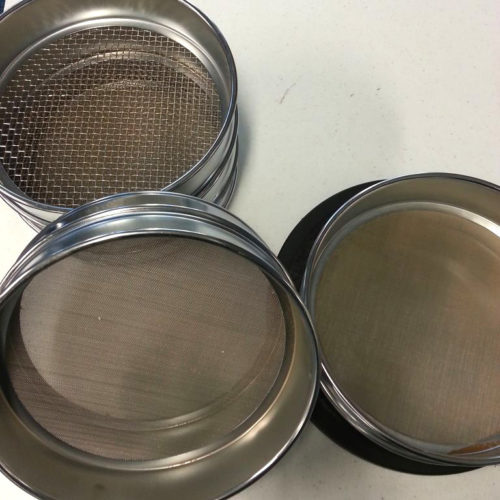
- Does it fit? – Classify the soil – it a sandy loam or loamy clay?
- How hard is it? – Investigate Moh’s scale of hardness
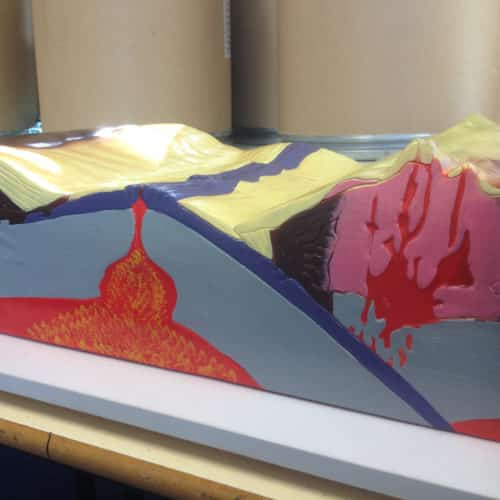
- Moving and shaking – Learn about subduction and others that occur in land formation
- Panning for gold – Use gold pans to find precious metal.
- Sedimentation – Silting the substrate
- Shaky seismograph – Investigate a seismograph in your classroom!
- Sort the rocks – Are they metamorphic, igneous or sedimentary?
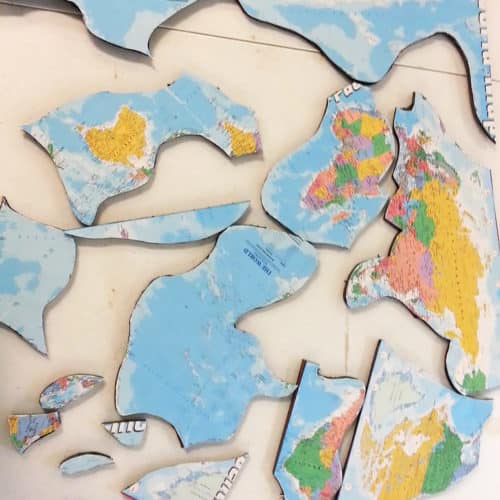
- Tectonic Jigsaw – Investigate how plate tectonics form our world
- Tricky topography – A visual representation of a topographic map.
- Volcano – How do they erupt and are they different?
Science workshop content
What Students Experience: The Geology Lab
In this immersive Earth Science workshop, students step into the role of geologists to uncover the secrets of our planet’s crust. From the massive movements of tectonic plates to the microscopic properties of minerals, we make geological time and processes tangible and engaging.
1. Earth’s Foundations
We begin by decoding the Rock Cycle. Using physical models and deep-dive discussions on plate tectonics, students learn how the Earth’s surface is constantly being recycled through three distinct phases.
2. Field Investigation
Students move to hands-on stations to test real-world specimens. Activities include Mohs hardness testing, mineral fluorescence, earthquake measurement using seismology tools, and soil sieving for classification.
3. Tectonic Forces
The session concludes with high-impact demonstrations. We compare different types of volcanic eruptions—from oozing lava flows to explosive blasts—to understand how pressure and gas shape landforms.
Real Classroom Feedback
Our students had a fantastic time becoming geologists for the day! The hands-on rock testing and volcanic demonstrations were a brilliant way to bring Earth Science to life.
Thank you Fizzics Education for an amazing session. The students loved using the seismology tools and testing the mineral specimens. A high-quality science experience!
A highly engaging day of Earth Science! The variety of rock samples and the clear explanation of tectonic forces kept all our students fascinated from start to finish.
⬅️ Swipe to see more examples ➡️
Our Commitment to Quality Science Education
A Trusted School Partner for 20 Years
Fizzics Education delivers reliable, syllabus-aligned visits that engage students and meet the practical requirements of the Australian classroom.

Australian Curriculum Mapping
Australian National Curriculum Mapping for all our science incursions
Australian ACARA Content Outcomes:
Science F-10 Version 9.0
Year 3
- compare the observable properties of soils, rocks and minerals and investigate why they are important Earth resources AC9S3U02
- identify sources of heat energy and examine how temperature changes when heat energy is transferred AC9S3U03
- investigate the observable properties of solids and liquids and how adding or removing heat energy leads to a change of state AC9S3U04
Year 4
- identify how forces can be exerted by one object on another and investigate the effect of frictional, gravitational and magnetic forces AC9S4U03
- examine the properties of natural and made materials and consider how these properties influence their use AC9S4U04
Year 3 & 4
- examine how people use data to develop scientific explanations AC9S3H01, AC9S4H01
- consider how people use scientific explanations to meet a need or solve a problem AC9S3H02, AC9S4H02
- pose questions to explore observed patterns and relationships and make predictions AC9S3I01, AC9S4I01
- compare findings with others and draw conclusions AC9S3I05, AC9S4I05
Year 5
- describe how weathering, erosion, transportation and deposition cause slow or rapid change to Earth’s surface AC9S5U02
- explain observable properties of solids, liquids and gases by modelling particles AC9S5U04
Year 6
- compare reversible changes and irreversible changes, including cooking and rusting, that produce new substances AC9S6U04
Year 5 & 6
- investigate how scientific knowledge is used by individuals and communities to identify problems AC9S5H02, AC9S6H02
- pose investigable questions to identify patterns and test relationships AC9S5I01, AC9S6I01
- compare methods and findings and select evidence to draw reasoned conclusions AC9S5I05, AC9S6I05
Australian National Curriculum Mapping for all our science workshops & shows

NSW K-10 Science Syllabus Mapping
NSW K – 10 Science Syllabus mapping
NSW Science Syllabus Content
A student:
- ST1-10ES-S recognises observable changes occurring in the sky and on the land and identifies Earth’s resources
- ST2-10ES-S investigates regular changes caused by interactions between the Earth and the Sun, and changes to the Earth’s surface
- ST3-10ES-S explains regular events in the solar system and geological events on the Earth’s surface
NSW Science and Technology K–6 Syllabus (Implementation from 2027)
For implementation advice, visit the NESA Science and Technology site.
Stage 1
ST1-SCI-01 measures and describes changes in living things, materials, movement, Earth and the sky
- Manipulate different rocks and describe their texture, colour and grain or crystal size
- ST1-PQU-01 poses questions based on observations and information to investigate cause and effect
Stage 2
ST2-SCI-01 uses information to investigate the solar system and the effects of energy on living, physical and geological systems
- Explain how the forces produced by wind, water and living things weather rocks
- Research and describe the changes to the landscape caused by earthquakes and volcanoes
- Research, describe and model the internal structure of Earth
- Describe and model how forces produced by moving water cause erosion
- ST2-PQU-01 poses questions to create fair tests that investigate the effects of energy
Stage 3
- ST3-PQU-01 poses questions to identify variables and conducts fair tests to gather data

VIC Science Syllabus Content
Science
Levels 3 & 4
- Rocks, minerals and soils are Earth resources with observable properties. VC2S4U06
- Properties of natural and made materials influence their use and re-use. VC2S4U05
- Forces (frictional, gravitational, magnetic) affect the motion of objects. VC2S4U10
- Weather events and climate impacts on land, air, water and living things. VC2S4U08
- Plan and conduct scientific investigations using provided scaffolds and fair tests. VC2S4I02
Levels 5 & 6
- Geological processes (weathering, erosion, deposition) cause slow or rapid changes. VC2S6U05
- Impacts of natural hazards (earthquakes, volcanoes, floods) and technological reductions. VC2S6U06
- Plan and conduct repeatable investigations, deciding variables and identifying risks. VC2S6I02
Session Requirements
👥 Capacity & Timing
👨🎓 Attendance: Max 32 students per class.
🏫 Target: Appropriate for Years 1 to 6.
⏰ Duration: 60 or 90-minute options.
🛠️ Set/Pack: 45 mins setup + 45 mins pack down.
📍 Venue Requirements
🏗️ Tables: 7 tables arranged in a U-shape around the room.
🔌 Power: Access to 1 electrical power socket.
🪑 Seating: Chairs are not required for students.
Go Further!
Complete Units of Work to Support Your Teaching
Support your classroom with 270+ syllabus-linked lessons, high-quality videos, and marking rubrics.
Save planning time with high-quality videos, printable experiments, and scope & sequences designed to engage students in STEM.
Extend the Experience
Pair this workshop with a larger stage show for groups of up to 240 students:






