
Playdough core sampling
Use playdough to show kids how core sampling is done by geologists. A simple activity that helps kids visualise soil layers.
Adult supervision for setup
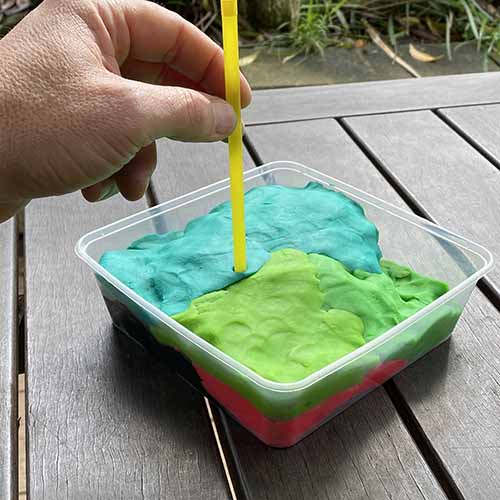
You will need
- Playdough of different colours
- A clear plastic tray (not essential but allows you to see the coloured layers from the side)
- A plastic straw
Method
-
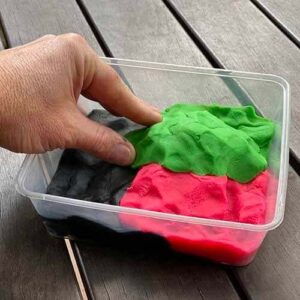
Gently push different coloured playdough samples into the tray, making sure that the layers are uneven in thickness and in different places of the tray.
-
You can choose to either have the different coloured playdoughs represent different soil layers (also known as horizons) or alternatively you can use choose to model different types of soil in different areas of a map.
You can read more about soil layers below.
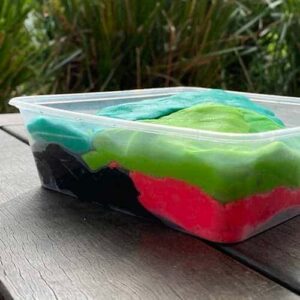
-
Use the straw to collect a core sample of your playdough.
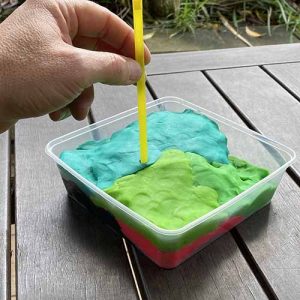
-
Gently squeeze out the playdough core sample onto some paper. Be careful not to break it!
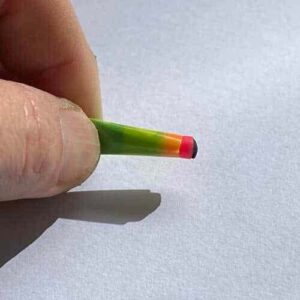
-
Keep creating core samples in different locations in your tray. You could also sample along a straight line to produce a line transect.
Going further – you could add strings over the top of the tray to produce a grid for the core sample. Label each sample as you take it with its grid reference for future discussions.
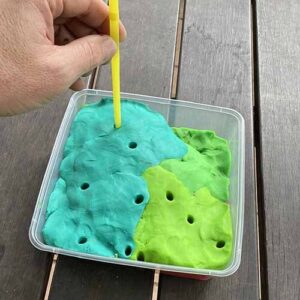
-
Keep going to see the difference of core samples in your playdough tray.
- What do you notice?
- Can you create a 3D map of the different playdoughs?
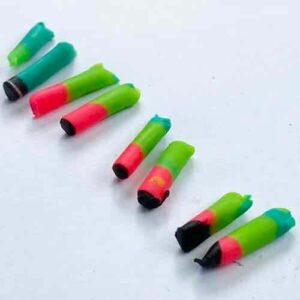
-
Get the Unit of Work on Geology here!
- The Earth’s layers, the rock cycle, volcanoes, earthquakes & more!
From soil science to mineral testing, these hands-on experiments your students will discover the importance of natural resources and the role of plate tectonics in shaping our world.
Includes cross-curricular teaching ideas, student quizzes, a sample marking rubric, scope & sequences & more
-
School science visits since 2004!
– Curriculum-linked & award-winning incursions.
– Over 40 primary & high school programs to choose from.
– Designed by experienced educators.
– Over 2 million students reached.
– Face to face incursions & online programs available.
– Early learning centre visits too!
-

The science behind it
What is going on?
This activity models how geologists map the soils & rock types within a given area. The underlying soils & rocks can be quite different due to geological processes shaping the landscape. By drilling into the rock with special hollow drills, scientists can sample underlying rock layers to learn more about the formation of the area and to discover potential mineral deposits.
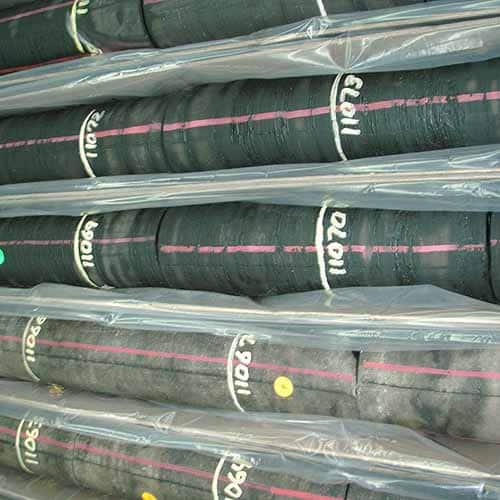
Bakken core samples – photo by Joshua Doubek
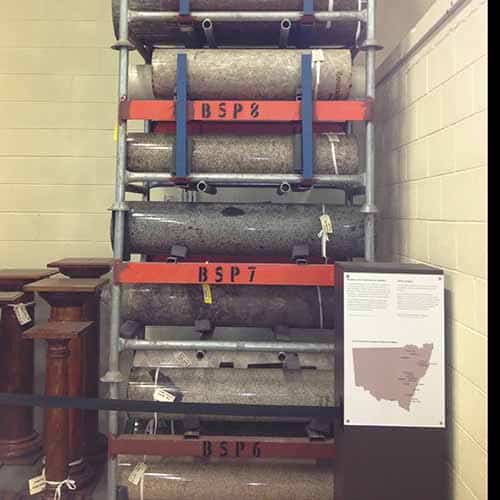
Rock cores of NSW at the Museums Discovery Center
More on soils
Our soils themselves have several distinct layers, also known as horizons. Whilst not all of the horizons can be found in some soils, the following shows the order of soil horizons that are commonly found
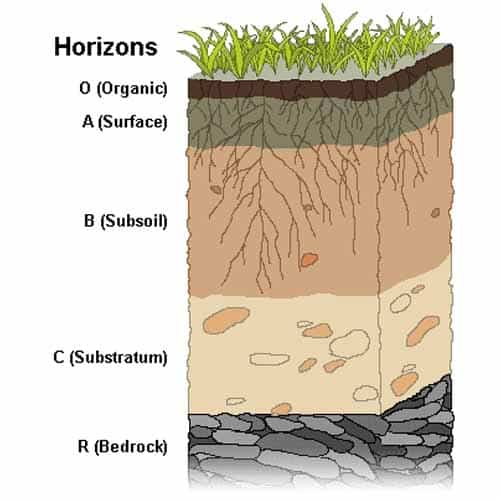
Soil horizons – Image by Wilsonbiggs
Going into the horizon details a little further
O (humus or organic): Mostly organic matter comprised of decaying plat material. Sometimes thin in some soils & thicker in others, and sometimes not present at all.
A (topsoil): Mostly minerals from parent material mixed with organic matter
E (eluviated): A mixture of clay, minerals, and organic matter that has leached from the O and A layer, usually found in older soils or forest soils.
B (subsoil): A layer filled with minerals that have leached from the A or E horizons.
C (parent material): The material from which the soil developed.
R (bedrock): The beginning of the rock layer that sits underneath all soils. The bedrock composition is different in areas due to regional variability of geological processes.
Trivia
- The Kola Superdeep Borehole SG-3 retains the world record at 12,262 metres (40,230 ft) in 1989 and still is the deepest artificial point on Earth
- A similar process is used to study ice cores. These ice cores can tell us about past climatic conditions.
Variables to test
- Would sampling the doughs at an angle instead of vertically produce a fair result? Why? Why not?
- Would the diameter of the straw matter?

Teacher's note
Curriculums change, and so does the way you implement them in your classroom. Please use your own experience and knowledge of your students to use these resources to best effect for student learning.
Still want the curriculum links?
Here are the suggested links:
Australian Curriculum (ACARA) Science:
NSW Science syllabuses:
Victorian Curriculum Science:
Want this experiment — and many more — running in your classroom?
Have us visit your school — every student gets three hands-on experiments in 60–90 minutes with a qualified presenter.








