
Why is an Iceberg Frozen but not the water below?
Ever wondered why an iceberg is frozen but the water around it is not? This fun experiment shows you how and why that happens!
Adult supervision for setup

You will need
- Two balloons
- Salt, funnel and a measuring spoon
- 75mL of water per balloon
- A freezer
- A stopwatch
Method
-
Place a funnel into the mouth of the balloon and add at least 1 tablespoon of salt into the
balloon.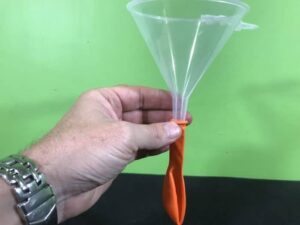
-
Carefully measure 75mL of water pour it into the balloon, tie the balloon and shake to dissolve the salt.
Using the funnel, add 75mL of water to the other balloon and tie it.
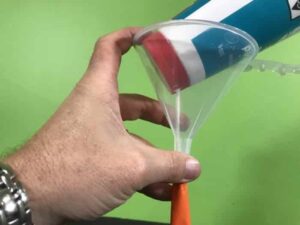
-
Place both balloons in the freezer and start the timer.
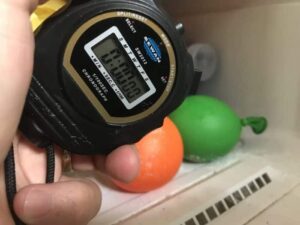
-
Check the balloons on 10-minute intervals. Which freezes first – salt water or fresh water?
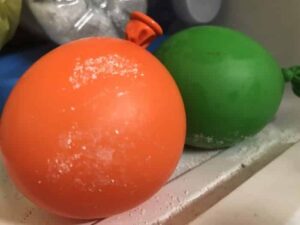
-
Get the Unit of Work on Water Science here!
- Explore the water cycle
- Learn about cohesion, adhesion & capillary action
- From water currents to floatation, join us to explore water science!
Includes cross-curricular teaching ideas, student quizzes, a sample marking rubric, scope & sequences & more
-
School science visits since 2004!
– Curriculum-linked & award-winning incursions.
– Over 40 primary & high school programs to choose from.
– Designed by experienced educators.
– Over 2 million students reached.
– Face to face incursions & online programs available.
– Early learning centre visits too!
-

The science behind it
Why Does This Happen?
The Science of Icebergs vs. Polar Water
Have you ever wondered why an iceberg can be solid ice while the water it floats in remains liquid, even though both are freezing cold? The secret lies in Freezing Point Depression. Pure water freezes at 0°C, but adding a solute like salt interferes with the water molecules’ ability to form rigid ice crystals. This lowers the freezing point, meaning the ocean must be much colder (around -2°C) before it turns to ice.
As sea ice forms in polar regions, a fascinating process called brine rejection occurs. The growing ice crystals “squeeze out” the salt, ejecting it into the surrounding water. This creates a layer of incredibly salty, super-chilled water beneath the ice that stays liquid even at sub-zero temperatures!
Furthermore, water is one of the few substances that expands when it freezes. You can see this in action by measuring a water-filled balloon with vernier callipers before and after freezing—it’s a much safer way to see thermal expansion than letting a can explode in the freezer! Because the same amount of water now takes up more space, the ice becomes less dense than the liquid water, allowing massive icebergs to float.
This same science is used for safety in cold climates. People spread salt on icy roads to lower the freezing point of the ice, causing it to melt into slush even when the air temperature is below zero.
Variables to test
Find out more on variables here.
-
Solute Variety
What if you add sugar instead of salt? Does sugar lower the freezing point by the same amount, or do different chemicals have different “melting powers”? -
Non-Polar Liquids
Does vegetable oil behave the same way? Oil molecules are non-polar and don’t form hydrogen bonds like water. Does oil expand or contract when it freezes? -
Concentration Gradient
How does the amount of salt affect the result? Compare a “dead sea” level of saltiness to a light sprinkle to see if the freezing point drops further as you add more solute. -
Insulation Factors
Does the container material (plastic vs. metal) affect how quickly the latent heat is removed from the water? This tests the thermal conductivity of the materials.
No matter which variable you try, remember to change only one thing and keep the rest of the experiment the same to ensure your results are valid!

Teacher's note
Curriculums change, and so does the way you implement them in your classroom. Please use your own experience and knowledge of your students to use these resources to best effect for student learning.
Still want the curriculum links?
Here are the suggested links:
Australian Curriculum (ACARA) Science:
NSW Science syllabuses:
Victorian Curriculum Science:
Want this experiment — and many more — running in your classroom?
Have us visit your school — every student gets three hands-on experiments in 60–90 minutes with a qualified presenter.








