
Ice Breaker Hull Design
Some ships have to travel through water that are frozen. This experiment shows you the tool they use to break though the ice and the science behind it!
Adult supervision for setup
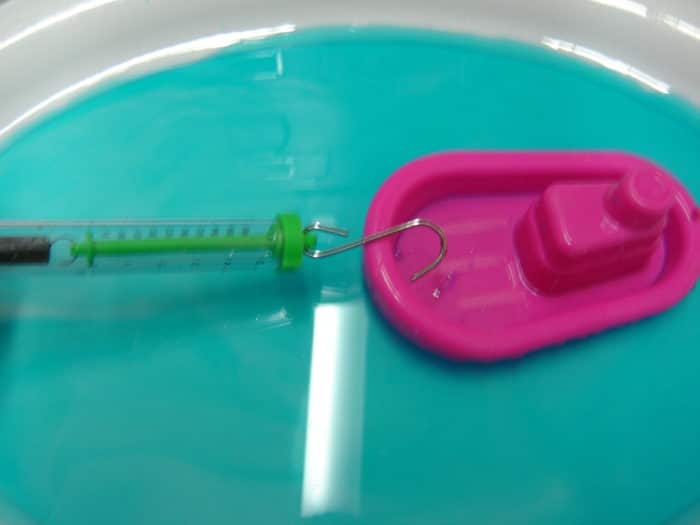
You will need
- Different toy boats, each with a different hull shape
- Jelly crystals, enough for 2 litres
- Newton spring balance from school
- Large flat platter for each boat and a measuring scale
- Small screw hooks and weights (metal nuts will do)
Method
-
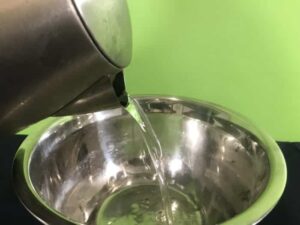
Make a jelly mixture for each platter the day before your investigation and let it set.
-
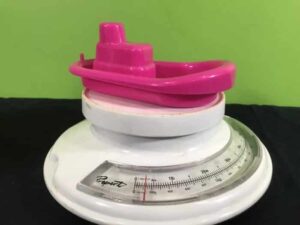
Weigh each boat and record your measurements.
-
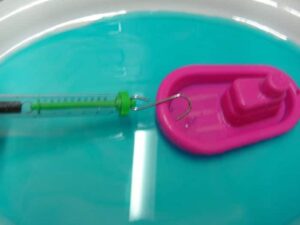
Place a boat at the end of the platter and gently pull it through the jelly using the spring scale. Take not of the force needed to move the boat.
Repeat for each boat.
Do you notice anything different? Is so why is this the case?
-
To make it a fairer test, weigh the lighter boats down with the metal nuts and repeat the experiment. Remember to make sure that the weight is evenly distributed along the boat.
Work out how you can make this an even fairer test.
For example: pulling from the same point of the boat, at the same angle, as the same speed, thought the same amount of jelly. Or should you use blocks with different shaped wedges attached instead?
-
School science visits since 2004!
– Curriculum-linked & award-winning incursions.
– Over 40 primary & high school programs to choose from.
– Designed by experienced educators.
– Over 2 million students reached.
– Face to face incursions & online programs available.
– Early learning centre visits too!

-

The science behind it
Why Does This Happen?
An object is set into motion when it is pushed or pulled, i.e. subjected to a force.
Force is measured in Newtons, which expresses the amount of energy being applied over a given distance and time. To pull the boat through the jelly required a certain amount of force to keep it moving. The greater the force applied, the greater the spring stretched within the spring scale.
Each boat would have had a different angle on its bow to cut through the jelly. If the boat had an acute-angled bow (i.e. ‘sharp’), the boat would have neatly cut through the jelly and would have required less force to keep it moving. If the boat was shaped like a barge, with a blunt front end, a larger force would need to have been applied to keep the boat moving at the same speed.
Ice breakers in polar regions are designed to slowly rise up onto the ice, thereby allowing the weight of the boat and the shape of the bow (an inclined plane) to break the ice. This process isn’t performed at great speed as the ship can still be damaged. Dense pack ice cannot be negotiated as the ice floes are too thick, however thin ice of a few metres thick can be broken. Commercial shipping lanes within the Arctic circle are regularly cleared by ice breakers.
Variables to test
- Change the shape of the boat
- Swap jelly for golden syrup, molasses, water and other liquids
- Add extra weight to the boat
Teacher's note
Curriculums change, and so does the way you implement them in your classroom. Please use your own experience and knowledge of your students to use these resources to best effect for student learning.
Still want the curriculum links?
Here are the suggested links:
Australian Curriculum (ACARA) Science:
NSW Science syllabuses:
Victorian Curriculum Science:
Want this experiment — and many more — running in your classroom?
Have us visit your school — every student gets three hands-on experiments in 60–90 minutes with a qualified presenter.








