
How Hard is that Rock?
Learn about how Moh's Scale of Hardness works with this simple fun activity that can be done at home or in the classroom!
Adult supervision for setup

You will need
- Your fingernail (approx. Mohs Scale 2.5)
- An old 2-cent coin or copper penny (approx. Mohs Scale 3.5)
- An iron nail (approx. Mohs Scale 5.5)
- A hardened steel file (approx. Mohs Scale 7)
- Rock samples eg. Granite, Marble, Talc, Sandstone, Shale etc
Method
-
Gently scrape each rock or metal sample with the above tools.
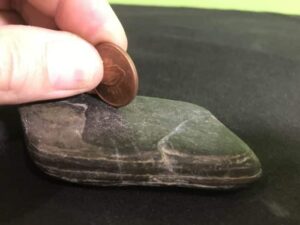
-
Make sure you scrape along the sample with even pressure, length and material.
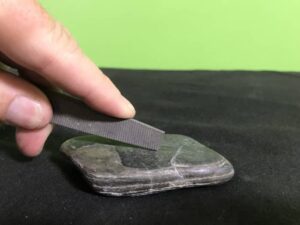
-
Slowly work up Mohs scale until you find can scratch the sample, giving you an approximate hardness result.
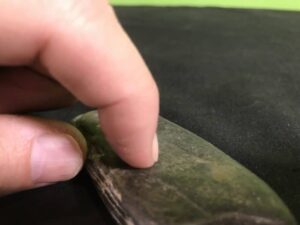
-
Go further – buy 5 x student activity sheets as extension worksheets – Moh’s Hardness of Candies!
This student science booklet has been created by experienced science educators from the Fizzics Education team.
Use these student worksheets as blackline masters for your science class!

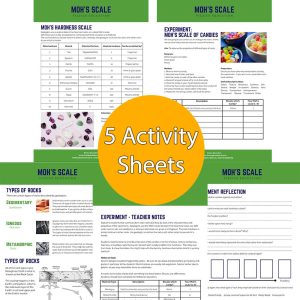
-
Get the Unit of Work on Geology here!
- The Earth’s layers, the rock cycle, volcanoes, earthquakes & more!
From soil science to mineral testing, these hands-on experiments your students will discover the importance of natural resources and the role of plate tectonics in shaping our world.
Includes cross-curricular teaching ideas, student quizzes, a sample marking rubric, scope & sequences & more
-
School science visits since 2004!
– Curriculum-linked & award-winning incursions.
– Over 40 primary & high school programs to choose from.
– Designed by experienced educators.
– Over 2 million students reached.
– Face to face incursions & online programs available.
– Early learning centre visits too!
-

The science behind it
Why Does This Happen?
Rocks differ in hardness due to the different compounds that make up the rock.
In 1822, an Austrian geologist, Frederick Mohs, devised a scale that ranked different mineral samples for their hardness, therefore standardising the field tests done by miners across the world.
Mohs chose the following samples as standards due to their abundance and different hardness.
- 1 = Talc
- 2 = Gypsum
- 3 = Calcite
- 4 = Fluorite
- 5 = Apatite
- 6 = Orthoclase
- 7 = Quartz
- 8 = Topaz
- 9 = Corundum
- 10 = Diamond.
By having a standard scale, prospectors can more easily classify the materials they find.

Teacher's note
Curriculums change, and so does the way you implement them in your classroom. Please use your own experience and knowledge of your students to use these resources to best effect for student learning.
Still want the curriculum links?
Here are the suggested links:
Australian Curriculum (ACARA) Science:
NSW Science syllabuses:
Victorian Curriculum Science:
Want this experiment — and many more — running in your classroom?
Have us visit your school — every student gets three hands-on experiments in 60–90 minutes with a qualified presenter.








