
Make your own worm farm
Wiggly worms can be harnessed to create a useful fertiliser in your garden. Learn how to make a worm farm of your own and start converting food scraps into garden fuel.
Adult supervision for setup
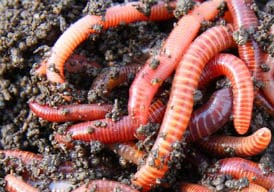
You will need
- 3 Stackable plastic boxes horticultural trays with pre-formed holes are ideal
- Shredded and whole newspaper sheets
- Soil, water and food scraps
- Composting worms – available from pet shops
Method
-
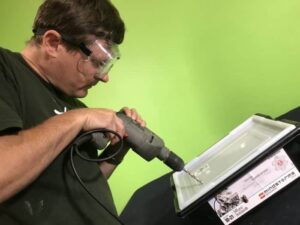
Have an adult drill out cut small holes in the bottom of 2 trays – leave one box without holes!
-
Place the bin without holes where you want the worm farm to be. For collecting excess water.
-
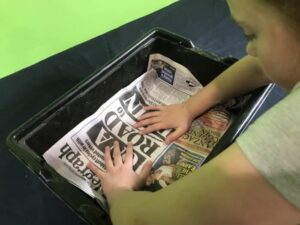
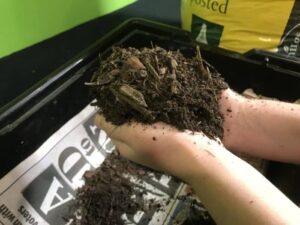
Stack one ‘holey’ bin on top of the 1st bin. Line with newspaper and add 4 handfuls of soil.
-
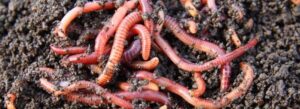
Add some food scraps (avoid meat if possible), stir through, then add the composting worms.
-
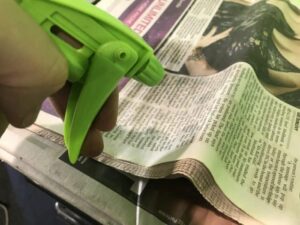
Moisten the box with water then cover with flat newspaper sheets to exclude light.
Once the box is about half full with worms, add another ‘holey’ box on top and repeat steps 3 to 5.
In a week your worms should move into the top box, leaving the middle box with composted soil for your garden. Make sure the soil in the bins doesn’t get too dry.
Dont forget to clean out the bottom bin. Dont add too much food – it will rot instead of being eaten!
-
School science visits since 2004!
– Curriculum-linked & award-winning incursions.
– Over 40 primary & high school programs to choose from.
– Designed by experienced educators.
– Over 2 million students reached.
– Face to face incursions & online programs available.
– Early learning centre visits too!
-

Teacher's note
Curriculums change, and so does the way you implement them in your classroom. Please use your own experience and knowledge of your students to use these resources to best effect for student learning.
Still want the curriculum links?
Here are the suggested links:
Australian Curriculum (ACARA) Science:
NSW Science syllabuses:
Victorian Curriculum Science:
Want this experiment — and many more — running in your classroom?
Have us visit your school — every student gets three hands-on experiments in 60–90 minutes with a qualified presenter.








