
Model the Dead Sea
Want know how to make a model of the dead sea? Using only simple materials this experiment could take you right there! An experiment great for the kids!
Adult supervision for setup
You will need
- One egg
- One drinking glass (about three-quarters full of tap water)
- 500g container of table salt
- One teaspoon
Method
-
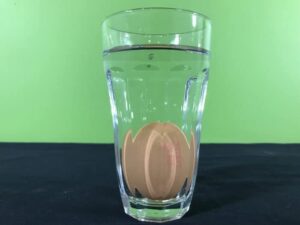
Put the egg into the glass of water. Notice that right now it’s sinking to the bottom of the glass.
-
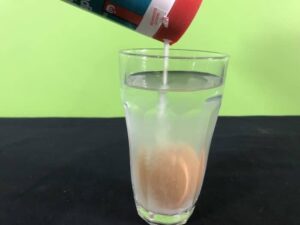
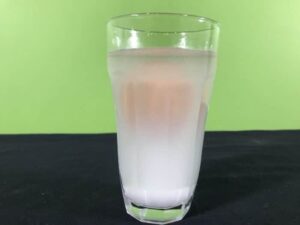
Now we are going to saturate the water with salt. This means adding salt a little at a time until no more will dissolve into the water. Add salt into the water slowly, stirring constantly with the teaspoon.
-
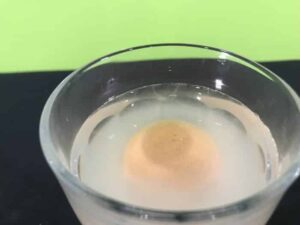
You’ll know when you have enough salt in the water when some salt crystals fall to the bottom of the glass, even after you’ve stirred it thoroughly.
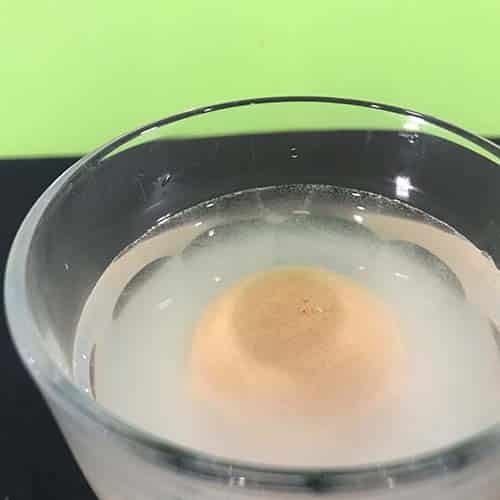
-
Notice now that the egg is floating on the water. Weird, why does this do this?
-
School science visits since 2004!
– Curriculum-linked & award-winning incursions.
– Over 40 primary & high school programs to choose from.
– Designed by experienced educators.
– Over 2 million students reached.
– Face to face incursions & online programs available.
– Early learning centre visits too!
-

The science behind it
Why Does This Happen
The Science of Modeling the Dead Sea
Whether an object floats or sinks depends on its density—a measure of how much matter is “crammed” into a specific amount of space. If an object is denser than the liquid it is in, it sinks; if it is less dense, it floats.
How Salt Changes Water
A fresh egg is denser than plain tap water, which is why it sinks to the bottom. However, when you dissolve salt into the water, the salt ions fit in between the water molecules. You are adding mass (the salt) without significantly increasing the volume (the space it takes up).
- Increasing Density: As the salinity increases, the water becomes “heavier” for its size.
- The Buoyancy Shift: Eventually, the salt-water solution becomes denser than the egg. At this point, the water provides enough buoyant force to push the egg to the surface.
[Image of an egg floating in salt water vs sinking in fresh water]
Real-World Applications
- The Dead Sea: Located in the Middle East, this sea is nearly ten times saltier than the ocean. It is so dense that humans float effortlessly on the surface without even trying! However, this high salinity makes it a harsh environment; only specialized bacteria called halophiles can survive there.
- Submarine Ballast: Submarines use ballast tanks to control their density. To sink, they fill the tanks with water (increasing mass). To rise, they use compressed air to push the water out, lowering the overall density until it is less than the surrounding sea.
Variables to test
Find out more on variables here.
-
Alternative Solutes
Does this work with sugar instead of salt? Sugar molecules are much larger than salt ions—does it take more or less mass of sugar to make the egg float? -
Object Density
What other household items can you get to float in your salty solution? Try a grape, a plastic toy, or a piece of pasta. Which requires the highest concentration of salt? -
Thermal Effects
What happens if the water is warmed or cooled? Temperature changes the volume of water (thermal expansion), which in turn changes its density. Does the egg sink back down if you heat the water?
To keep your experiment valid, make sure you stir the water thoroughly until all the salt is dissolved before checking if the egg floats!

Teacher's note
Curriculums change, and so does the way you implement them in your classroom. Please use your own experience and knowledge of your students to use these resources to best effect for student learning.
Still want the curriculum links?
Here are the suggested links:
Australian Curriculum (ACARA) Science:
NSW Science syllabuses:
Victorian Curriculum Science:
Want this experiment — and many more — running in your classroom?
Have us visit your school — every student gets three hands-on experiments in 60–90 minutes with a qualified presenter.








