
Lemon juice Christmas cards
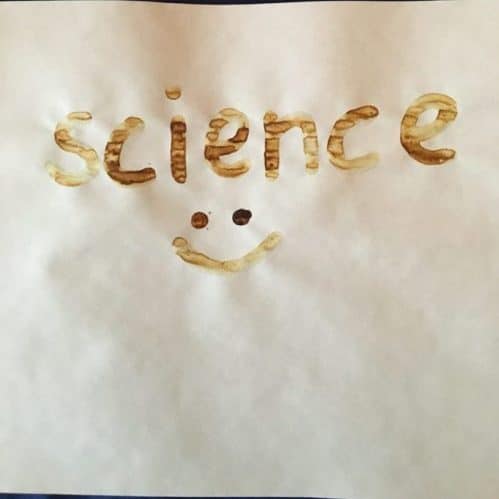
Learn about chemical reactions, acids and even how to make a homemade invisible ink with this fun science experiment for home or school!
Adult supervision for setup
You will need
- A Lemon
- Bowl
- Paper
- Some pens
- A spotlight or a hairdryer
- Cotton swab
Method
-
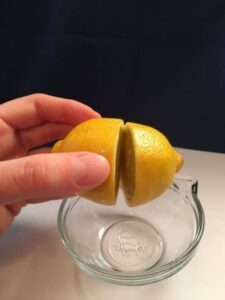
“Putting lemon juice into the bowl”
Squeeze some lemon juice into the bowl.
-
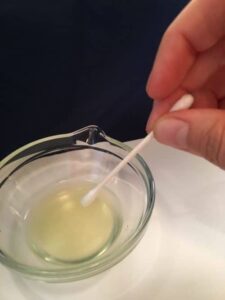
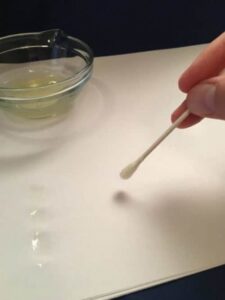
Dab the tip of your cotton swab into the lemon juice and use it to paint your Christmas card and message.
-
Let your card dry.
-
Decorate you card some more with the pens.
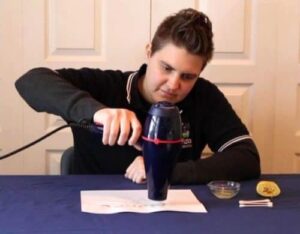
Turn on the spotlight, or hairdryer, and use it to heat up the paper from a safe distance. DO NOT USE AN OPEN FLAME TO DO THIS.
-
“Lemon juice on paper after heating “
Move your card over the heated light, or hairdryer until lemon juice changes colour.
Stop before the paper starts to burn.

-
School science visits since 2004!
…including a Christmas science show!
– Curriculum-linked & award-winning incursions.
– Over 40 primary & high school programs to choose from.
– Designed by experienced educators.
– Over 2 million students reached.
– Face to face incursions & online programs available.
– Early learning centre visits too!

-

-
Want to dive into acid-base chemistry?
Get the 30-minute video + PDF + curriculum links for your class here!

The science behind it
Why Does This Happen?
The Science of Lemon Juice Christmas Cards
This classic “invisible ink” trick is a fantastic way to explore organic chemistry and thermal decomposition. Lemon juice contains citric acid and natural sugars. When you paint it onto paper, the acid begins to react with the cellulose fibres of the paper, subtly weakening its structure.
Because the acid-treated paper is now more delicate, it has a lower combustion temperature than the rest of the page. When you apply heat (from a light bulb or an iron), the parts of the paper soaked in lemon juice begin to oxidise and brown much faster than the surrounding white paper.
Simultaneously, a process called caramelisation occurs. The small amount of sugar in the lemon juice undergoes a chemical change when heated, turning into a brown, carbon-rich substance. This combination of weakened paper burning and sugar turning to caramel is what makes your secret message magically appear!
Variables to test
Find out more on variables here.
-
Solute Concentration
What will happen if you add extra sugar to your lemon juice solution? Does a higher sugar content make the message turn darker or appear faster due to increased caramelisation? -
Organic Acid Variety
Try other fruit juices like orange, apple, or grape juice. Do different levels of citric or malic acid affect how clearly the secret message reveals itself? -
pH Level Comparison
Try other weak acids from the kitchen, such as white vinegar. Does the lack of sugar in vinegar make the message harder to see compared to the fruit juices? -
Thermal Energy Source
Does the method of heating (a hair dryer vs. an iron vs. a radiator) change the clarity of the message? Which method provides the most controlled energy transfer?
Always be careful when applying heat to paper and ensure you have an adult helping you. To keep your experiment valid, try to use the same type of paper for every test!

Teacher's note
Curriculums change, and so does the way you implement them in your classroom. Please use your own experience and knowledge of your students to use these resources to best effect for student learning.
Still want the curriculum links?
Here are the suggested links:
Australian Curriculum (ACARA) Science:
NSW Science syllabuses:
Victorian Curriculum Science:
Want this experiment — and many more — running in your classroom?
Have us visit your school — every student gets three hands-on experiments in 60–90 minutes with a qualified presenter.








