
Rising water experiment
Learn about air pressure with the classic rising water experiment! You just need a candle, some water, a glass and a plate to do this activity
Adult supervision for setup
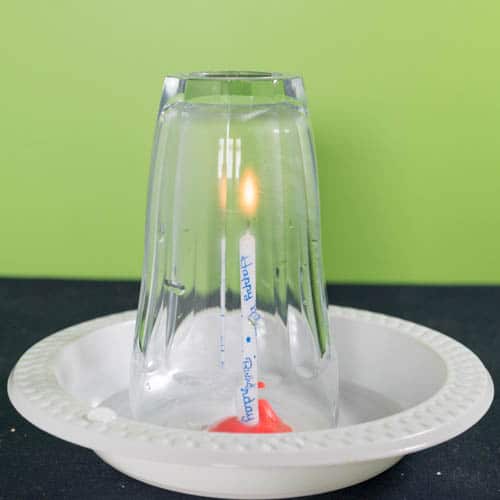
You will need
- A bowl
- A candle
- A clear glass cup that is taller than the candle
- Water
- Playdough
- Matches
- Adult supervision
Method
-
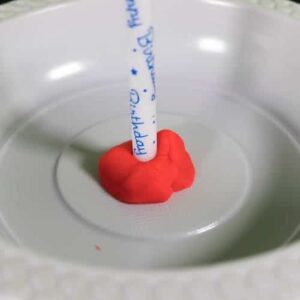
Using the playdough, fix the candle to the bowl so that it sits upright inside the bowl.
-
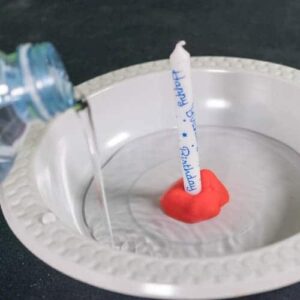
Pour some water into the bowl.
-
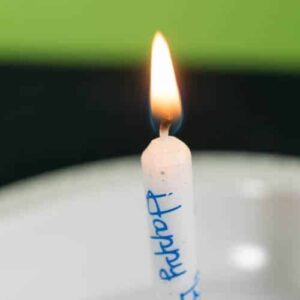
With the matches, light the candle.
-
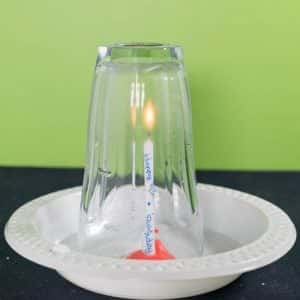
Cover the candle with the glass cup. Watch what happens! If you want, you can add food colouring into the water to make the experiment more visible.
-
Get the Unit of Work on Pressure here!
Want to dive into air pressure?
Get the 60-minute video + PDFs + curriculum links for your class here!
-
School science visits since 2004!
– Curriculum-linked & award-winning incursions.
– Over 40 primary & high school programs to choose from.
– Designed by experienced educators.
– Over 2 million students reached.
– Face to face incursions & online programs available.
– Early learning centre visits too!

-

The science behind it
What is happening?
The Science of Rising Water
In this experiment, you created an area of low pressure! While many people think the water rises because the oxygen is “used up,” that is only a small part of the story. The main driver is the change in air temperature.
As the candle burns, it heats the air inside the glass, causing the air molecules to move faster and take up more space. You may have seen tiny bubbles escaping from under the rim; this is the expanding hot air rushing out. Once the candle consumes the available oxygen and goes out, the air inside the glass cools down rapidly.
Cooling air contracts (takes up less space), which causes the internal air pressure to drop significantly. This creates a pressure differential between the inside and the outside of the glass. The higher atmospheric pressure outside pushes down on the water in the plate, forcing it up into the glass until the pressure is equalised.
Variables to test
Find out more on variables here.
-
Thermal Contrast
Does using hot water versus cold water change the result? (Hint: Consider how water temperature affects the cooling rate of the air inside.) -
Combustion Rate
What happens if you use two candles instead of one? Does the air get hotter, and does the water rise further or faster? -
Liquid Properties
What happens when you use different liquids, such as vegetable oil or salty water? Does the density of the liquid affect how easily the air pressure can push it upwards?

Teacher's note
Curriculums change, and so does the way you implement them in your classroom. Please use your own experience and knowledge of your students to use these resources to best effect for student learning.
Still want the curriculum links?
Here are the suggested links:
Australian Curriculum (ACARA) Science:
NSW Science syllabuses:
Victorian Curriculum Science:
Want this experiment — and many more — running in your classroom?
Have us visit your school — every student gets three hands-on experiments in 60–90 minutes with a qualified presenter.








