
Collect animal footprints
Do you know how to read animal tracks? Learn how to cast prints with plaster and have a fun time with this crazy experiment!
Adult supervision for setup
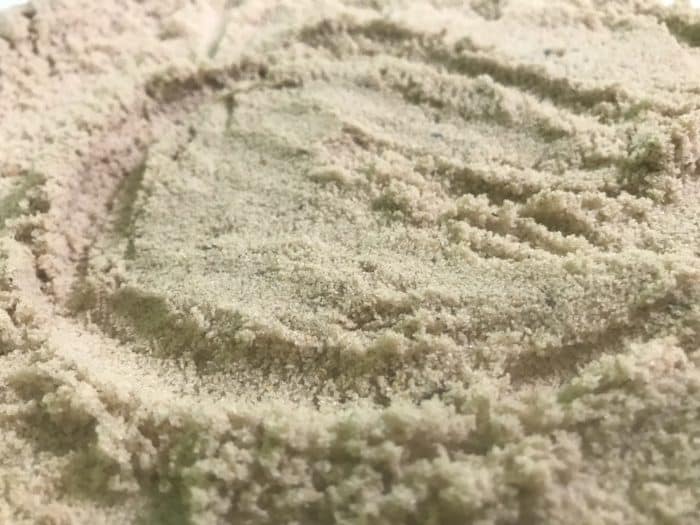
You will need
- Plaster of Paris
- Water
- A Bowl
Method
-
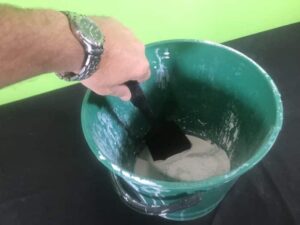
After rain, mix up the plaster of paris with water. Don’t make it too thick as you want a good mold.
You may want to make this mix just prior to pouring into the footprints, otherwise the plaster could set before you find the footprints!
-
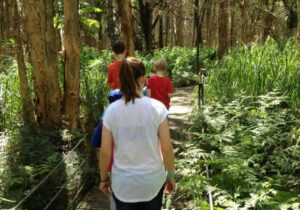
Walk through your park or garden to find animal prints in mud patches
-
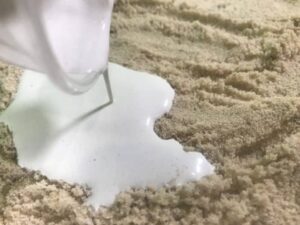
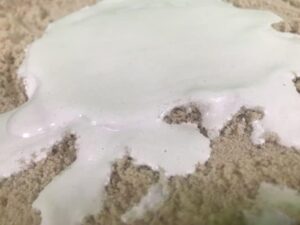
Gently pour the plaster into the impression made by the animal – it’s cast
-
Allow to dry. The time taken to dry is dependent on how wet your plaster solution is
-
Compare the print with a book of animal tracks in your local library
-
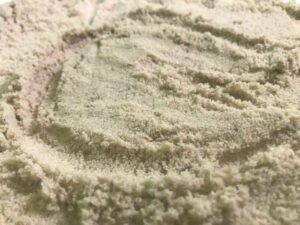
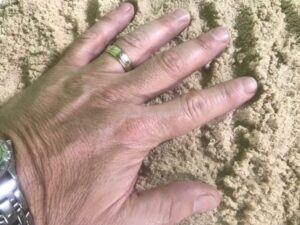
Press your hand into the mud and make a mold of your own hand!
-
School science visits since 2004!
– Curriculum-linked & award-winning incursions.
– Over 40 primary & high school programs to choose from.
– Designed by experienced educators.
– Over 2 million students reached.
– Face to face incursions & online programs available.
– Early learning centre visits too!
-

The science behind it
Australian animals can be hard to find in bushland.
The Science of Tracking and Traces
Ecologists and biologists are much like detectives. Because many animals are nocturnal or shy, scientists often have to rely on traces to work out which species inhabit an area. These clues include tracks, fur, feathers, nests, tree hollows, and even “scats” (droppings).
Reading the Landscape
Tracks are rarely perfectly formed. A biologist’s job is to look at the gait (the way an animal moves), the depth of the print, and the distance between steps to determine the size, speed, and health of the animal.
- Macro to Micro: It isn’t just mammals that leave marks. If you look closely at a Scribbly Gum tree, you can see the intricate zig-zag tracks left behind by the larvae of the Scribbly Gum Moth as they tunnel through the bark.
- Forensic Techniques: When you use Plaster of Paris to cast a footprint, you are using the same basic technique as forensic investigators at a crime scene! Modern teams often use dental stone, which is a harder, more durable version of gypsum that captures even finer details.
Ancient Footprints
Tracks can last for millions of years if they are made in the right conditions. At Lark Quarry in Queensland, scientists have uncovered the world’s only recorded dinosaur stampede. By analysing thousands of footprints, they were able to reconstruct a “crime scene” from the Cretaceous period involving a large theropod hunting a herd of smaller herbivores.
Variables to test
Find out more on variable testing here.
-
Substrate Consistency
Does it matter if the mud is very wet or nearly dry? How does the viscosity of the soil affect the detail captured in the plaster cast? -
Exothermic Reaction
Plaster of Paris creates heat as it sets. Does changing the water temperature used to mix the plaster change how fast the cast sets? -
Plaster Concentration
Vary the ratio of plaster to water. Does a thicker mix capture more detail, or does it make it harder to fill the small toes and claws of a print? -
Preservation Environment
If you leave a footprint in dry sand versus damp clay, which one lasts longer before the wind or sun erodes the evidence?
For further reading on identifying Australian wildlife traces, check out Tracks, Scats and Other Traces by Barbara Triggs.

Teacher's note
Curriculums change, and so does the way you implement them in your classroom. Please use your own experience and knowledge of your students to use these resources to best effect for student learning.
Still want the curriculum links?
Here are the suggested links:
Australian Curriculum (ACARA) Science:
NSW Science syllabuses:
Victorian Curriculum Science:
Want this experiment — and many more — running in your classroom?
Have us visit your school — every student gets three hands-on experiments in 60–90 minutes with a qualified presenter.








