
Create a simple lens
Ever wondered what refraction is? Well luckily this experiment is just for you! Learn how to create a simple lens and change the way light moves!
Adult supervision for setup
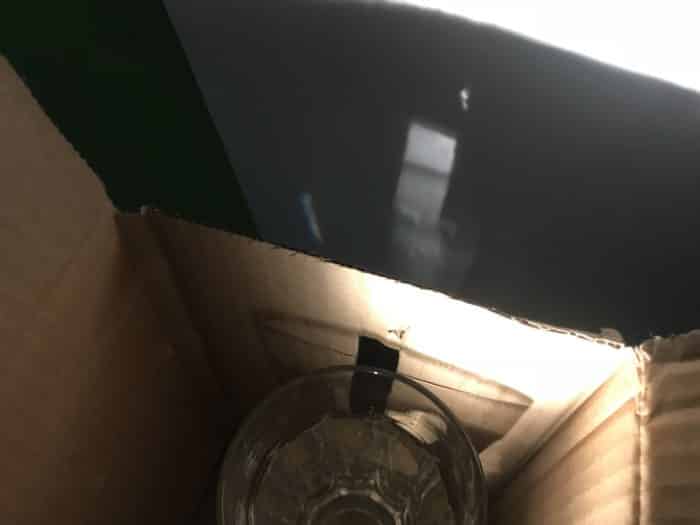
You will need
- A shoebox
- A torch
- Scissors
- White paper
- A dark room
- A straight-sided glass of water (short enough to fit within the shoebox)
Method
-
Cut a 5mm wide slit into one side of the shoebox.
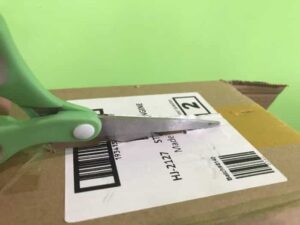
-
Cut a similar slit into the other side of the show box.
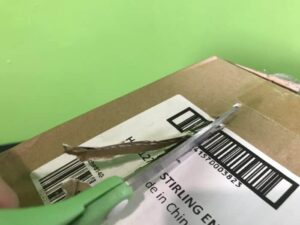
-
Turn off the lights and shine the torchlight through the slits.
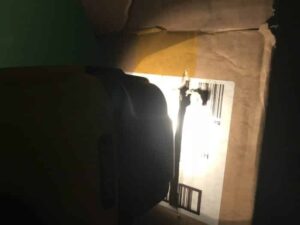
-
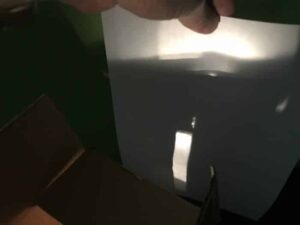
Hold a piece of white paper at one end of the shoe box. You should see a thin slit of light on the paper.
-
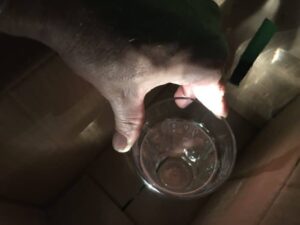
Now place the glass of water inside the shoebox, between the two slits.
-
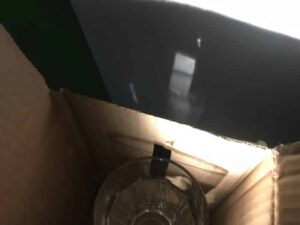
Again, shine the torch through the two slits, and glass, and onto your sheet of paper.
What do you see?
-
School science visits since 2004!
– Curriculum-linked & award-winning incursions.
– Over 40 primary & high school programs to choose from.
– Designed by experienced educators.
– Over 2 million students reached.
– Face to face incursions & online programs available.
– Early learning centre visits too!

-

-
Get the Unit of Work on Light & Colour here!
- What is colour addition vs subtraction?
- What is opacity, translucence & transparency?
- What is the difference between refraction & reflection?
- Explore UV light, lenses, thermochromism and more!
Includes cross-curricular teaching ideas, student quizzes, a sample marking rubric, scope & sequences & more
The science behind it
Why Does This Happen?
The Science of Creating a Simple Lens
When you place the glass of water in the path of the light, you should see the narrow slit of light on your paper spread out into a much broader, softer beam. In some setups, depending on the distance, the light may even cross over itself. This is a clear demonstration of refraction.
Why does the light spread out?
Light travels at different speeds depending on the material it is moving through. This experiment highlights how a change in optical density affects the path of light.
- Refraction: Light moves more slowly through water than through air. As the light waves enter the curved glass, the change in speed causes them to bend. This bending at an interface is called refraction.
- Cylindrical Lens: The round shape of the glass acts as a convex lens. Because the glass is curved, the light rays entering at different points are bent at different angles, causing the beam to diverge (spread out) or converge (focus) after it passes through.
Variables to test
Find out more on variables here.
-
Aperture Width
Try different width slits in the box. Does a narrower 5mm slit create a sharper beam than a wider one? -
Lens Geometry
Try different shaped glasses. A square glass has flat sides—how does this compare to the refraction seen in a round glass? -
Medium Density
What happens if you fill the glass with oil or salty water instead? Different liquids have different refractive indices, which will change how much the light bends.
To ensure a fair test, try to keep the distance between the torch and the first slit the same for every trial!

Teacher's note
Curriculums change, and so does the way you implement them in your classroom. Please use your own experience and knowledge of your students to use these resources to best effect for student learning.
Still want the curriculum links?
Here are the suggested links:
Australian Curriculum (ACARA) Science:
NSW Science syllabuses:
Victorian Curriculum Science:
Want this experiment — and many more — running in your classroom?
Have us visit your school — every student gets three hands-on experiments in 60–90 minutes with a qualified presenter.








