
Fold mountains using towels activity
With a stack of towels you can easily demonstrate folding in our landscape! An easy geology activity that helps students visualise how our landscape forms.
Adult supervision for setup

You will need
- Four towels of different colours
Method
-
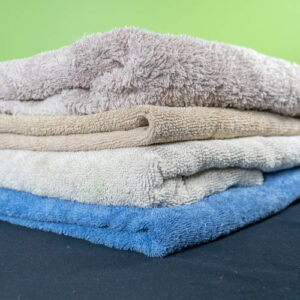
Lay the towels on top of one another flat on the floor. Alternate the colours represent each rock strata
-
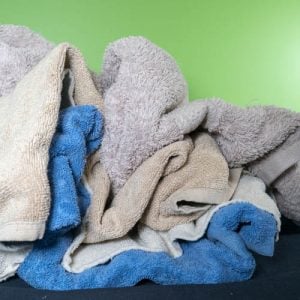
Push two sides of your towel pancake together so that the towels create folds. That’s all there is to it!
-
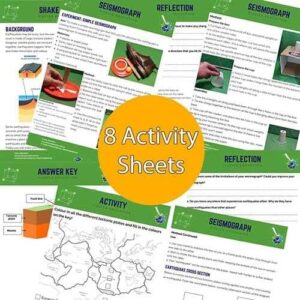
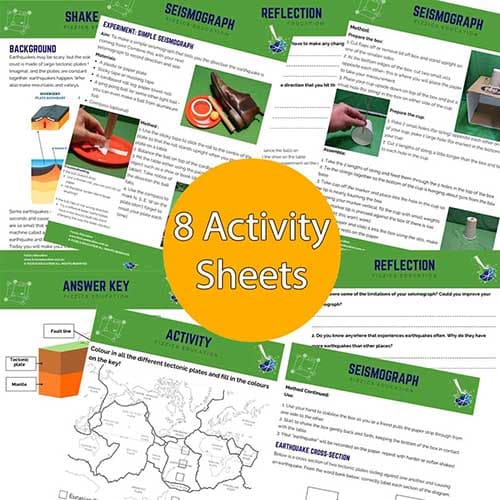
Go further – buy 8 x student activity sheets as extension worksheets.
This student science booklet has been created by experienced science educators from the Fizzics Education team.
Use these student worksheets as blackline masters for your science class!

-
Get the Unit of Work on Geology here!
- The Earth’s layers, the rock cycle, volcanoes, earthquakes & more!
From soil science to mineral testing, these hands-on experiments your students will discover the importance of natural resources and the role of plate tectonics in shaping our world.
Includes cross-curricular teaching ideas, student quizzes, a sample marking rubric, scope & sequences & more
-
School science visits since 2004!
– Curriculum-linked & award-winning incursions.
– Over 40 primary & high school programs to choose from.
– Designed by experienced educators.
– Over 2 million students reached.
– Face to face incursions & online programs available.
– Early learning centre visits too!
-

The science behind it
What is this all about?
The folding towels represent what can happen to rock layers over time near fault lines!
As simple as this experiment is, it is a good way to see how the movement of tectonic plates form hills, valleys, mountains and volcanoes.On the towels, you should see several hills and valleys in their folds after pushing them together. These folded areas represent the same bending and folding that occurs in our landscape due to pressures from the earth moving deep underground.
Deep underground the Earth’s crust is made up of tectonic plates that float on a sea of magma. The area where these tectonic plates meet are called faults. When these tectonic plates rub against one another in the fault the huge amount of force produced can bend the landscape into folds similar to your towels. When the force is too great, earthquakes can occur when the tectonic plates slip past each other or one of them passes under the other. Over time these forces can build huge mountain ranges along the entire length of continents (for example the Sierra Nevada ranges or the Himalayas).
Variables to test
- Does it matter about the thickness of towels used?
- Try layering different foams together
- What happens if you have different shapes underneath the towels?
Classroom activity sheets for this experiment
Create, reflect & extend!


Teacher's note
Curriculums change, and so does the way you implement them in your classroom. Please use your own experience and knowledge of your students to use these resources to best effect for student learning.
Still want the curriculum links?
Here are the suggested links:
Australian Curriculum (ACARA) Science:
NSW Science syllabuses:
Victorian Curriculum Science:
Want this experiment — and many more — running in your classroom?
Have us visit your school — every student gets three hands-on experiments in 60–90 minutes with a qualified presenter.








